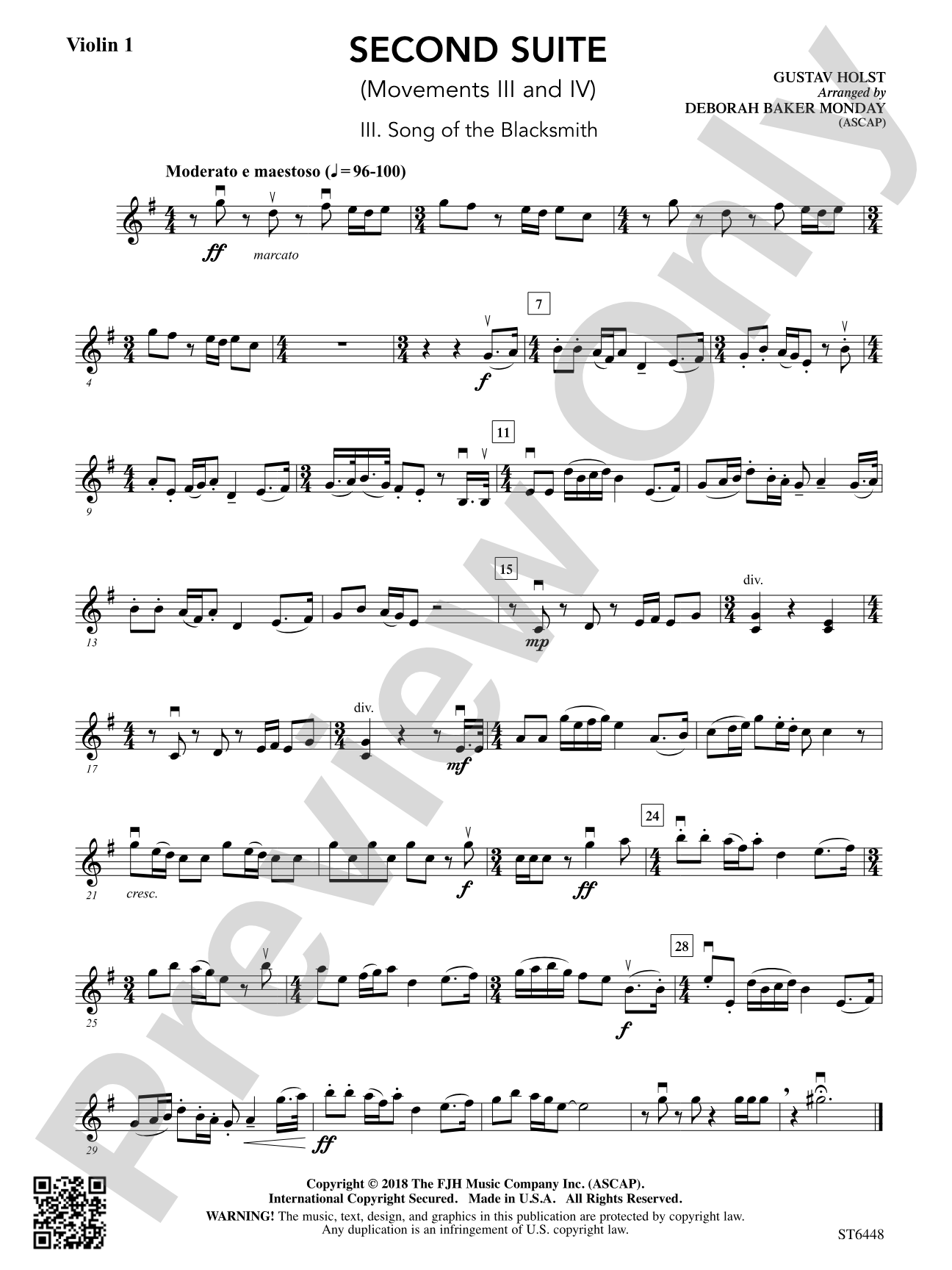
This spectacular transcription offers string orchestras an alternative to Holst's St. Paul's Suite. Based on his Second Suite for Band, this version features Song of the Blacksmith and Dargeson. Written in the key of G Major, the final movement will prove to be less difficult than St. Paul's Suite, yet still has the excitement and energy of the original!
Discover MakeMusic Cloud: thousands of interactive titles your students can play along with today.
Gustav Holst (1874–1934) was an English composer whose gift for writing memorable melodies and brilliant orchestration made him a cornerstone of the teaching repertoire. He understood the needs of amateur musicians and student ensembles deeply, composing works that were both artistically substantial and genuinely playable by developing musicians. His suites remain standard repertoire in schools because they balance accessibility with genuine musical content.
Why we love this
Deborah Baker Monday's transcription gives string orchestras a serious alternative to the St. Paul's Suite without asking them to compromise on musical substance. The final movement's reduced technical demands compared to St. Paul's make this an excellent choice for intermediate ensembles that want to program Holst without stretching beyond their current abilities, yet the energy and character remain completely intact.
What to expect
Song of the Blacksmith carries the quiet dignity and folk character of its original, with a gentle, almost meditative quality that lets the strings sing. The final movement bursts with rhythmic vitality and playful energy, capturing the swagger and excitement of the band version without losing the warmth that string writing naturally provides.
Who it's for
String orchestra directors seeking a Grade 4 work with genuine artistic merit and the security of programming a Holst masterwork. This arrangement suits ensembles that have developed solid intonation and rhythmic control but are not yet ready for the technical demands of St. Paul's Suite.
How to get the most out of it
Bring out the lyrical warmth in Song of the Blacksmith by allowing the melody to sing through the string texture; resist the urge to rush the phrasing even as accompaniment figures gain momentum.
Lock the rhythmic precision of the final movement's opening figures before allowing the energy to build; the excitement comes from clean ensemble attacks, not from pushing tempo.
Balance the divisi sections carefully in both movements so inner voices support rather than obscure the primary melodic line.
How to use it
Program this as a centerpiece for a concert celebrating British masterworks, pairing it with contemporary British string literature or earlier Baroque selections. It also works as a spring concert feature that demonstrates your ensemble's growth while delivering audience appeal without requiring soloists or narrative framing.
Skills your students will build
Stylistic interpretation of early 20th-century British music
Balanced divisi voicing across changing textures
Sustaining lyrical phrasing while accompanying rhythmic figures
Clean ensemble attacks in energetic, rhythmically driven passages
Dynamic control across a two-movement arc
You May Also Like
Scan to Complete Your Purchase
Use your phone's camera to scan the code below
You'll log in on your phone and the order will be added to your account