
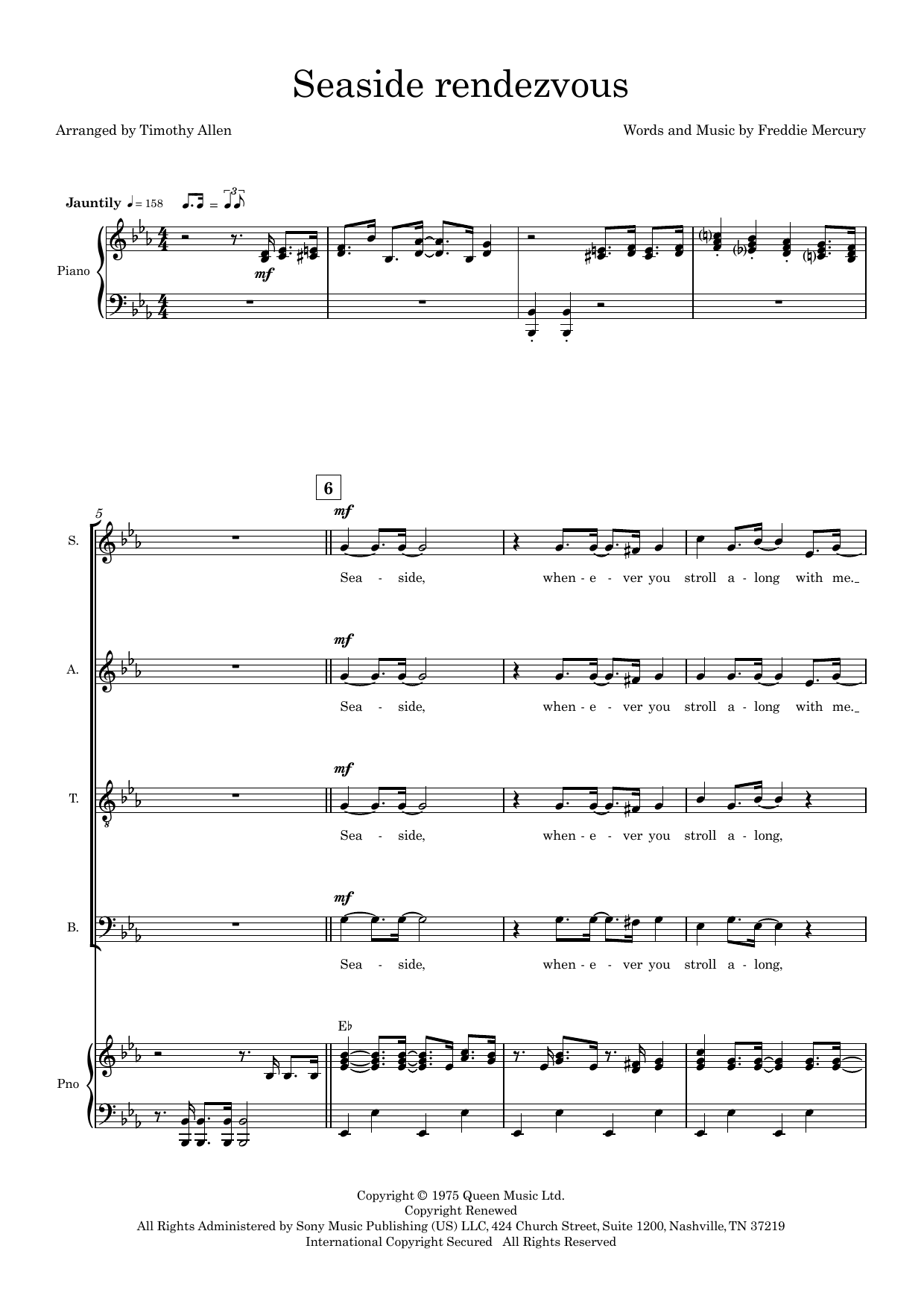

Seaside Rendezvous (arr. Tim Allen): Choral Instrumental Pak
As performed by Queen / Arranged by Tim Allen
Item: 35-PK01560973
$1.99
Pickup currently not available
Buy Extra Parts (Digital PDF Download)
Parts Added to Cart!
Description
Seaside Rendezvous (arr. Tim Allen)


Seaside Rendezvous (arr. Tim Allen): Choral Instrumental Pak isn't in MakeMusic Cloud just yet...but it could be. Let us know you'd like to see it, and you'll help shape what comes next. In the meantime, start a free trial and dive into thousands of interactive titles your students can play along with today.
Request This Title
Tell us you want it.
Start Your Free Trial
Explore everything that's ready to play right now.
Sample Audio
No sample audio found.
Sample Video
No sample videos found.
Additional Details
Publisher:
Hal Leonard
SKU:
35-PK01560973
More about this title
About the Artist: Queen
Queen redefined what a rock band could be, blending theatrical presentation with compositional sophistication and virtuosic musicianship. Freddie Mercury's vocal genius, Brian May's architectural guitar work, Roger Taylor's inventive drumming, and John Deacon's melodic bass lines created a catalog that rewards both casual listening and deep study. Their influence on popular music education has grown steadily as educators recognize how Queen's harmonies, rhythmic complexity, and genre-blending approach engage students and stretch their musicianship.
Why we love this
Tim Allen's arrangement captures the playful sophistication of this Queen deep cut, translating Freddie Mercury's inventive melody into a setting that works beautifully for developing SSA and SSAA ensembles. The piece balances accessibility with genuine musical interest, giving your singers memorable material that doesn't condescend to them. Programming Queen in a choral concert signals to students and audiences alike that excellent music making isn't confined to classical canon.
What to expect
Lighthearted and witty, with an undercurrent of sophistication. The piece captures the playful character of a seaside encounter while maintaining the harmonic and melodic cleverness you expect from Queen. There's an elegant sparkle here, a sense of fun that never tips into frivolity.
Who it's for
SSA and SSAA choirs looking to program contemporary pop repertoire that demands musicality and precision rather than just showmanship. This works for intermediate to advanced high school choirs, treble college ensembles, or community groups seeking fresh material with genuine artistic merit. Singers gain exposure to a different compositional vocabulary while tackling genuine musical challenges.
How to get the most out of it
- Anchor the ensemble's sense of swing and rubato by having your rhythm section (if using optional instrumentation) lock the groove early in rehearsals. This frees the singers to shape the melodic phrases with more nuance.
- Pay attention to the vowel consistency across voice parts, especially in the background layers. Queen's arrangements thrive on tight, unified sonorities that make the harmony sparkle.
- Record a section rehearsal focused on intonation in the divisi passages. Unison and simple two-part textures forgive minor tuning issues; the richer harmonies here expose every cent.
- Allow the ensemble to hear the original recording in full before diving into score study. Knowing the arrangement's relationship to the source material helps singers make informed interpretive choices.
How to use it
Position this in a pop or contemporary music concert segment where it can be paired with other rock or musical theater repertoire, or use it as a palate cleanser between classical pieces to show your audience the range of your ensemble's capabilities. Its moderate length makes it ideal for variety show formats or end-of-semester concerts where energy and approachability matter alongside musicianship.
Skills your students will build
- Phrasing in a non-classical idiom (managing breath placement and lyrical shape in contemporary pop settings)
- Singing divisions and parts independence (especially in SSA/SSAA texture with background layers)
- Intonation with richer harmonic language (navigating extended chords and chromatic movement)
- Musicality through stylistic context (connecting their singing to the original recording and rock performance traditions)