
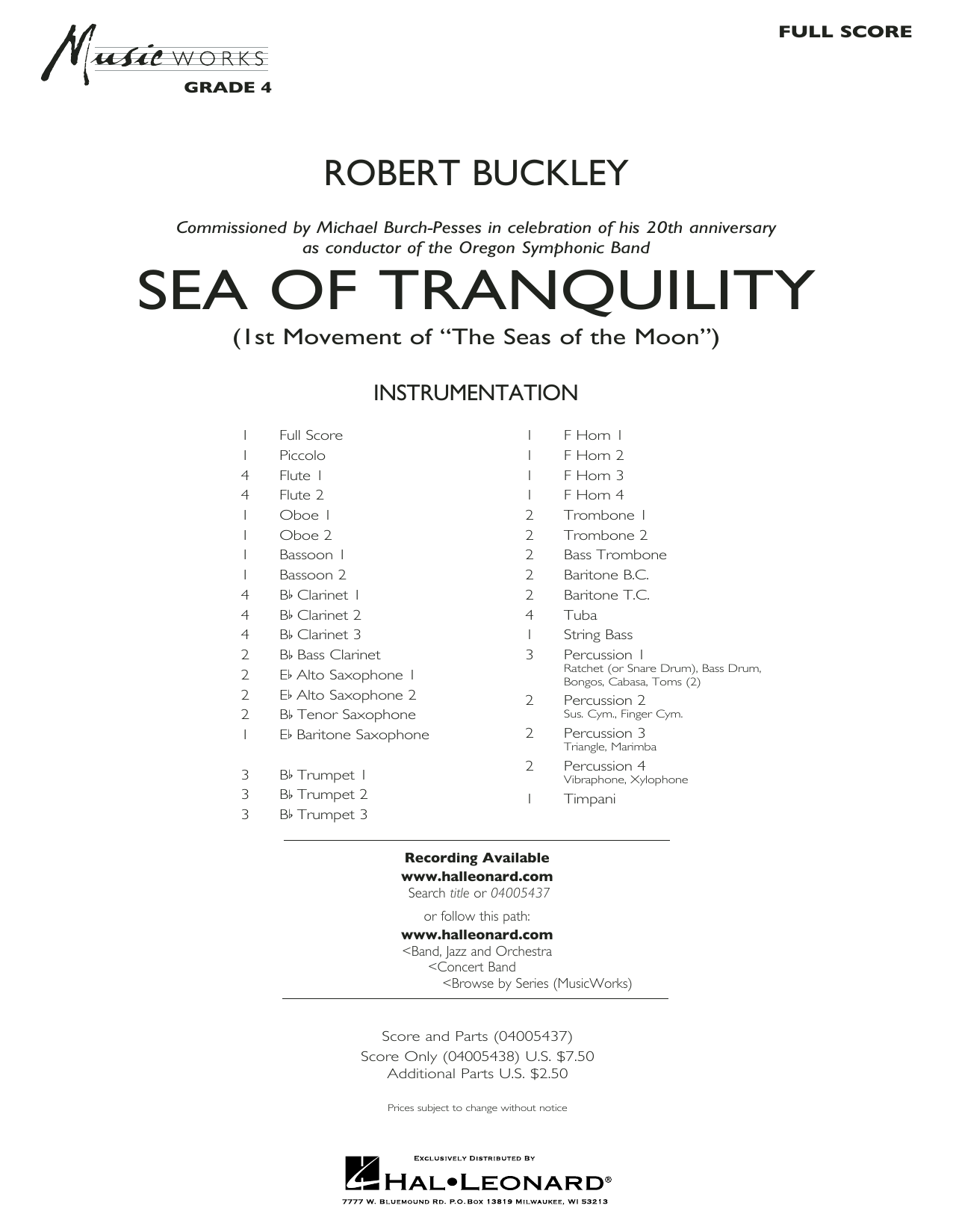

Sea of Tranquility: Concert Band Conductor Score & Parts
By Robert Buckley
Grade: 4
Item: 35-PK00417660
$75.00
Pickup currently not available
Buy Extra Parts (Digital PDF Download)
Parts Added to Cart!
Description
Since the beginning of humanity we've been mesmerized by the moon, and what were originally thought to be "seas" appearing on the surface. The "Sea of Tranquility" is probably the best-known of these thanks to the landing of Apollo 11 in 1969. The first movement of Robert Buckley's four-movement suite captures the astronauts' sense of awe and wonder of their journey from lift-off, to weightlessness, to the triumph and jubilation of the lunar landing itself.


Sea of Tranquility: Concert Band Conductor Score & Parts isn't in MakeMusic Cloud just yet...but it could be. Let us know you'd like to see it, and you'll help shape what comes next. In the meantime, start a free trial and dive into thousands of interactive titles your students can play along with today.
Request This Title
Tell us you want it.
Start Your Free Trial
Explore everything that's ready to play right now.
Sample Audio
No sample audio found.
Sample Video
No sample videos found.
Additional Details
Publisher:
Hal Leonard
SKU:
35-PK00417660
More about this title
Why we love this
Buckley captures the emotional arc of spaceflight with orchestration that feels both intimate and expansive. This movement delivers genuine drama without requiring virtuosic technical writing, making it accessible for Grade 4 groups while still impressing audiences with its cinematic scope.
What to expect
The piece unfolds like watching earth recede through a spacecraft window. It begins with grounded anticipation, builds into the strange beauty of weightlessness, and arrives at triumph tinged with wonder. The orchestration breathes; it never rushes.
Who it's for
Concert bands at the intermediate level looking for programmatic music that tells a story without becoming gimmicky. Directors seeking pieces that engage both musicians and audiences through accessible but thoughtful composition.
How to get the most out of it
- Balance the sustained harmonic foundation in the lower voices against the melodic material above. The sense of weightlessness depends on clarity, not volume.
- Pay attention to the dynamic trajectory from lift-off through landing. These shifts in intensity should feel inevitable rather than sudden.
- Conduct with intention through the transitions between the different phases of the journey. Slight ritards or tempo adjustments can heighten the sense of arrival at each milestone.
How to use it
This works beautifully as an opening number for a concert centered on exploration, discovery, or American achievement. It also pairs naturally with other programmatic works or with thematic programs connecting music to science and space.
Skills your students will build
- Sustaining long melodic lines with consistent tone across register changes
- Balance between multiple concurrent musical layers
- Responding to subtle dynamic and tempo shifts that convey narrative
- Ensemble intonation in sustained harmonic passages