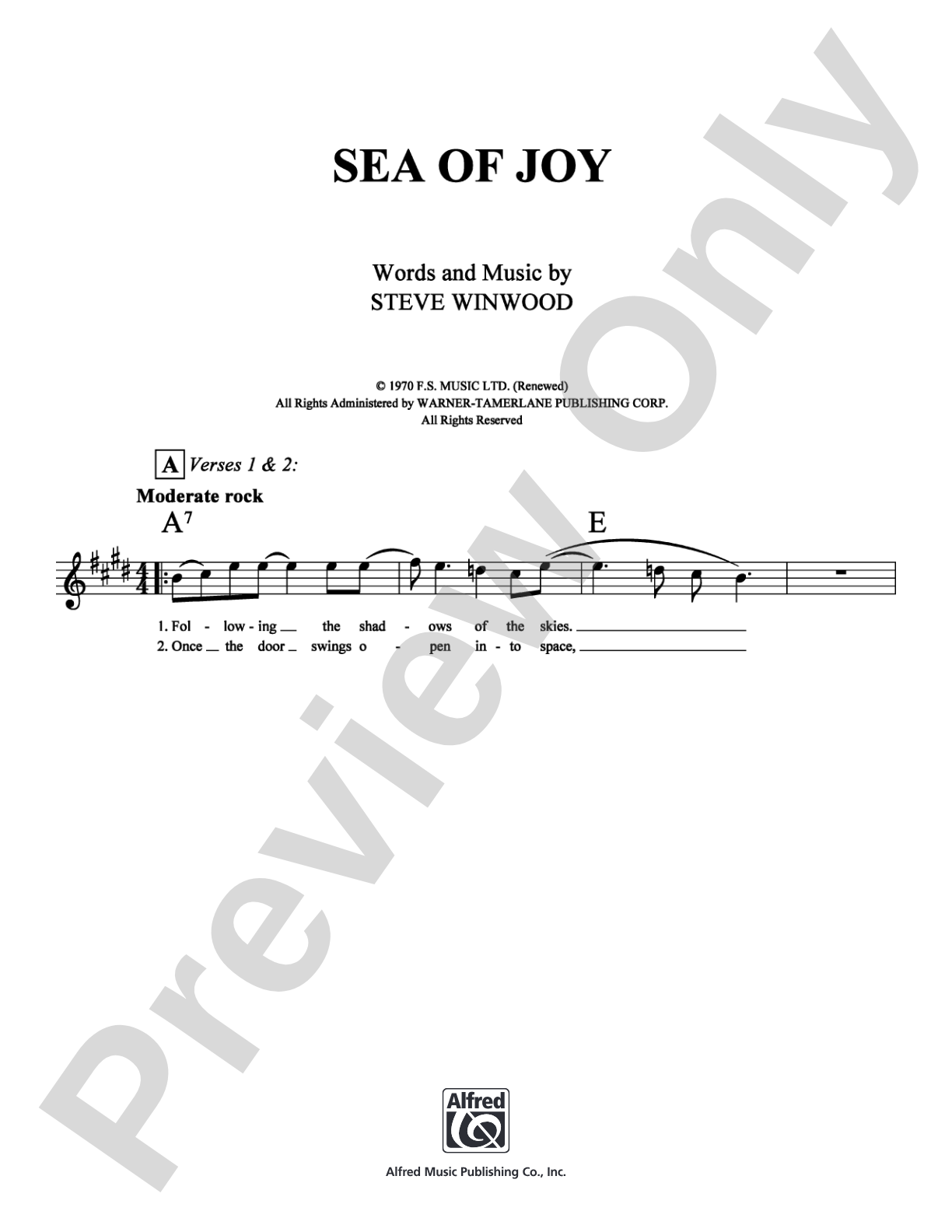
Sea of Joy: Lead Sheet Digital Sheet Music

Sea of Joy: Lead Sheet Digital Sheet Music

Steve Winwood, Blind Faith

Item: 00-PS-0006843

Digital Download
$1.99
Description

Sea of Joy: Lead Sheet Digital Sheet Music isn't in MakeMusic Cloud just yet...but it could be. Let us know you'd like to see it, and you'll help shape what comes next. In the meantime, start a free trial and dive into thousands of interactive titles your students can play along with today.

Sample Audio
No sample audio found.
Sample Video
Additional Details
SKU: 00-PS-0006843

More about this title

About the Artist: Blind Faith

Blind Faith formed in 1969 as rock's first supergroup, bringing together Steve Winwood (Traffic), Eric Clapton (Cream), Ginger Baker (Cream), and Ric Grech (Family). Their self-titled debut album became a landmark of early 1970s rock, balancing blues-based intensity with psychedelic experimentation and soulful vocal arrangements. The band's brief but influential run shaped how rock musicians approached ensemble interplay and studio production.

Why we love this

This lead sheet captures a song rooted in 1970s rock vocabulary, making it ideal for jazz and contemporary ensemble classes exploring how rock idioms translate to jazz notation. The harmonic movement and melody offer enough sophistication to challenge intermediate musicians while remaining accessible for those still building chord-reading fluency.

What to expect

Confident and soulful, with the unmistakable warmth of early 1970s rock. The melody has space to breathe, and the underlying harmony supports both straightforward reading and creative reharmonization.

Who it's for

Jazz ensemble directors, contemporary music classes, and musicians learning to read and improvise from lead sheets. This works well for upper-level high school and college musicians who are building fluency with pop-rock harmony and want to explore iconic 1970s material.

How to get the most out of it

  • Study the original recording to lock in the groove and phrasing before relying solely on the lead sheet notation.
  • Experiment with different rhythmic interpretations of the written melody; the lead sheet sets the framework, but the original arrangement carries interpretive details worth exploring.
  • Work the chord progression as a small ensemble first, letting the rhythm section establish the harmonic foundation before adding melody.

How to use it

Include this in a unit on rock and pop song forms, pairing it with other lead sheets from the same era. It works particularly well when teaching the transition between classical harmonic thinking and the looser, blues-inflected changes found in rock repertoire.

Skills your students will build

  • Reading and interpreting pop-rock lead sheet notation
  • Understanding chord progressions rooted in blues and R&B traditions
  • Balancing score-reading with interpretive listening to recorded sources
  • Improvisation and reharmonization over a fixed harmonic progression

You May Also Like