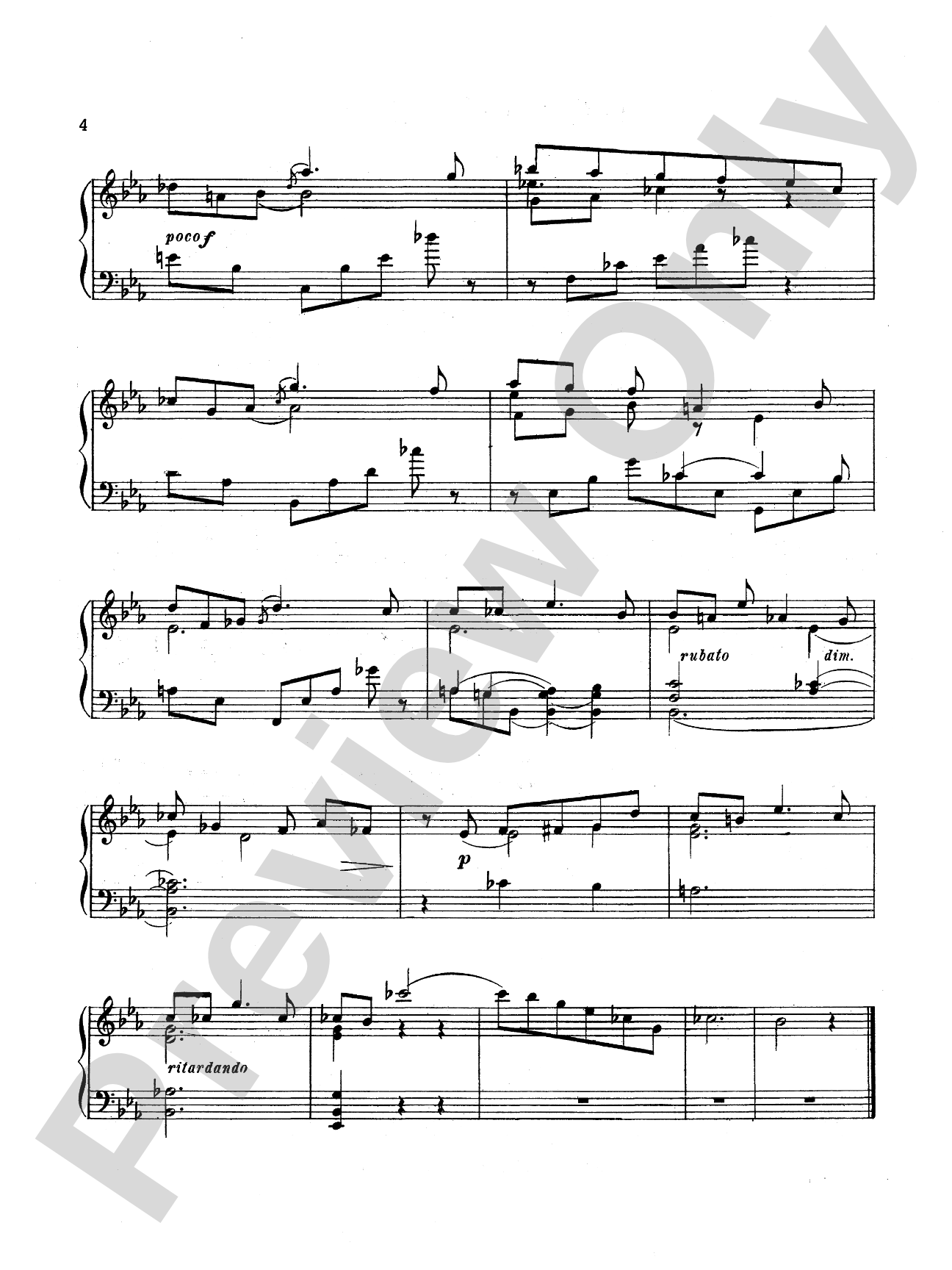
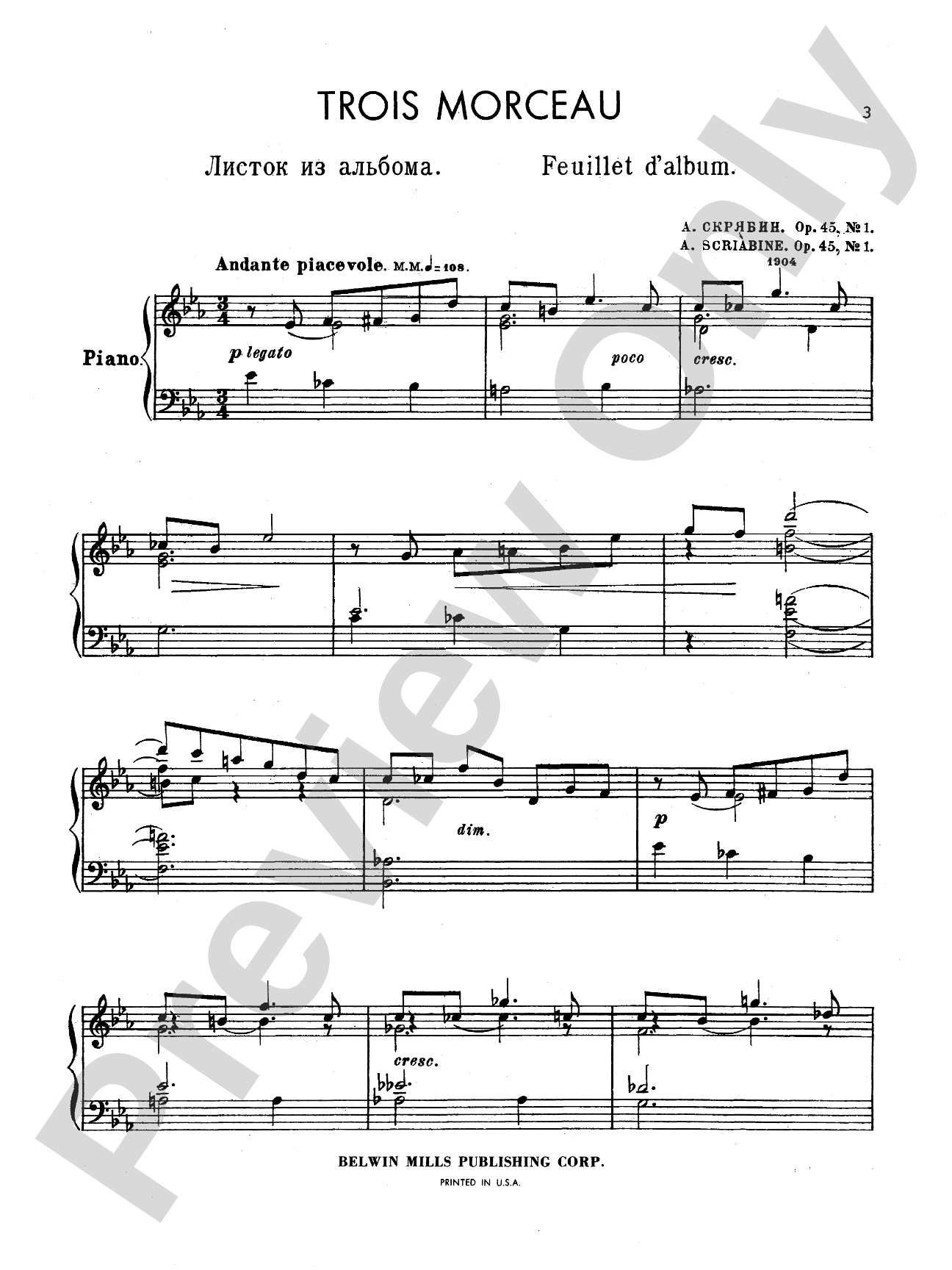
Scriabin: Trois Morceaux Sheet Music Preview

Scriabin: Trois Morceaux: Piano Book

By Alexander Scriabin

Item: 00-PK-0003768

Digital Download
makemusic Cloud badge
$5.99

Buy Extra Parts (Digital PDF Download)

Parts Added to Cart!

Description
A Piano solo, expertly composed by Alexander Scriabin.

Don't just read it, hear it, play along with it, and watch your students grow with it. In MakeMusic Cloud, Scriabin: Trois Morceaux: Piano Book comes alive with professional accompaniment, adjustable tempo, and built-in practice tools that turn solo practice into real progress.

Sample Audio
No sample audio found.
Sample Video
Additional Details
Series: Kalmus Edition
Publisher: Alfred Music
Page Count: 8
SKU: 00-PK-0003768

More about this title

About the Composer: Alexander Scriabin

Alexander Scriabin (1872-1915) was a Russian composer and pianist who fundamentally expanded the harmonic language of early twentieth-century music. Working at the intersection of Romanticism and modernism, Scriabin developed increasingly dissonant and chromatic idioms, moving away from traditional tonality toward more abstract harmonic structures. His output spans five piano sonatas, numerous shorter piano works, and orchestral compositions that influenced composers from Stravinsky to contemporary experimentalists.

Why we love this

These three pieces distill Scriabin's harmonic innovation into manageable, compelling studies that don't demand the technical extremes of his sonatas. Advanced pianists gravitate toward Scriabin for the sheer foreignness of his sound world; these short works let you inhabit that world without the stamina requirements of larger forms.

What to expect

Scriabin's music exists in a dreamlike haze where traditional harmony dissolves into pure sonority. These pieces shimmer with introspection and yearning, their chromaticism and unconventional voice leading creating an otherworldly, almost mystical atmosphere that lingers long after the final note.

Who it's for

This collection suits advanced pianists preparing recital repertoire or exploring early modern idioms in private study. Teachers introducing upper-level students to non-tonal harmony and Scriabin's distinctive voice will find these three pieces accessible entry points.

How to get the most out of it

  • Approach Scriabin's harmonies on their own terms rather than searching for traditional functional relationships. Let the vertical sonorities breathe; clarity matters more than speed.
  • Pedal deliberately and sparingly. Scriabin's textures can blur quickly, and even a subtle lift between phrases reshapes how listeners hear the harmonic colors.
  • Attend to dynamic nuance across the entire dynamic spectrum. These pieces reward sensitive control in both soft and intense passages.

How to use it

Pair these pieces on a recital with late Romantic or twentieth-century works that share Scriabin's harmonic adventurousness. They work equally well as standalone concert items or as part of a program exploring the bridge between Romanticism and modernism.

Skills your students will build

  • Navigating non-functional harmony and chromatic voice leading
  • Controlling pedal for harmonic color and clarity
  • Interpreting dynamic and tempo marking subtleties in early twentieth-century notation
  • Developing independence between hands across dissonant textures

You May Also Like