Scriabin: Etudes Sheet Music Preview

Scriabin: Etudes

By Alexander Scriabin

Item: 00-PC-0009398

Digital Download
$0.99
Description
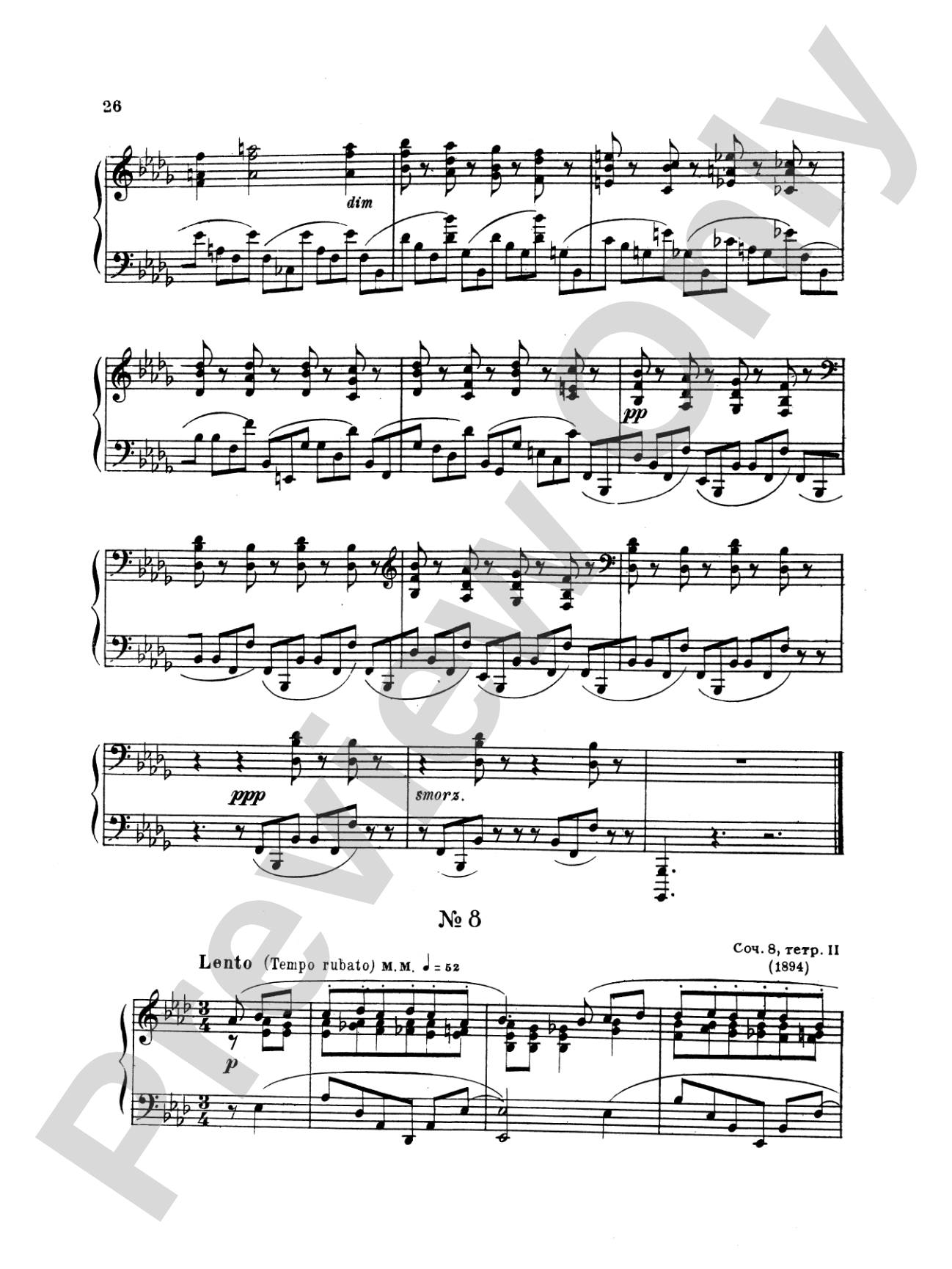
Contents: Opus 2, No. 1 * Opus 8 * Opus 42 * Opus 49, No. 1 * Opus 56, No. 4 * Opus 65.

Don't just read it, hear it, play along with it, and watch your students grow with it. In MakeMusic Cloud, Scriabin: Etudes comes alive with professional accompaniment, adjustable tempo, and built-in practice tools that turn solo practice into real progress.

Sample Audio
No sample audio found.
Sample Video
Additional Details
Series: Kalmus Edition
Publisher: Alfred Music
Page Count: 104
SKU: 00-PC-0009398

More about this title

About the Composer: Alexander Scriabin

Alexander Scriabin (1872-1915) transformed piano technique and harmonic language in the early 20th century, moving from Russian Romantic roots toward a visionary, almost mystical idiom. His etudes sit at the intersection of virtuosic display and harmonic experimentation, demanding both technical command and interpretive maturity from pianists who tackle them.

Why we love this

Scriabin's etudes occupy a singular space in the piano repertoire: they demand the precision and finger independence of Chopin or Liszt, but reward you with harmonic and textural landscapes that feel entirely modern. Programming one of these pieces signals to an audience that a pianist is serious about both technical mastery and musical vision.

What to expect

These etudes pulse with nervous energy and harmonic restlessness. You'll find yourself in shimmering, chromatic soundscapes where delicate passagework floats over unsettling chords, then moments of almost ritualistic intensity. The music feels caught between worlds: still rooted in pianistic tradition, but straining toward something stranger and more abstract.

Who it's for

Advanced pianists preparing recital or competition repertoire, and serious music students exploring early 20th-century piano writing. This collection serves pianists ready to move beyond Romantic-era etudes into harmonic and stylistic territory that demands both technical precision and conceptual flexibility.

How to get the most out of it

  • Approach the harmonic language with clarity rather than cloudiness. Scriabin's chords are dense, but each voice and interval matters; excessive pedal blurs the architecture he built.
  • Develop independence between hands early. Many of these etudes isolate technical challenges in one hand while the other sustains complex harmonic material.
  • Study the dynamic and tempo markings with the same rigor you give to the notes themselves. They shape how listeners experience the emotional arc and harmonic color.
  • Lock in the rhythm before worrying about speed. Scriabin's fingerwork sits atop carefully structured meters and pulse patterns that anchor the virtuosity.

How to use it

Feature a single etude as a recital opener or contrasting interlude. The Op. 8 group is particularly effective for showcasing a pianist's technical fluency and harmonic sophistication within a compact timeframe. These pieces work especially well on programs pairing late Romantic and early modernist piano literature.

Skills your students will build

  • Finger independence and control in rapid passagework across varying harmonic contexts
  • Voice leading in chromatic and non-functional harmony
  • Pedal technique that colors without obscuring harmonic clarity
  • Interpretation of sparse, unconventional notation and dynamic marking
  • Rhythmic precision in complex meters and syncopated figures

You May Also Like