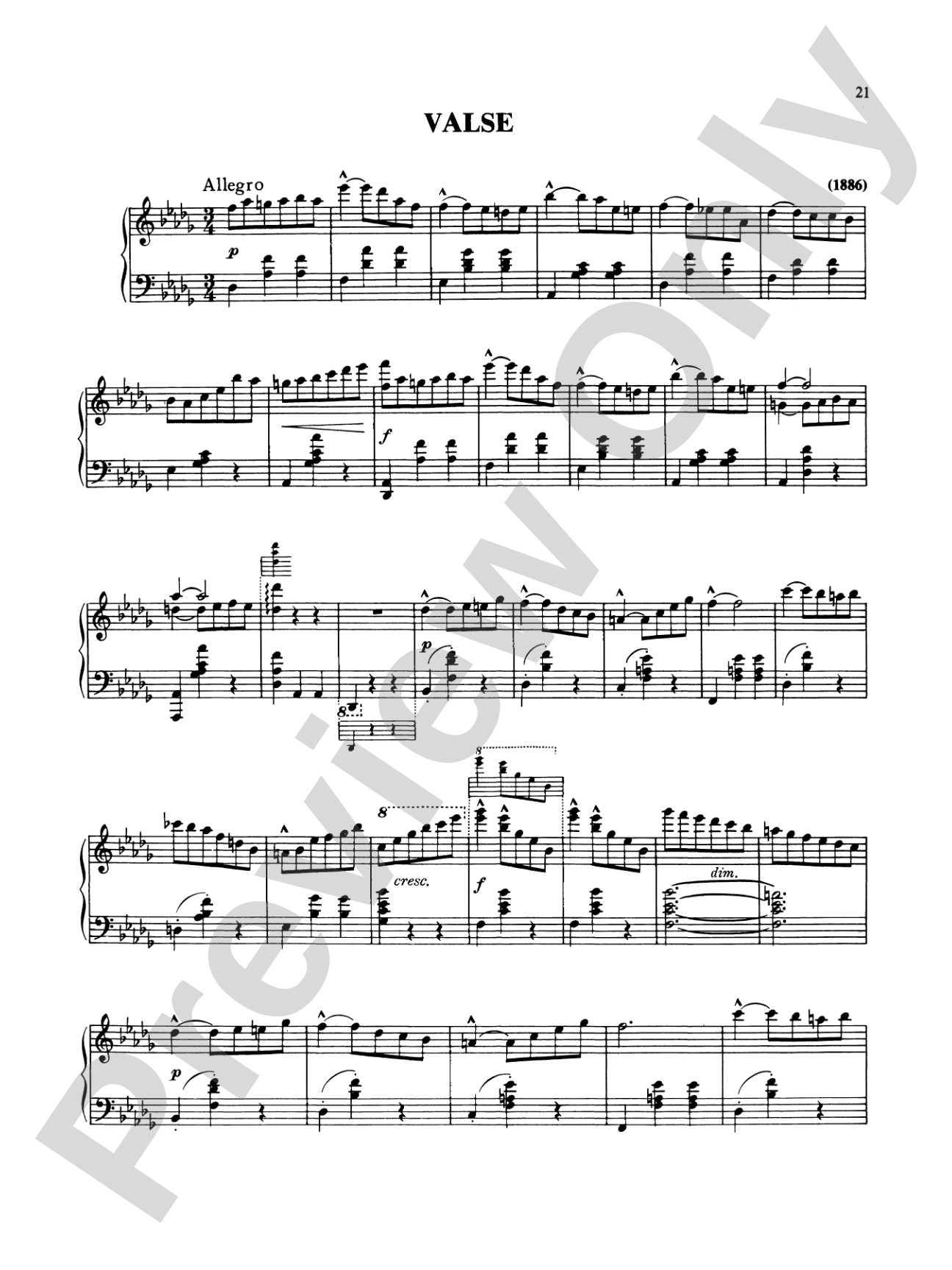
Scriabin: Early Works
By Alexander Scriabin
Item: 00-PC-0014055
Pickup currently not available
Description
Don't just read it, hear it, play along with it, and watch your students grow with it. In MakeMusic Cloud, Scriabin: Early Works comes alive with professional accompaniment, adjustable tempo, and built-in practice tools that turn solo practice into real progress.
Jump straight in and assign it today.
Open this title and explore the full library in minutes.
Sample Audio
Sample Video
Additional Details
More about this title
About the Composer: Alexander Scriabin
Alexander Scriabin (1872–1915) was a Russian composer and pianist who fundamentally reshaped early twentieth-century keyboard writing. His early works, composed before his mature harmonic innovations, reveal a musician steeped in Romantic tradition yet already pushing toward something entirely new. As a virtuoso performer, Scriabin understood the piano's capabilities intimately and wrote for it with both lyrical generosity and technical precision.
During the 1880s and 1890s, when these pieces were written, Scriabin was synthesizing influences from Chopin and Liszt while developing the mystical, harmonic language that would define his later career. These early compositions remain essential to understanding how one of music's most visionary figures emerged from nineteenth-century Romanticism and began charting his own path.
Why we love this
These early works capture Scriabin at a fascinating crossroads: virtuosic and melodically rich enough to engage advanced students, yet structurally coherent and expressive without the harmonic density of his later output. The collection spans roughly a decade of creative development, offering insight into how a major twentieth-century voice evolved while remaining entirely playable and musically rewarding. Programming these pieces signals to audiences that your recitals honor the full arc of significant composers, not just their most familiar works.
What to expect
These pieces inhabit a world of twilight Romanticism: lyrical and introspective, with moments of dramatic intensity woven through elegant, dance-like passages. The music breathes with nineteenth-century melodicism and structural clarity, yet carries hints of harmonic restlessness and exotic color that signal Scriabin's distinctive voice emerging. Playing through this collection is like witnessing a great mind in formation, respectful of tradition yet genuinely searching for something new.
Who it's for
This collection serves advanced pianists seeking substantial Romantic-era repertoire beyond the canonical warhorse sonatas and concertos. Students preparing for competitions, recitals, or university auditions will find pieces that showcase both technical facility and interpretive maturity while exploring a composer whose later works often intimidate players new to twentieth-century idioms.
How to get the most out of it
- Treat the Nocturne with the breadth and rubato you would give a Chopin model; Scriabin inherited that Romantic singing line and expects genuine legit orchestration from the left hand.
- The Valses benefit from clarity in the rhythmic pulse despite their lyrical character; resist over-romanticizing the accompanimental figures or the main melody will blur.
- Let the Fuga breathe as counterpoint, not merely as an exercise; these voices have musical independence and should speak individually even when woven together.
- Balance technical display with musical intent in the Presto; the figuration supports the harmonic and melodic content, not the other way around.
How to use it
Feature individual pieces from this collection on student recitals as contrasts to more familiar Romantic repertoire; the Nocturne and Valses work especially well in mixed programs. A sequenced pairing of two or three shorter pieces offers audiences a focused portrait of Scriabin's early aesthetic without requiring a full sonata-length commitment. These works also enrich undergraduate piano literature courses and performance classes exploring the historical bridge between nineteenth and twentieth-century keyboard writing.
Skills your students will build
- Reading Scriabin's early harmonic language and textural complexity
- Executing virtuosic figurations with clarity and evenness of tone
- Managing Romantic rubato while maintaining structural integrity
- Interpreting dance forms (Valse) with period-appropriate style
- Balancing melody and accompaniment across contrasting registers
- Understanding polyphonic texture in the Fuga