Scott: Selected Piano Works Sheet Music Preview

Scott: Selected Piano Works

By Cyril Scott

Item: 00-PC-0014206

Digital Download
$0.99
Description
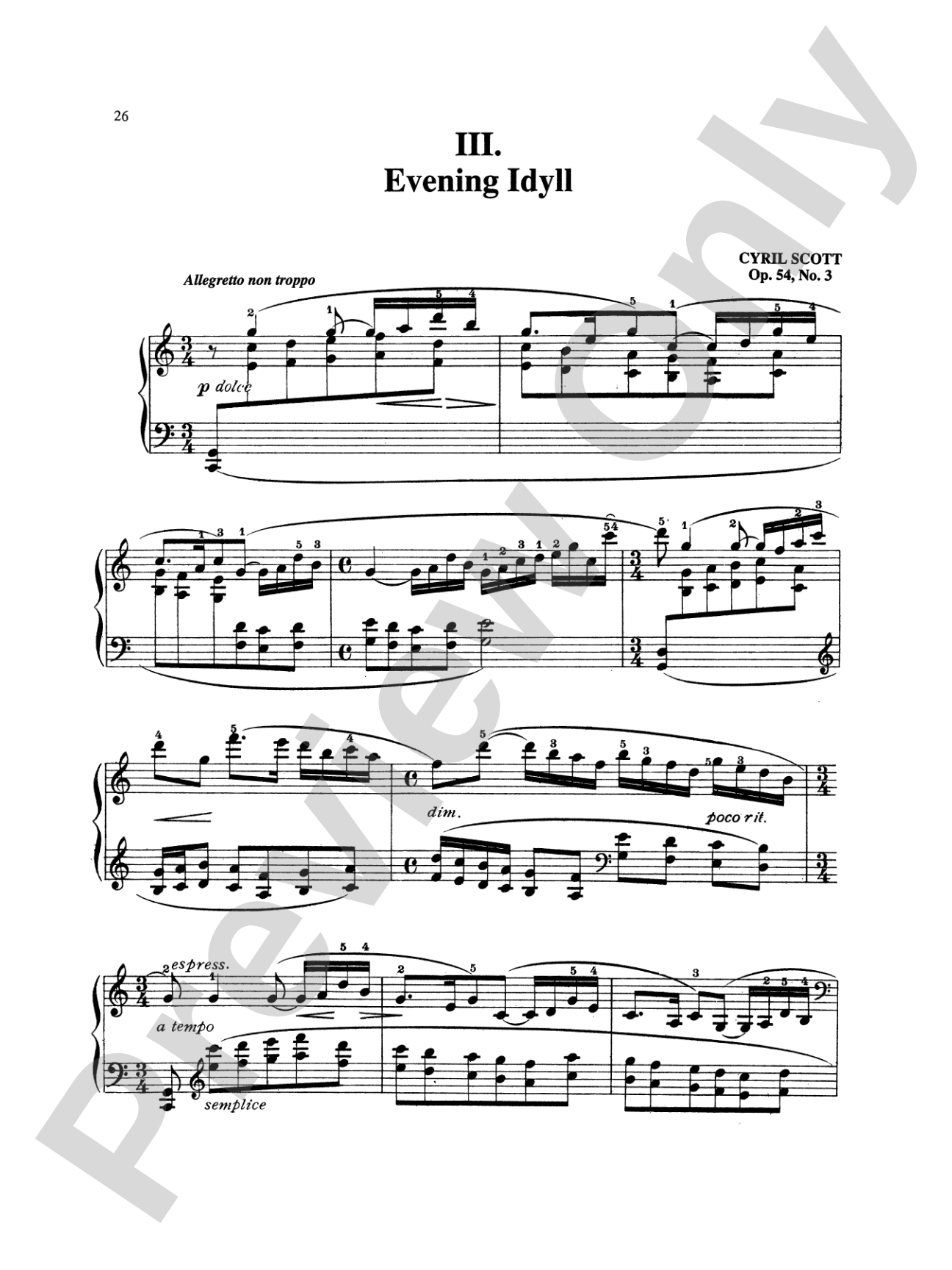
Four pieces by English-born and German-educated Cyril Scott, one of five composers known collectively as "The Frankfurt Group." Scott's music is known for its rich harmonies and lovely melodies, as found in the selections included in this collection. Works: Chimes, Op. 40, No. 3 * Impromptu (A Mountain Brook), Op. 41 * Sonata, Op. 66 * Summerland (Four Little Pieces), Op. 54

Don't just read it, hear it, play along with it, and watch your students grow with it. In MakeMusic Cloud, Scott: Selected Piano Works comes alive with professional accompaniment, adjustable tempo, and built-in practice tools that turn solo practice into real progress.

Sample Audio
No sample audio found.
Sample Video
Additional Details
Series: Kalmus Edition
Publisher: Alfred Music
Page Count: 68
SKU: 00-PC-0014206

More about this title

About the Composer: Cyril Scott

Cyril Scott (1879-1970) was an English composer whose studies in Frankfurt shaped his cosmopolitan musical voice. He earned recognition as a member of the Frankfurt Group, a circle of English composers who absorbed continental European influences and brought them back to Britain. Scott's output ranged from symphonies and concertos to intimate piano works that showcase his gift for lyrical melody and sophisticated harmonic language.

Why we love this

This collection showcases Scott's distinctive gift for writing pianistic music that balances accessibility with genuine harmonic sophistication. The four works span different scales and moods, from the delicate imagery of Chimes and the programmatic flow of Impromptu to the architectural breadth of the Sonata, giving pianists varied repertoire that rewards both technical and interpretive attention.

What to expect

These pieces inhabit a gentle, introspective world rich with impressionistic color and Romantic sensibility adapted for modern harmonic language. Scott's gift for melody keeps even his most complex harmonic moments feeling natural and expressive rather than cerebral, creating music that invites the listener into intimate emotional spaces.

Who it's for

Pianists at the intermediate to advanced-intermediate level who are ready to explore twentieth-century repertoire beyond the familiar canon. Teachers seeking varied programming options that combine melodic appeal with harmonic and structural interest will find this collection particularly useful for students who respond well to lyrical, narrative-driven music.

How to get the most out of it

  • Attend to Scott's harmonic vocabulary in pieces like Chimes; his chromatic voice leading and added-note chords require clarity of touch to prevent muddiness, even at slower tempos.
  • In the Impromptu, shape the melodic line as you would in vocal music, allowing the "mountain brook" imagery to guide your phrasing and pedal choices rather than treating it as pure figuration.
  • The Sonata benefits from treating each movement as a distinct character study; map the emotional arc before diving into technical detail.
  • Balance the impressionistic harmony in Summerland with clear rhythmic definition in the accompaniment figures so the piece doesn't blur despite its dreamy quality.

How to use it

Program this collection strategically across a student recital season or use individual pieces as elegant encores that introduce audiences to an underrepresented twentieth-century voice. The Sonata works well as a substantial program anchor, while the shorter character pieces pair beautifully with Impressionist or early twentieth-century French repertoire.

Skills your students will build

  • Reading and executing chromatic voice leading and expanded harmonic vocabulary
  • Balancing melody and accompaniment in impressionistic textures
  • Shaping melodic lines with rubato and pedal control in slower, lyrical contexts
  • Managing multi-movement form and emotional architecture in larger works like the Sonata
  • Developing interpretive choices based on programmatic or narrative imagery

You May Also Like