
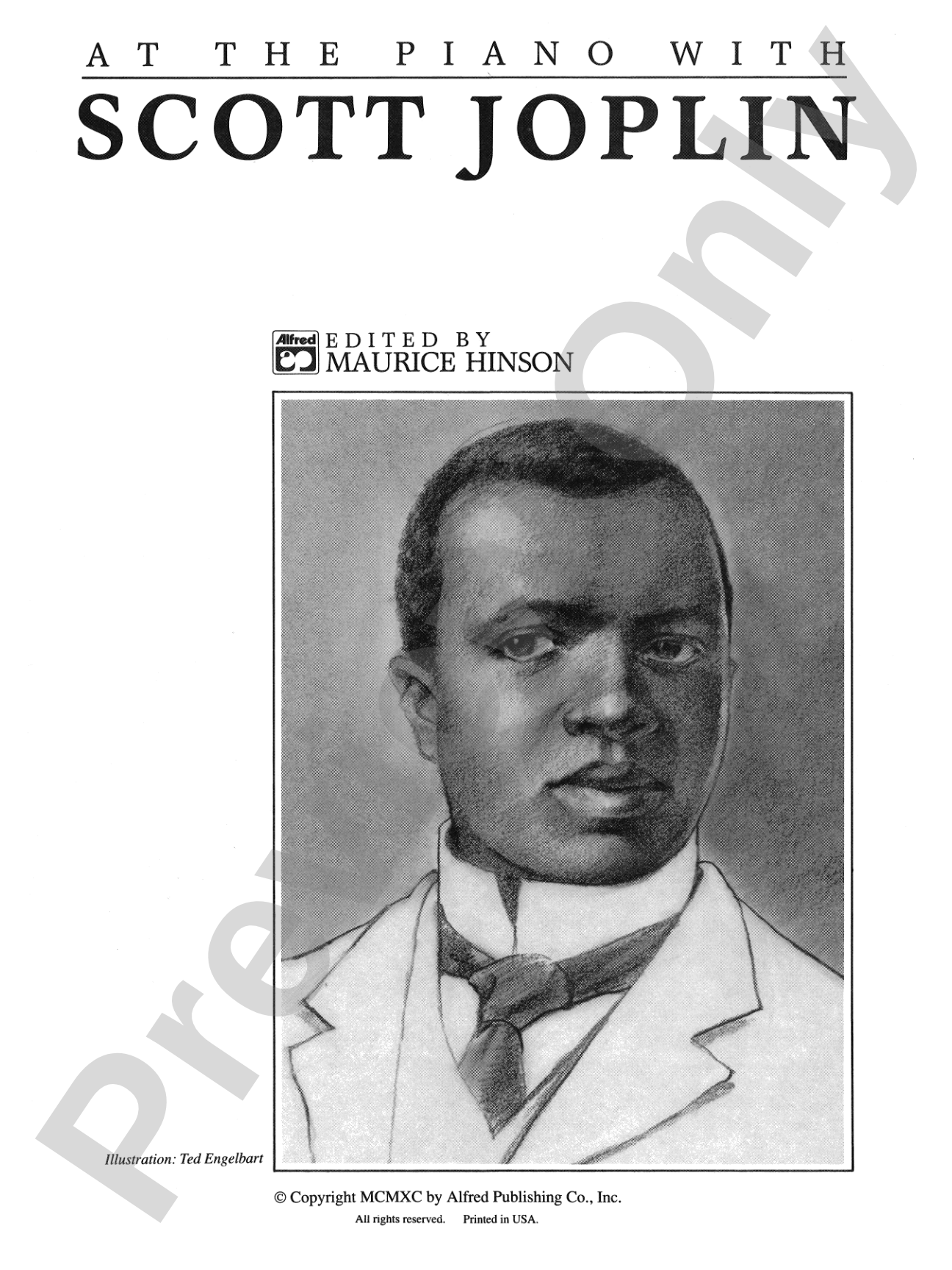

Scott Joplin at the Piano: Piano
By Scott Joplin / ed. Maurice Hinson
Level: Late Intermediate / Early Advanced
Item: 00-PB-0000869
$13.99
Pickup currently not available
Related Items
Scott Joplin at the Piano: Piano Book |
$13.99
|
View |
Description
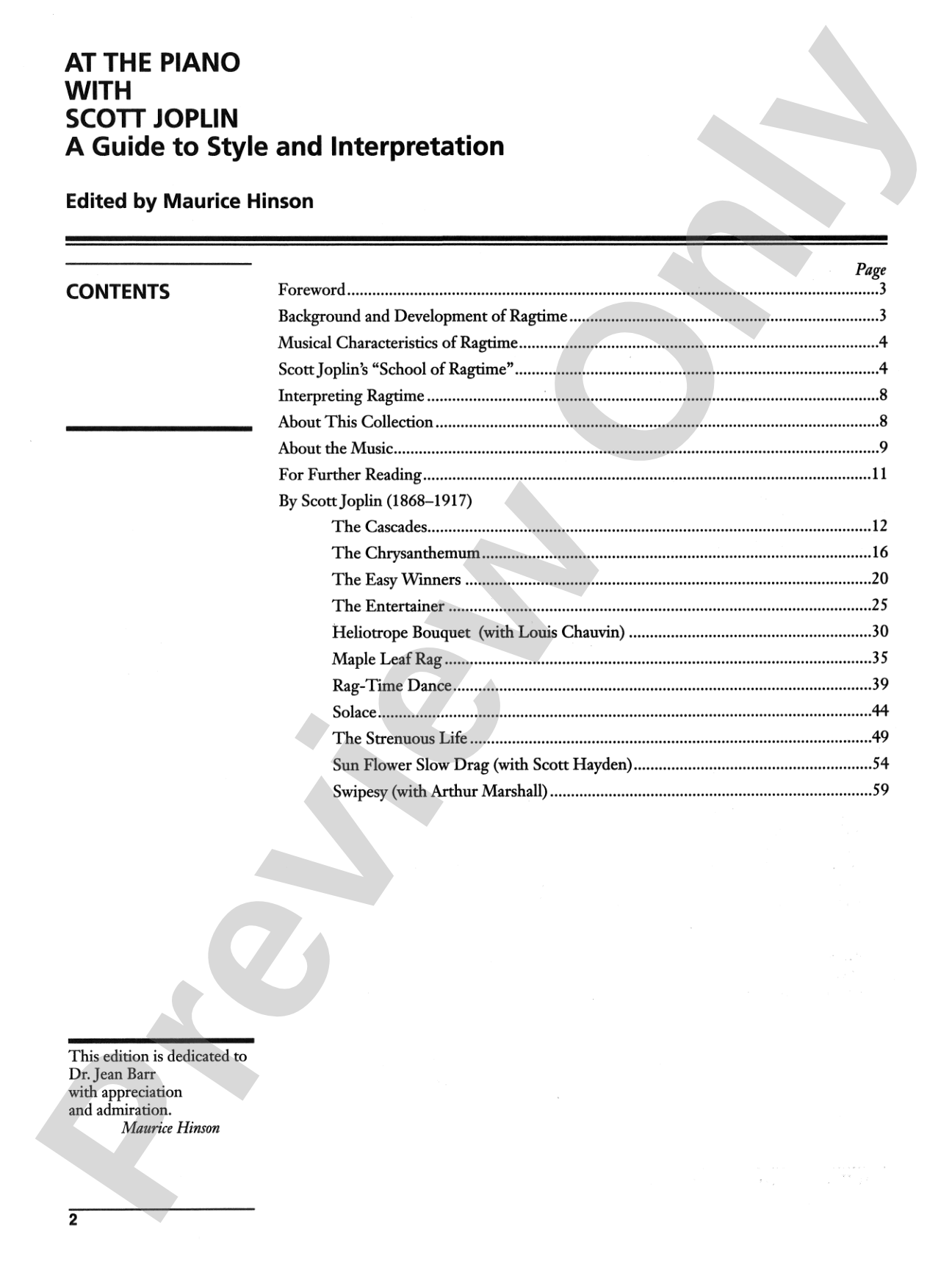
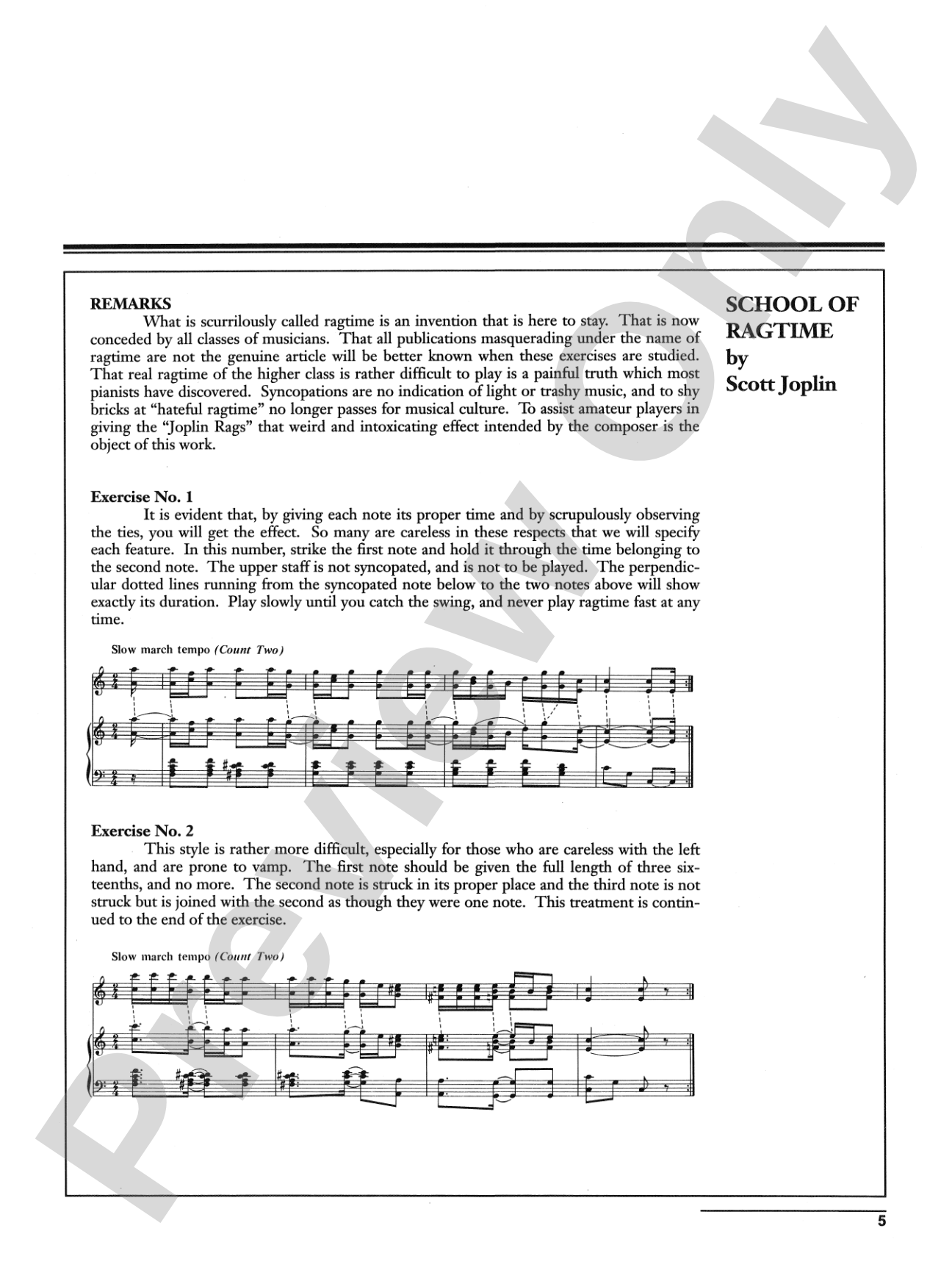
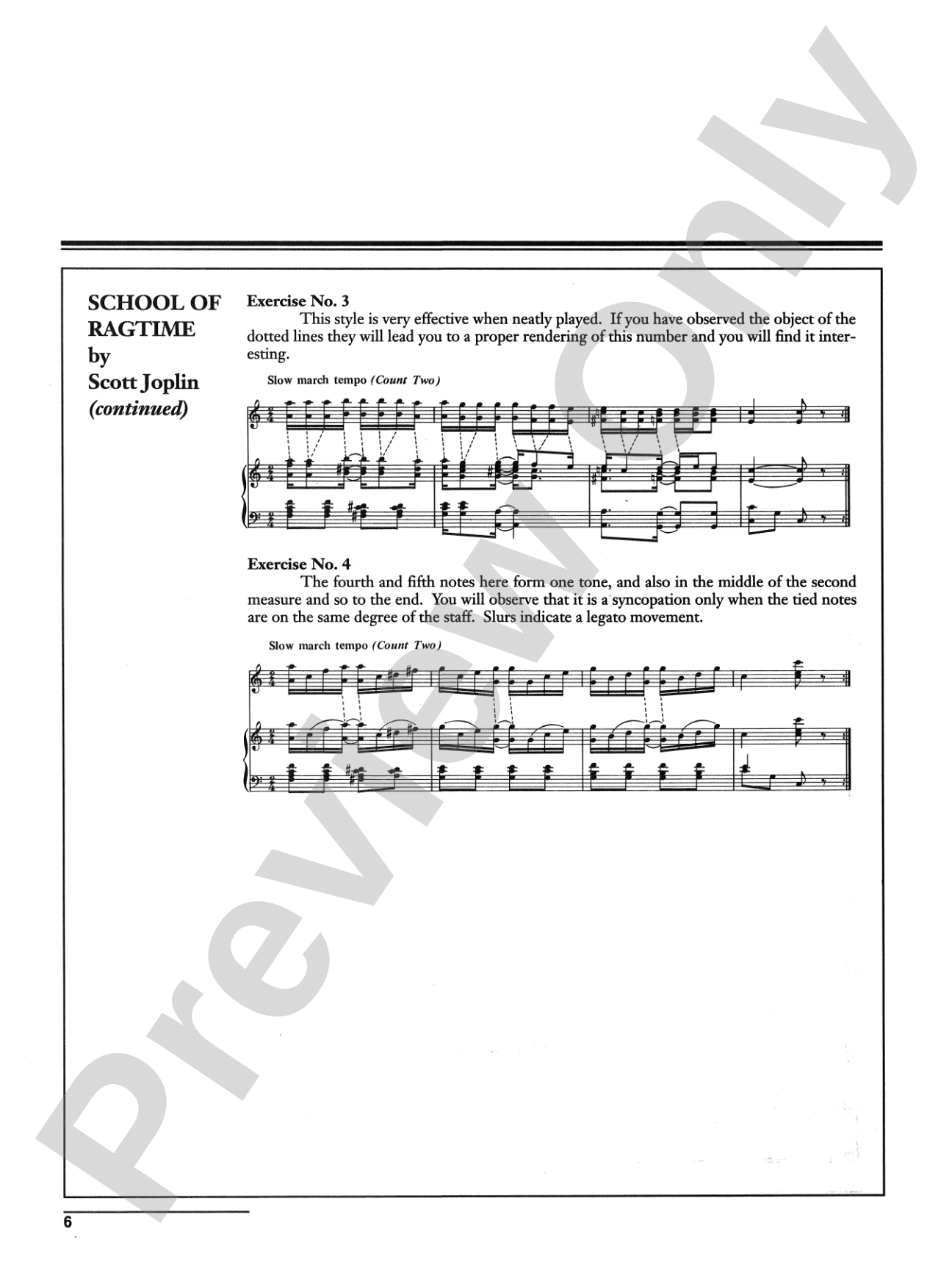
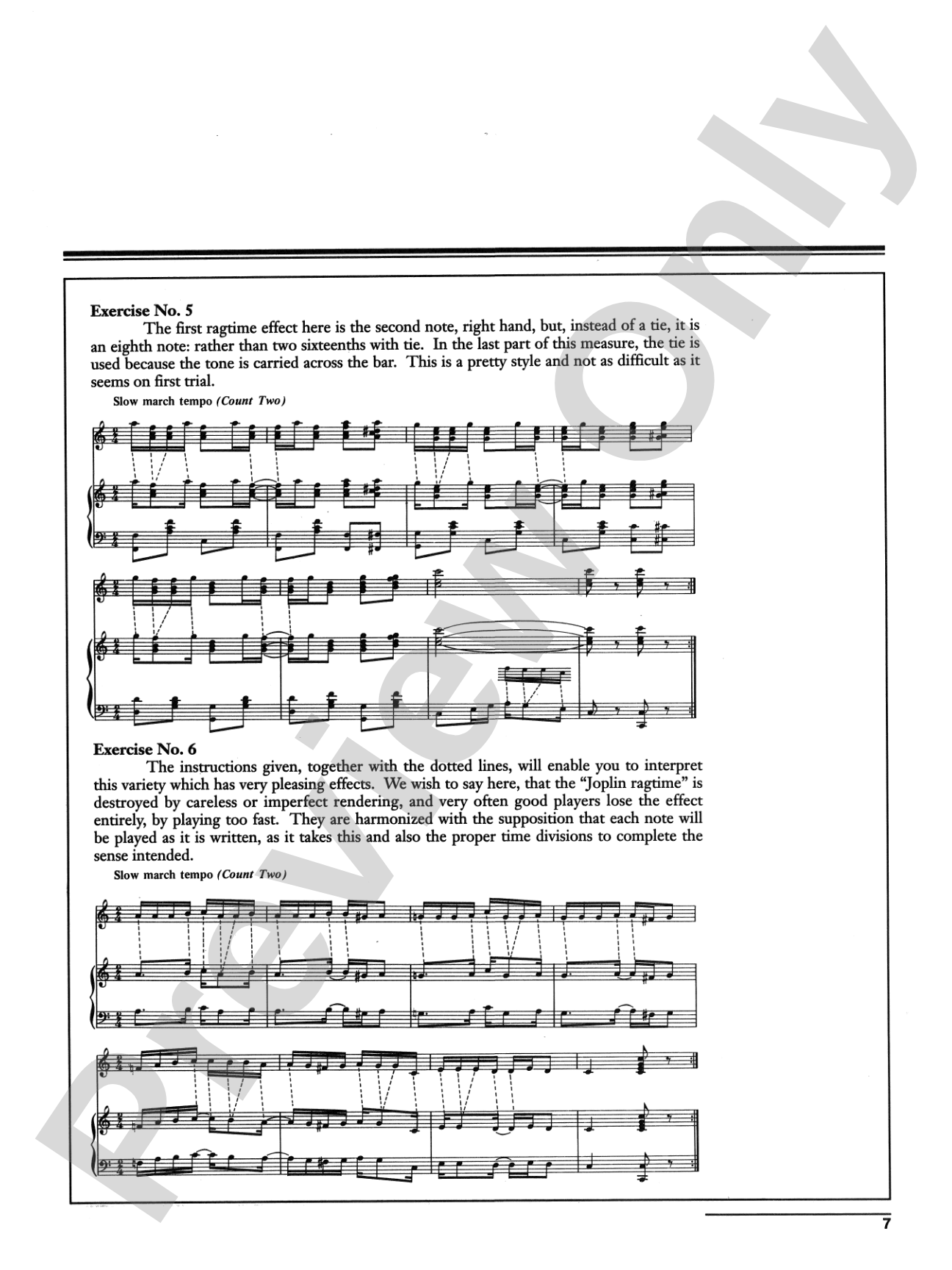
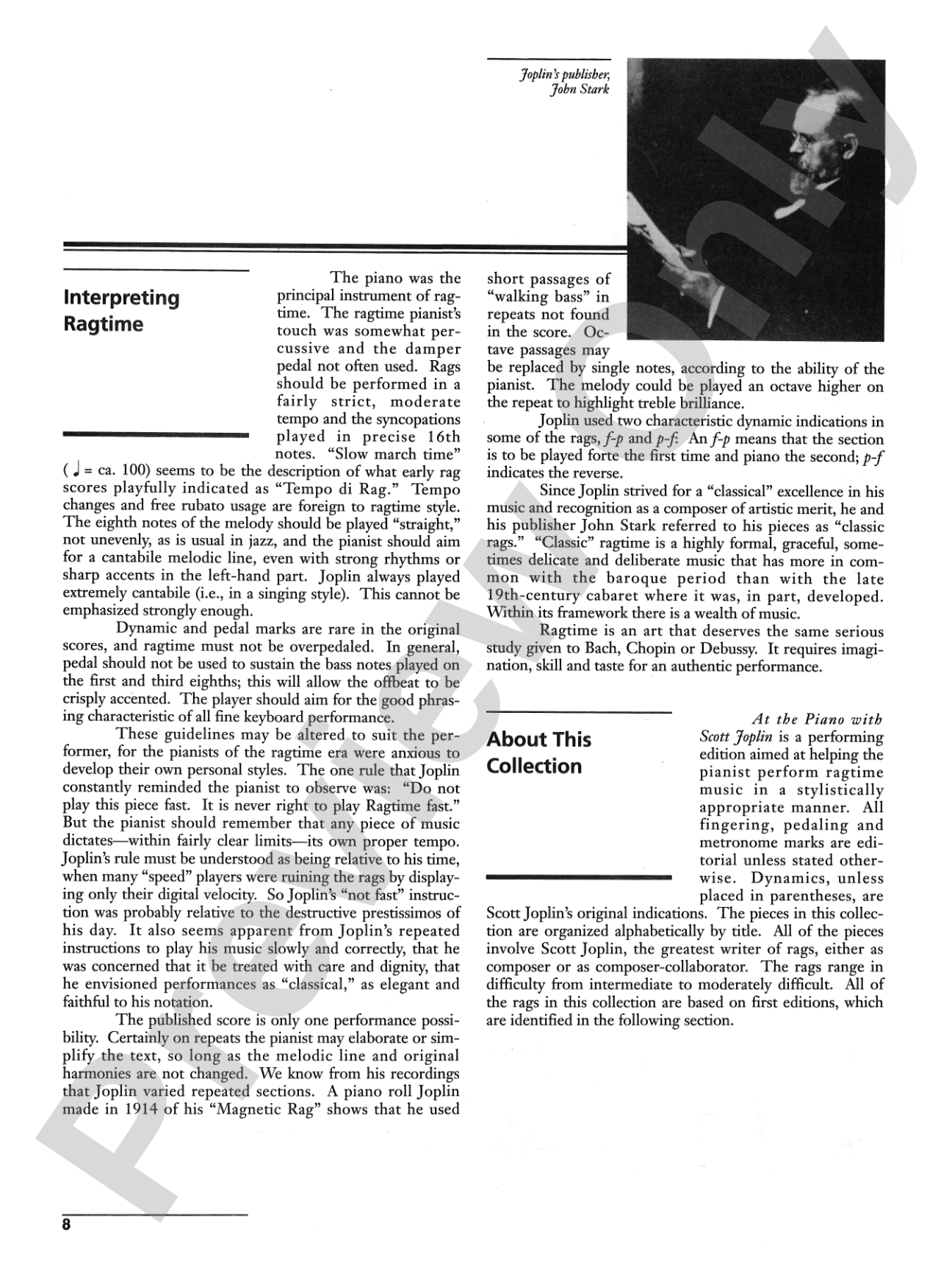
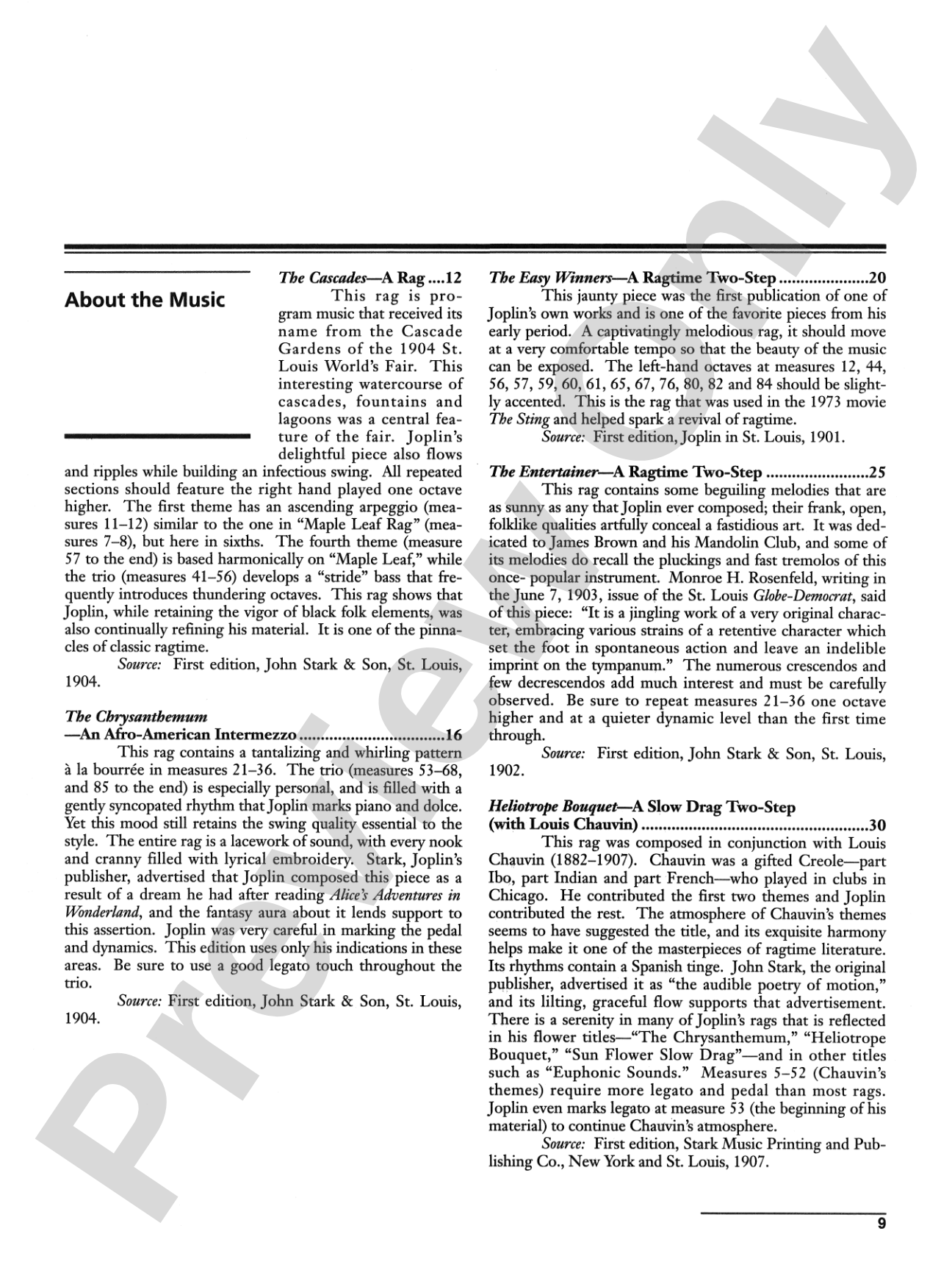
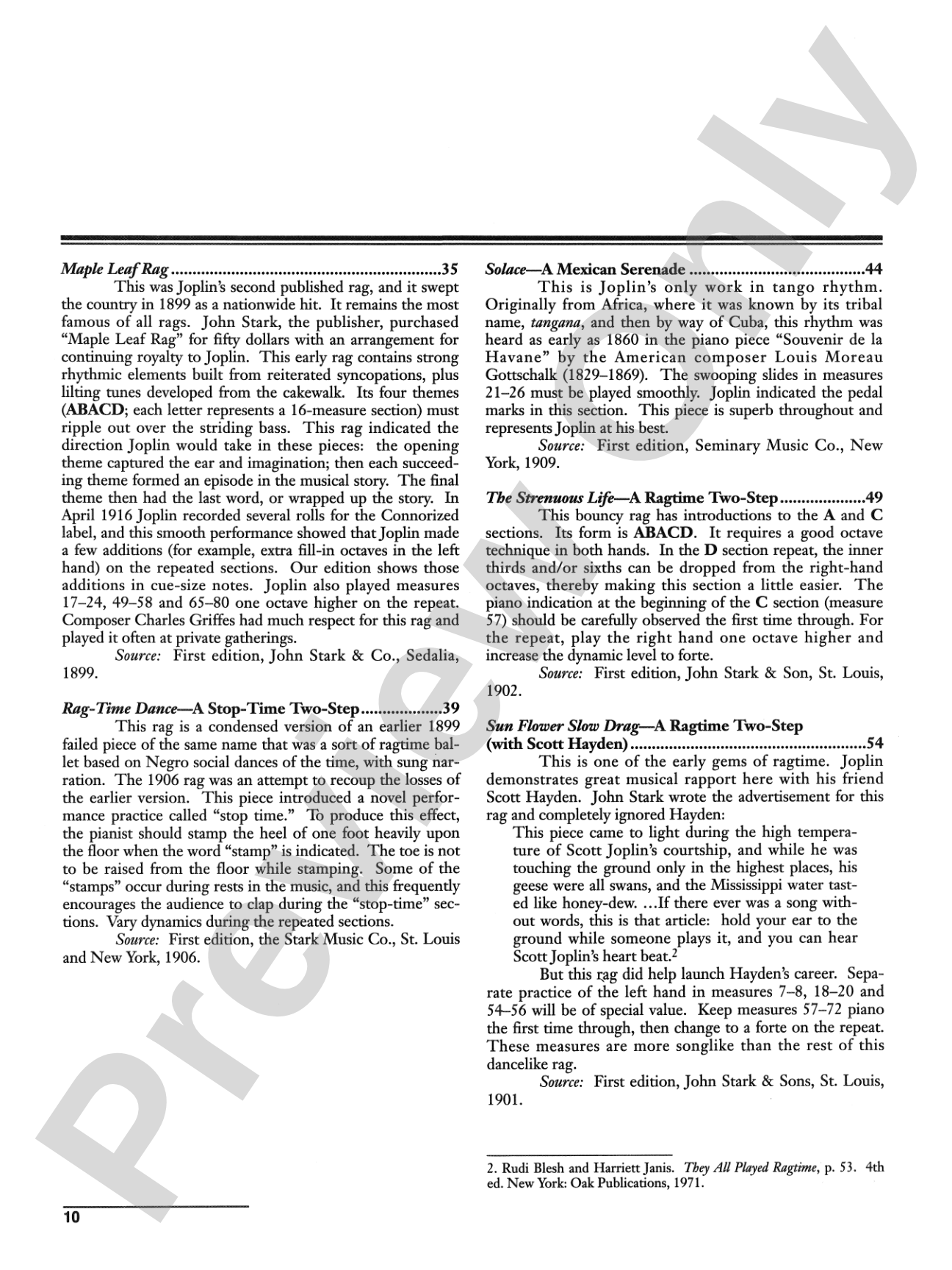
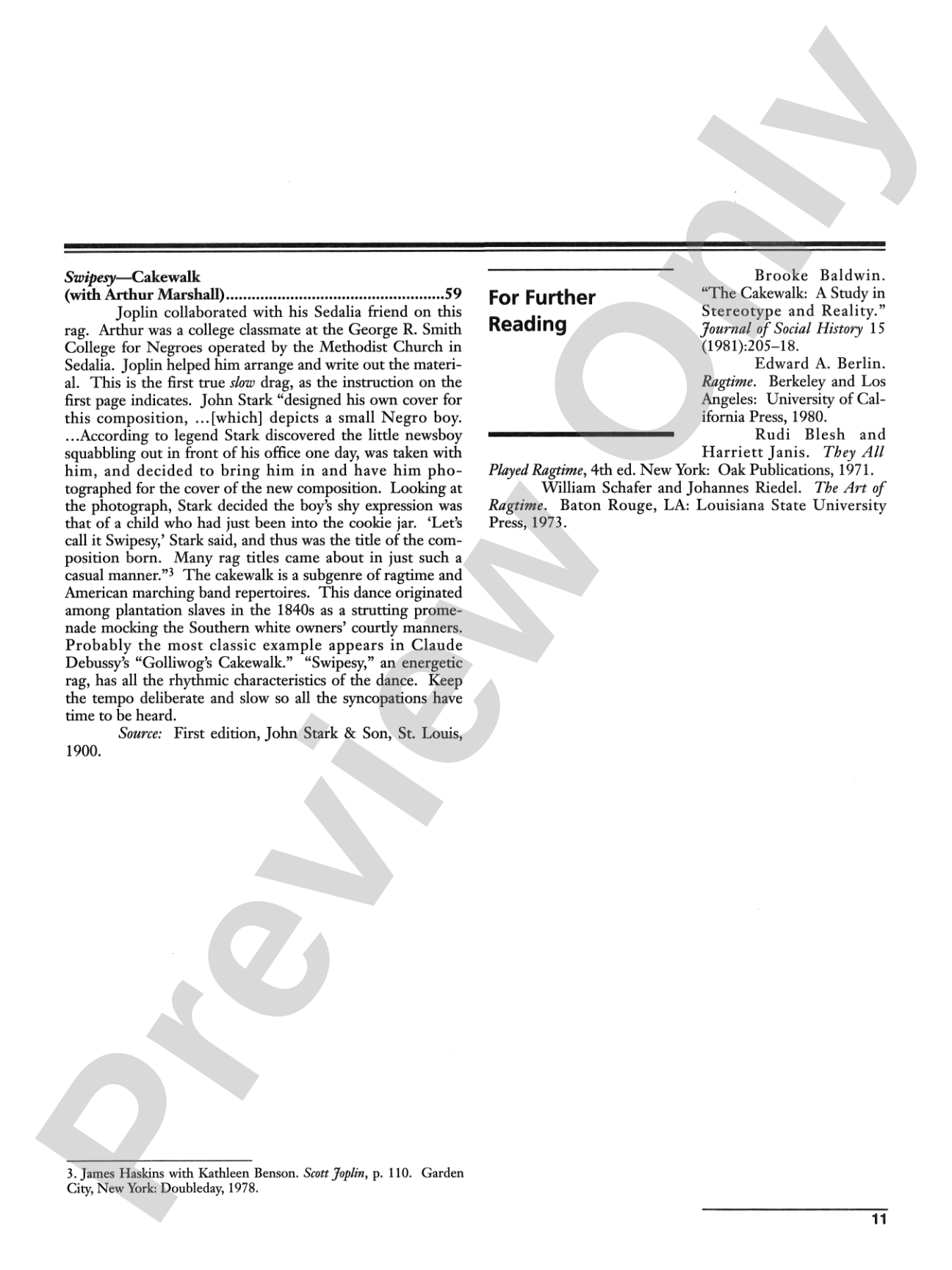
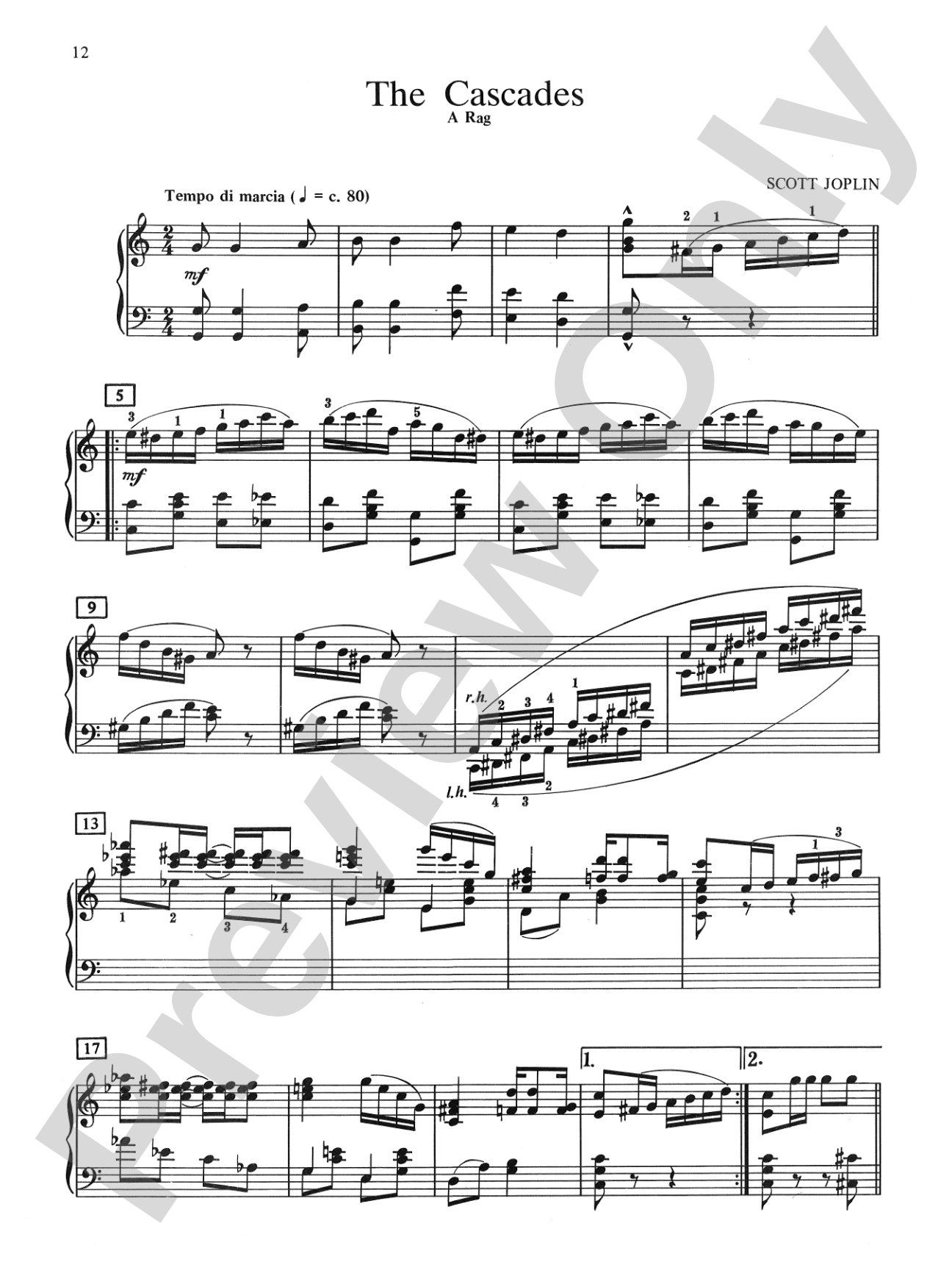
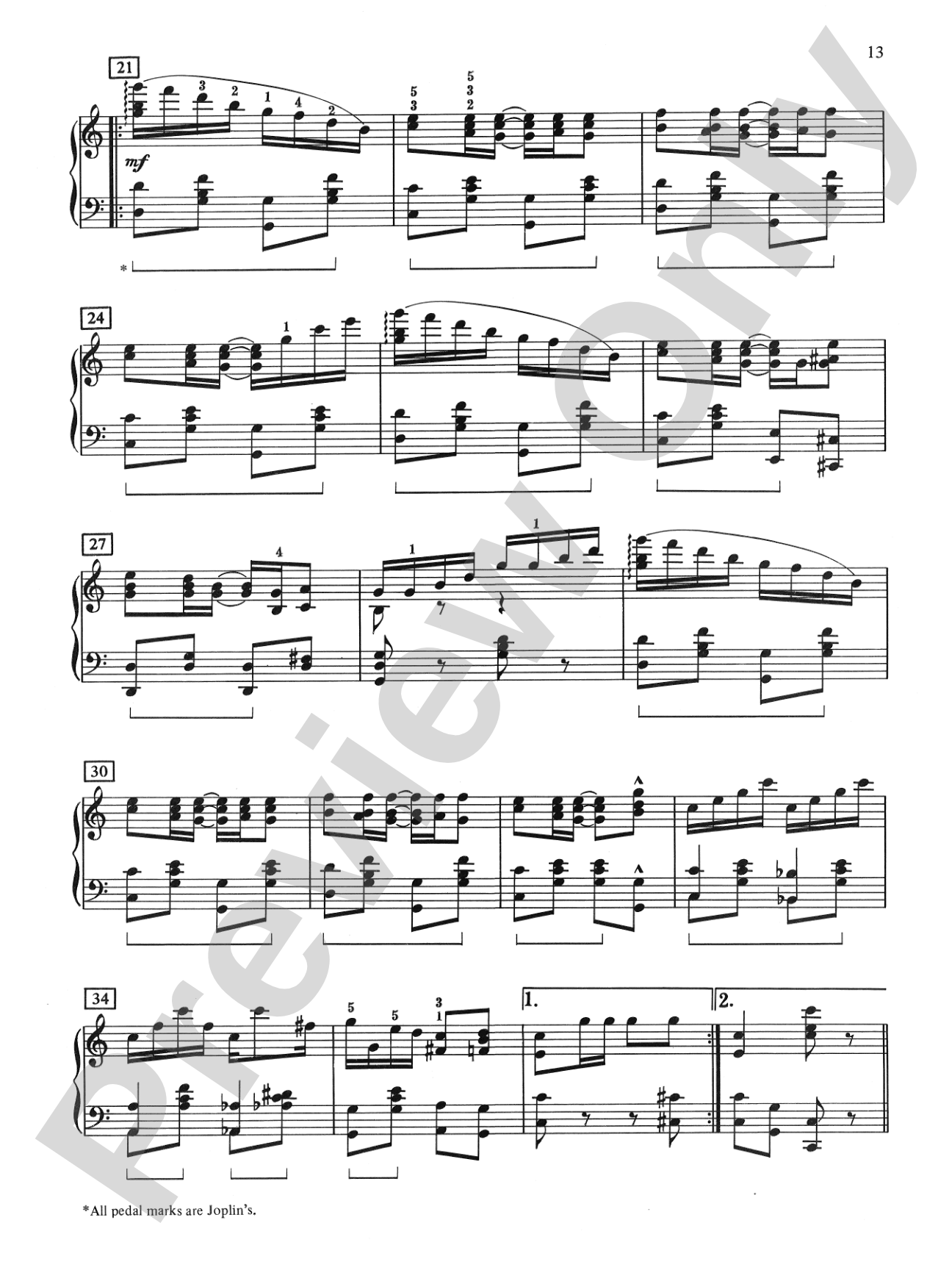
This outstanding collection of classic Joplin rags includes a concise guide to ragtime history, style and interpretation, plus a reprint of Scott Joplin's definitive document entitled School of Ragtime. Titles: The Cascades * The Chrysanthemum * The Easy Winners * The Entertainer * Heliotrope Bouquet * Maple Leaf Rag * Rag-Time Dance * Solace * The Strenuous Life * Sun Flower Slow Drag * Swipesy. "The Easy Winners" is a Federation Festivals 2016-2020 selection. A Federation Festivals 2020-2024 selection.


Scott Joplin at the Piano: Piano isn't in MakeMusic Cloud just yet...but it could be. Let us know you'd like to see it, and you'll help shape what comes next. In the meantime, start a free trial and dive into thousands of interactive titles your students can play along with today.
Request This Title
Tell us you want it.
Start Your Free Trial
Explore everything that's ready to play right now.
Sample Audio
No sample audio found.
Sample Video
No sample videos found.
Additional Details
Series:
Alfred Masterwork Edition: At the Piano
Publisher:
Alfred Music
Page Count:
64
SKU:
00-PB-0000869
More about this title
About the Composer: Scott Joplin
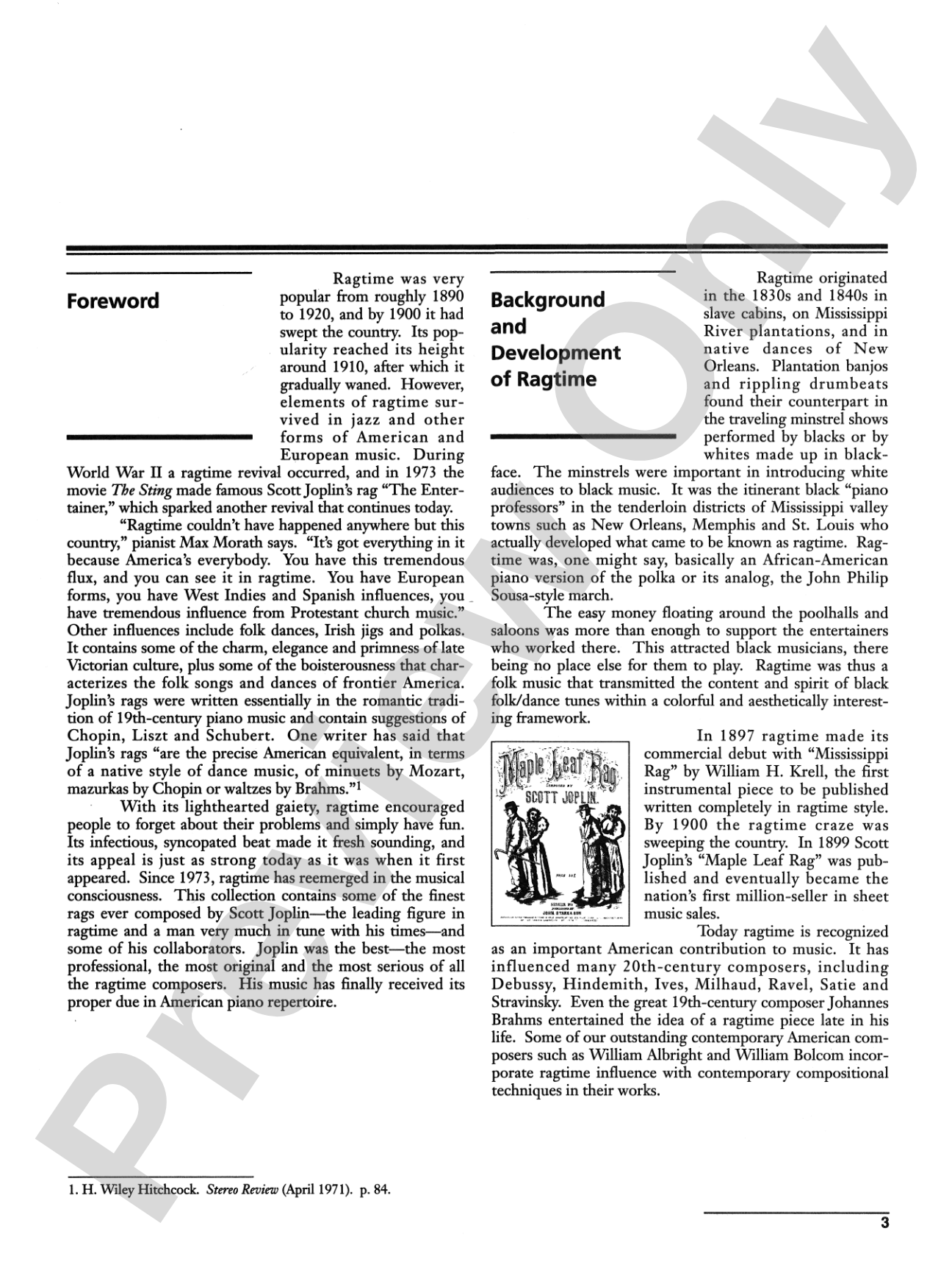
Scott Joplin (1868-1917) was an African American composer and pianist who elevated ragtime from popular dance music to a sophisticated art form. Working primarily in Sedalia and St. Louis, Missouri, Joplin composed over 100 piano rags and collaborated with other musicians to create works that bridged vernacular and concert traditions. His insistence on precise notation and performance practice, documented in his "School of Ragtime," established him as both a creative innovator and a serious pedagogue.
Joplin's rags remain central to American music education because they demand technical facility, rhythmic precision, and interpretive sensitivity in equal measure. Teachers and students encounter in his music a direct link to jazz history, American popular culture, and the ongoing question of how concert music and vernacular traditions speak to each other.
Why we love this
This collection pairs authentic Joplin rags with his own "School of Ragtime" and scholarly historical context, creating a complete learning environment rather than just a set of pieces. The inclusion of festival selections and a range of tempos and difficulty levels across the eleven rags means students can find entry points at different stages of their development while working toward the more complex works. Pianists gain insight into ragtime style not through external commentary alone but through Joplin's own technical guidance.
What to expect
Joplin's rags combine the vitality of dance music with the formal structure and emotional depth of concert works. You'll find moments of driving rhythmic energy contrasted with surprising tenderness, syncopation that pulls against the pulse without losing clarity, and melodies that surprise and delight because they sit just outside expected harmonic destinations. The cumulative effect is sophisticated entertainment: music that makes you move and think at the same time.
Who it's for
Late intermediate and early advanced pianists ready to explore American vernacular music through a composer's own lens. This collection serves students preparing for competitions (including Festival selections), those interested in jazz history and rhythm studies, and pianists seeking technically substantial material rooted in popular music traditions.
How to get the most out of it
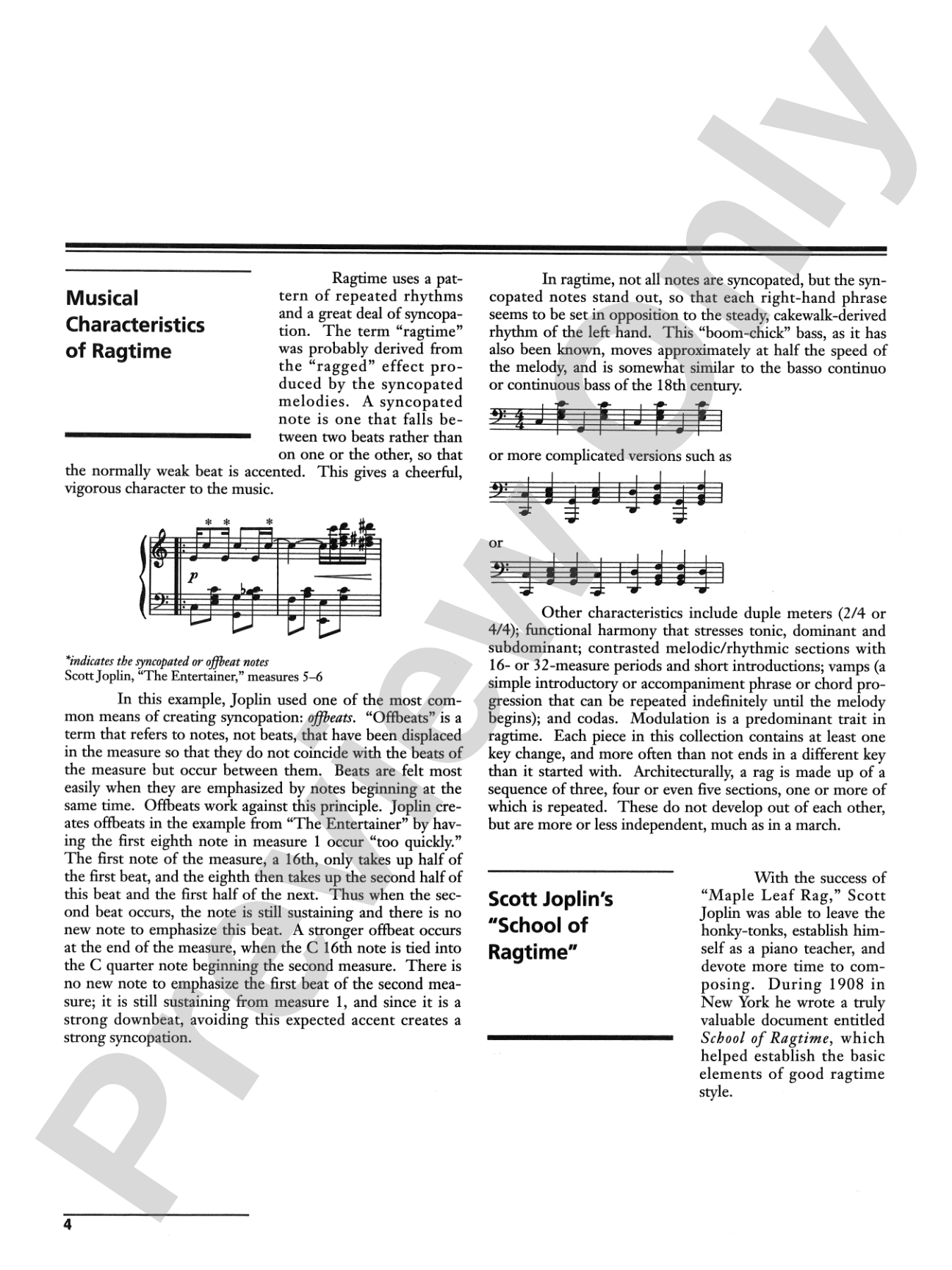
- Study Joplin's own "School of Ragtime" before performing to understand his specific approach to rhythmic placement, left-hand coordination, and the precise articulation he expected.
- Maintain clarity in the left hand despite the steady ragtime pulse; the syncopated melody must sit on top of, not fight against, the accompaniment pattern.
- Bring out the lyrical quality in slower rags like "Solace" and "Sun Flower Slow Drag" to avoid treating all pieces as novelty entertainment.
- Shape phrases across syncopations rather than accent every unexpected beat; let the music breathe within Joplin's rhythmic framework.
How to use it
Feature individual rags in solo recitals at points where you want to shift energy and repertoire perspective, or program "The Entertainer" or "Maple Leaf Rag" as an accessible anchor for audiences less familiar with classical concert music. The Festival selections pair well with other American art music in themed concerts exploring ragtime's influence on 20th-century composition, and the collection's scope allows for a multi-movement Joplin suite across a longer recital format.
Skills your students will build
- Syncopation and cross-rhythm independence between hands
- Left-hand steady accompaniment patterns while managing tempo and groove
- Reading and executing Joplin's specific notational practices for rhythm and articulation
- Dynamic shaping and phrasing across syncopated melodies
- Historical context and stylistic awareness of American vernacular music