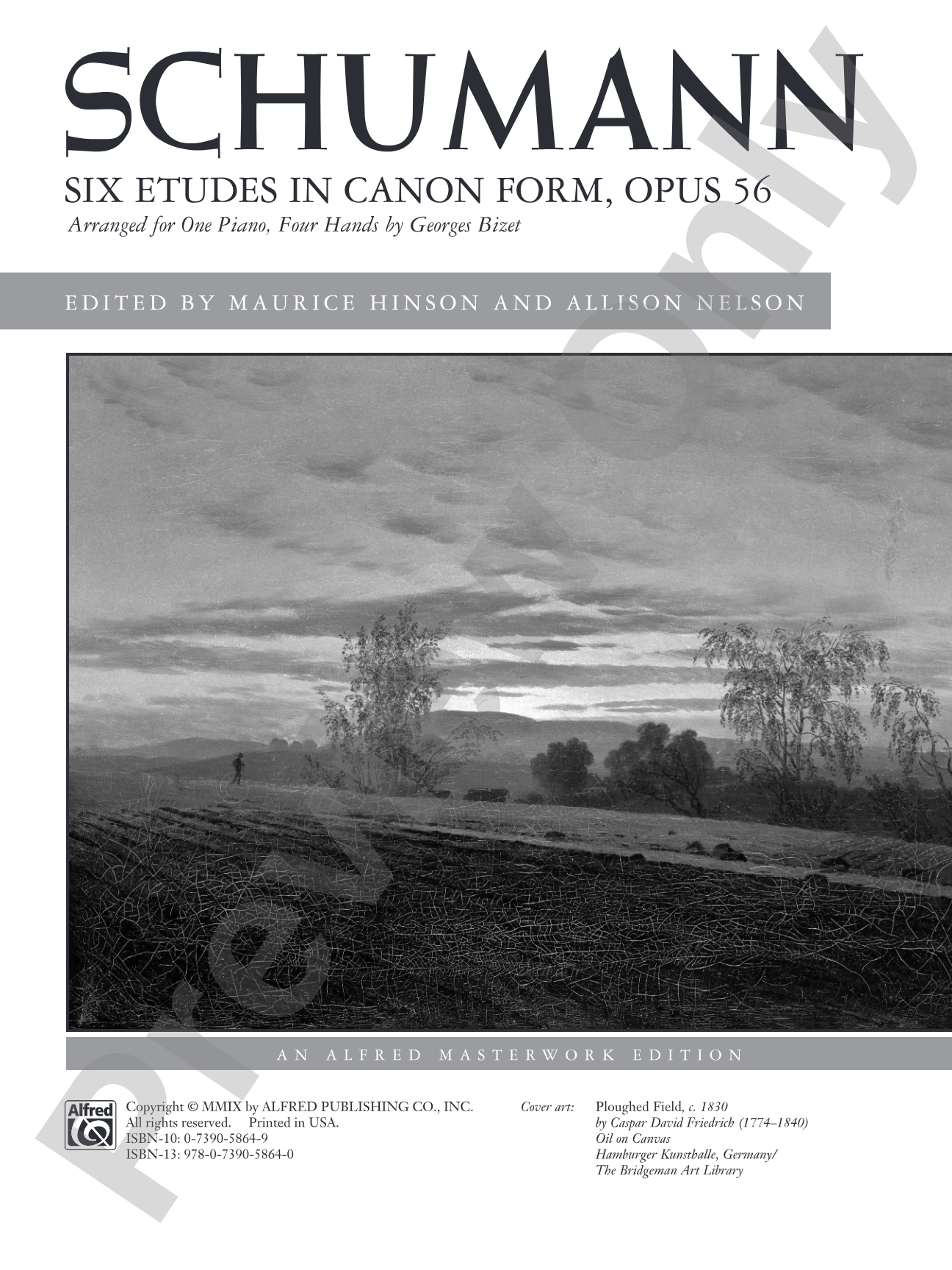
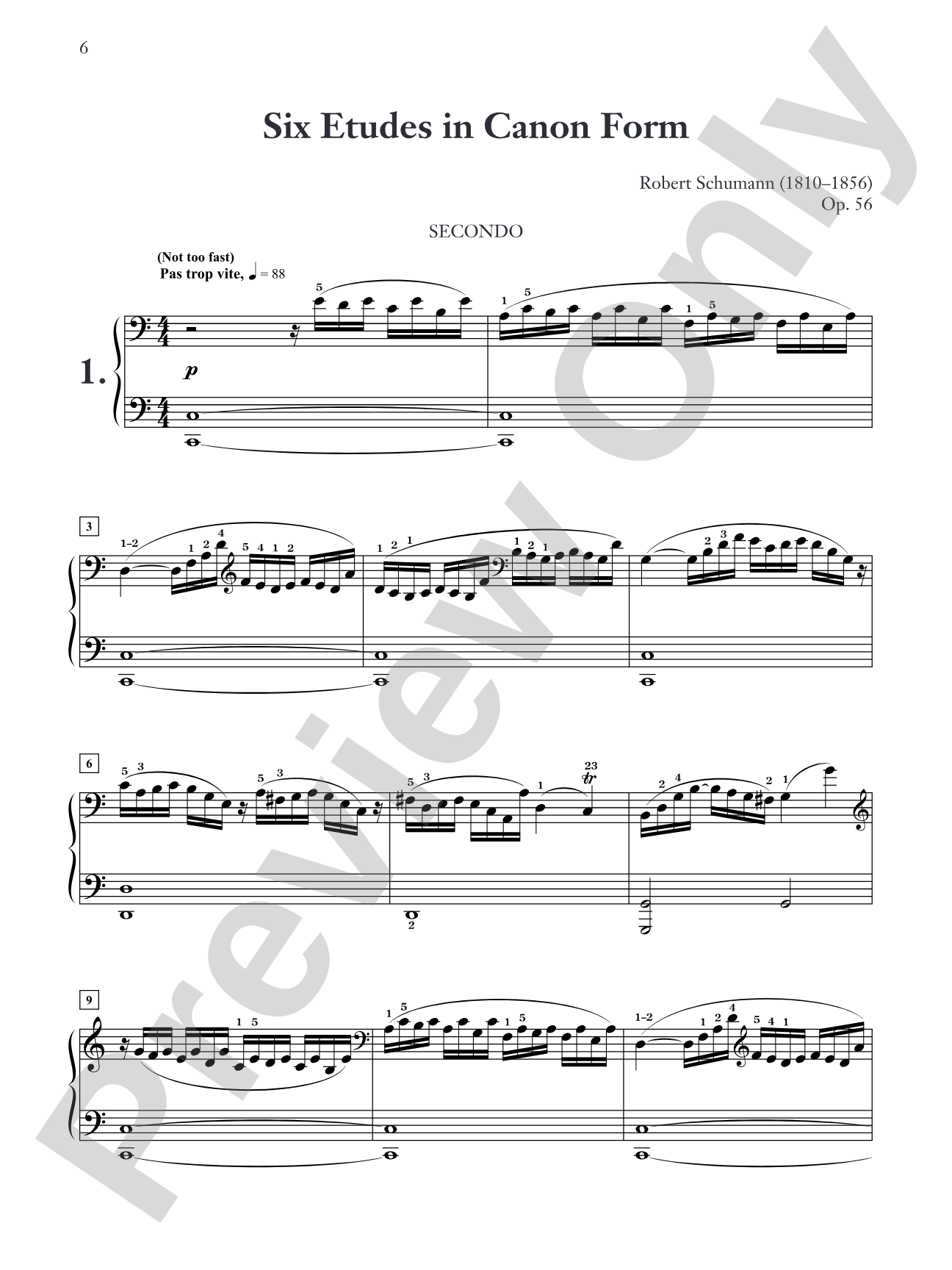
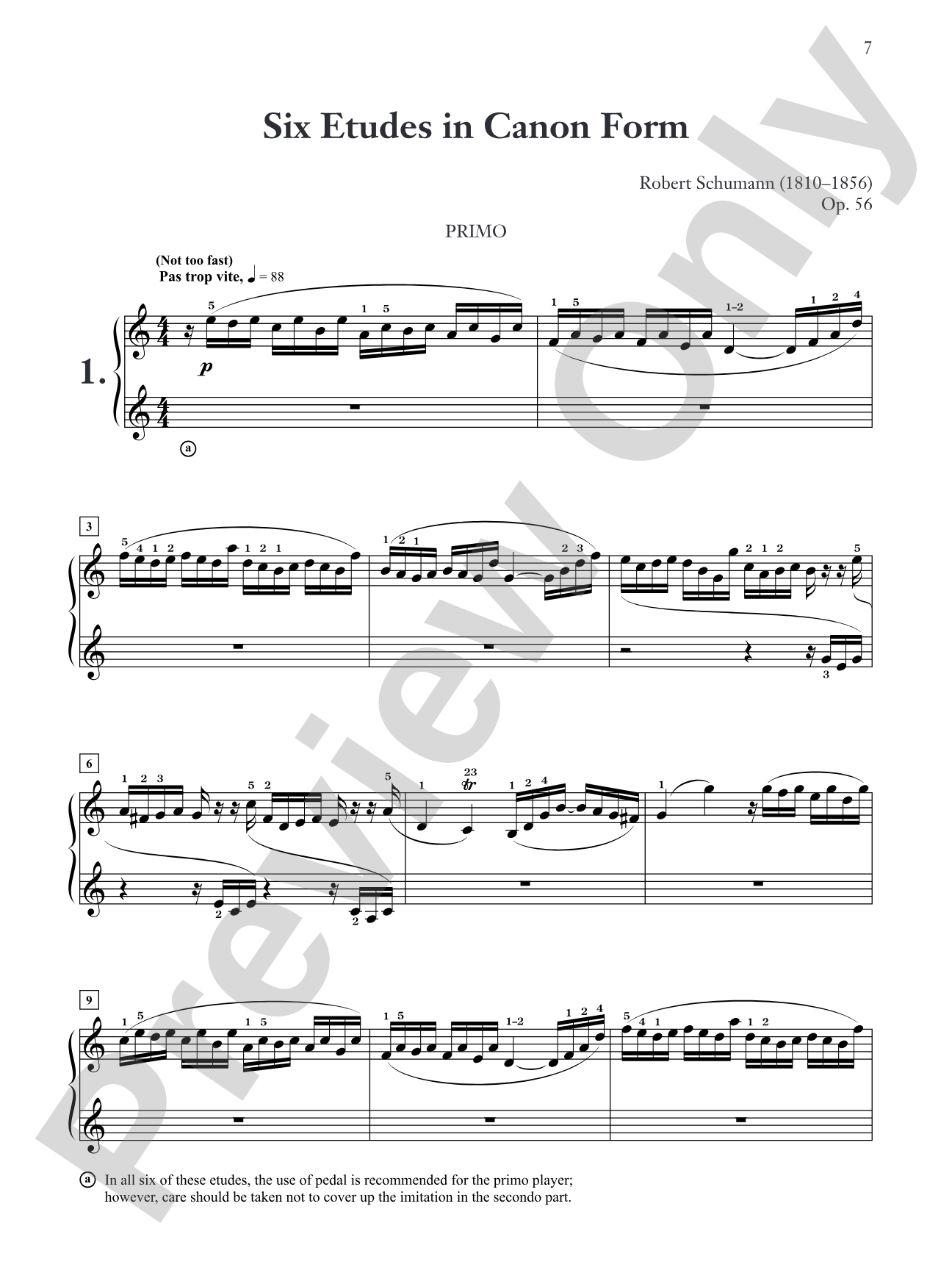
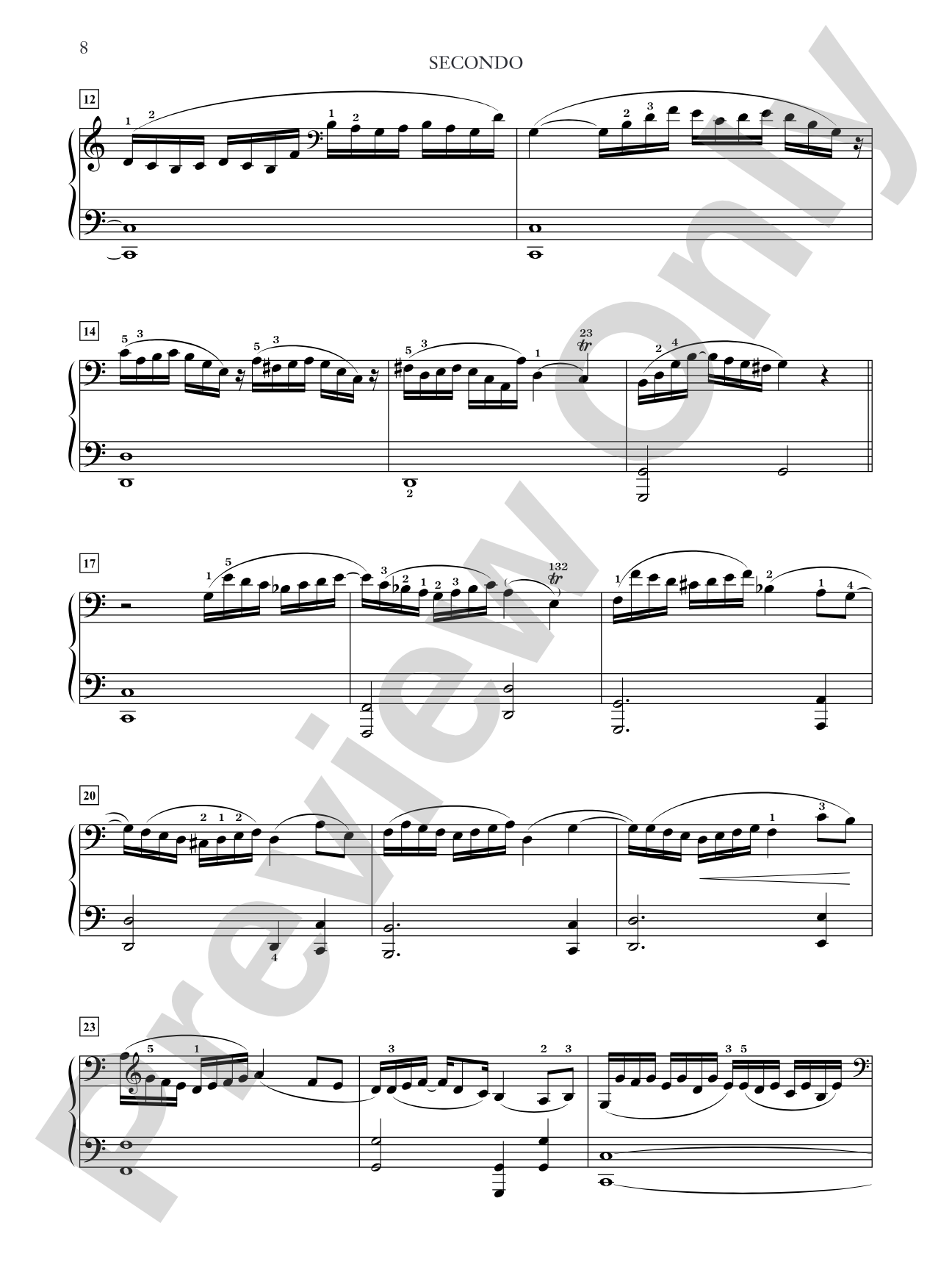
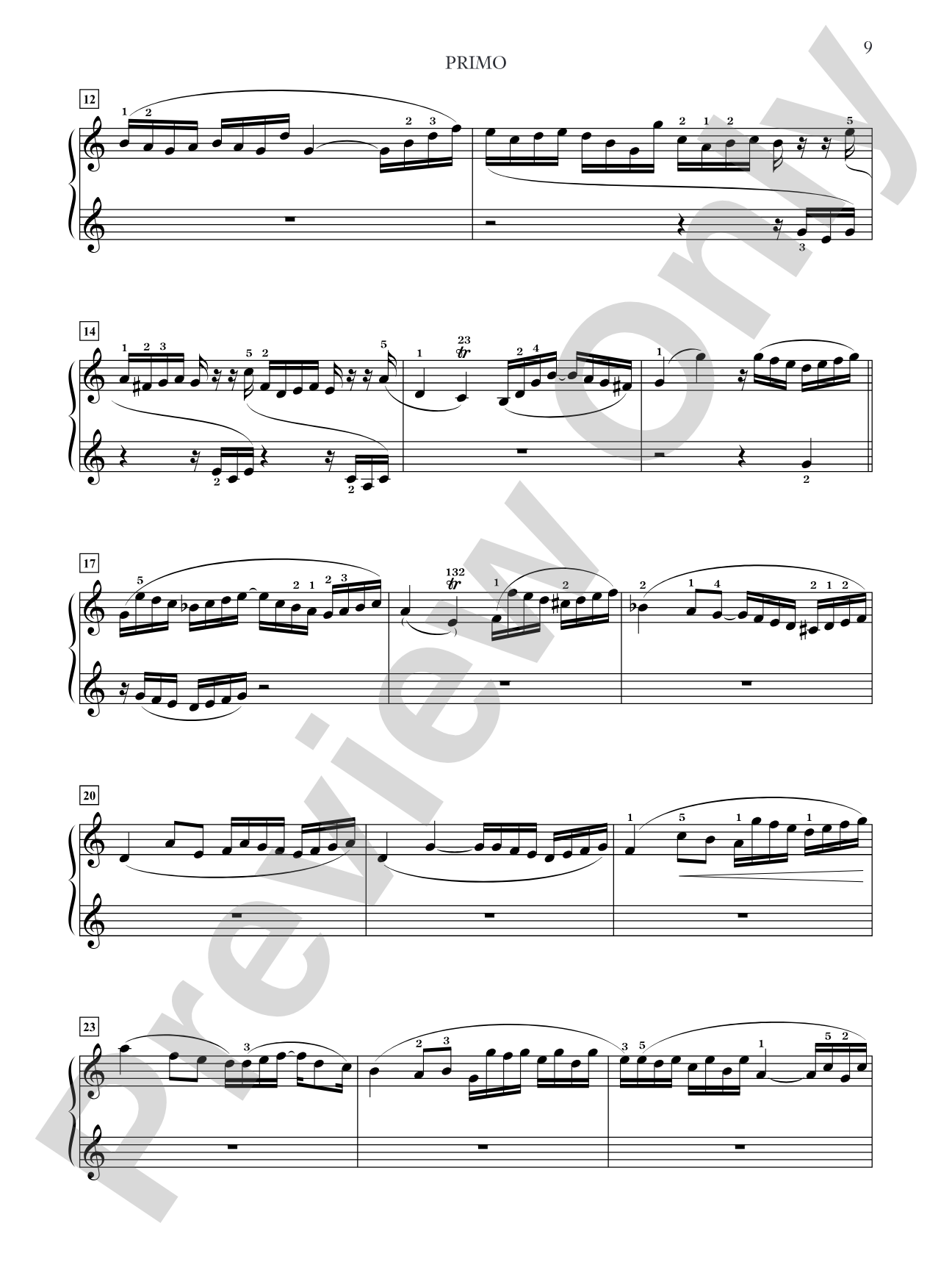
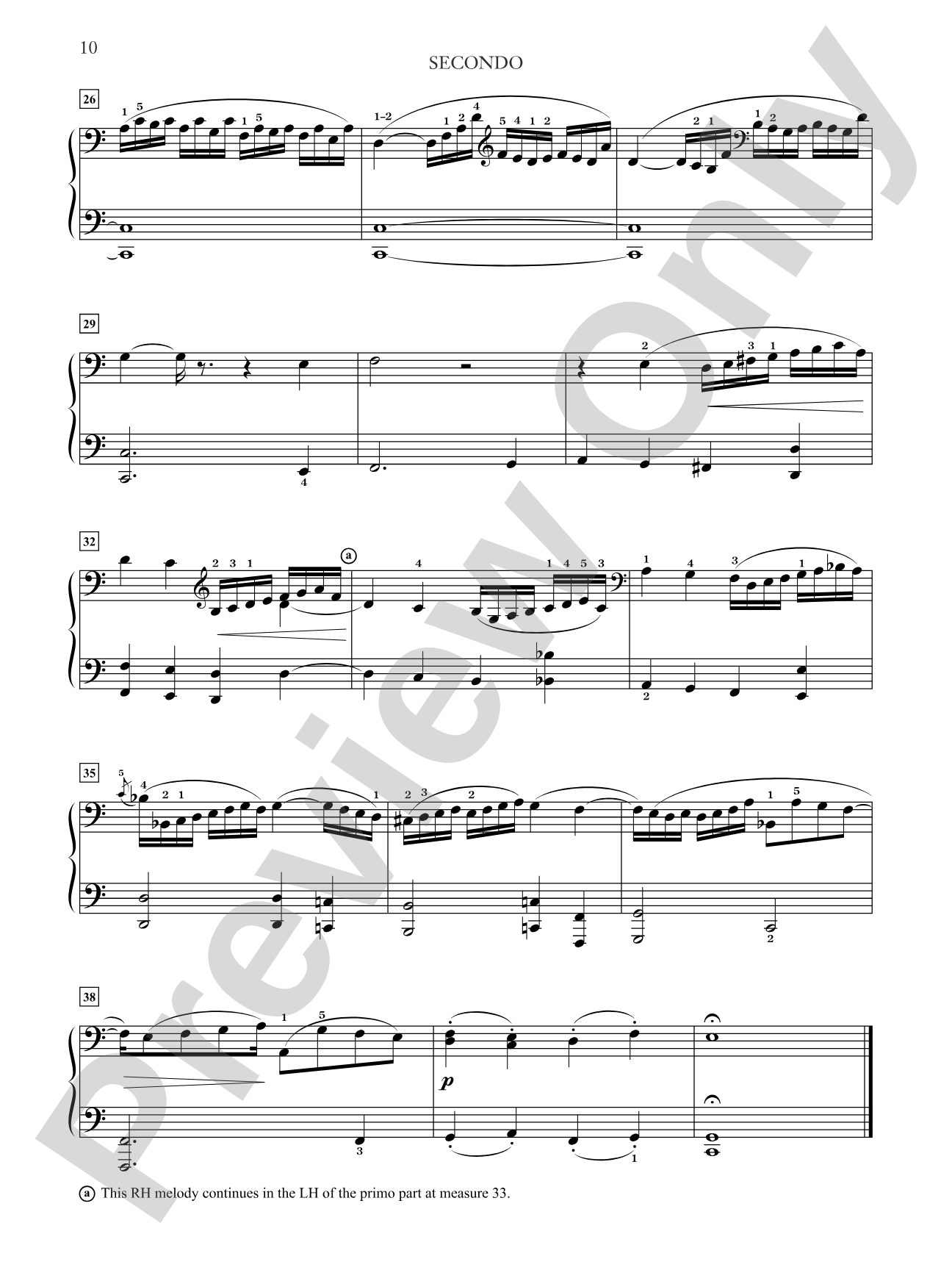
Schumann: Six Etudes in Canon Form, Opus 56 - Piano Duet (1 Piano, 4 Hands): Piano Duets & Four Hands
By Robert Schumann / arr. for One Piano, Four Hands by Georges Bizet / ed. Maurice Hinson and Allison Nelson
Level: Late Intermediate / Early Advanced
Item: 00-PB-0000618
Pickup currently not available
Related Items
Schumann: Six Etudes in Canon Form, Opus 56: Piano Duet (1 Piano, 4 Hands) Book |
$8.95
|
View |
Description
Schumann: Six Etudes in Canon Form, Opus 56 - Piano Duet (1 Piano, 4 Hands): Piano Duets & Four Hands isn't in MakeMusic Cloud just yet...but it could be. Let us know you'd like to see it, and you'll help shape what comes next. In the meantime, start a free trial and dive into thousands of interactive titles your students can play along with today.
Tell us you want it.
Explore everything that's ready to play right now.
Sample Audio
Sample Video
Additional Details
More about this title
About the Composer: Robert Schumann
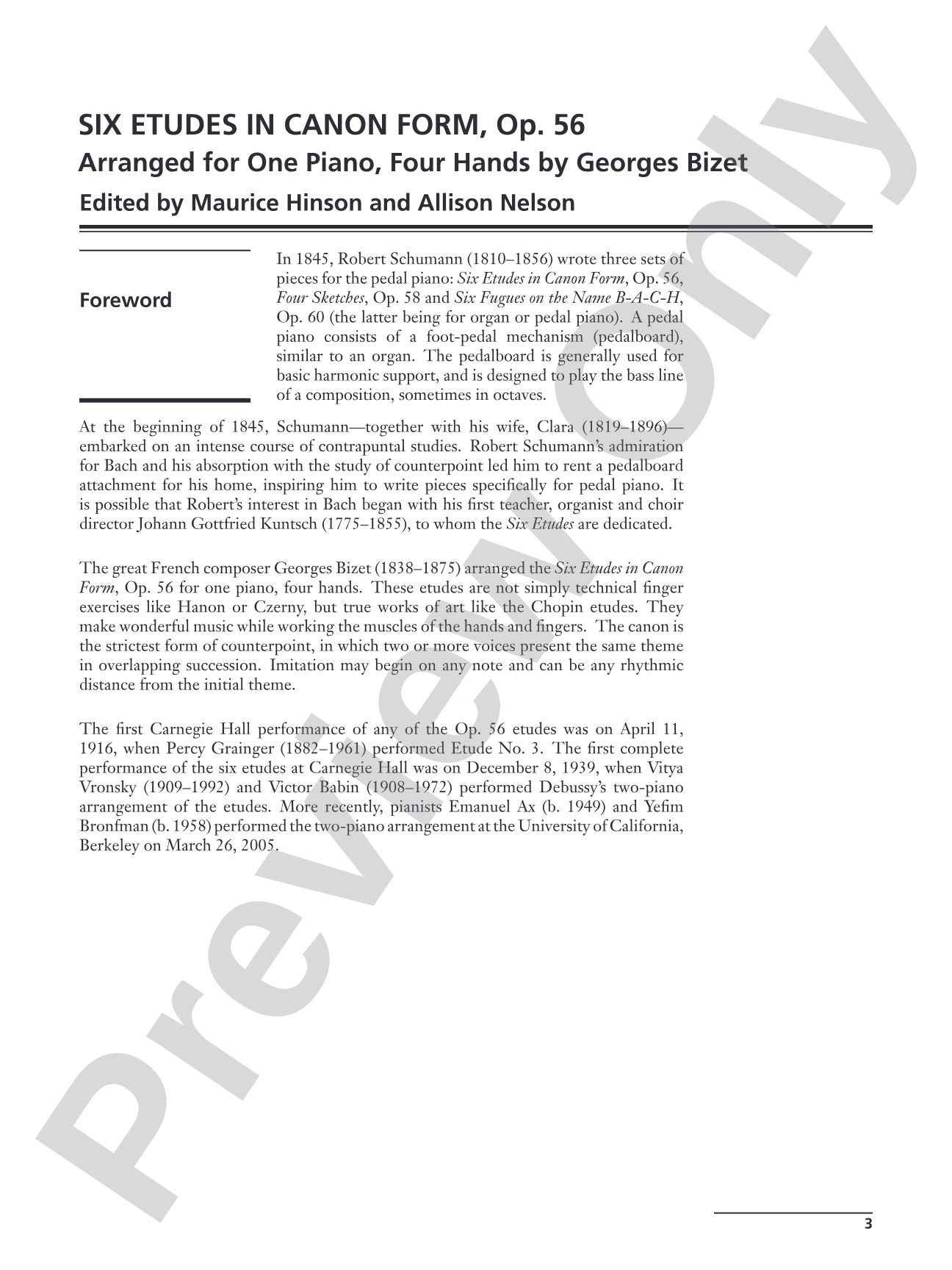
Robert Schumann (1810-1856) was a composer and music critic whose work bridged Romanticism's emotional intensity with rigorous compositional craft. His late career deepened this marriage of heart and intellect: in 1845, seeking to strengthen his contrapuntal writing, Schumann undertook systematic studies in canon and fugue that would reshape his approach to music. These technical investigations never felt academic in his hands; they produced works of genuine artistic substance.
Why we love this
Schumann's Six Etudes refuse the false choice between technique and artistry. Your students will build real facility while inhabiting genuinely expressive musical material, not grinding through finger patterns. The duet arrangement opens this rewarding cycle to partnerships that might otherwise tackle less sophisticated four-hand repertoire.
What to expect
These studies glow with introspection and formal discipline. The canonic voices weave together like a conversation between two thoughtful voices, creating moments of clarity and complexity that shift throughout each piece. There's an intellectual elegance here, tempered by Schumann's gift for intimate, lyrical melody.
Who it's for
Late intermediate and early advanced pianists ready to engage with Romantic-era counterpoint in an accessible partnership format. This appeals equally to duet teams preparing for festivals and to students looking beyond the standard etude literature.
How to get the most out of it
- Balance the contrapuntal lines carefully in rehearsal. Mark which voice carries the primary melodic weight in each section, then rotate that responsibility between partners to ensure both players develop the musical leadership skill.
- Experiment with pedaling as a unified conversation. Since Schumann originally wrote these for pedal piano, your team should explore how shared damper pedal work can blur and clarify the canonic writing depending on harmonic goals.
- Take time to hear the canonic architecture before worrying about tempo. Play slowly enough that both hands (across both players) can clearly track how each voice traces its path through the texture.
How to use it
Include one or two etudes on a recital celebrating Romantic piano partnerships, or frame them as the serious musical centerpiece of a student duet showcase. Their Federation Festival pedigree also makes them natural choices for collaborative competition preparation.
Skills your students will build
- Voice independence in contrapuntal writing
- Coordinating rhythmic and harmonic alignment across two players
- Sustaining lyrical lines while tracking secondary voices
- Pedal control to clarify or blend canonic texture
- Listening and balance adjustments in real time