
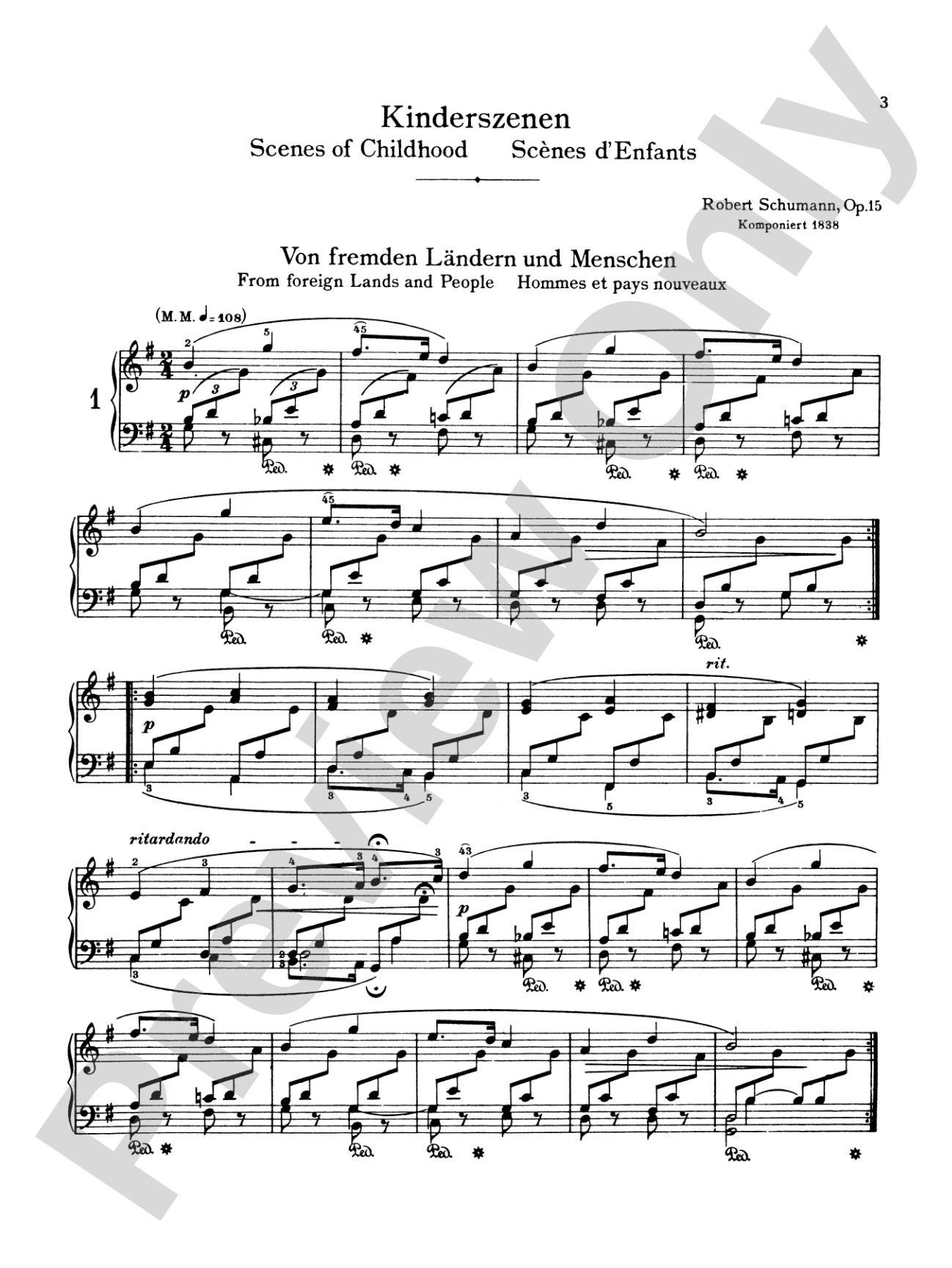

Schumann: Scenes from Childhood, Op. 15: Piano Book
By Robert Schumann
Item: 00-PK-0003320

$7.99
Pickup currently not available
Buy Extra Parts (Digital PDF Download)
Parts Added to Cart!
Related Items
Scenes from Childhood, Opus 15: Piano Book |
$7.95
|
View |
Description
A collection of piano solos composed by Robert Schumann.


Don't just read it, hear it, play along with it, and watch your students grow with it. In MakeMusic Cloud, Schumann: Scenes from Childhood, Op. 15: Piano Book comes alive with professional accompaniment, adjustable tempo, and built-in practice tools that turn solo practice into real progress.
Open in the Player
Jump straight in and assign it today.
Start Your Free Trial
Open this title and explore the full library in minutes.
Sample Audio
No sample audio found.
Sample Video
No sample videos found.
Additional Details
Series:
Kalmus Edition
Publisher:
Alfred Music
Page Count:
16
SKU:
00-PK-0003320
More about this title
About the Composer: Robert Schumann
Robert Schumann (1810, 1856) was a pivotal figure in Romantic piano music, composing works that bridged the virtuosic tradition of earlier decades with intimate, character-driven miniatures. His output spans symphonies, chamber music, and songs, but his piano collections remain central to standard repertoire. Schumann's genius lay in his ability to write music that feels spontaneous and deeply personal while maintaining structural coherence.
Schumann believed that composers should write music reflecting the full range of human experience, not just display technique. This philosophy shaped *Scenes from Childhood*, a work that elevated the character piece into an art form. His music demands expressive maturity from performers: technical skill matters far less than the ability to inhabit each movement's emotional landscape.
Why we love this
Schumann's cycle rewards the pianist who seeks character and storytelling within technical boundaries. Each of the thirteen pieces in this collection stands complete on its own while contributing to a larger emotional arc, offering flexibility for recital programming or study sequences that don't require performing the entire work. The writing balances accessibility with genuine compositional substance, avoiding the saccharine while remaining deeply connected to 19th-century Romantic aesthetics.
What to expect
Intimate and reflective, these pieces evoke the inner emotional life of childhood memory and imagination without sentimentality. Schumann's voice emerges through lyrical melodies, graceful accompaniments, and harmonic language that feels both familiar and gently surprising, inviting the listener into a world of delicate introspection.
Who it's for
Intermediate to early-advanced pianists seeking substantial solo repertoire that combines technical development with genuine artistic challenge. This collection suits students ready to engage with character pieces that demand interpretive choice alongside secure technique.
How to get the most out of it
- Attend to the poetic titles and movement headings as guides to interpretation and tempo, not as literal descriptions. Schumann's subtle markings guide expression better than pushing for dramatic extremes.
- Shape phrases through voicing and color rather than dynamic swells alone. The piano writing often distributes melody across registers, and clarity reveals the compositional craft.
- Establish consistent pedal technique early in preparation. Schumann's harmonies sit comfortably under the pedal, but overuse blurs the contrapuntal textures.
- Resist rushing through repeated sections. Small variations in dynamics, articulation, or tempo inflection transform familiar material into new emotional territory.
How to use it
Select individual pieces for student recitals, allowing performers to showcase different facets of Schumann's writing without the commitment of the full cycle. These pieces also pair effectively with other Romantic solo works in themed programs exploring 19th-century piano literature or programmatic music.
Skills your students will build
- Executing fluid pedal changes to sustain harmonic color while maintaining textural clarity
- Shaping lyrical lines with dynamic nuance and phrase direction
- Interpreting Romantic-era expressivity markings and applying them musically
- Managing hand independence in pieces combining singing melody with independent accompaniment
- Reading and navigating modest key signatures and harmonic progressions typical of mid-19th-century piano writing