
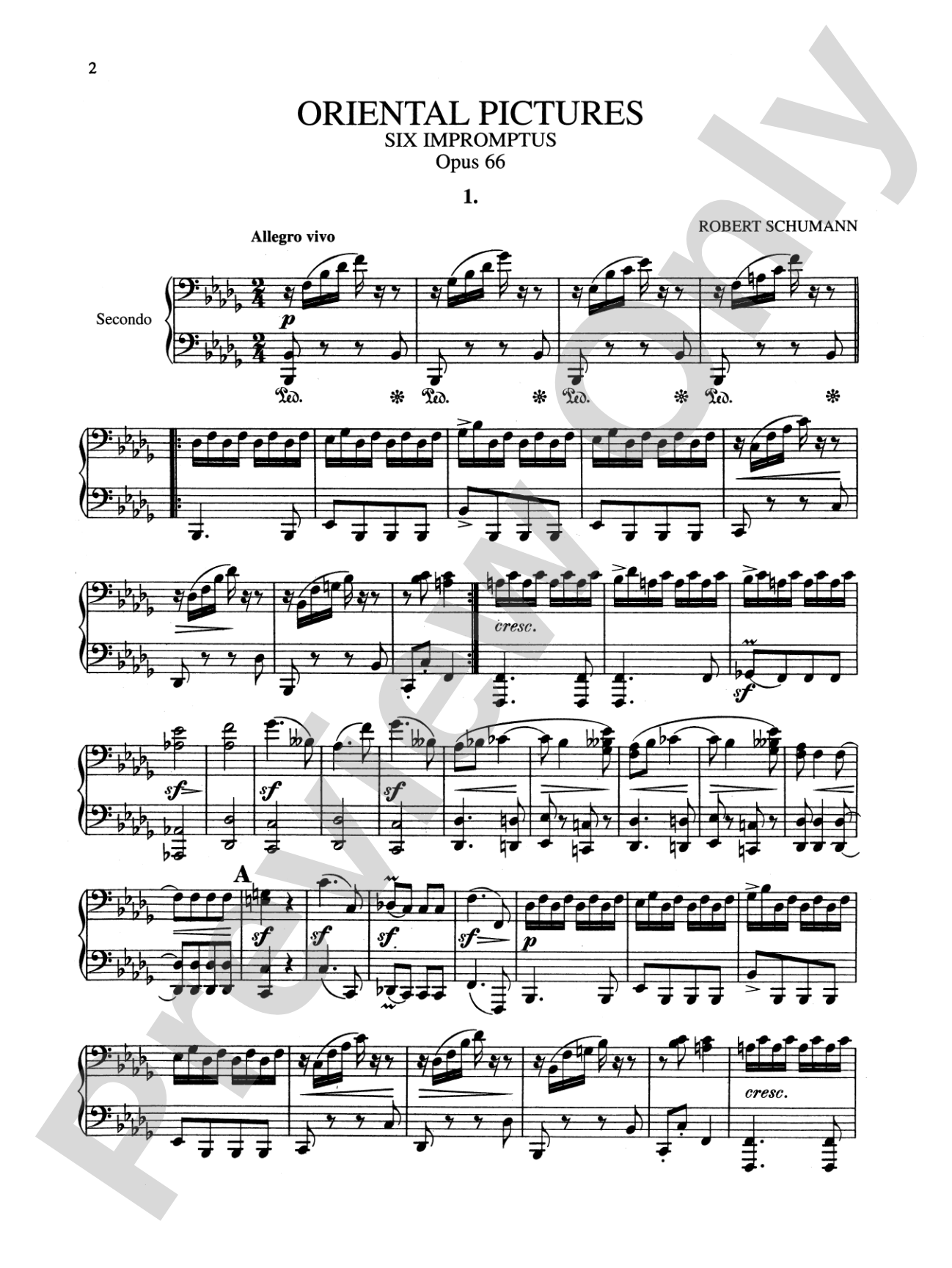
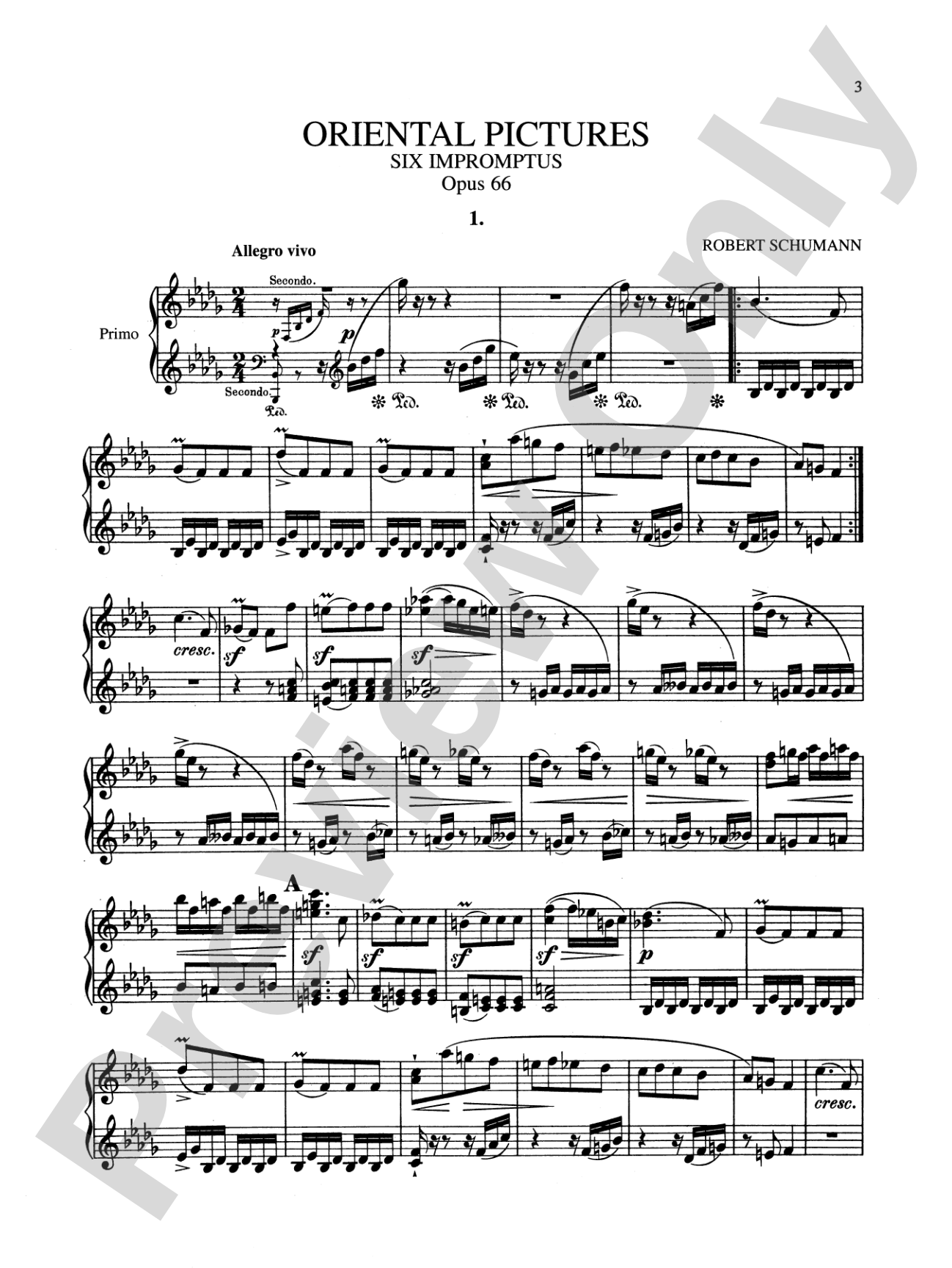
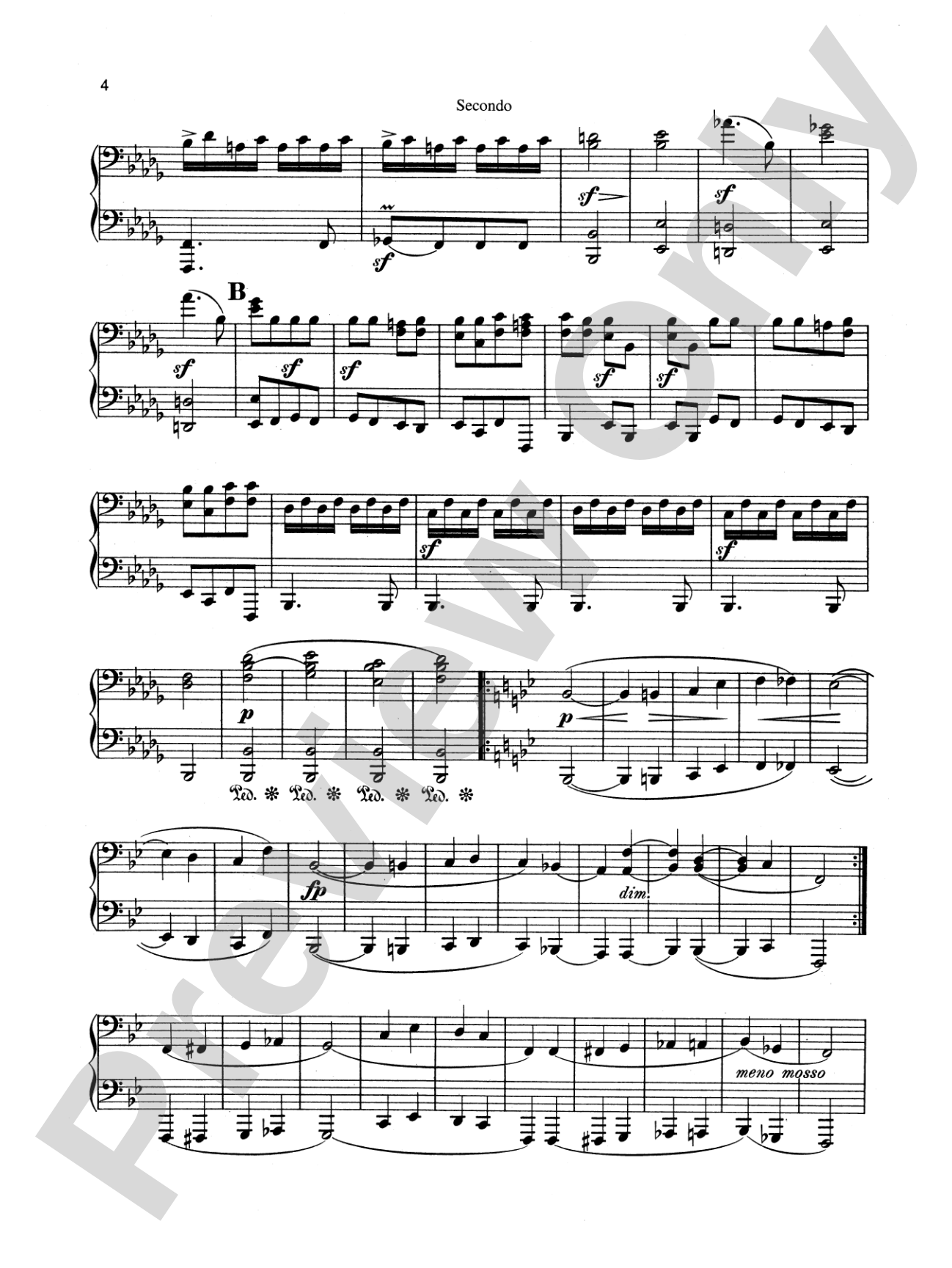
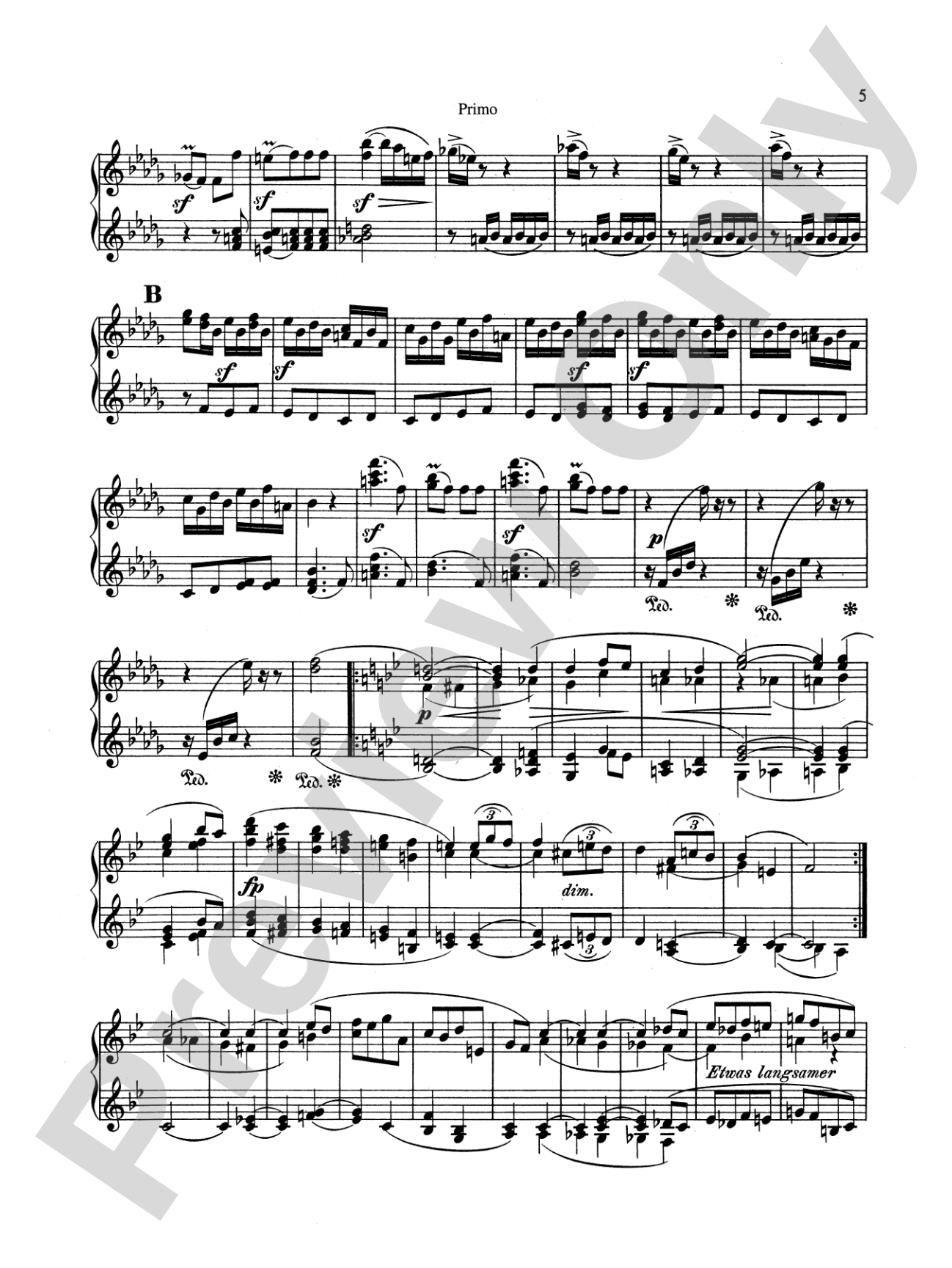
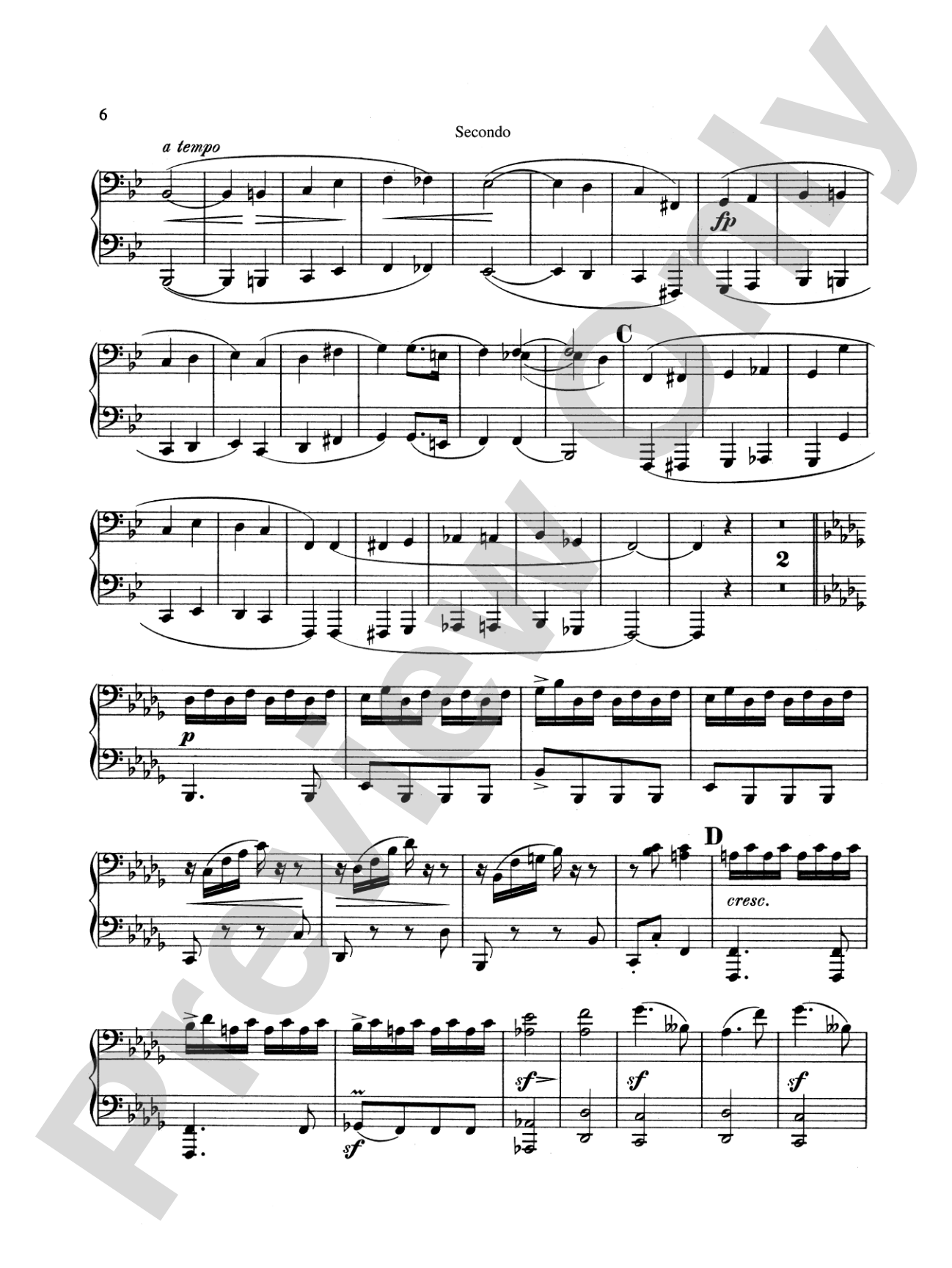
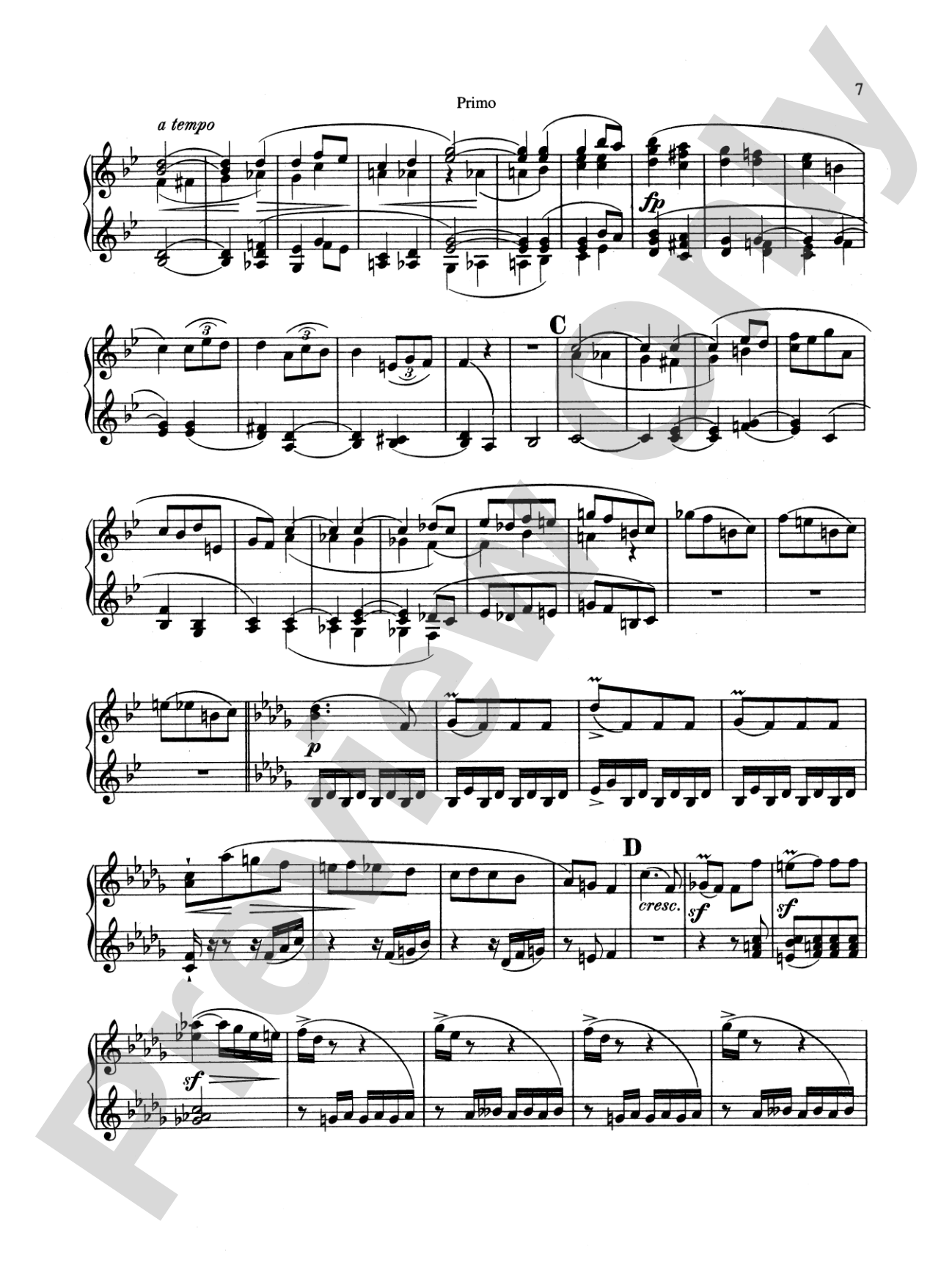
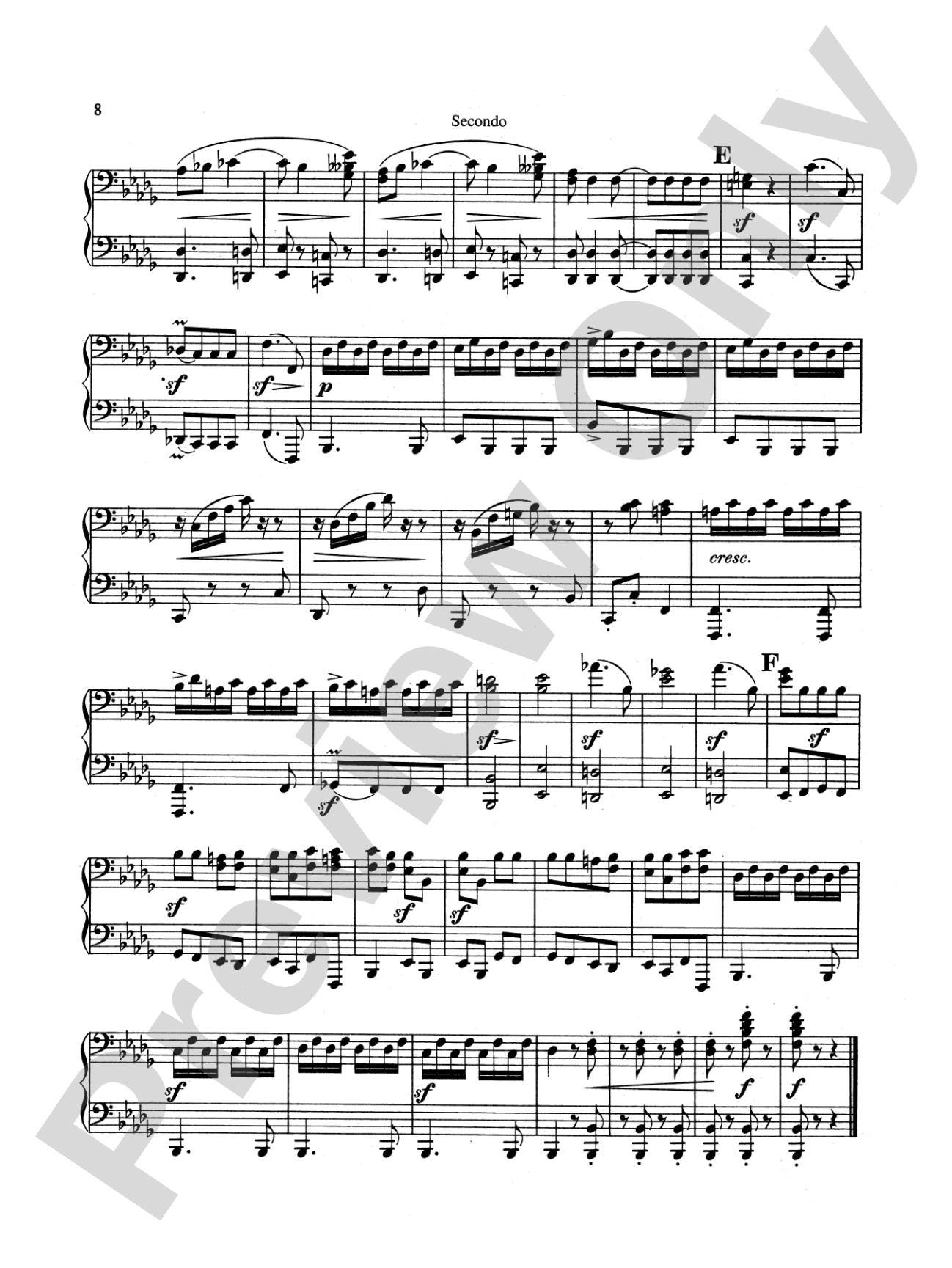
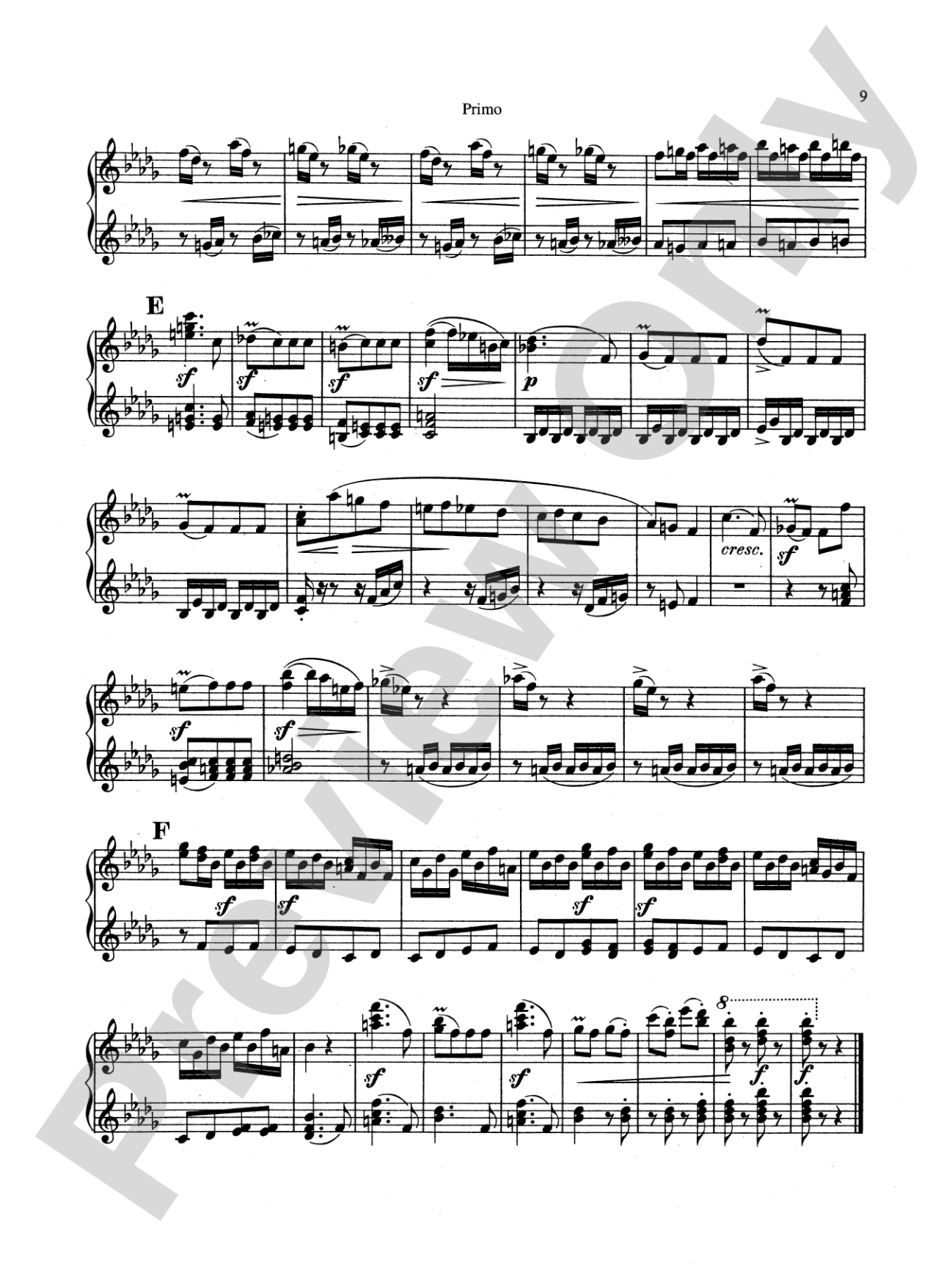

Schumann: Oriental Pictures (Six Impromptus, Op. 66): Piano Duet (1 Piano, 4 Hands) Book
By Robert Schumann
Item: 00-PK-0002792

$8.99
Pickup currently not available
Buy Extra Parts (Digital PDF Download)
Parts Added to Cart!
Related Items
Oriental Pictures (Six Impromptus, Opus 66): Piano Duet (1 Piano, 4 Hands) Book |
$8.95
|
View |
Description
A Piano Duet for 1 Piano, 4 Hands, composed by Robert Schumann.


Don't just read it, hear it, play along with it, and watch your students grow with it. In MakeMusic Cloud, Schumann: Oriental Pictures (Six Impromptus, Op. 66): Piano Duet (1 Piano, 4 Hands) Book comes alive with professional accompaniment, adjustable tempo, and built-in practice tools that turn solo practice into real progress.
Open in the Player
Jump straight in and assign it today.
Start Your Free Trial
Open this title and explore the full library in minutes.
Sample Audio
No sample audio found.
Sample Video
No sample videos found.
Additional Details
Series:
Kalmus Edition
Publisher:
Alfred Music
Page Count:
32
SKU:
00-PK-0002792
More about this title
About the Composer: Robert Schumann
Robert Schumann (1810, 1856) was a composer and critic who shaped the Romantic era's approach to intimate, character-based music. His piano works reveal a fascination with miniature forms and literary inspiration, often organized in suites that explore a single emotional or thematic world. Schumann's duet writing demonstrates his belief that music-making among friends and family was central to musical life, making his four-hand works essential to the pianist's repertoire.
Why we love this
These six impromptus showcase Schumann's gift for creating emotionally nuanced miniatures that feel both intimate and orchestral in scope. The duet format distributes musical ideas evenly between primo and secondo, making it genuinely engaging for both players rather than relegating one to accompaniment duty. Programming this work signals serious artistic ambition while remaining accessible to intermediate-advanced pianists.
What to expect
Romantic sensibility suffused with harmonic subtlety and emotional restraint. The music alternates between moments of lyrical tenderness and passages of surprising chromatic color, creating an atmosphere that feels both graceful and introspective. Each impromptu invites listeners into Schumann's private world of musical imagination, where elegance and depth coexist.
Who it's for
Intermediate-advanced pianists ready to explore Schumann's duet literature with a partner of comparable skill. This collection works equally well for conservatory students, advanced high school pianists, or adult amateurs seeking substantial four-hand repertoire. The 32-page score offers enough musical substance and stylistic variety to reward serious preparation.
How to get the most out of it
- Balance the dialogue between parts carefully; both the primo and secondo carry essential melodic and harmonic material. Avoid the tendency to favor either hand.
- Work through the score separately at first, paying particular attention to how Schumann's chromatic voice-leading and unexpected harmonic shifts create emotional depth.
- The Oriental aesthetic suggested by the title appears in harmonic color and melodic contour rather than literal exoticism. Let the Romantic lyricism of the writing guide your interpretation.
- Attend to Schumann's tempo and dynamic markings with precision. His subtle indications of character and pacing are essential to the music's effectiveness.
How to use it
Feature these pieces on a recital dedicated to Romantic keyboard literature, pairing them with other Schumann solo works or with duets by Brahms or Clara Schumann. A four-hand concert program built around Schumann's complete duet output offers a satisfying exploration of his chamber voice. These impromptus also work beautifully as an encore or as the centerpiece of a student collaboration recital.
Skills your students will build
- Balancing independent lines in four-hand writing while maintaining unified interpretation
- Navigating Romantic harmonic language, including chromatic voice-leading and unexpected modulations
- Responding to Schumann's expressive markings and understanding rubato within a structured form
- Developing ensemble listening and collaborative leadership when sharing one keyboard
- Sight-reading confidence in works with frequent key changes and textural density