
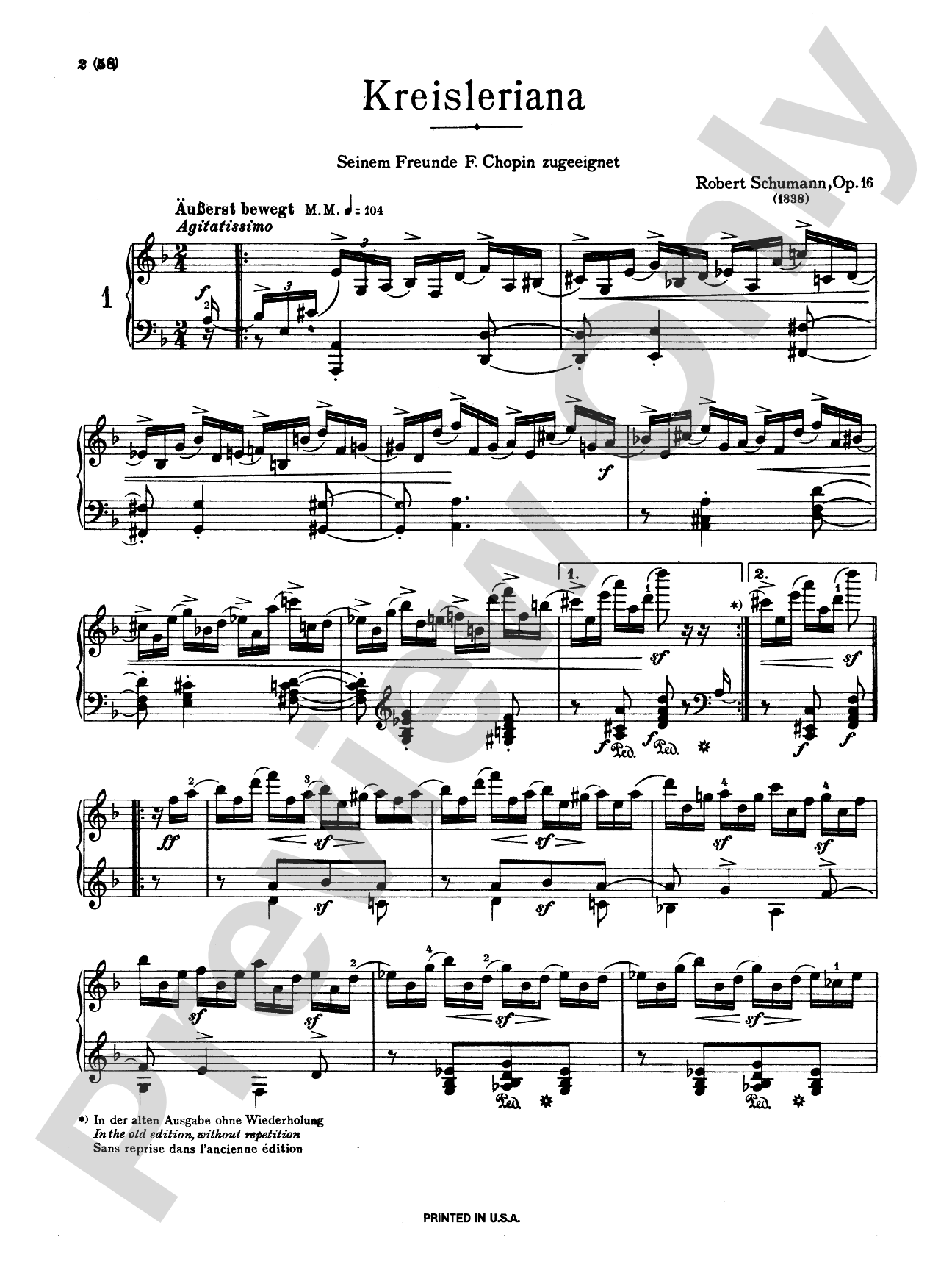
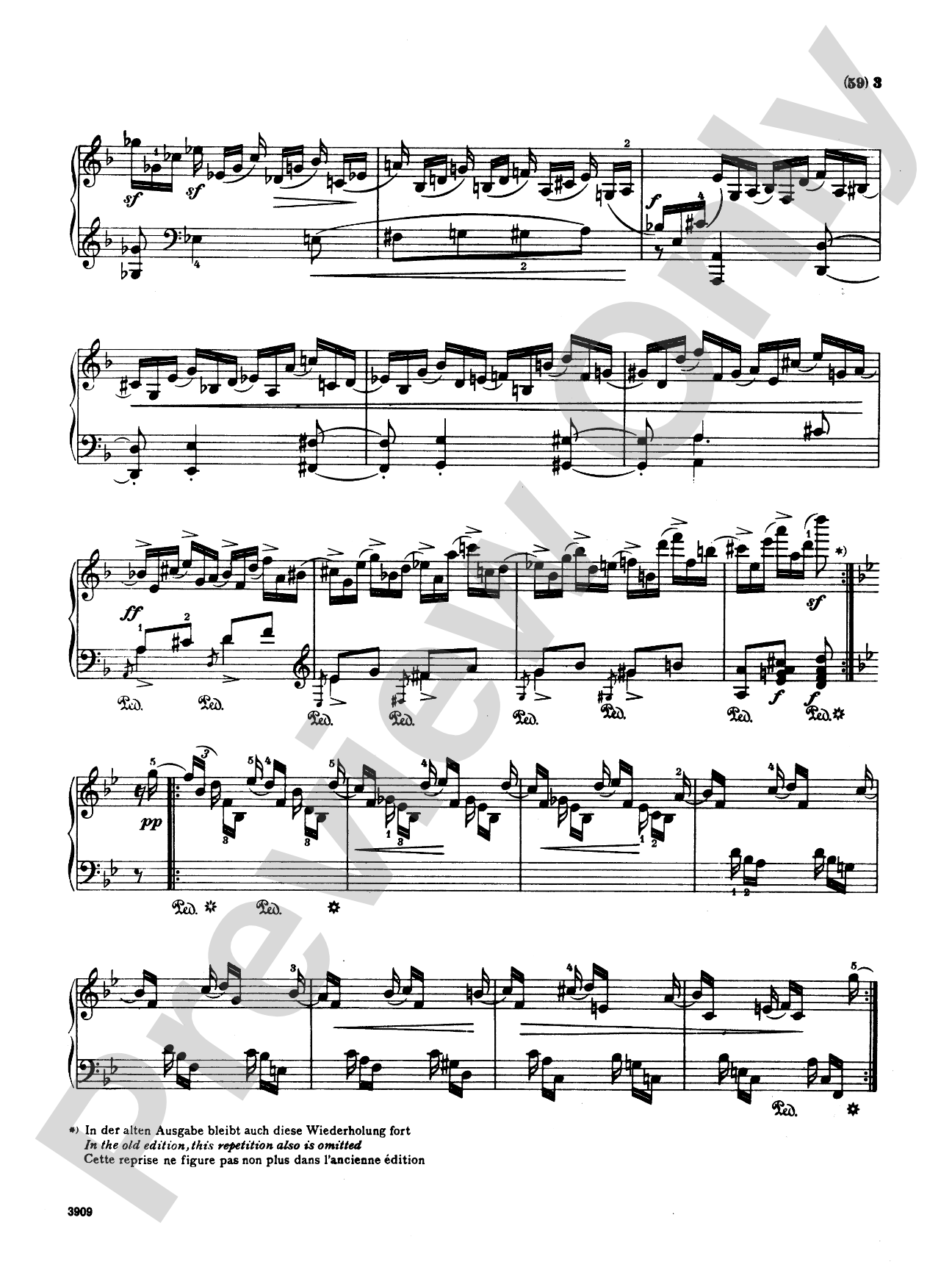
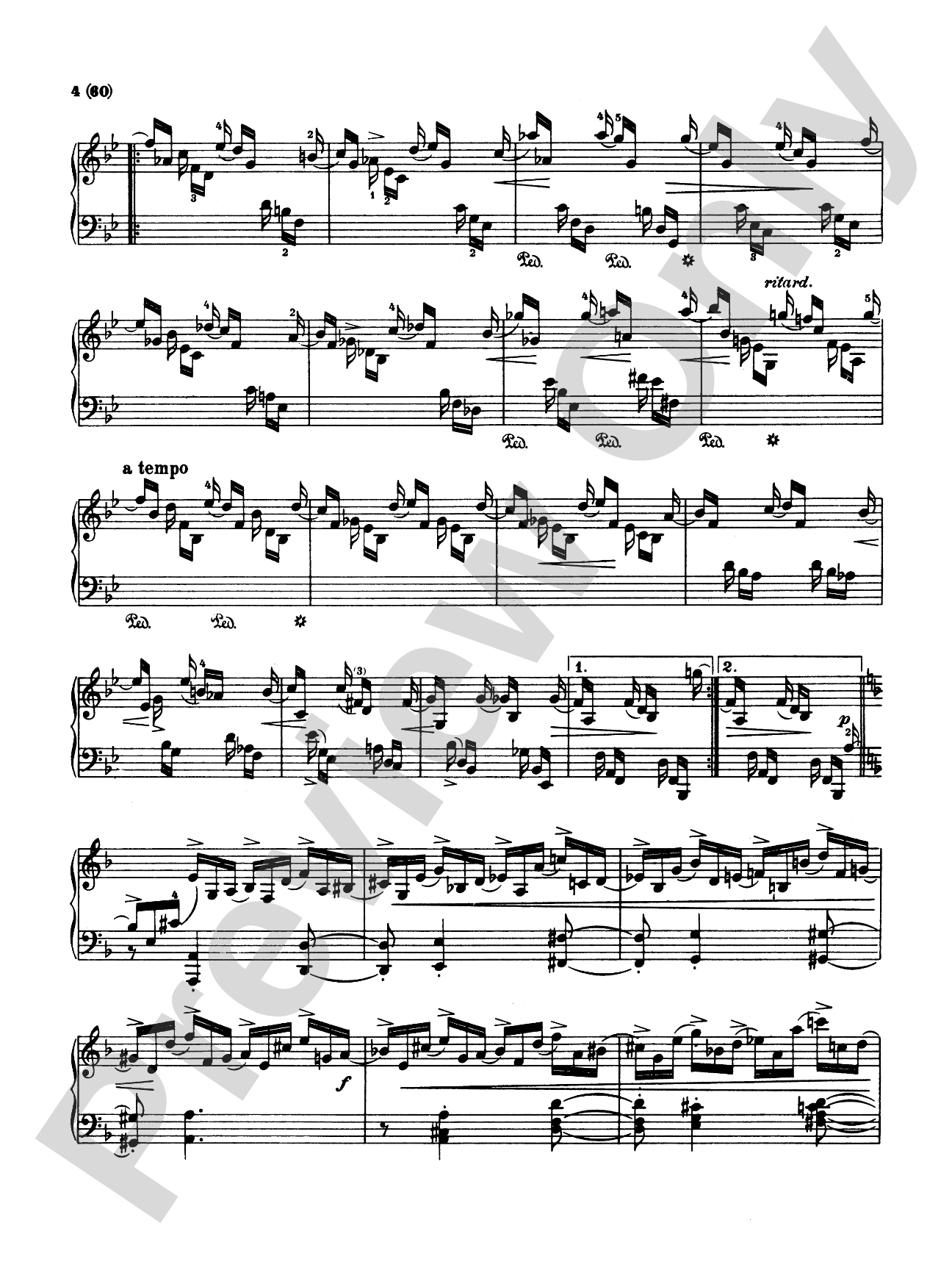
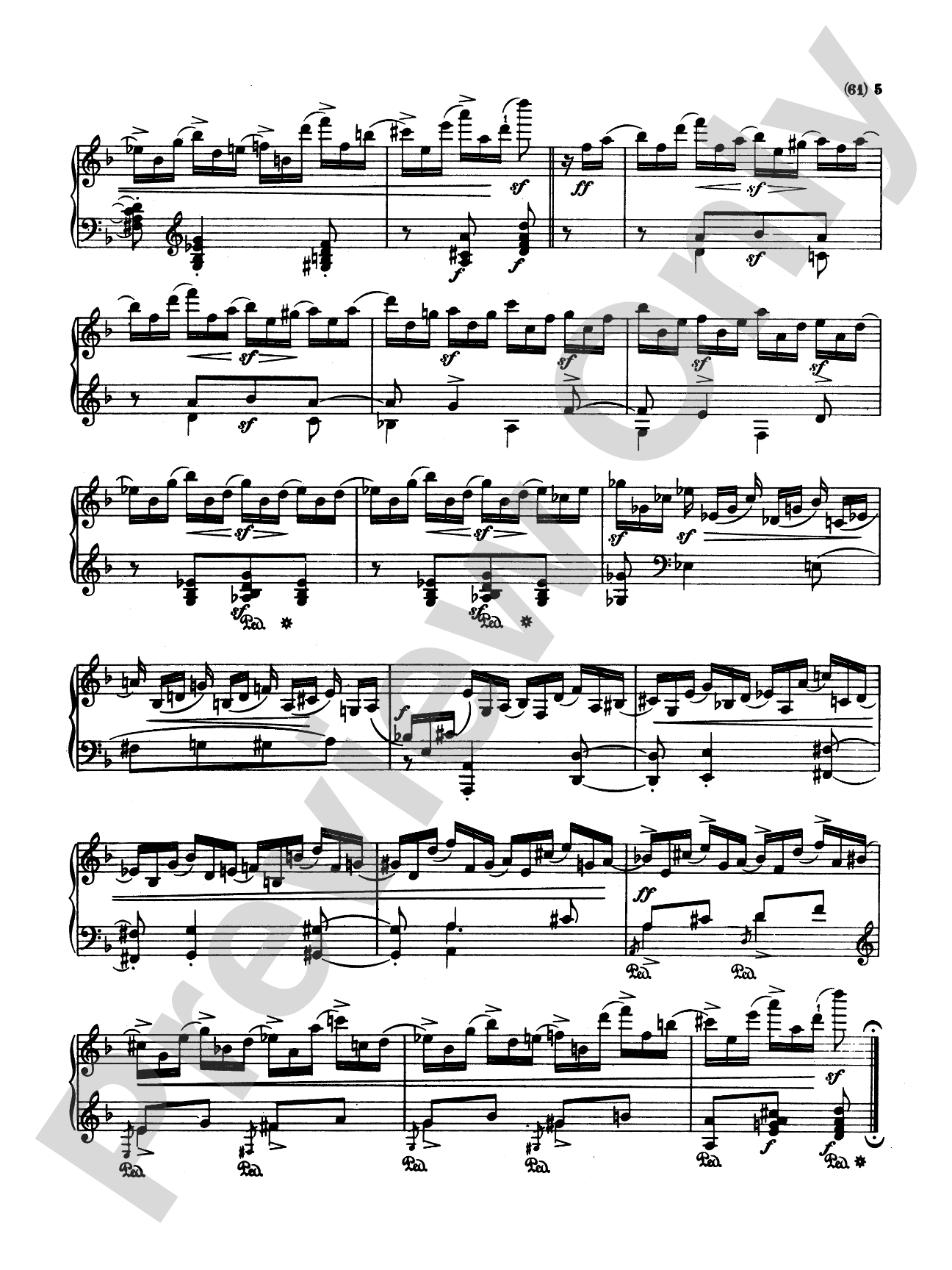

Schumann: Kreisleriana, Op. 16: Piano
By Robert Schumann
Item: 00-PK-0003326

$9.99
Pickup currently not available
Buy Extra Parts (Digital PDF Download)
| Product | Price | Quantity |
|---|---|---|
| Schumann: Kreisleriana, Op. 16 | $0.99 | |
| Schumann: Kreisleriana, Op. 16 | $0.99 | |
| Schumann: Kreisleriana, Op. 16 | $0.99 | |
| Schumann: Kreisleriana, Op. 16 | $0.99 | |
| Schumann: Kreisleriana, Op. 16 | $0.99 | |
| Schumann: Kreisleriana, Op. 16 | $0.99 | |
| Schumann: Kreisleriana, Op. 16 | $0.99 | |
| Schumann: Kreisleriana, Op. 16 | $0.99 |
Parts Added to Cart!
Related Items
Kreisleriana, Opus 16: Piano |
$9.99
|
View |
Description
Expertly arranged piano solo from our Kalmus Edition.


Don't just read it, hear it, play along with it, and watch your students grow with it. In MakeMusic Cloud, Schumann: Kreisleriana, Op. 16: Piano comes alive with professional accompaniment, adjustable tempo, and built-in practice tools that turn solo practice into real progress.
Open in the Player
Jump straight in and assign it today.
Start Your Free Trial
Open this title and explore the full library in minutes.
Sample Audio
No sample audio found.
Sample Video
No sample videos found.
Additional Details
Series:
Kalmus Edition
Publisher:
Alfred Music
Page Count:
36
SKU:
00-PK-0003326
More about this title
About the Composer: Robert Schumann
Robert Schumann (1810, 1856) stands as a central figure in Romantic piano music, bridging the virtuosic tradition of his predecessors with deeply personal, introspective composition. His output shaped the repertoire fundamentally: he elevated the character piece to an art form, championed new music through his journalism, and wrote prolifically for piano despite struggling with hand injury that ended his performance career.
Schumann's music rewards close study. His harmonic language pushes past Classical boundaries, his forms balance structure with spontaneity, and his expressive marks reveal a composer intensely concerned with capturing mood and inner states. For pianists and teachers, his work demands both technical command and interpretive maturity.
Why we love this
Kreisleriana ranks among the most rewarding Romantic cycles for advanced pianists seeking to move beyond virtuosity into genuine musical storytelling. The eight connected character pieces demand interpretive clarity and emotional commitment, rewarding teachers and students who engage seriously with Schumann's harmonic language and structural imagination.
What to expect
Kreisleriana unfolds like a musical diary of shifting moods: moments of passionate intensity collide with intimate introspection, lyrical passages dissolve into rhythmic turbulence, and sudden harmonic pivots create a sense of psychological complexity. The work invites you into Schumann's inner world, where beauty and restlessness coexist.
Who it's for
Advanced pianists and serious music students ready to tackle substantial Romantic repertoire with both technical and musical depth. This cycle suits teachers preparing students for competitions, recitals, or college auditions, as well as private instructors building comprehensive Schumann literacy.
How to get the most out of it
- Pay close attention to Schumann's frequent shifts between tempos and characters; the Kalmus edition notation of these transitions will guide you, but practice spotting them in advance so direction changes feel intentional rather than abrupt.
- Balance the lyrical vocal lines (often hidden in inner voices) against the accompaniment; this work rewards a singer's approach to phrasing despite its keyboard demands.
- Explore the full harmonic palette without romanticizing every moment; Schumann's strength lies partly in unexpected tonal turns and dissonance, not just memorable melodies.
- Mark your own interpretive decisions early in preparation. The eight pieces can blur together without deliberate contrasts in tempo, touch, and emotional temperature between movements.
How to use it
Program this as a complete cycle on a recital or student showcase to demonstrate mastery of Romantic piano literature, or select individual movements as contrasting pieces alongside Classical sonatas. The work also serves well as a capstone project for intermediate to advanced private students nearing the end of a study year.
Skills your students will build
- Romantic harmonic language and unexpected tonal shifts
- Independence of voices in contrapuntal textures
- Pedal control for sustained harmonic color without muddiness
- Character differentiation across a multi-movement cycle
- Reading complex rhythmic relationships and syncopation
- Interpretive choices within a composer's detailed notation