Schumann: Complete Works (Volume V) Sheet Music Preview

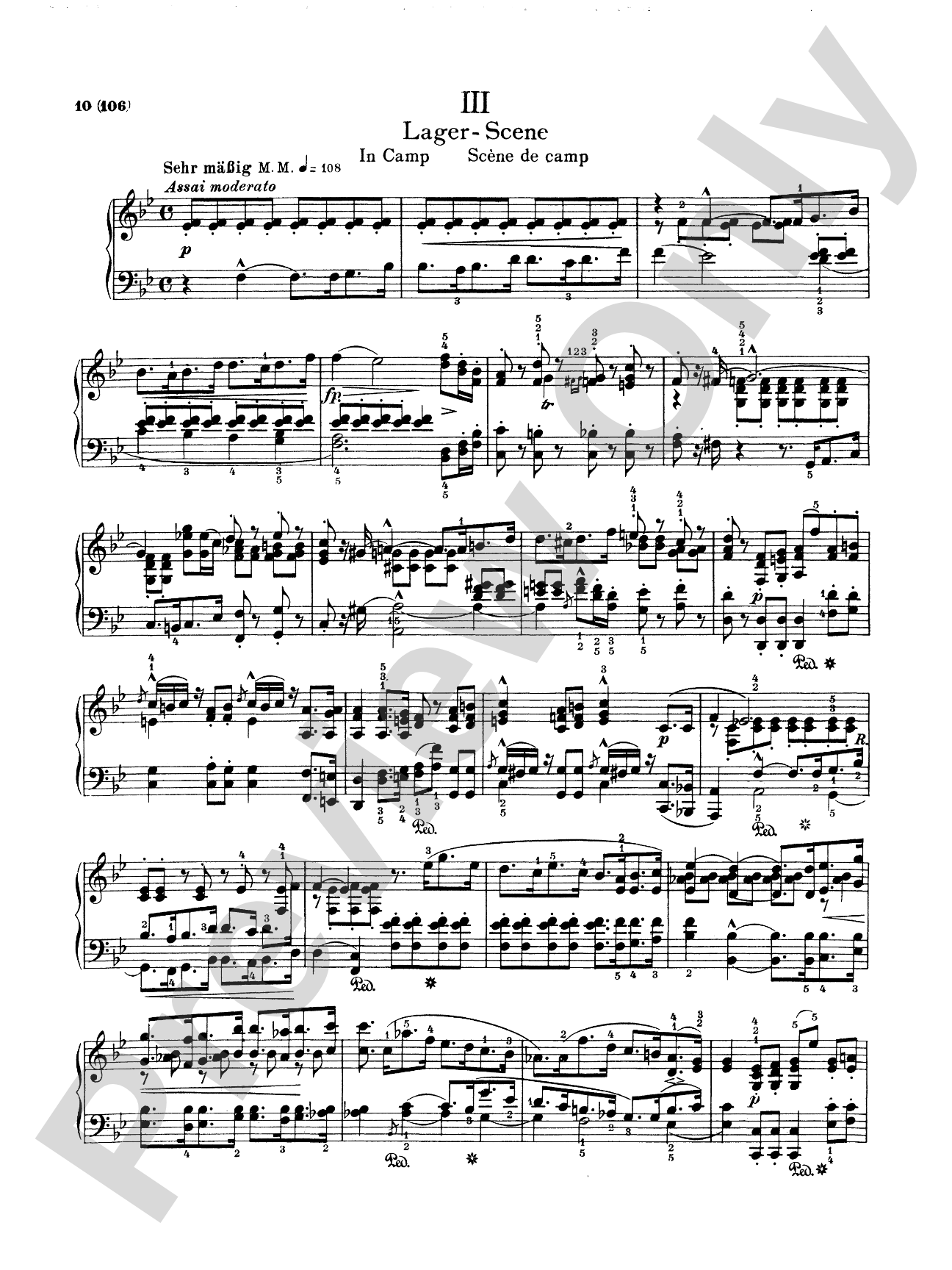
Schumann: Complete Works (Volume V)

By Robert Schumann

Item: 00-PC-0009369

Digital Download
$0.99
Description
Op. 56 - Op. 82

Schumann: Complete Works (Volume V) isn't in MakeMusic Cloud just yet...but it could be. Let us know you'd like to see it, and you'll help shape what comes next. In the meantime, start a free trial and dive into thousands of interactive titles your students can play along with today.

Sample Audio
No sample audio found.
Sample Video
Additional Details
Series: Kalmus Edition
Publisher: Alfred Music
Page Count: 136
SKU: 00-PC-0009369

More about this title

About the Composer: Robert Schumann

Robert Schumann (1810-1856) stands as one of the Romantic era's most innovative composers, bridging the expressive world of poetry with instrumental music. His piano works transformed the instrument into a vehicle for intimate storytelling, blending technical brilliance with emotional depth. Schumann's influence on music education runs deep; his compositions for piano remain cornerstone repertoire for serious students navigating the transition from intermediate to advanced playing.

Why we love this

This collection captures Schumann at his most inventive, spanning nearly three decades of piano writing and offering repertoire that challenges both fingers and interpretive maturity. The Kalmus Edition presents these works in accessible, legible format, making it possible to explore works beyond the well-known Album for the Young or Carnaval. Programming from this volume allows pianists and audiences to experience the full arc of Schumann's pianistic vision, from character pieces to large-scale forms.

What to expect

Schumann's piano writing in this period moves between introspection and virtuosity, between tender lyricism and dramatic sweep. These works contain rich harmonic surprises, unexpected key shifts, and moments of genuine poetic fragility alongside passages of technical display. The collection evokes the intimate world of the salon while never losing sight of larger structural ambition.

Who it's for

This volume serves advanced pianists preparing recital repertoire, serious students building a foundation in Romantic piano literature, and teachers seeking a comprehensive reference for selecting works at intermediate-advanced levels. It is equally valuable for music history study, as it illustrates Schumann's evolving compositional voice across Op. 56 through Op. 82.

How to get the most out of it

  • Study the autograph scores or facsimiles when available; Schumann's notation often carries compositional intention that printed editions may flatten, particularly regarding pedal placement and dynamic shaping.
  • Work through the shorter character pieces first to absorb Schumann's harmonic language and rhythmic flexibility before tackling the longer works; this foundation makes the larger forms feel coherent rather than fragmented.
  • Honor the rubato inherent in Schumann's phrasing; these are not works that reward metronomic steadiness, but rather a singing, speech-like approach to line that allows melodic voices to breathe.
  • Pay close attention to hand independence, especially in works where inner voices carry the harmonic or thematic weight while outer voices maintain the texture; clarity here is essential to revealing Schumann's compositional architecture.

How to use it

Program individual character pieces from this volume as recital fillers or opening works to establish an intimate tone before larger forms; conversely, use the more substantial multi-movement works as centerpieces on programs exploring Romantic piano music. This collection is also invaluable for designing a semester or year-long study of a single composer, allowing students to trace the development of Schumann's voice without relying on scattered anthology selections.

Skills your students will build

  • Navigating Romantic-era harmonic language and unexpected key relationships
  • Sustaining long melodic lines across broken textures and hand position changes
  • Distinguishing multiple simultaneous voices in densely textured passages
  • Interpreting rubato and flexible pulse without losing structural coherence
  • Managing pedal changes that reflect harmonic rather than metrical logic
  • Understanding character-piece form and its departure from Classical structures

You May Also Like