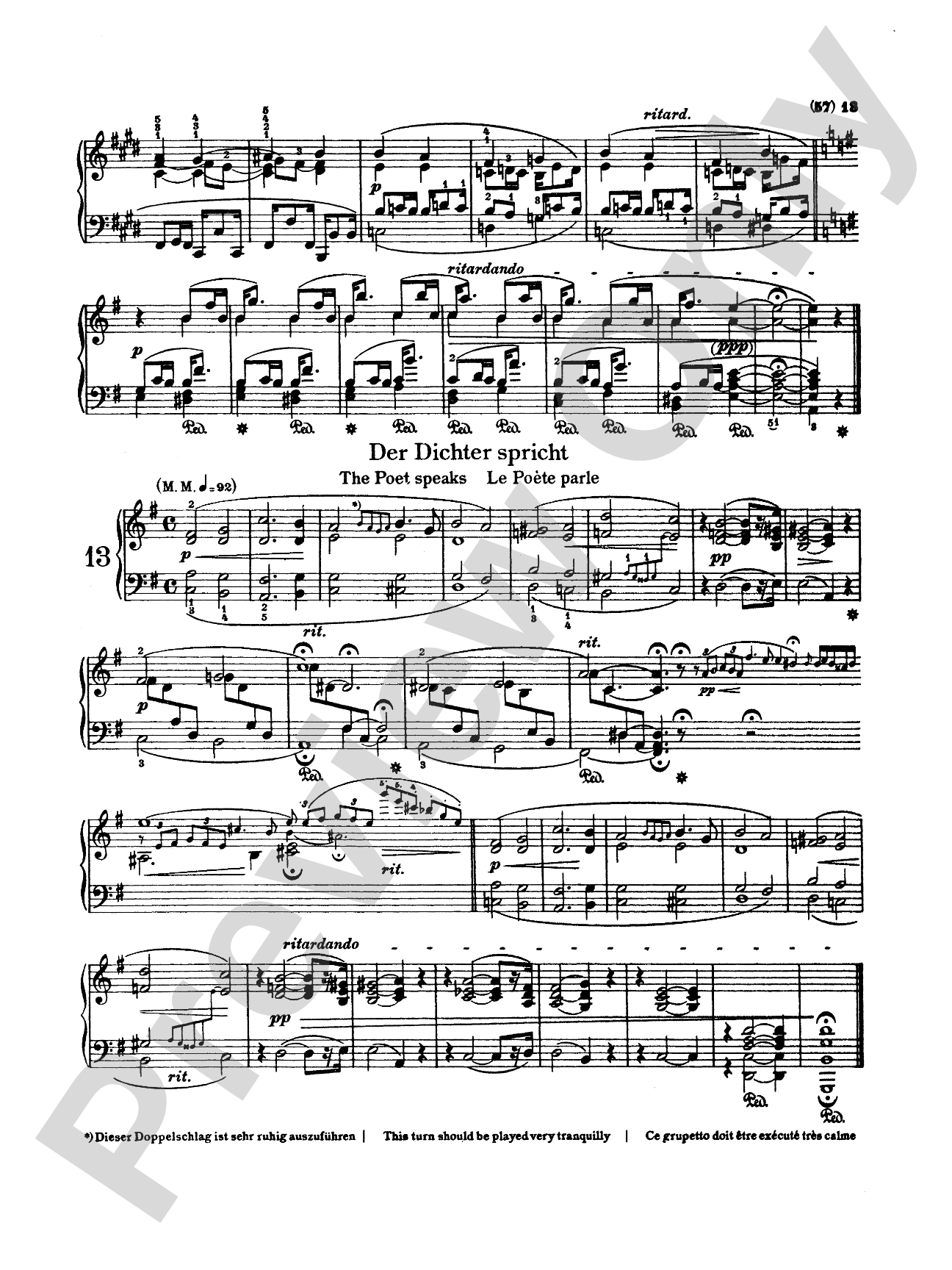
Robert Schumann (1810–1856) was a towering figure of the Romantic piano tradition, a composer whose intimate miniatures and large-scale works fundamentally reshaped how pianists understood expression at the keyboard. His early piano compositions emerged from a period of intense creative activity in the 1830s, when he was also founding the Neue Zeitschrift für Musik and establishing himself as one of music's most influential critics.
Schumann's approach to piano writing balanced poetic restraint with structural rigor. His works span character pieces, variations, fantasias, and sonatas, each exploring the interplay between lyrical melody and harmonic ambition that defined his compositional voice. Many of his pieces invite performers to discover multiple interpretive possibilities within carefully notated scores, making his music enduringly relevant to pianists seeking depth and individuality.