Schumann: Complete Works (Volume III) Sheet Music Preview

Schumann: Complete Works (Volume III)

By Robert Schumann

Item: 00-PC-0009338

Digital Download
$0.99
Description
Op. 14 - Op. 19

Schumann: Complete Works (Volume III) isn't in MakeMusic Cloud just yet...but it could be. Let us know you'd like to see it, and you'll help shape what comes next. In the meantime, start a free trial and dive into thousands of interactive titles your students can play along with today.

Sample Audio
No sample audio found.
Sample Video
Additional Details
Series: Kalmus Edition
Publisher: Alfred Music
Page Count: 136
SKU: 00-PC-0009338

More about this title

About the Composer: Robert Schumann

Robert Schumann (1810–1856) was a towering figure of the Romantic piano tradition, a composer whose intimate miniatures and large-scale works fundamentally reshaped how pianists understood expression at the keyboard. His early piano compositions emerged from a period of intense creative activity in the 1830s, when he was also founding the Neue Zeitschrift für Musik and establishing himself as one of music's most influential critics.

Schumann's approach to piano writing balanced poetic restraint with structural rigor. His works span character pieces, variations, fantasias, and sonatas, each exploring the interplay between lyrical melody and harmonic ambition that defined his compositional voice. Many of his pieces invite performers to discover multiple interpretive possibilities within carefully notated scores, making his music enduringly relevant to pianists seeking depth and individuality.

Why we love this

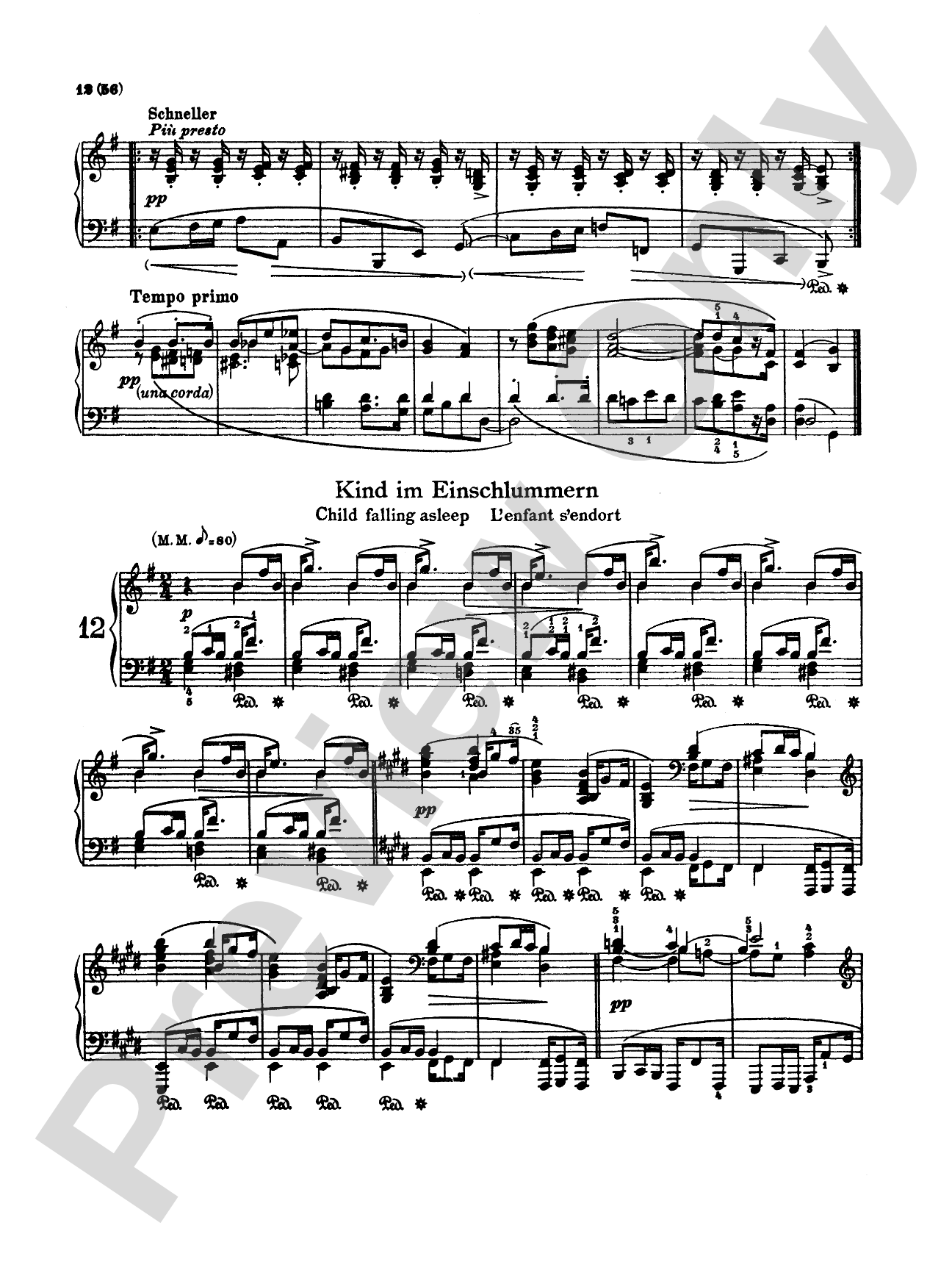
This volume collects Schumann's early-to-mid career piano works, capturing the moment when his style matured from youthful virtuosity toward the refined lyricism he perfected. Teachers value having these pieces together because they represent consecutive compositional periods, allowing students to trace Schumann's evolving harmonic language and formal thinking across a single collection. The range of difficulty and character within these opus numbers makes programming straightforward, whether building a recital or selecting study pieces that reward sustained practice.

What to expect

Schumann's piano works in this range evoke intimate introspection alongside moments of passionate intensity, moving between delicate character pieces and larger structural ambitions. The music feels deeply personal yet carefully crafted, rewarding performers who listen closely to inner voices and harmonic color rather than pursuing surface virtuosity.

Who it's for

Advanced pianists preparing recital repertoire and serious students undertaking comprehensive study of Schumann's keyboard writing will find this collection essential. Teachers can draw from these opus numbers for intermediate-to-advanced students ready to explore Romantic harmony and formal experimentation within structured, publishable works.

How to get the most out of it

  • Approach harmonic shifts with deliberate voicing clarity; Schumann layers inner voices with melodic purpose, and neglecting them creates muddy sonority.
  • Honor the publication details and metronome markings where provided, as Schumann was specific about tempo relationships between sections and movements.
  • Balance ornamental figurations against thematic material; his passagework serves structural function, not display, and should never obscure phrase architecture.
  • Work with a reliable edition to confirm articulation and pedaling; different printings occasionally diverge on these details, affecting period-appropriate interpretation.

How to use it

Pair selections from this volume with German Lied settings or other Romantic piano literature to build thematic concert programs exploring 19th-century keyboard expression. Individual pieces work equally well in recital contexts or as study repertoire throughout the academic year, with the varying difficulty levels supporting progressive performance goals.

Skills your students will build

  • Interpreting dense harmonic progressions and chromatic voice-leading
  • Pedaling for tone color and sustain in Romantic-era textures
  • Balancing multiple voices within a single hand across a wide range
  • Understanding formal structures in character pieces and larger cyclic works
  • Sustaining musical narrative across sectional and developmental forms

You May Also Like