
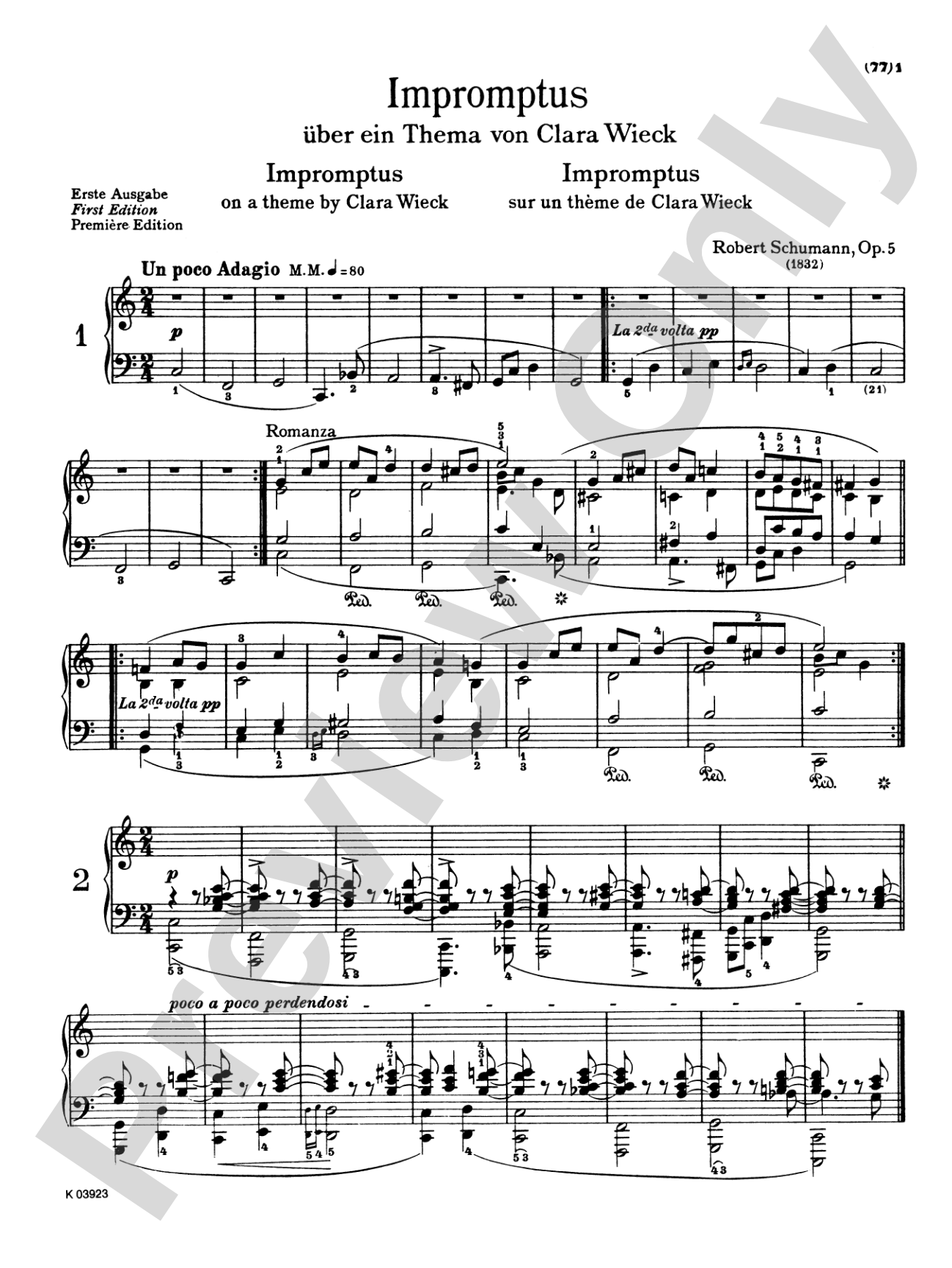
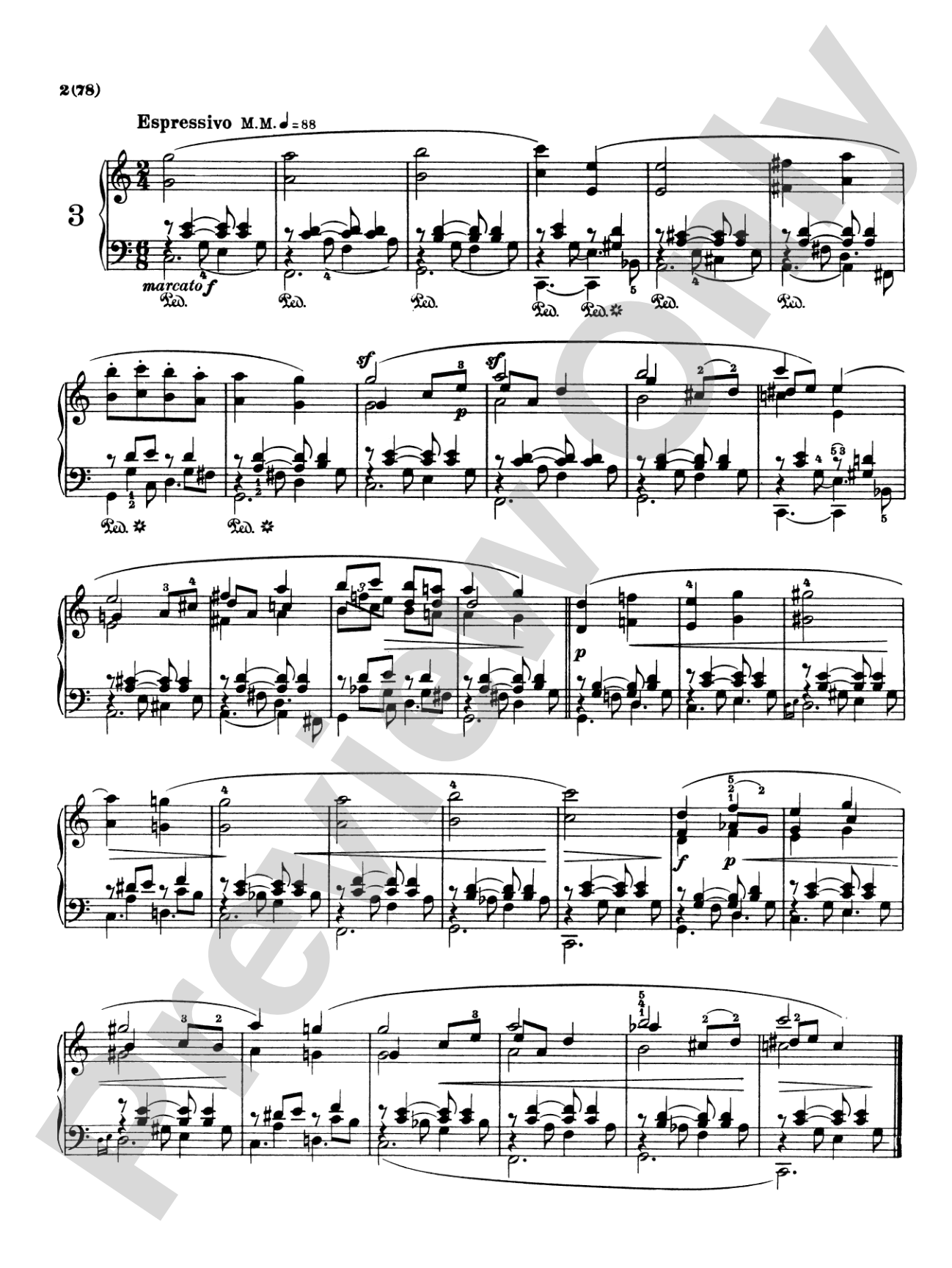
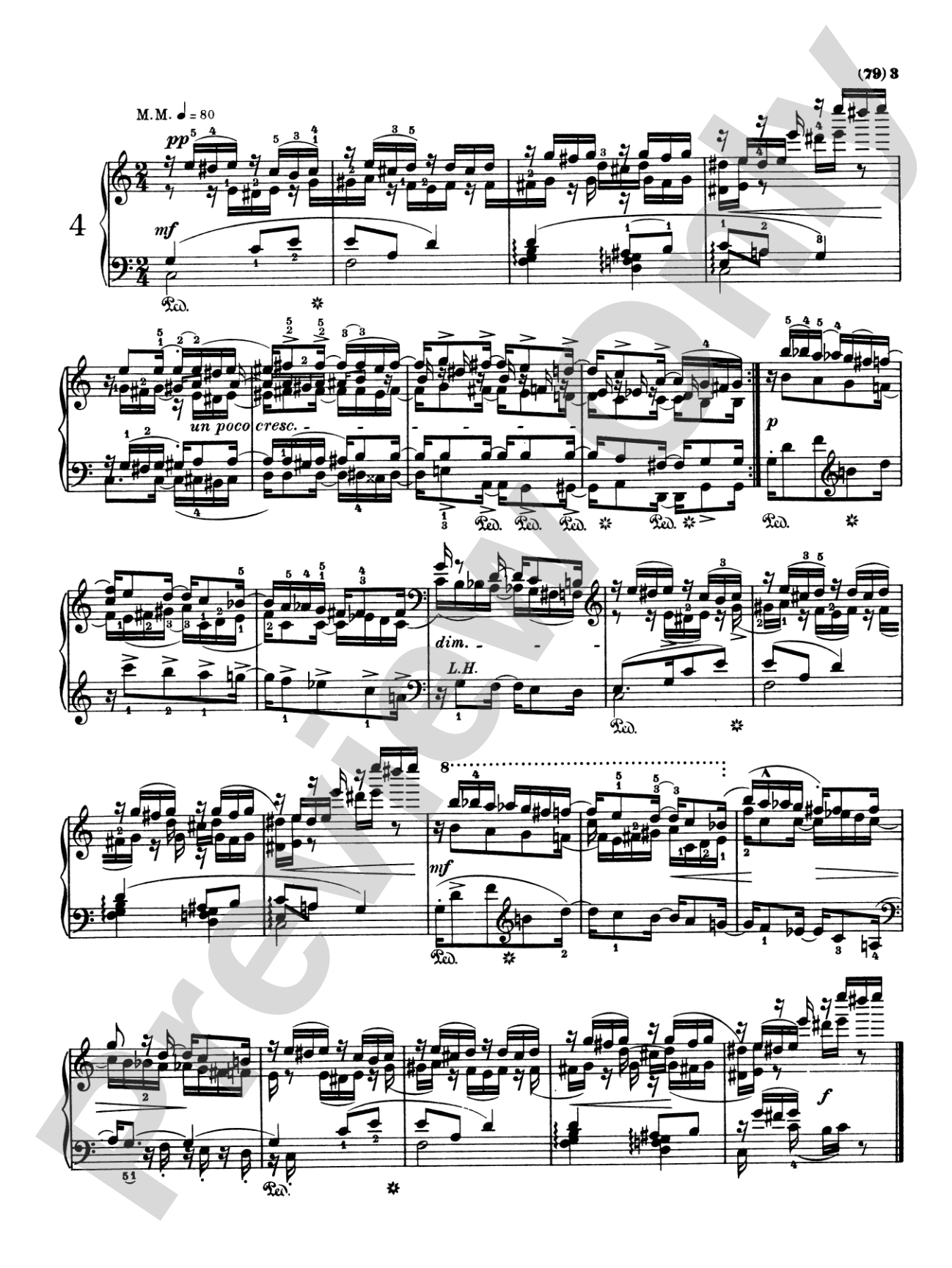
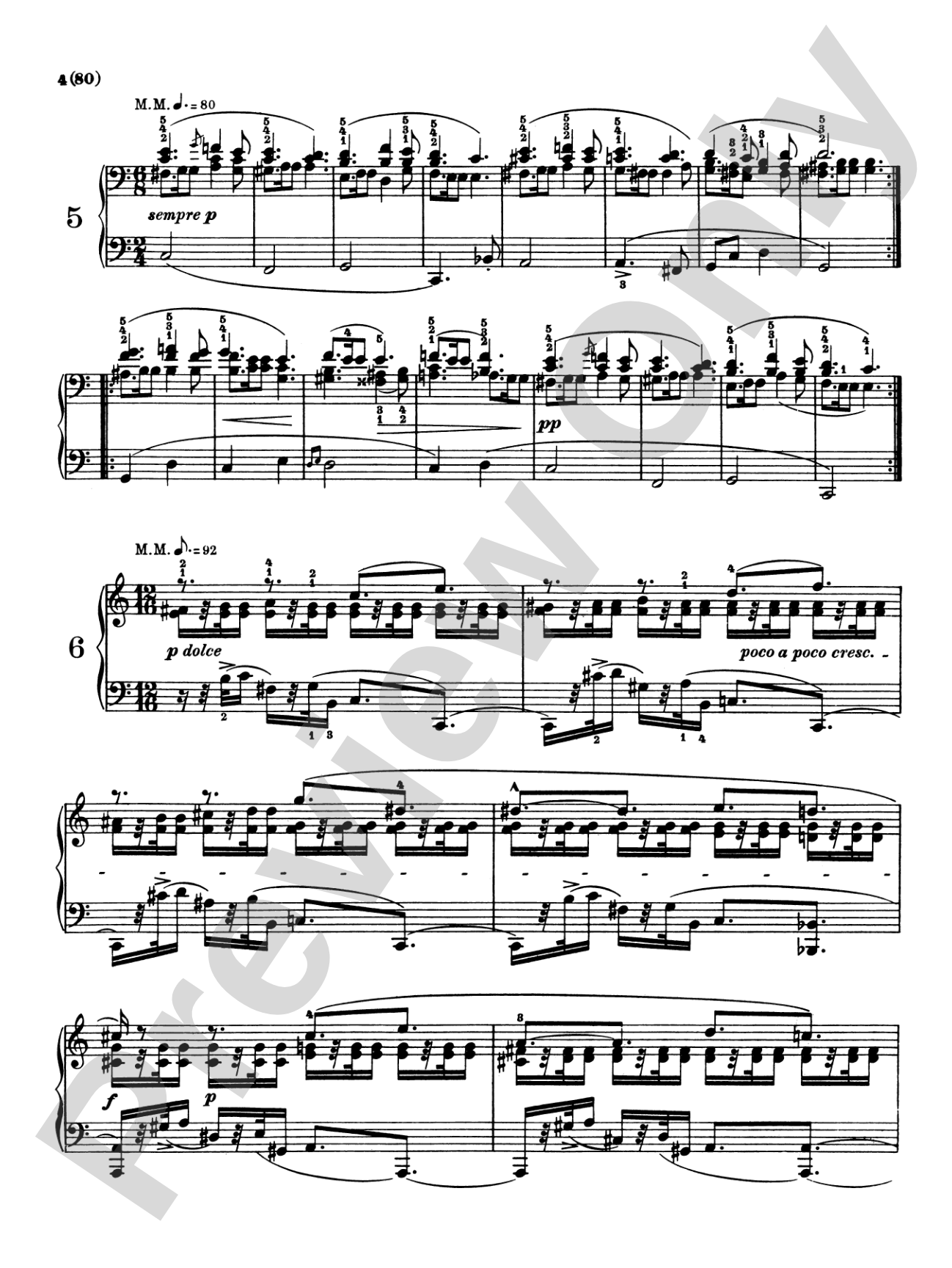

Schumann: Complete Works (Volume I)
By Robert Schumann
Item: 00-PC-0009317
$0.99
Pickup currently not available
Description
Complete Works, Clara Schumann Edition, Op. 1 - Op. 8


Don't just read it, hear it, play along with it, and watch your students grow with it. In MakeMusic Cloud, Schumann: Complete Works (Volume I) comes alive with professional accompaniment, adjustable tempo, and built-in practice tools that turn solo practice into real progress.
Open in the Player
Jump straight in and assign it today.
Start Your Free Trial
Open this title and explore the full library in minutes.
Sample Audio
No sample audio found.
Sample Video
No sample videos found.
Additional Details
Series:
Kalmus Edition
Publisher:
Alfred Music
Page Count:
184
SKU:
00-PC-0009317
More about this title
About the Composer: Robert Schumann
Robert Schumann (1810-1856) was a composer and music critic who fundamentally shaped Romantic piano literature. His early works for solo piano established new possibilities for the instrument, blending lyrical melody with ambitious harmonic language and intricate counterpoint. Schumann's output spans intimate character pieces, large-scale sonatas, and imaginative sets of variations, all marked by poetic titles and deeply personal expression.
As a founder and editor of the Neue Zeitschrift für Musik, Schumann championed musical innovation while maintaining rigorous artistic standards. His dual identity as composer and critic influenced how he conceived his own works: intellectually rigorous yet emotionally direct, technically demanding yet immediately communicative.
Why we love this
This collection captures Schumann's formative voice before his major sonatas and concerto emerged, showcasing the compositional confidence and harmonic daring that made him indispensable to Romantic repertoire. Programming these early works offers pianists a direct path into his aesthetic without the extreme technical demands of his later masterpieces, making it ideal for serious students ready to move beyond standard 19th-century fare. The breadth of works across 184 pages means you can select pieces that match your students' level while maintaining artistic integrity.
What to expect
Schumann's early piano works pulse with lyrical intensity and intimate introspection, balancing Classical formal clarity with Romantic harmonic adventure. These pieces invite dialogue between the poetic and the architectural; passages of song-like simplicity give way to surprising harmonic twists and episodic developments that feel simultaneously logical and emotionally surprising. You'll encounter moods that shift between charming lightness and profound melancholy, often within a single piece.
Who it's for
Advanced high school pianists, undergraduate music majors, and conservatory students ready to engage with Romantic-era compositional technique and expressive depth. Teachers preparing students for college auditions or competitions will find substantial repertoire at multiple difficulty levels throughout the volume. Private studio instructors seeking to deepen students' understanding of early Romanticism will appreciate having Schumann's complete early works in one edition.
How to get the most out of it
- Shape the melodic lines with control over weight and release; Schumann's textures often hide the tune in inner voices, and careful voice leading rewards patient practice.
- Respect the indicated tempo markings and character directions (Lebhaft, Leidenschaftlich, etc.). They define the emotional architecture as much as harmonic choices do.
- Balance the often-dense left-hand figuration so accompaniment never overwhelms the musical idea. Voicing becomes as important as technical accuracy.
- Approach the harmony with awareness of Schumann's chromatic voice-leading tendencies; unexpected key areas emerge naturally when inner voices are clearly voiced.
How to use it
Curate a recital around Schumann's formal approaches to introduce students to how Romantic composers extended Classical structures; a single-composer program of works from Op. 1-8 can trace his harmonic and stylistic development across three years. These pieces also pair well with Brahms or Mendelssohn on mixed-composer programs, providing a stylistic bridge between Classical and later Romantic aesthetics. For teaching purposes, use them throughout the year as students progress in technique; the variety of forms and difficulty levels means you'll always find something appropriately challenging.
Skills your students will build
- Voice-leading independence in thick textures and chromatic harmony
- Interpretation of varied character markings and Romantic aesthetic direction
- Formal analysis of Classical forms expanded through harmonic experimentation
- Pedal management in pieces with complex harmonic resonance
- Sight-reading of 19th-century notation and performance conventions