
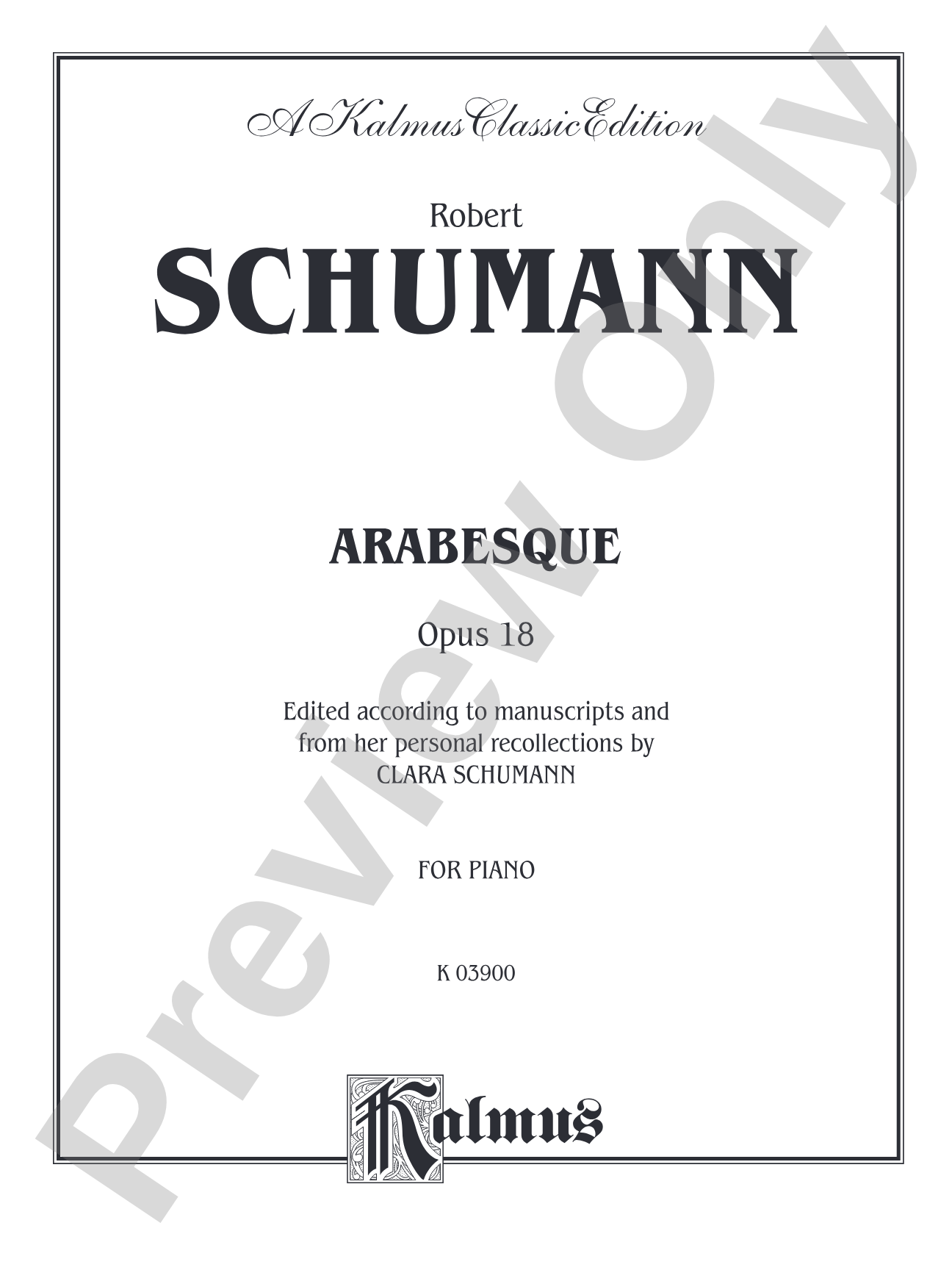
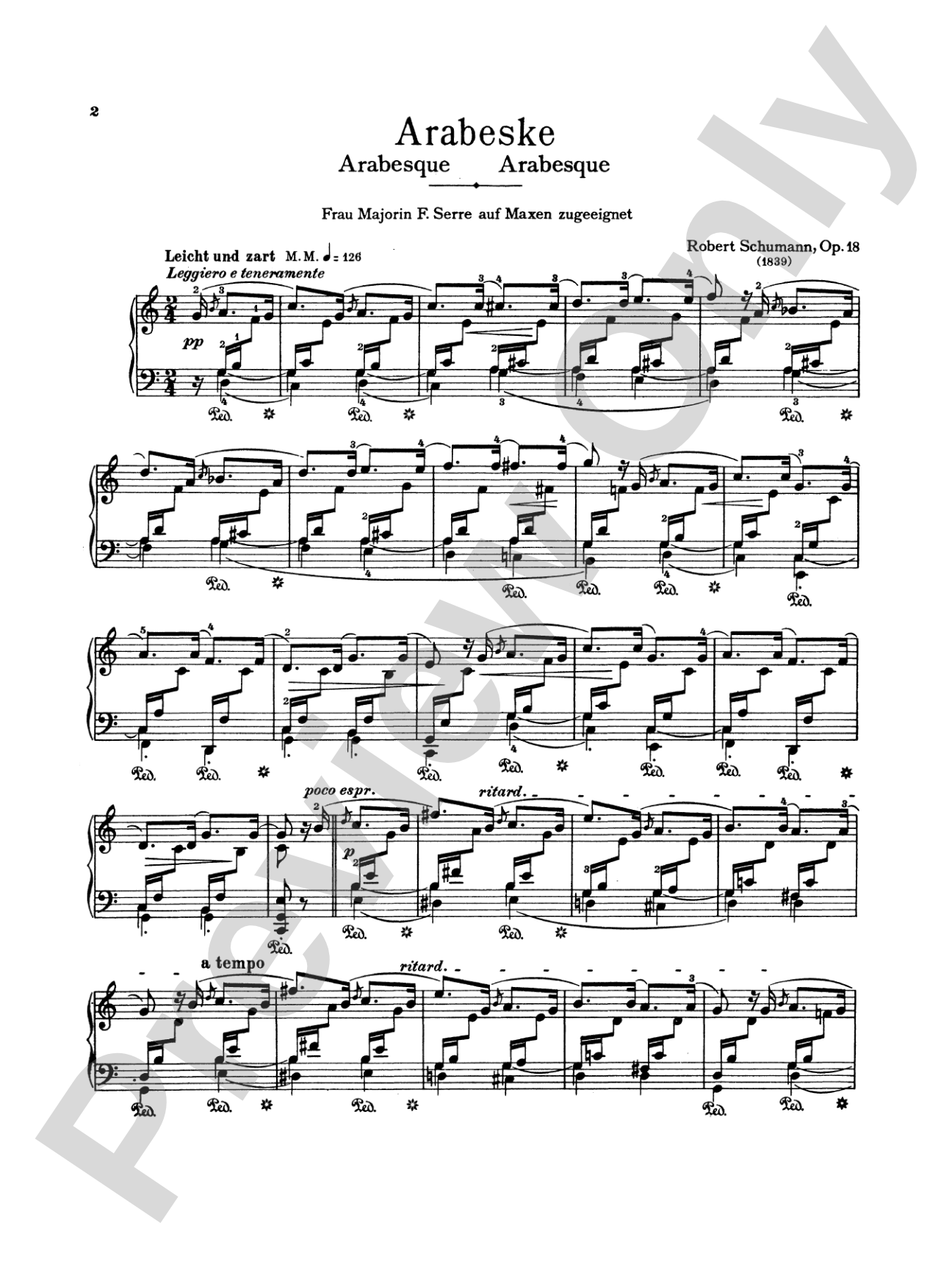
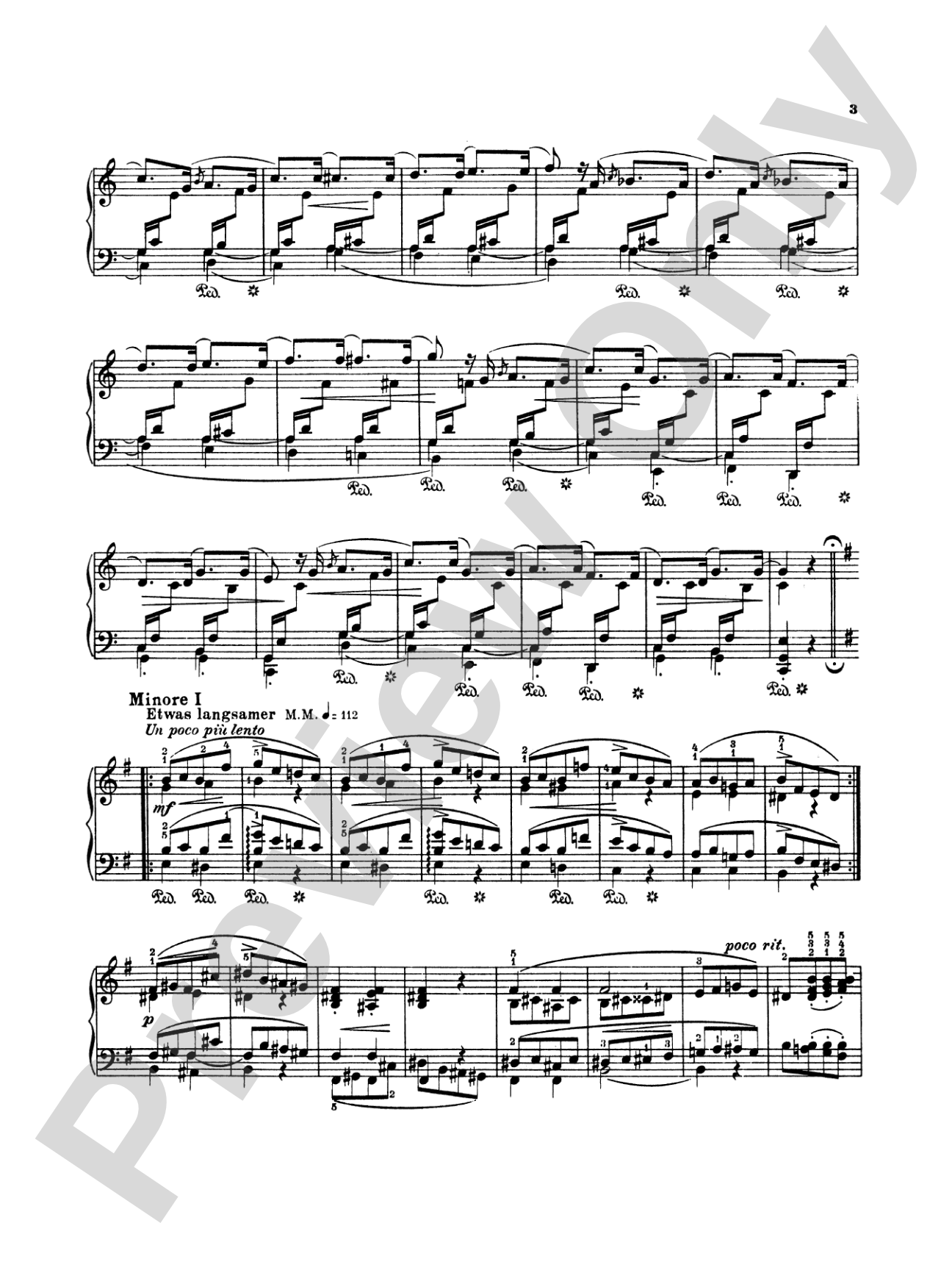
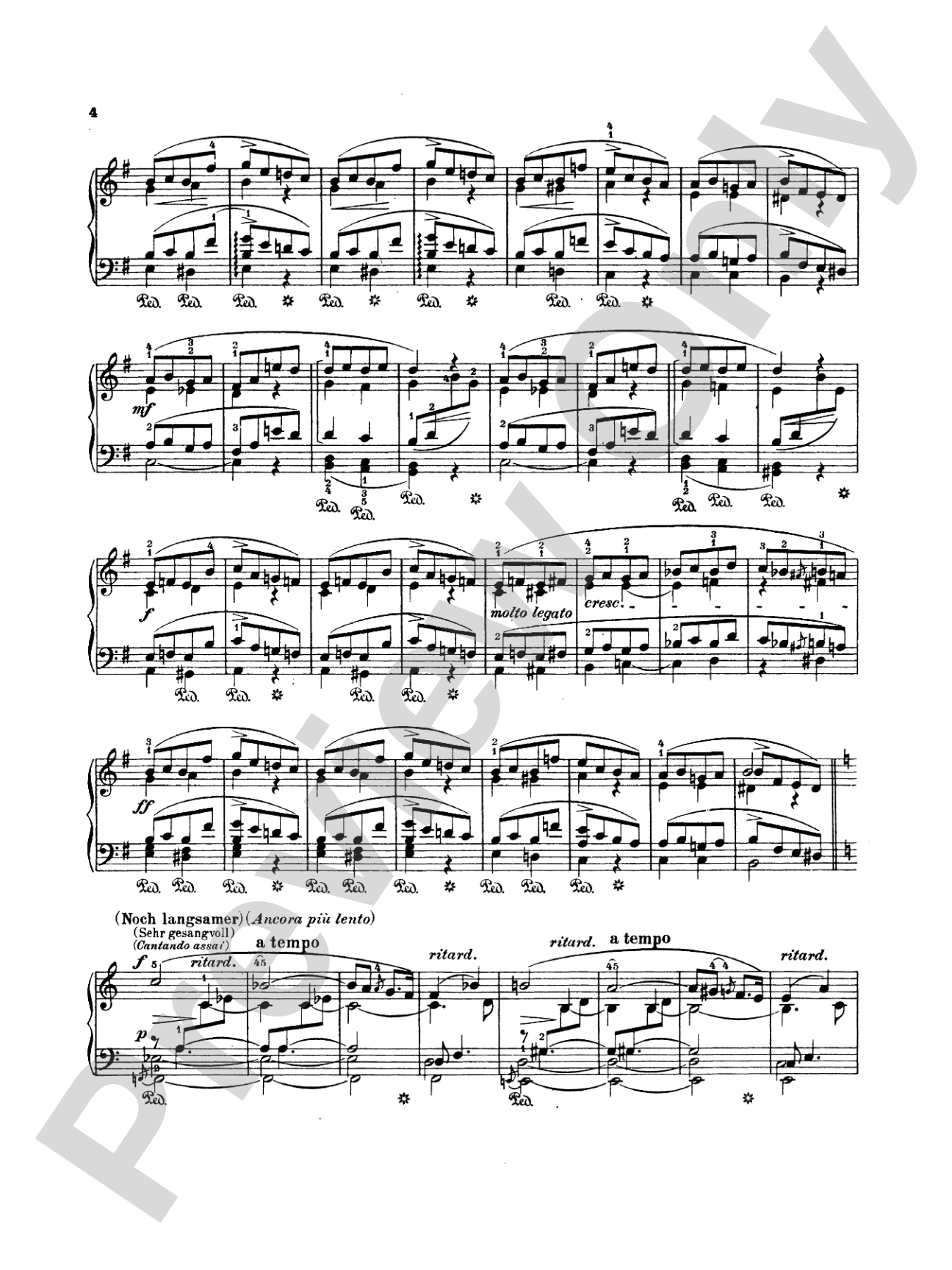
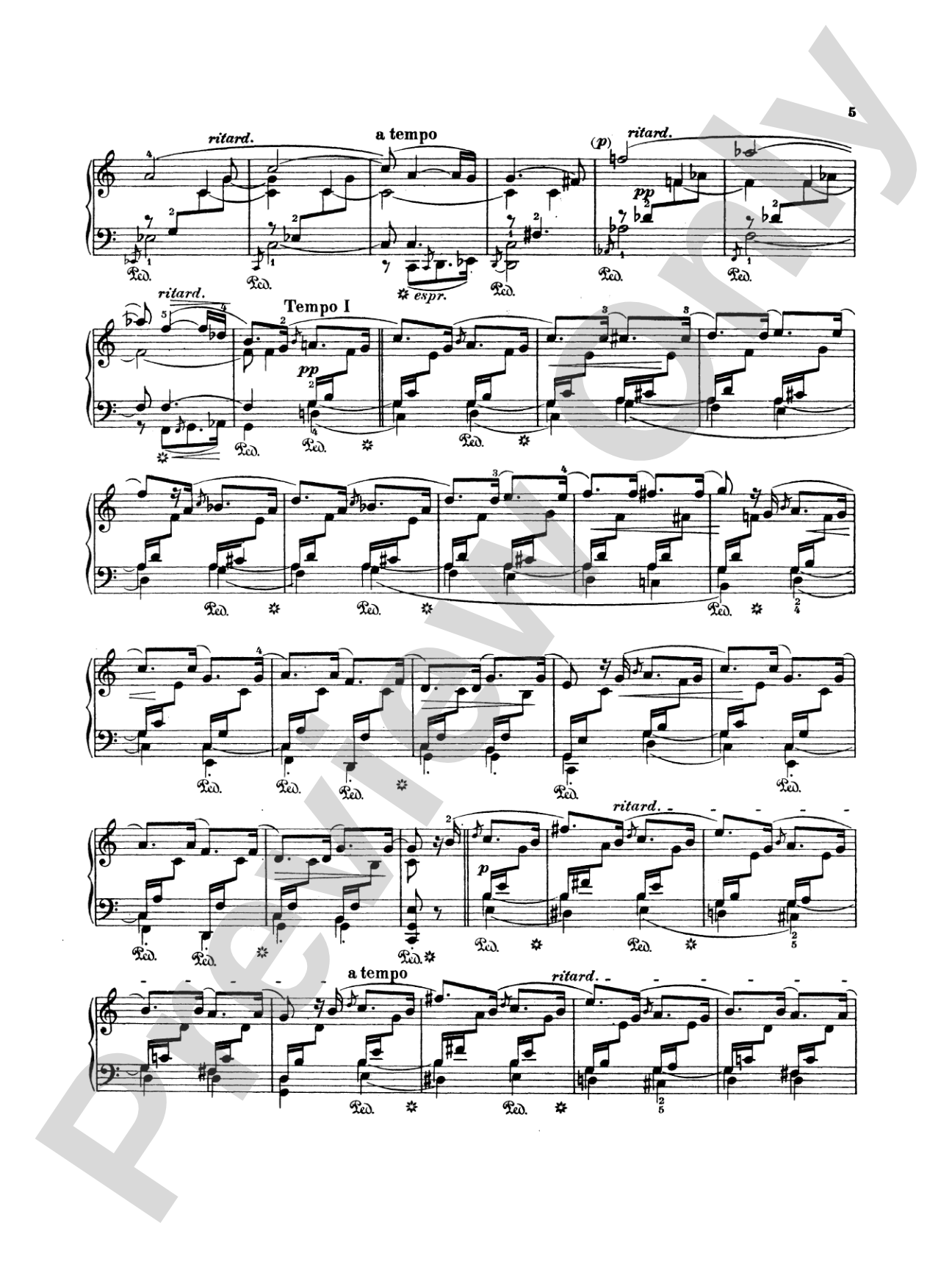
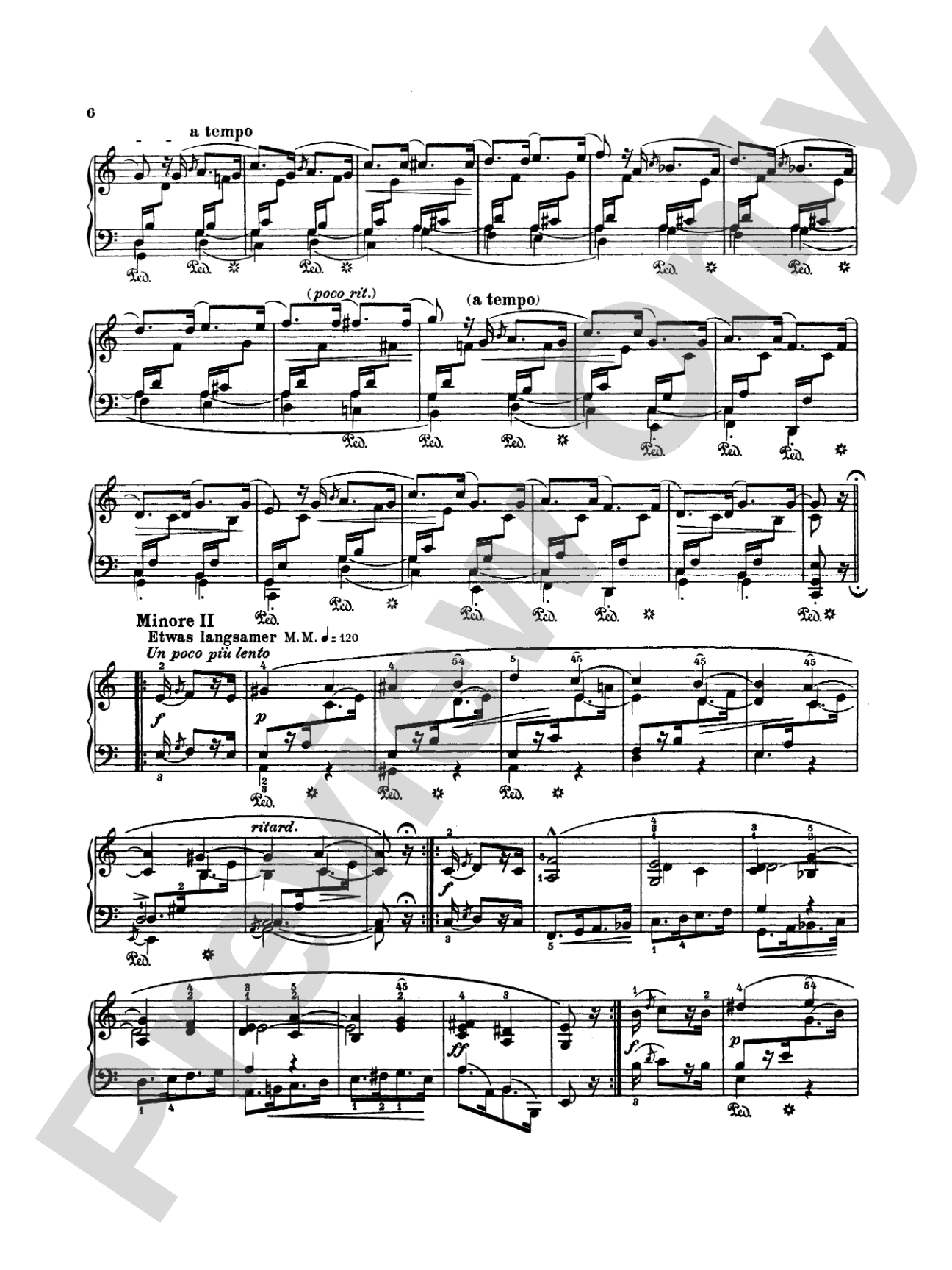
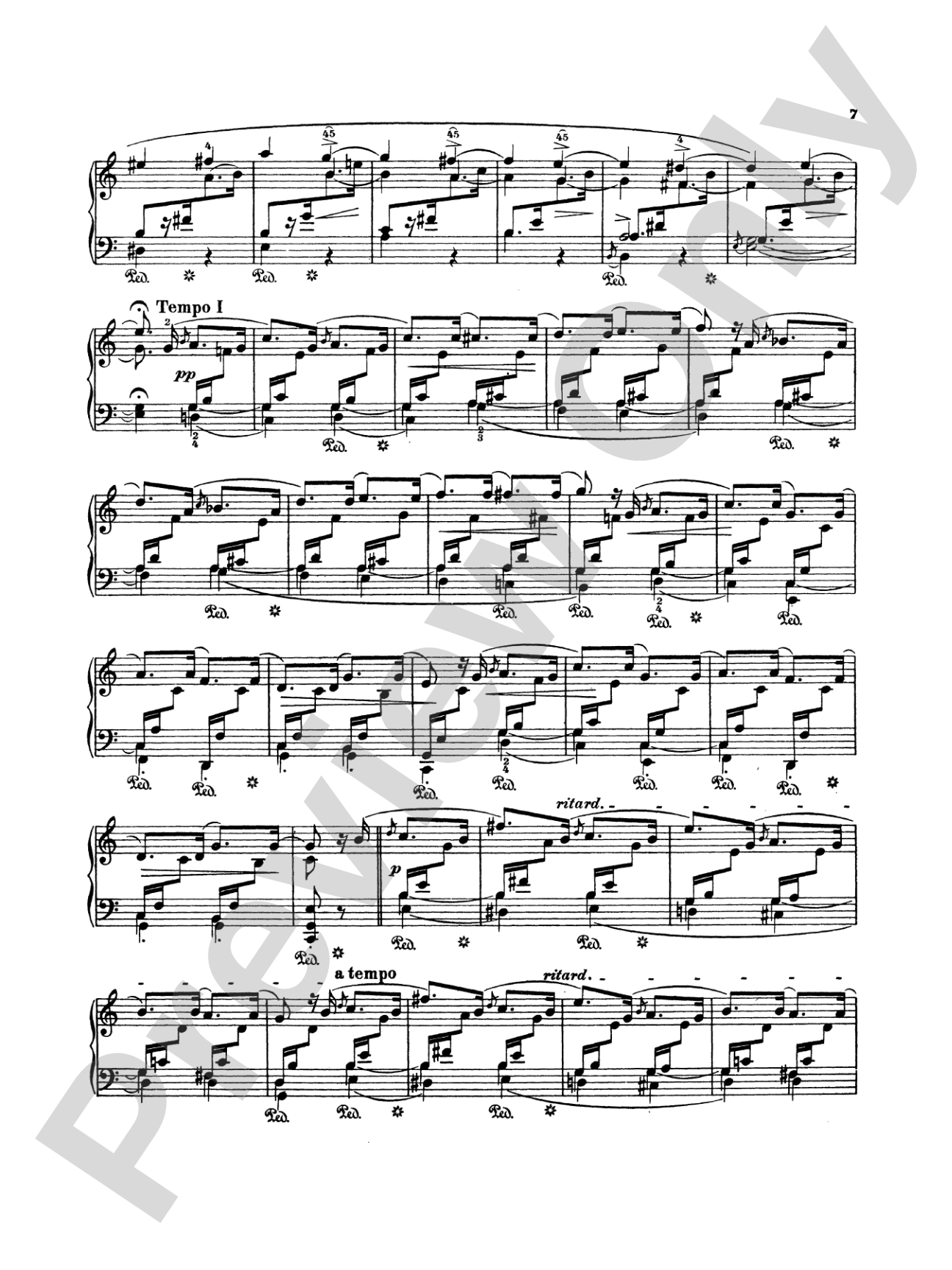
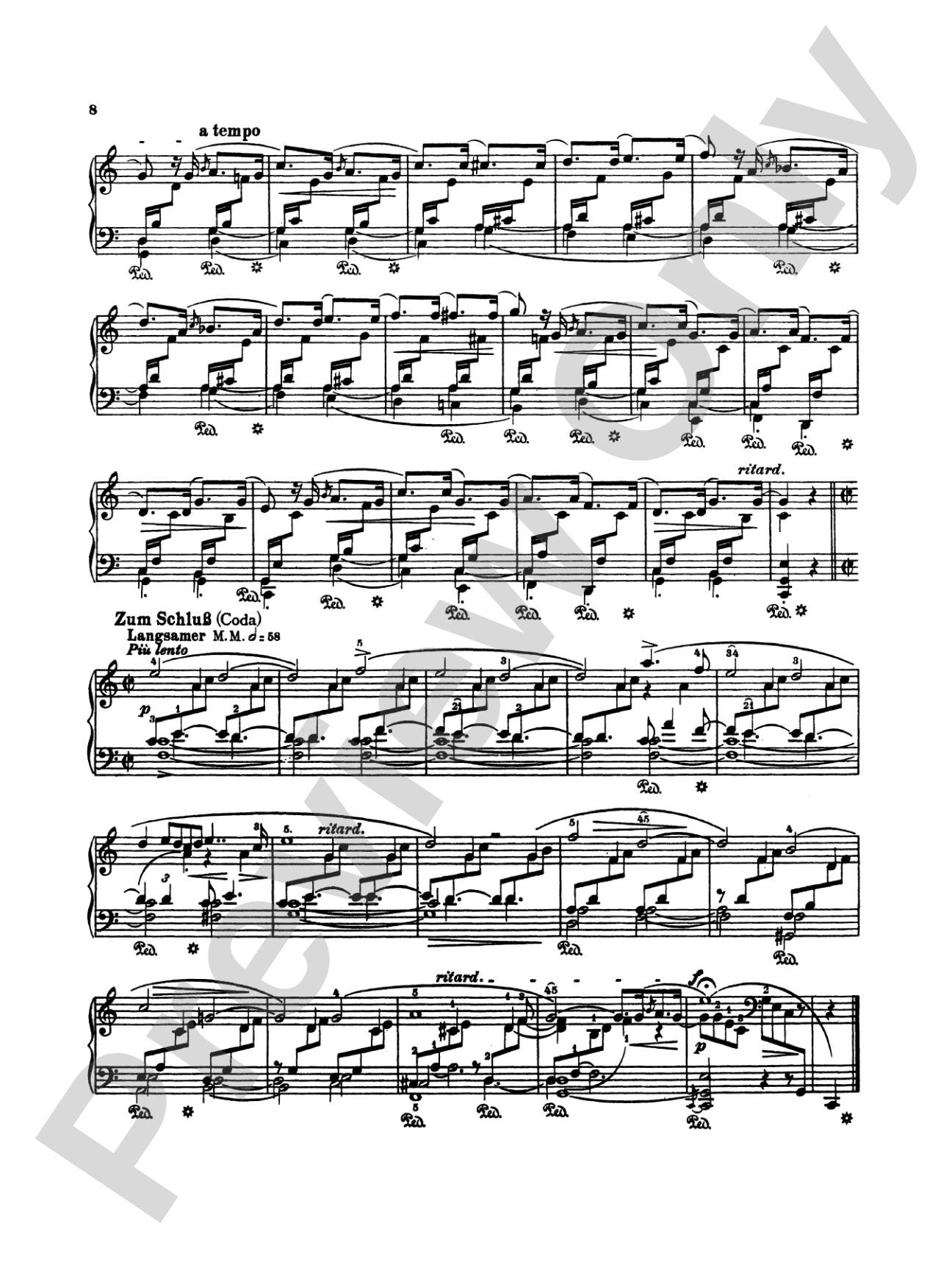

Schumann: Arabesque: Piano
By Robert Schumann / ed. Clara Schumann
Level: Intermediate / Advanced
Item: 00-PK-0003323

$7.99
Pickup currently not available
Parts Added to Cart!
Related Items
Arabesque, Opus 18: Piano |
$7.95
|
View |
Description


Don't just read it, hear it, play along with it, and watch your students grow with it. In MakeMusic Cloud, Schumann: Arabesque: Piano comes alive with professional accompaniment, adjustable tempo, and built-in practice tools that turn solo practice into real progress.
Open in the Player
Jump straight in and assign it today.
Start Your Free Trial
Open this title and explore the full library in minutes.
Sample Audio
No sample audio found.
Sample Video
No sample videos found.
Additional Details
Series:
Kalmus Edition
Publisher:
Alfred Music
Page Count:
8
SKU:
00-PK-0003323
More about this title
About the Composer: Robert Schumann
Robert Schumann (1810, 1856) was a central figure of the Romantic piano tradition, equally gifted as a composer and music critic. His piano works balance lyrical melody with harmonic innovation, and they remain cornerstones of the intermediate-to-advanced pianist's repertoire. Schumann's gift for writing character pieces, short, focused works with distinct moods, made him a bridge between the Classical forms his generation inherited and the more experimental language of his contemporaries.
Why we love this
Arabesque sits at the heart of Schumann's character piece tradition, offering the kind of musical substance that rewards serious study without sacrificing accessibility. The piece balances Romantic lyricism with genuine technical challenge, making it an ideal recital choice for intermediate-advanced pianists ready to engage with 19th-century compositional craft.
What to expect
Introspective and gently ornamental, with a lyrical melody that unfolds over shimmering harmonic support. The piece evokes the salon world of 19th-century Europe while maintaining an intimate, almost confessional tone throughout.
Who it's for
Intermediate-advanced pianists developing their Romantic repertoire and looking for substantial character pieces beyond the most familiar salon works. Teachers seeking recital material that showcases harmonic refinement and expressive maturity without the extremes of virtuosity.
How to get the most out of it
- Attend carefully to voice leading in the accompaniment; Schumann's inner voices often carry harmonic color that disappears if relegated to the background.
- Shape each phrase with the rubato that Romantic convention expects, but anchor the timing to a clear pulse underneath so the flexibility serves the architecture rather than obscuring it.
- Differentiate the registral landscapes; the piece explores a wide range, and clarity in the middle register prevents muddiness when the left hand ventures lower.
How to use it
Program this as a bridge between the Classical and later Romantic eras, or pair it with other character pieces from Schumann's output for a recital focused on 19th-century miniature forms. Its moderate length (8 pages) makes it suitable for concert segments exploring the evolution of lyrical writing for solo piano.
Skills your students will build
- Pedal control in the sustaining of harmonic colors across registers
- Rubato and expressive timing within a stable pulse
- Voice leading awareness, particularly in accompanying figures
- Voicing and balancing between treble melody and inner harmonic layers
- Interpretation of Romantic-era rubric and stylistic convention