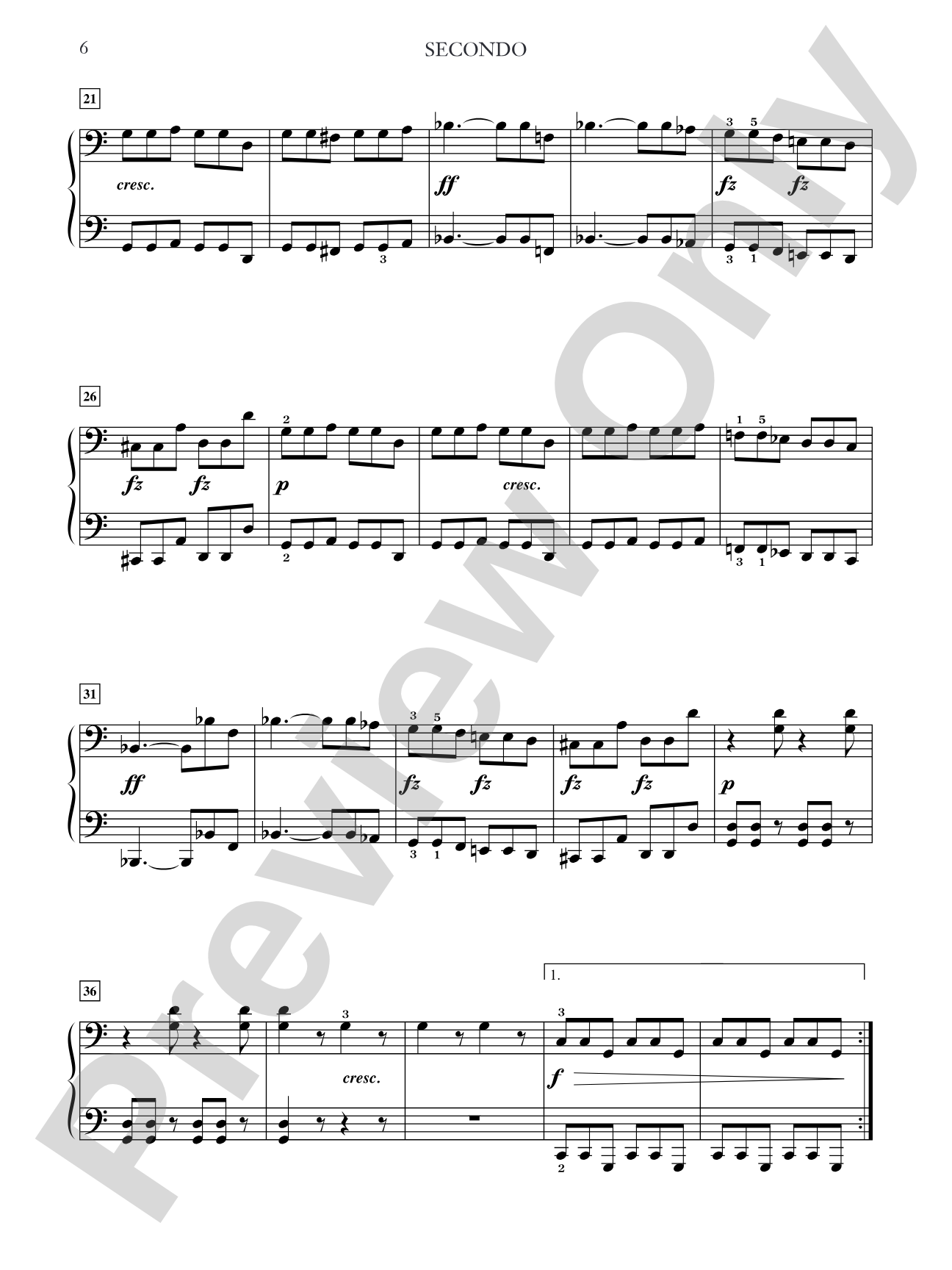
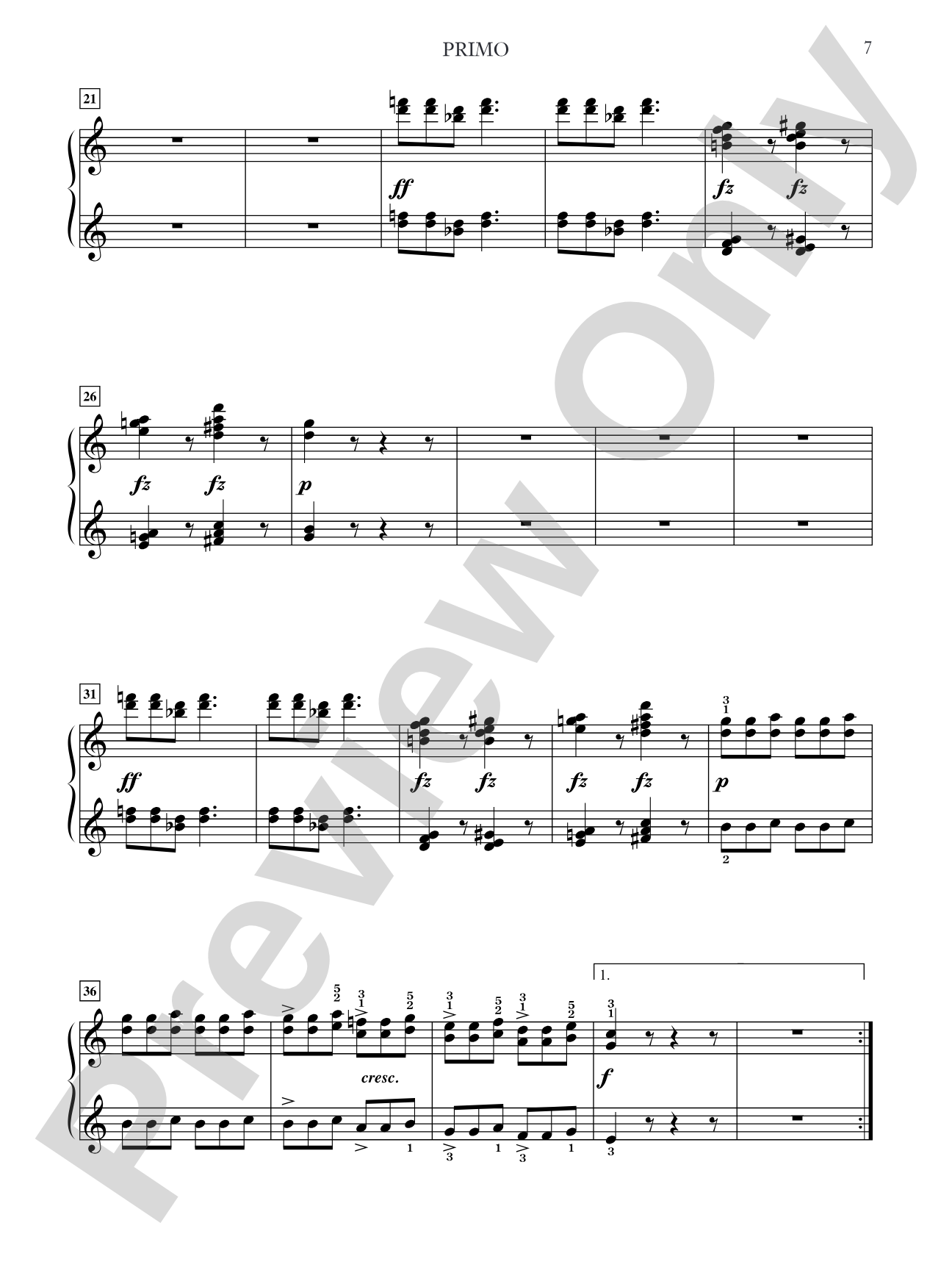
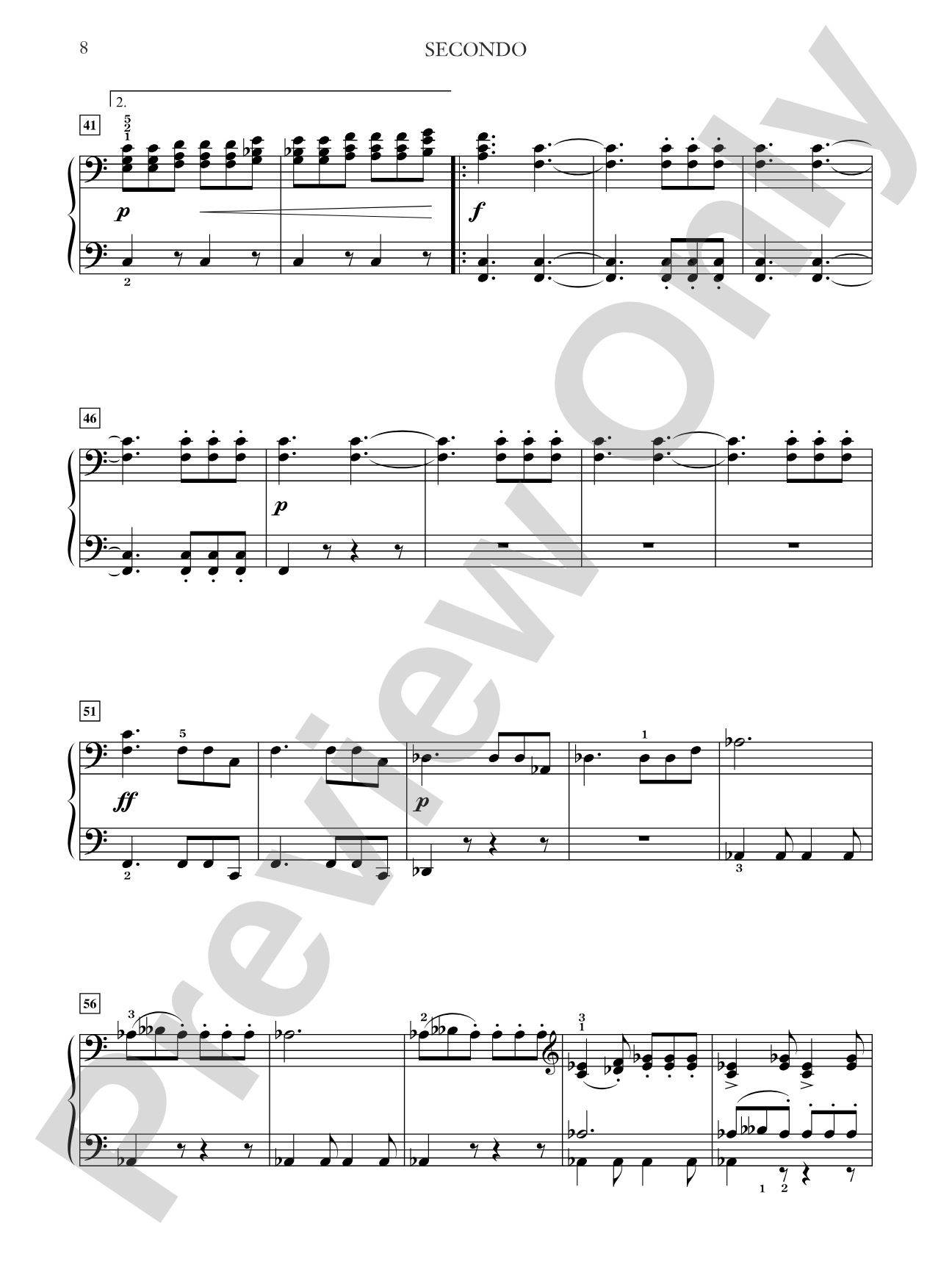
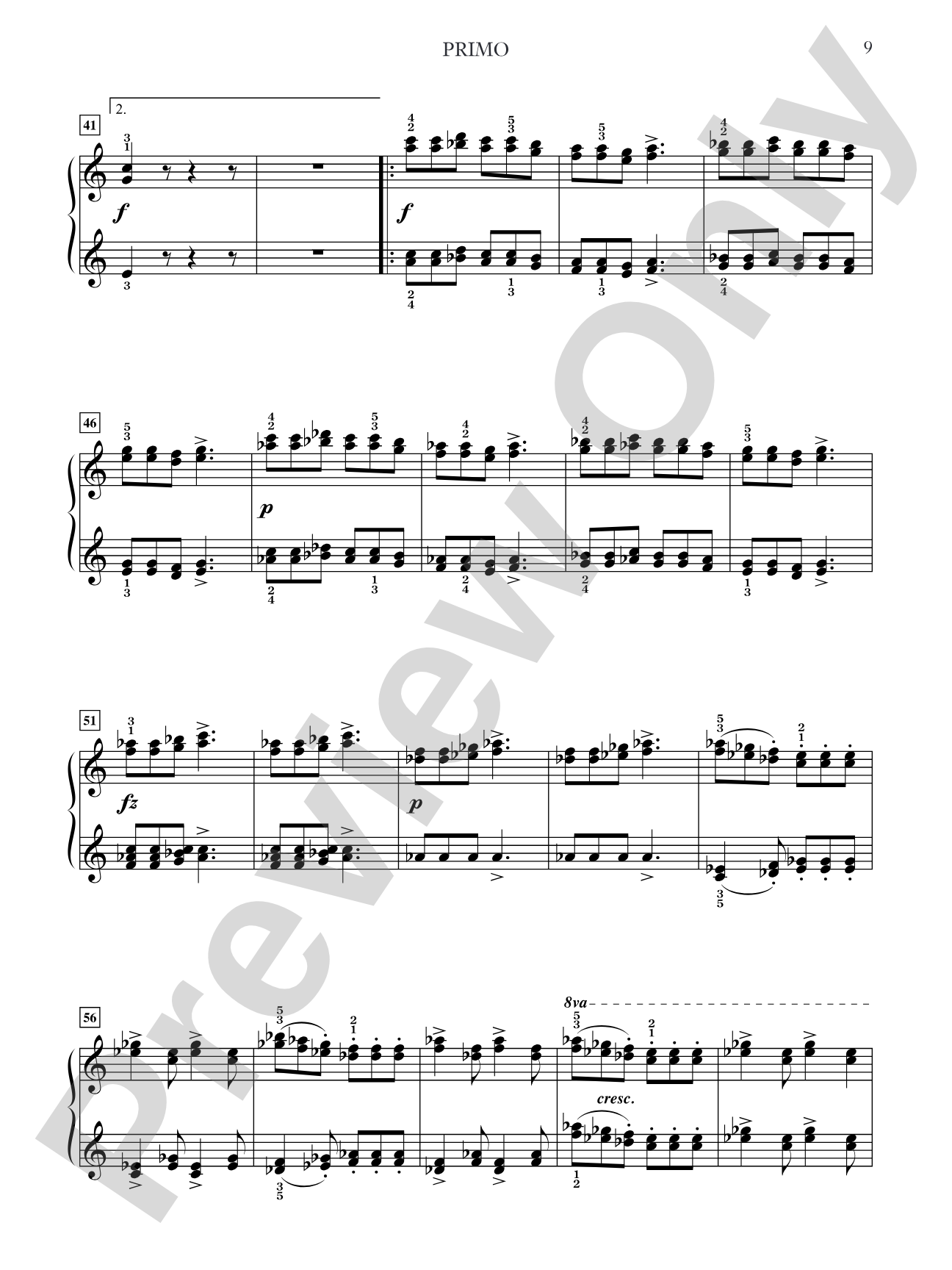
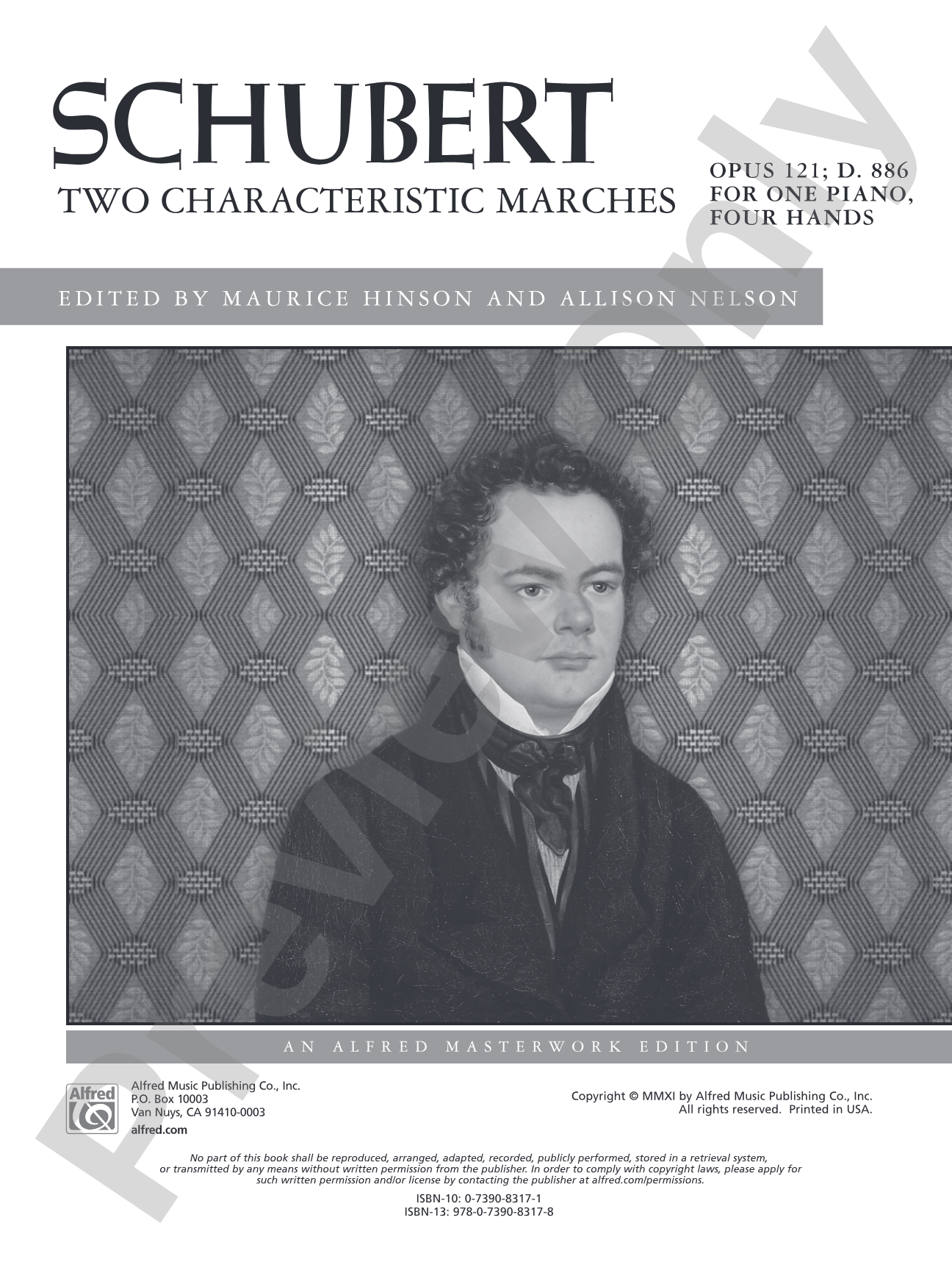
Schubert: Two Characteristic Marches, Opus 121, D. 886 - Piano Duet (1 Piano, 4 Hands) Sheet Music Preview

Schubert: Two Characteristic Marches, Opus 121, D. 886 - Piano Duet (1 Piano, 4 Hands): Piano Duets & Four Hands

By Franz Schubert / ed. Maurice Hinson and Allison Nelson

Level: Advanced

Item: 00-PB-0000610

Digital Download
$8.99
Description
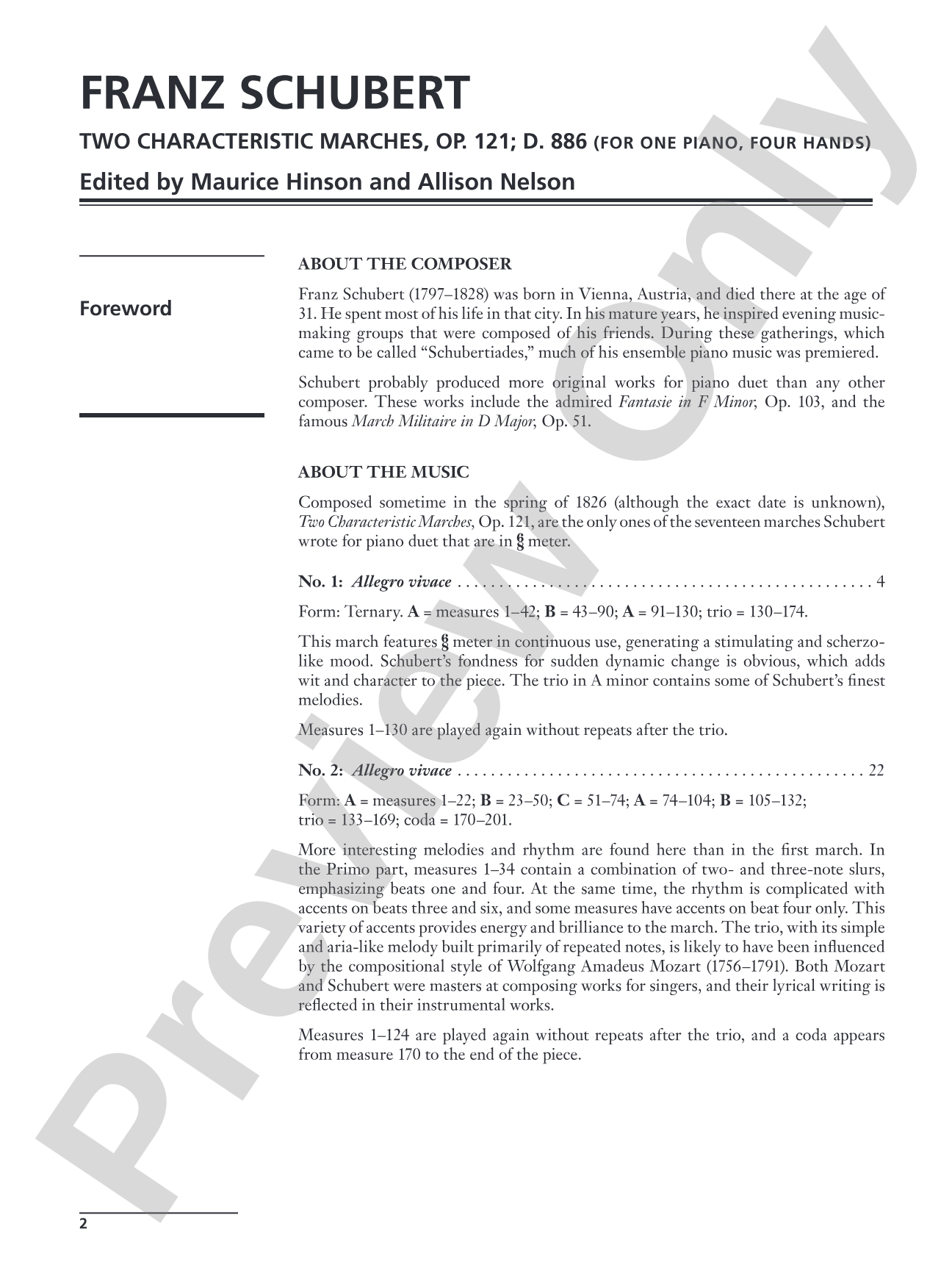
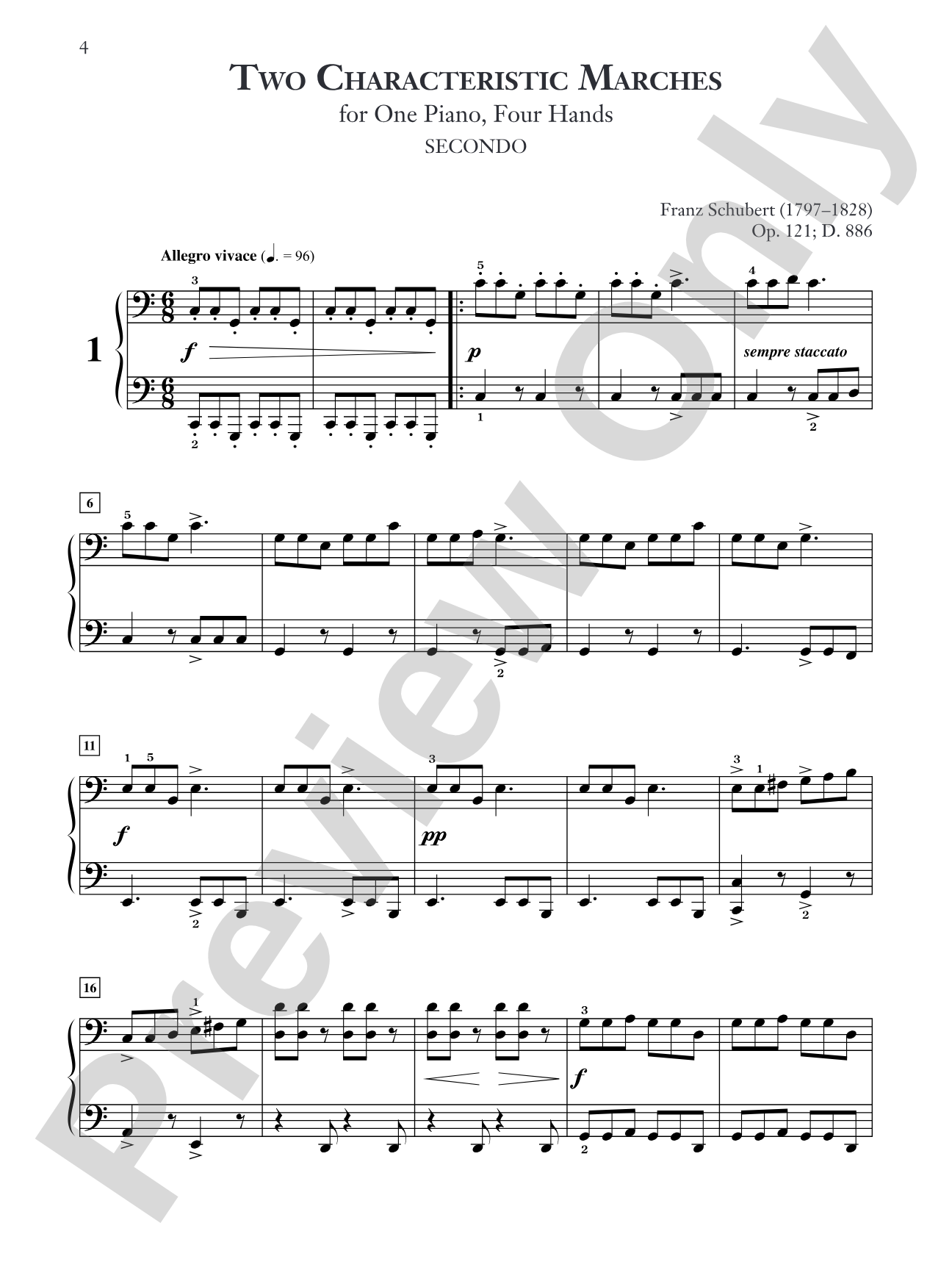
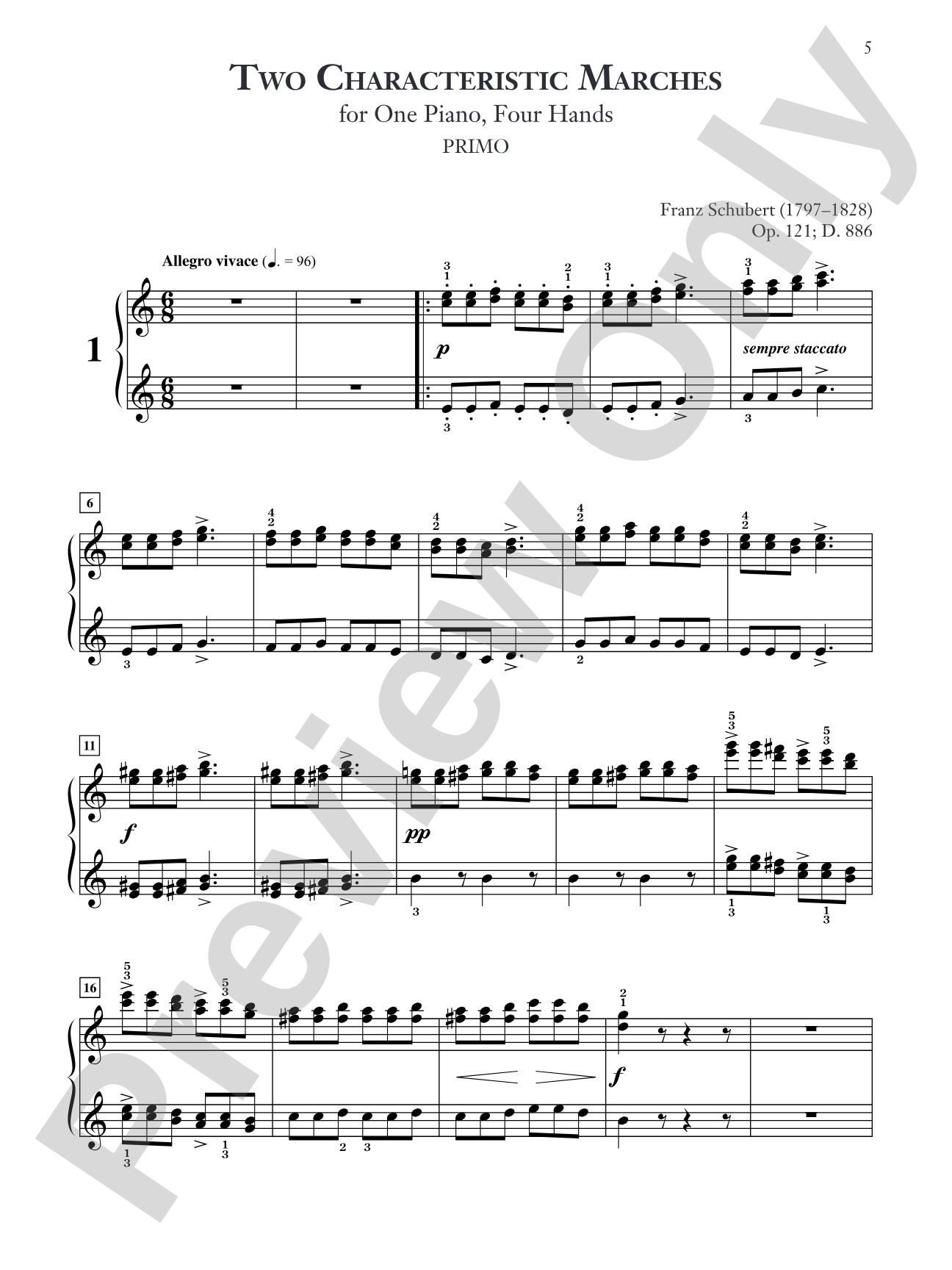
Franz Schubert was one of the most prolific composers of ensemble piano music, and these two marches demonstrate his mastery at writing for one piano, four hands. The Two Characteristic Marches, Op. 121, were composed in 1826 and are the only marches that Schubert wrote for piano duet that are in 6/8 meter. Both marches are in C major and are scherzo-like in mood, revealing Schubert's fondness for sudden dynamic changes, his musical wit, and his fine melodic writing. A Federation Festivals 2020-2024 selection.

Schubert: Two Characteristic Marches, Opus 121, D. 886 - Piano Duet (1 Piano, 4 Hands): Piano Duets & Four Hands isn't in MakeMusic Cloud just yet...but it could be. Let us know you'd like to see it, and you'll help shape what comes next. In the meantime, start a free trial and dive into thousands of interactive titles your students can play along with today.

Sample Audio
No sample audio found.
Sample Video
Additional Details
Series: Alfred Masterwork Edition
Publisher: Alfred Music
Page Count: 44
SKU: 00-PB-0000610

More about this title

About the Composer: Franz Schubert

Schubert composed over 600 works across nearly every genre during his brief 31 years, yet he remains most celebrated for his songs and chamber music. His gift for melody was unmatched, and he brought that lyrical sensibility into instrumental forms that might otherwise feel merely structural. His approach to ensemble writing, particularly for keyboard duets, elevated the form from salon entertainment to art music of genuine substance.

Why we love this

These marches stand apart because they're the only ones Schubert wrote for piano duet in 6/8 meter, giving them a lilting, almost dance-like quality that's immediately distinctive. The scherzo-like character means they reward pianists who can navigate sudden dynamic shifts and keep the wit intact, and that combination of technical demand with genuine musical humor makes them satisfying to work through in rehearsal.

What to expect

Light yet purposeful. The C major tonality and dancing 6/8 meter create an almost buoyant sensation, but the harmonic language and sudden tonal shifts prevent these marches from ever feeling simple or sentimental. There's musical intelligence at work here, a composer showing off his ability to be both graceful and clever.

Who it's for

Advanced pianists preparing for a festival performance, competitive adjudication, or a recital that calls for substantial repertoire. These works suit pianists who enjoy witty, character-driven pieces over purely virtuosic display, and pairs who want to explore Schubert's mastery at writing texture and voice interaction within a single instrument.

How to get the most out of it

  • The 6/8 meter wants a lilting lilt; avoid letting either hand drag into a plodding feel by thinking in two rather than six.
  • Mark the sudden dynamic changes during rehearsal with pencil reminders so neither pianist misses the shifts that give these pieces their character.
  • Balance the primo and secondo carefully in passages where both hands are moving. Neither voice should disappear into accompaniment texture.
  • Test the tempi you choose in an actual room. These pieces can feel rushed or sluggish depending on acoustics and how clearly the 6/8 pulse carries.

How to use it

Program these as a pairing on a recital featuring multiple Schubert works, or use them to open a duet-focused concert where you want to establish sophistication and charm immediately. They also work well as a bridge piece between a heavy classical sonata and contemporary works, giving audiences a moment of elegance without letting the energy drop.

Skills your students will build

  • Reading and performing in 6/8 meter with two-beat phrasing
  • Coordinating dynamic changes between primo and secondo voices in real time
  • Balancing independence of hands across register and texture
  • Shaping lyrical lines within a dance-like harmonic framework
  • Responding to sudden harmonic movement and key inflection

You May Also Like