
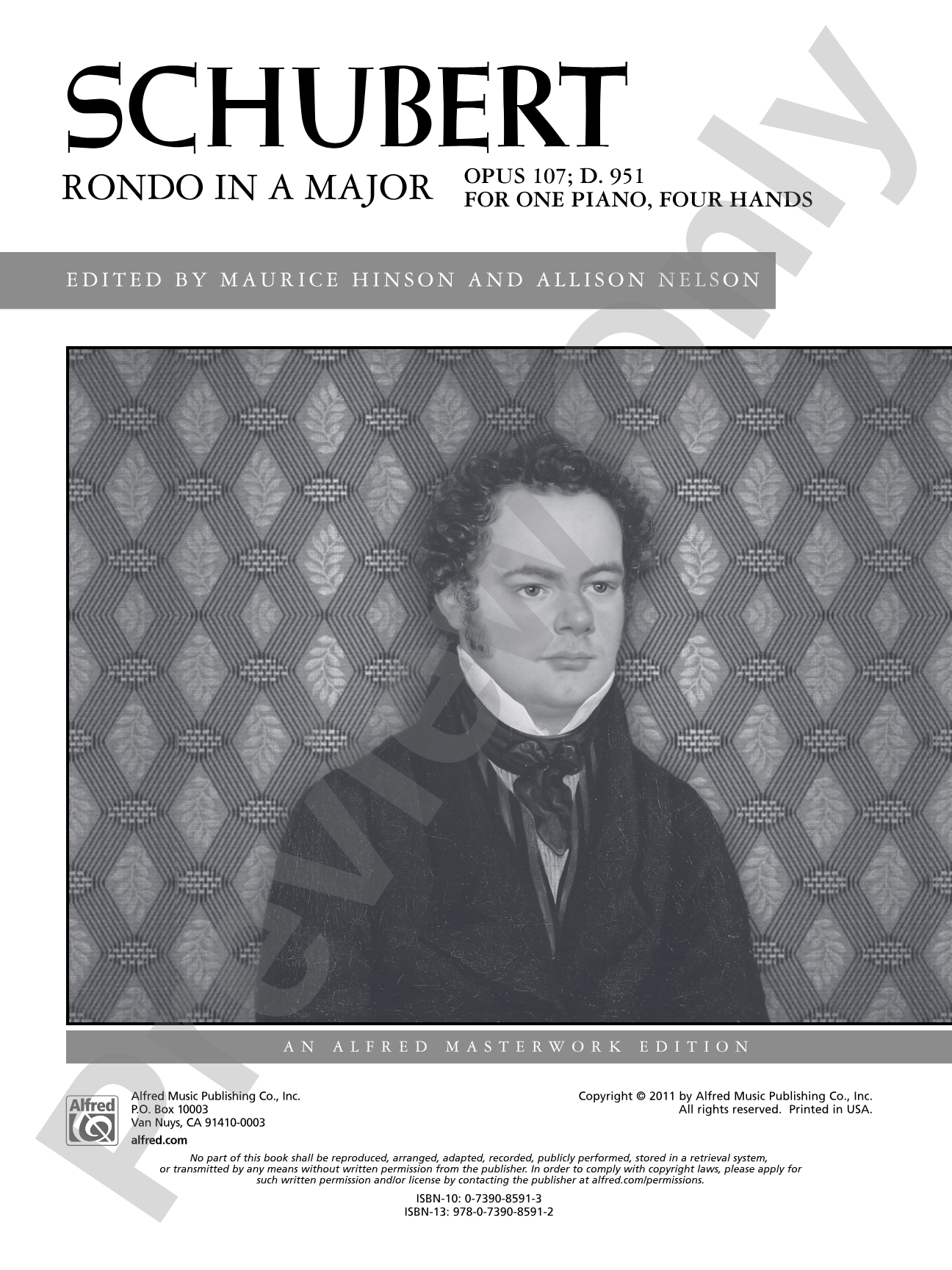

Schubert: Rondo in A Major, Opus 107, D. 951 - Piano Duet (1 Piano, 4 Hands): Piano Duets & Four Hands
By Franz Schubert / ed. Maurice Hinson and Allison Nelson
Level: Advanced
Item: 00-PB-0000574
$7.99
Pickup currently not available
Description
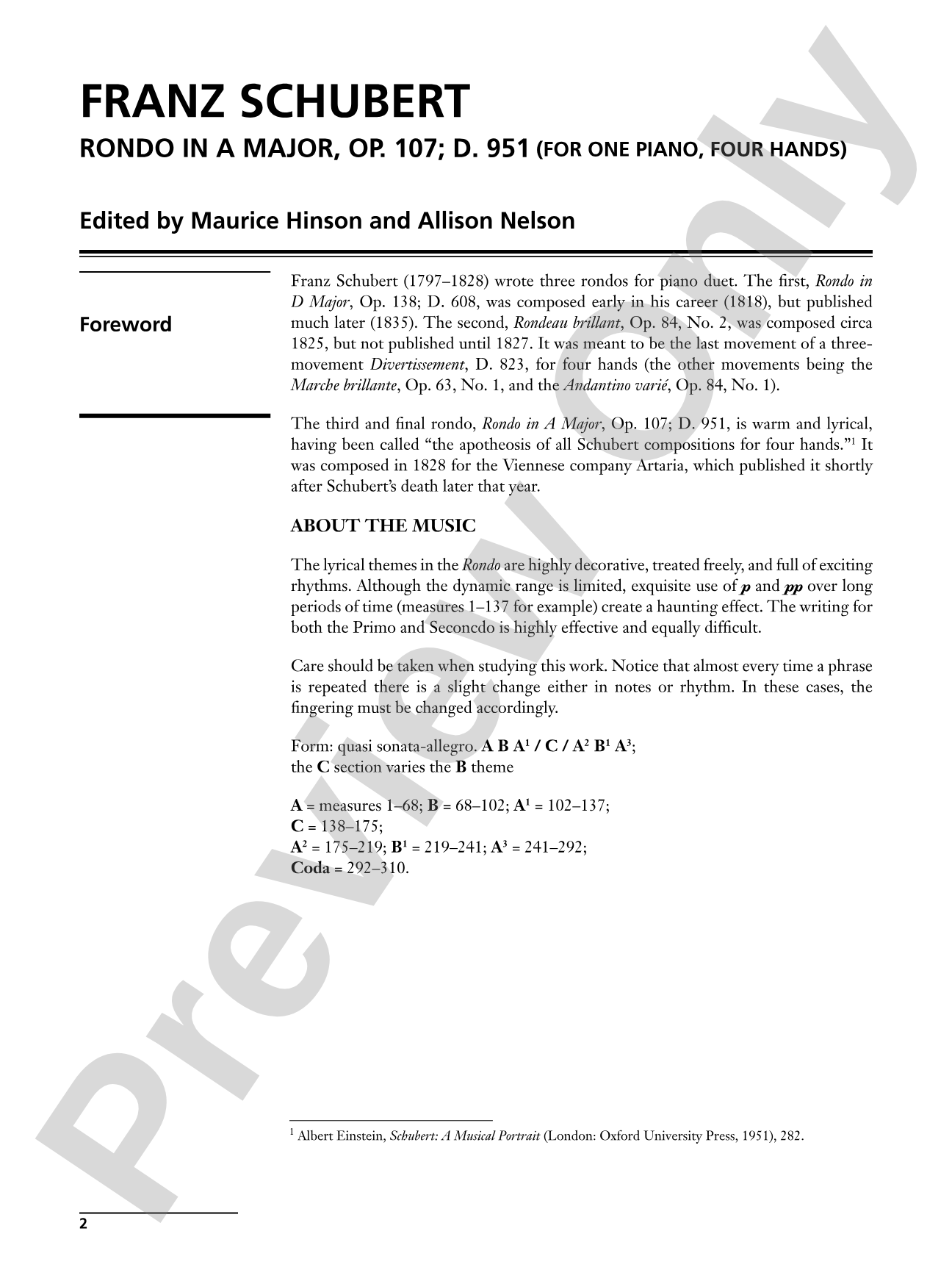
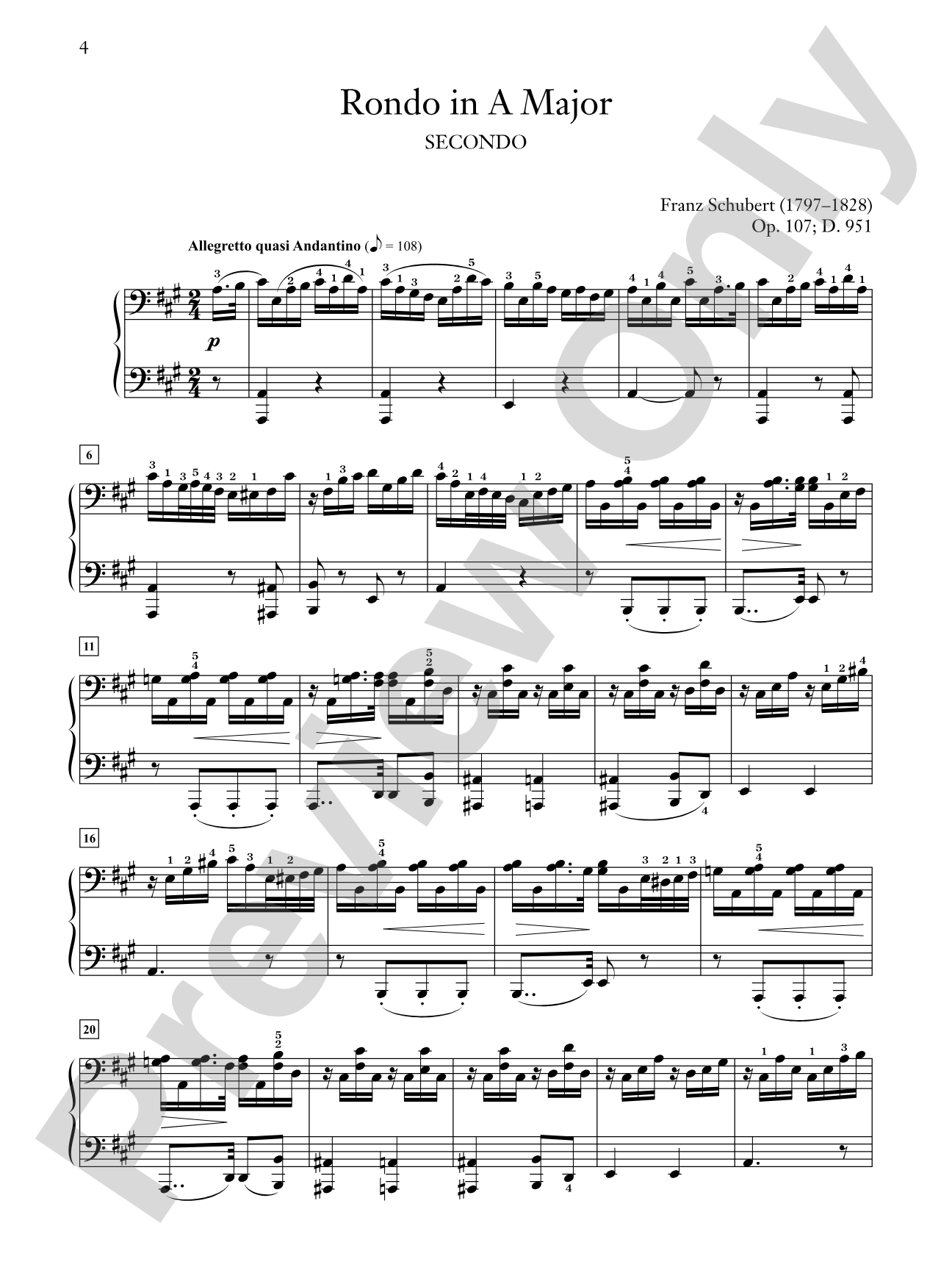
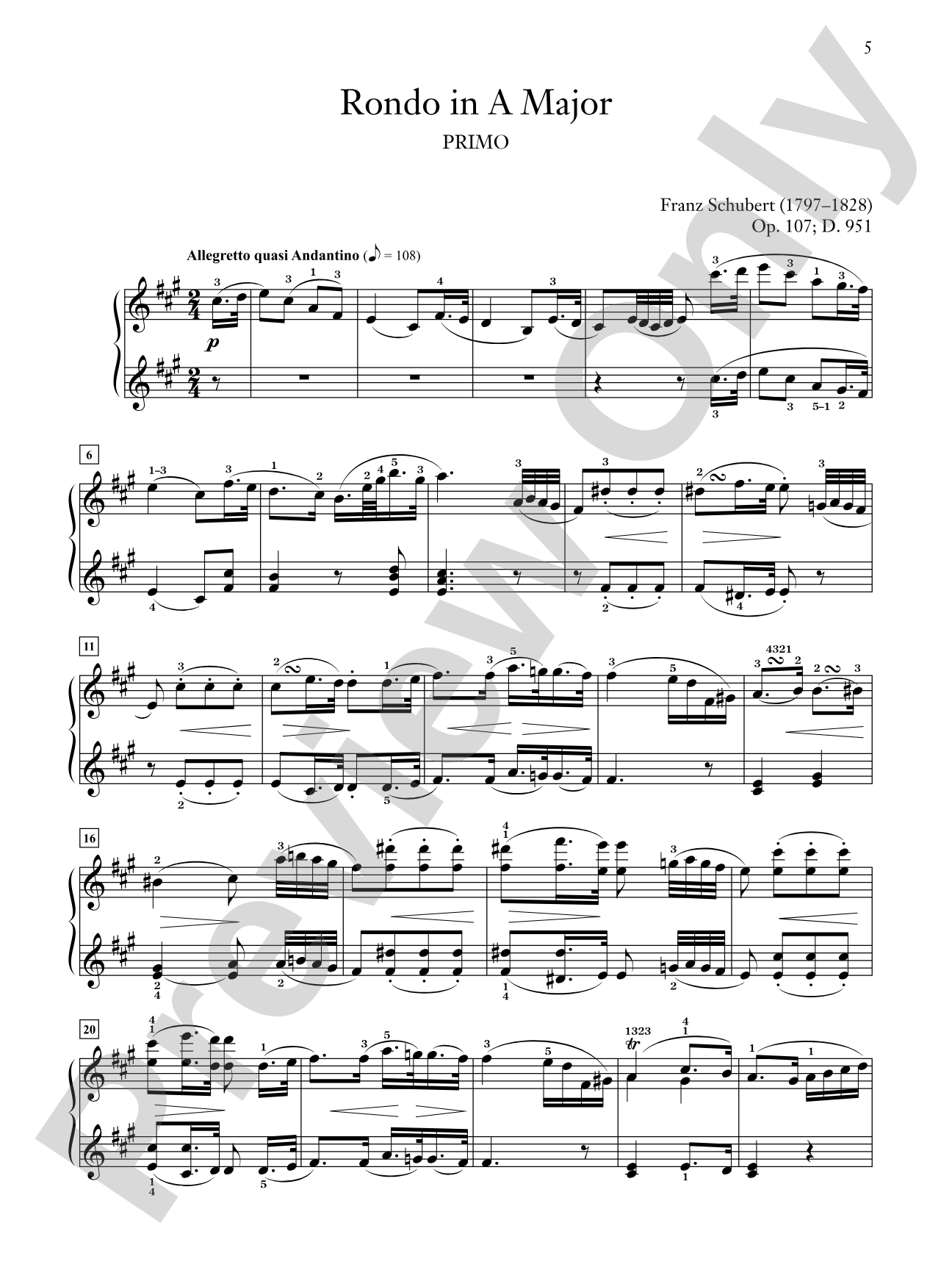
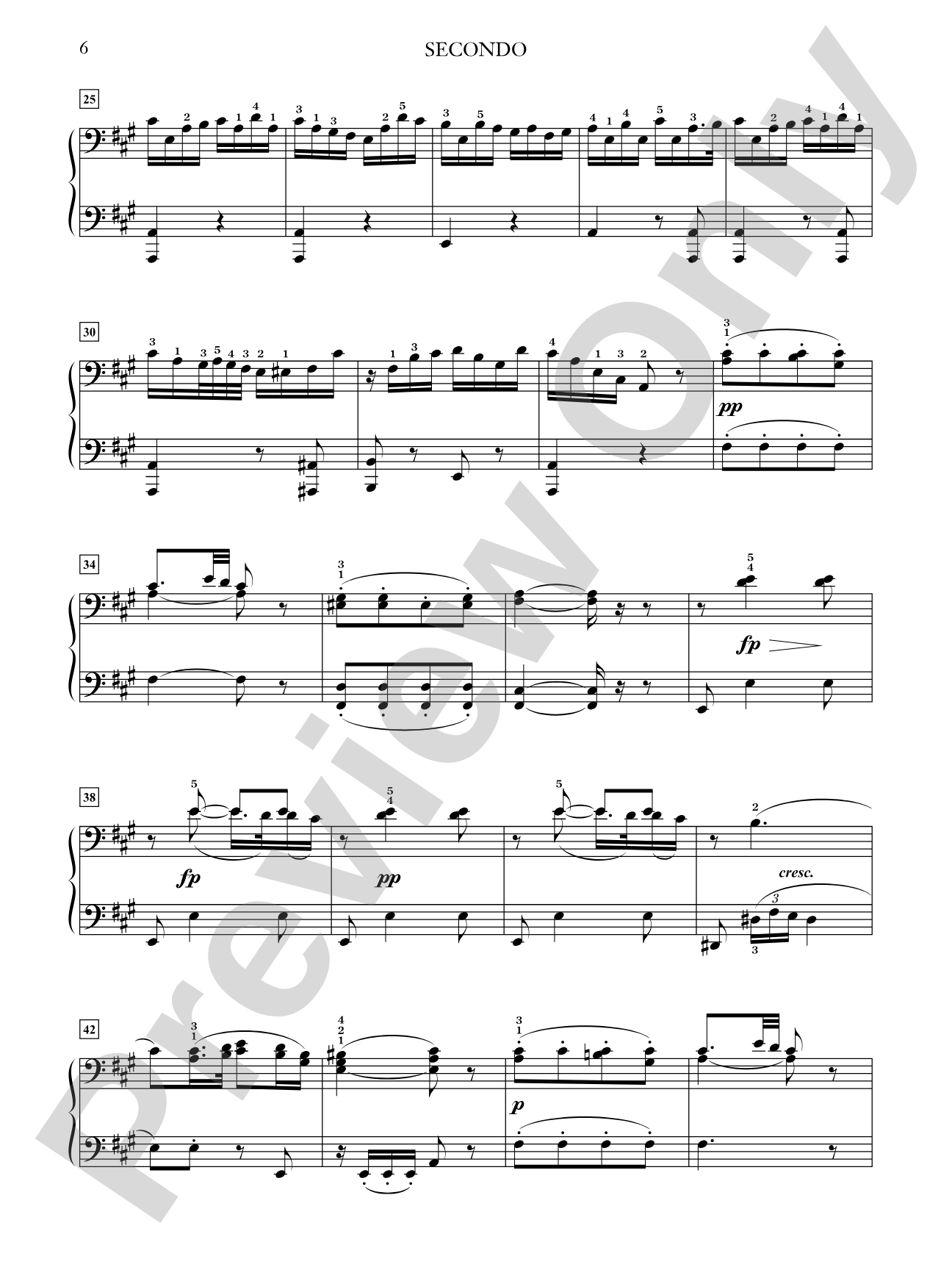
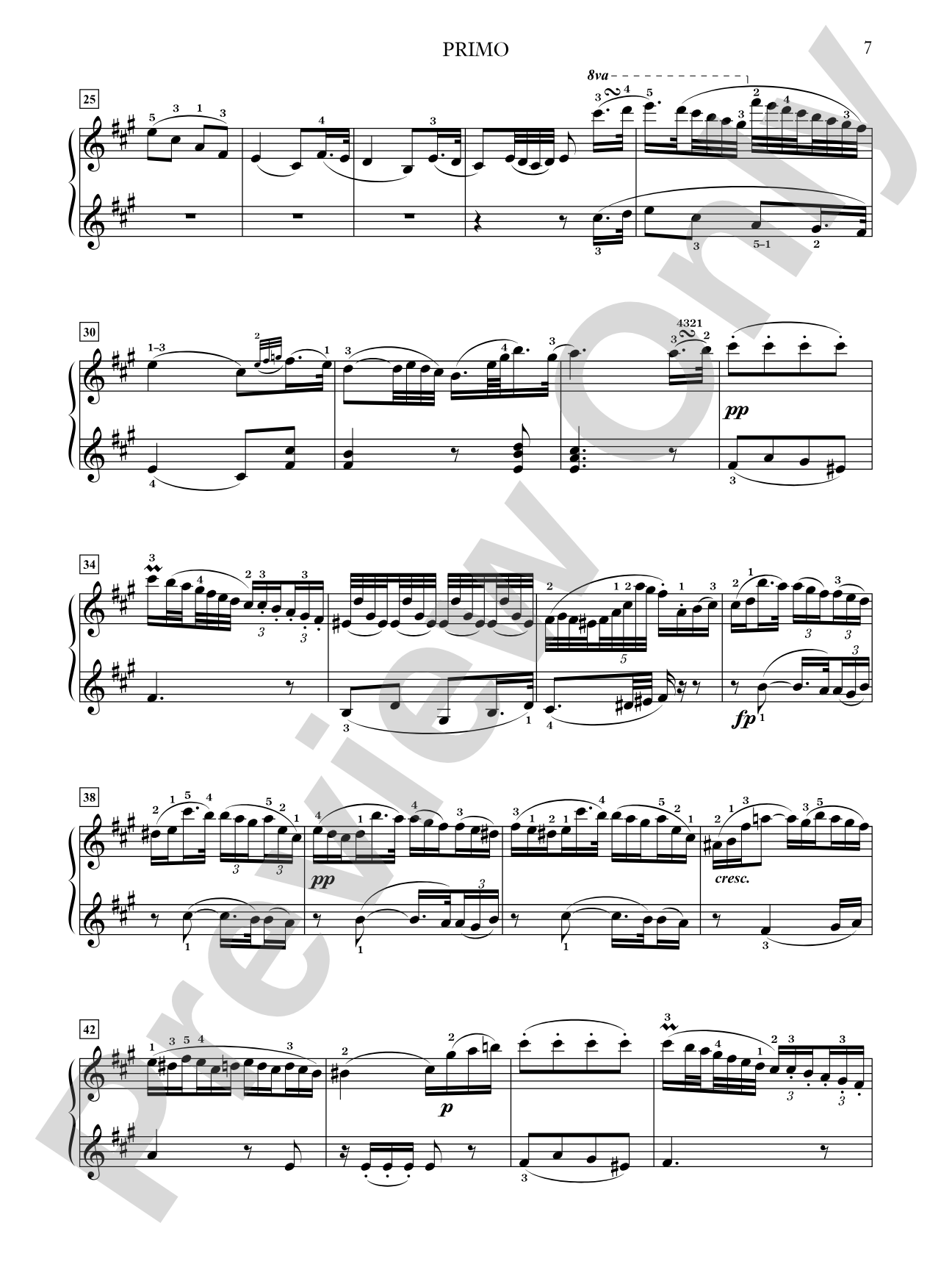
Franz Schubert was one of the most prolific composers of ensemble piano music, and the Rondo in A Major, Op. 107, demonstrates his mastery at writing for one piano, four hands. The Rondo was composed in 1828 for the famous Viennese company Artaria. The work is warm and lyrical in contrast to many of Schubert's other compositions for four hands. Its themes are highly decorative, treated freely, and full of exciting rhythms.


Schubert: Rondo in A Major, Opus 107, D. 951 - Piano Duet (1 Piano, 4 Hands): Piano Duets & Four Hands isn't in MakeMusic Cloud just yet...but it could be. Let us know you'd like to see it, and you'll help shape what comes next. In the meantime, start a free trial and dive into thousands of interactive titles your students can play along with today.
Request This Title
Tell us you want it.
Start Your Free Trial
Explore everything that's ready to play right now.
Sample Audio
No sample audio found.
Sample Video
No sample videos found.
Additional Details
Series:
Alfred Masterwork Edition
Publisher:
Alfred Music
Page Count:
32
SKU:
00-PB-0000574
More about this title
About the Composer: Franz Schubert
Franz Schubert (1797, 1828) produced an extraordinary volume of chamber music during his short life, leaving an indelible mark on the duet repertoire. His gift for melody and harmonic invention made him uniquely suited to writing for four hands at one keyboard, where he could balance lyrical lines across two players while maintaining textural richness.
Schubert's approach to duet writing differs markedly from his symphonic and solo keyboard works. He understood that four hands opened new possibilities for color and dialogue; each player could carry substantial musical material without the accompaniment feeling thin or relegated. This principle shaped his most successful duets, including the Rondo in A Major.
Why we love this
Schubert wrote this piece with genuine understanding of what makes four-hand playing satisfying: both players have real voice-leading work to do, the textures stay transparent enough to hear each other clearly, and the harmonic language is richly Romantic without becoming overly chromatic or thick. The warm lyricism and decorative treatment of themes give advanced students a compelling reason to choose duet playing over solo repertoire.
What to expect
A lyrical walk through sunlit key areas, where melodies bloom with gentle ornamentation and shift gracefully between the two players. The rhythmic energy keeps the piece moving forward with vitality, yet nothing feels rushed or strained; warmth and elegance dominate the emotional landscape.
Who it's for
Advanced pianists preparing recital repertoire or studio students ready to explore the Romantic duet literature in depth. This work rewards players with strong independent hand facility and the maturity to hear themselves as part of an ensemble sound.
How to get the most out of it
- Balance the decorative figurations with the underlying harmonic structure. The themes may sparkle with rhythmic detail, but the slower harmonic rhythm beneath them should remain clear and unhurried.
- Shape the dialogue between primo and secondo thoughtfully. Schubert often passes thematic material between the two parts; treat these hand-offs as genuine conversation, not mechanical alternation.
- Resist the urge to rush through the exciting rhythmic passages. The energy comes from precision and clarity, not tempo, especially in sections where both players are active.
- Listen across the keyboard to the full harmonic picture. Because the writing is so idiomatic to four hands, moments of unison or doubling carry special weight and should land with conviction.
How to use it
Position this as a centerpiece for a recital featuring Romantic duet repertoire, or pair it with other Schubert four-hand works to showcase a single composer's range and craft. Its 32-page length makes it substantial enough to anchor a program segment while remaining approachable compared to longer sonata forms.
Skills your students will build
- Ensemble listening and balance while maintaining independent part integrity
- Decorative figuration with clarity and control in the upper register
- Harmonic awareness across a two-player texture
- Dialogue and phrasing between primo and secondo voices
- Reading and executing rapid rhythmic figurations without sacrificing lyrical shape