
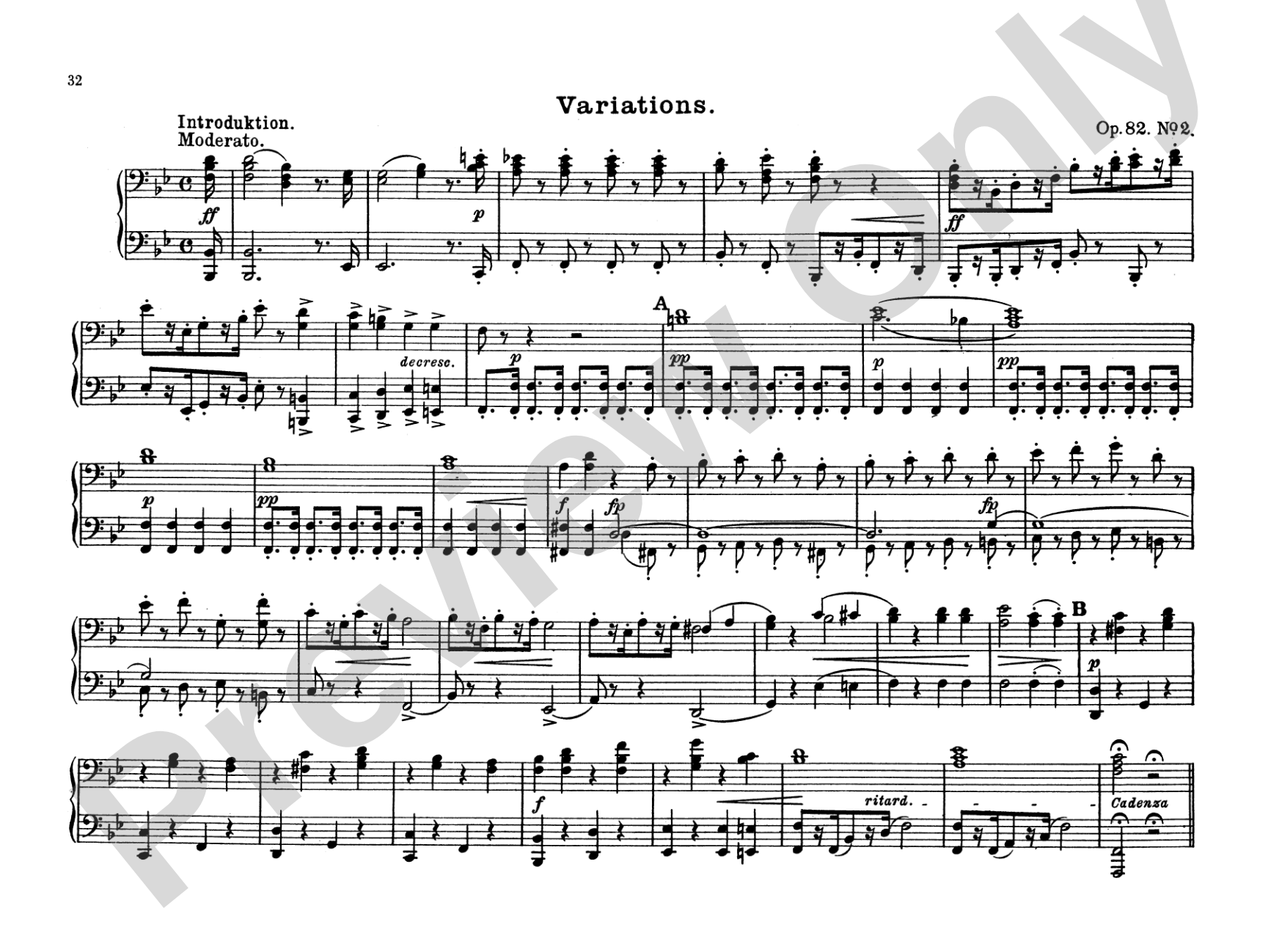
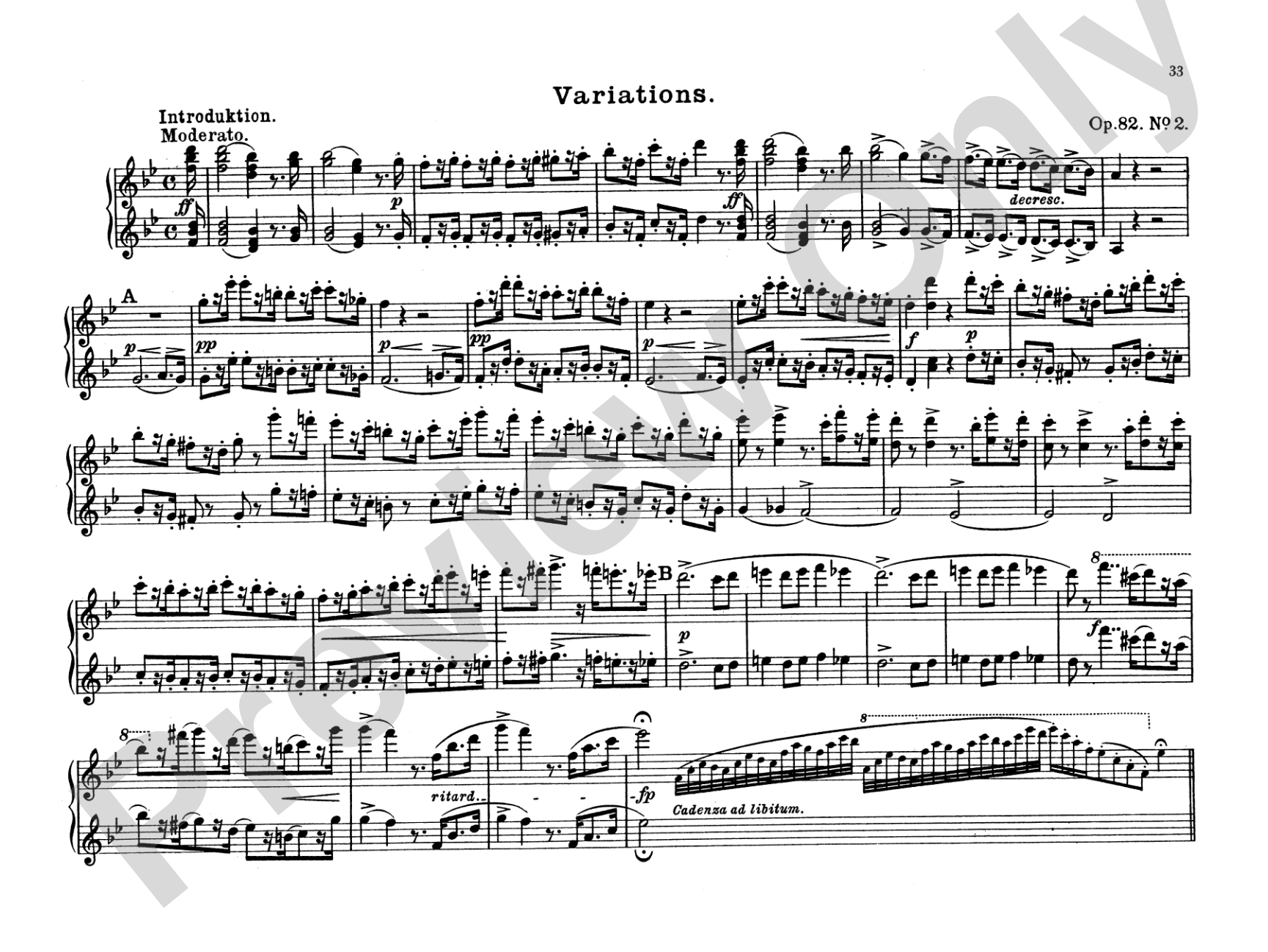
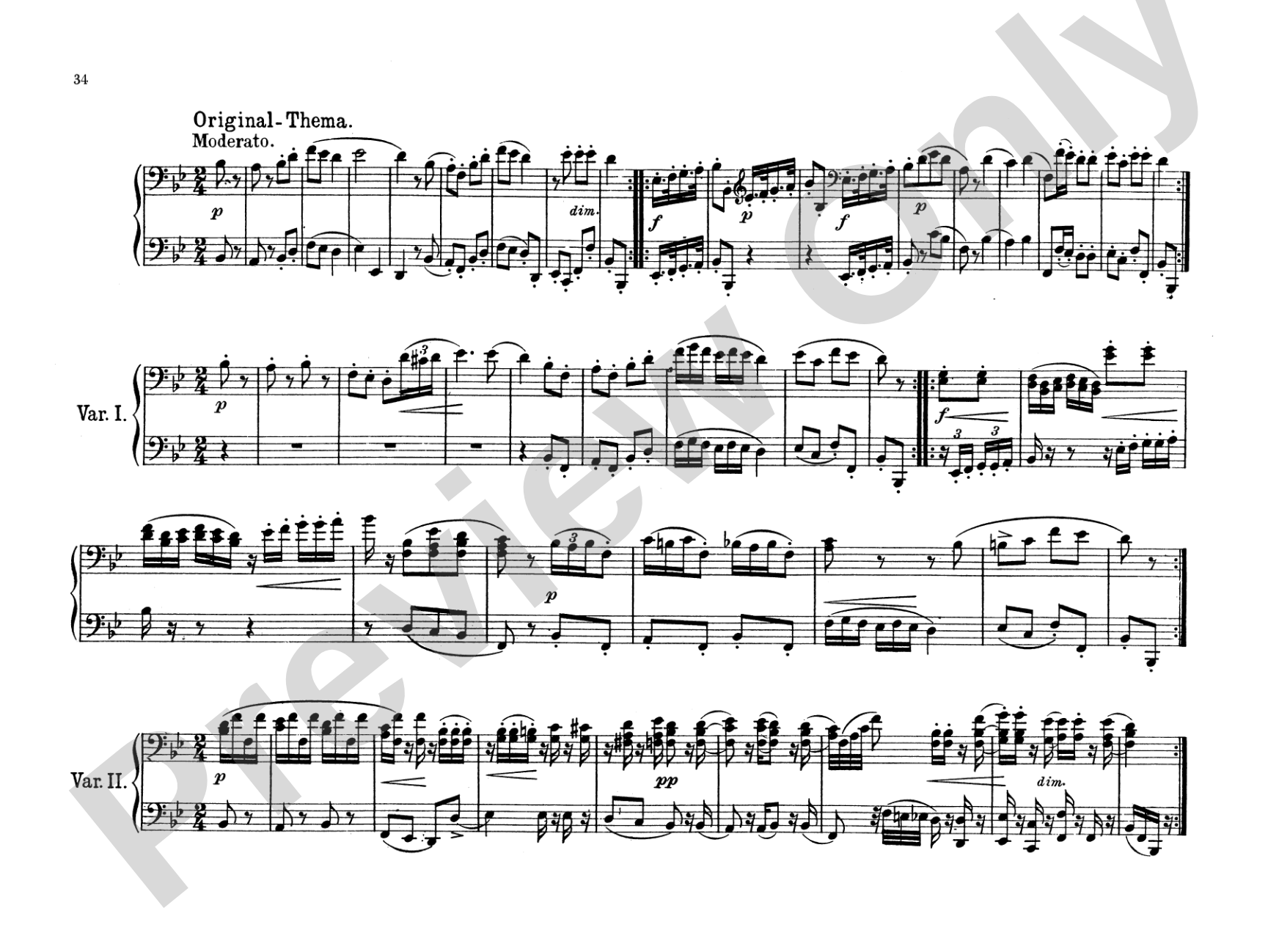

Schubert: Original Compositions for Four Hands, Volume III
By Franz Schubert
Item: 00-PC-0009174
$1.99
Pickup currently not available
Description
Op. 75 * Op. 82 - Nos. 1 & 2 * Op. 84 - Nos. 1 & 2 * Op. 103


Don't just read it, hear it, play along with it, and watch your students grow with it. In MakeMusic Cloud, Schubert: Original Compositions for Four Hands, Volume III comes alive with professional accompaniment, adjustable tempo, and built-in practice tools that turn solo practice into real progress.
Open in the Player
Jump straight in and assign it today.
Start Your Free Trial
Open this title and explore the full library in minutes.
Sample Audio
No sample audio found.
Sample Video
No sample videos found.
Additional Details
Series:
Kalmus Edition
Publisher:
Alfred Music
Page Count:
96
SKU:
00-PC-0009174
More about this title
About the Composer: Franz Schubert
Franz Schubert (1797-1828) composed more than 600 works across every major genre despite living only 31 years. His gift for melody was unmatched; he could spin out themes that seemed to flow endlessly, often favoring emotional depth and harmonic innovation over architectural grandeur. The four-hand piano works represent a significant strand of his output, written for amateur musicians and professional friends alike, and they reveal how seriously he took the domestic music-making of his era.
Schubert's duet works are often overlooked in favor of his symphonies and chamber music, yet they contain some of his most direct and accessible writing. These pieces sit at the intersection of entertainment and artistry; they ask both players to contribute meaningfully while remaining playable by musicians of moderate technical skill. They also showcase his remarkable ability to write convincingly for the piano as an orchestral instrument, layering textures and distributing musical material in ways that feel both natural and sophisticated.
Why we love this
These five works span nearly two decades of Schubert's compositional life and reveal the breadth of his duet language. You get lyric movements full of harmonic color, spirited rondos that feel genuinely joyful, and character pieces that sit comfortably between concert and parlor repertoire. They're substantial enough to command respect and intimate enough that rehearsal feels like collaboration rather than competition.
What to expect
These pieces inhabit a gracious, conversational world. There's warmth and a certain ease to them, even when Schubert ventures into minor keys or unexpected harmonic territory. The writing feels chamber-like; two voices in genuine dialogue, trading ideas, echoing each other, and occasionally joining in unison for moments of gentle declaration.
Who it's for
This collection serves intermediate to advanced pianists who want to explore four-hand repertoire beyond the obvious warhorse duets. It's ideal for piano teachers seeking literature that allows two competent students to share the keyboard, and for professional duet partnerships looking to expand their Schubert catalog with less frequently performed works.
How to get the most out of it
- Balance the parts carefully in the opening sections. The secondo player's accompaniment figures are foundational, but they should never disappear; listen for each other constantly to build a unified sound.
- Take time with the harmonic progressions in the slower movements. Schubert's voice-leading often moves by subtle inflection rather than obvious gesture, and giving these moments space will reveal the emotional architecture.
- Resist the urge to rush the rondos. The charm of these pieces depends on clarity of phrase and articulation, which gets lost when tempo pushes ahead.
- Pay attention to the printed dynamics and accent marks. Schubert's notation in these works is deliberate, and following it precisely shapes the character in ways a generic interpretation will miss.
How to use it
Program a single work from this collection as a recital opener or intermission piece, where its charm and approachability offer a welcome contrast to more demanding repertoire. Alternatively, consider pairing one of the lighter pieces with a more substantial four-hand work to create a small duet cycle that showcases different facets of early-19th-century keyboard writing.
Skills your students will build
- Playing in dialogue with another pianist (listening, balancing, phrasing as a unit)
- Reading and executing Schubert's harmonic language and unexpected modulations
- Managing textural clarity when both hands are active in the same register
- Interpreting Classical and early Romantic stylistic conventions in duet texture
- Coordination of ensemble rhythm and tempo across two players on one instrument