
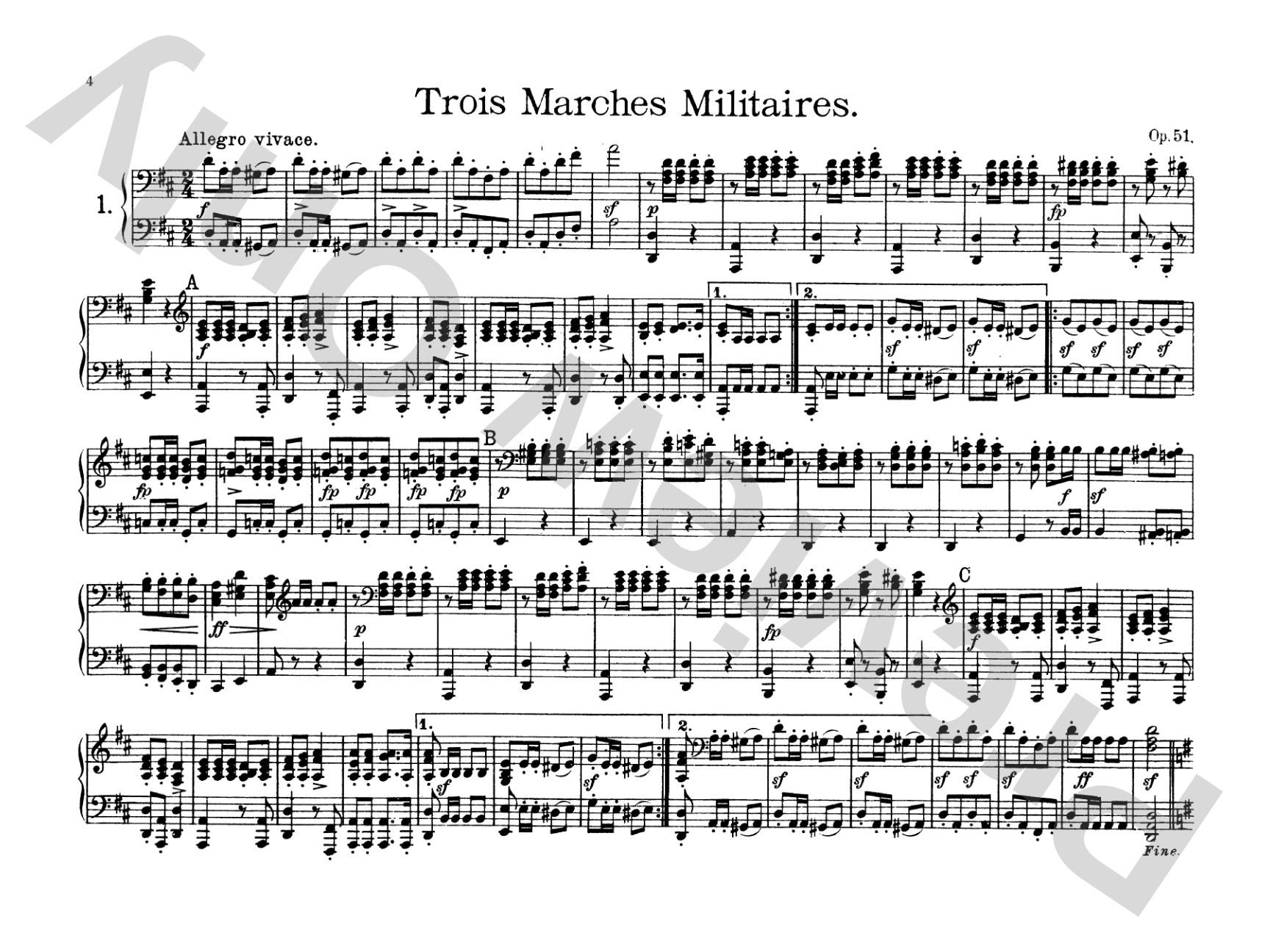
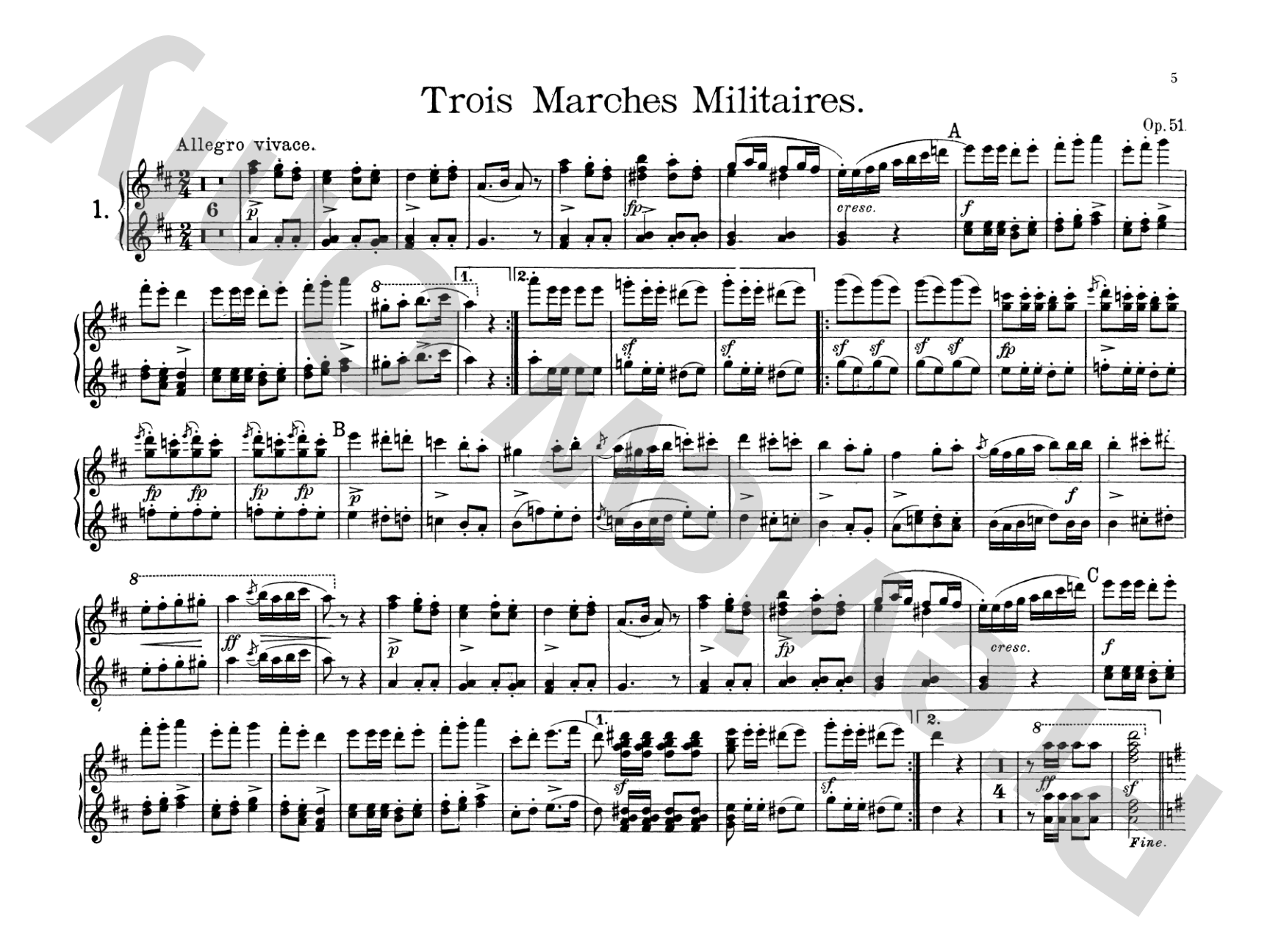
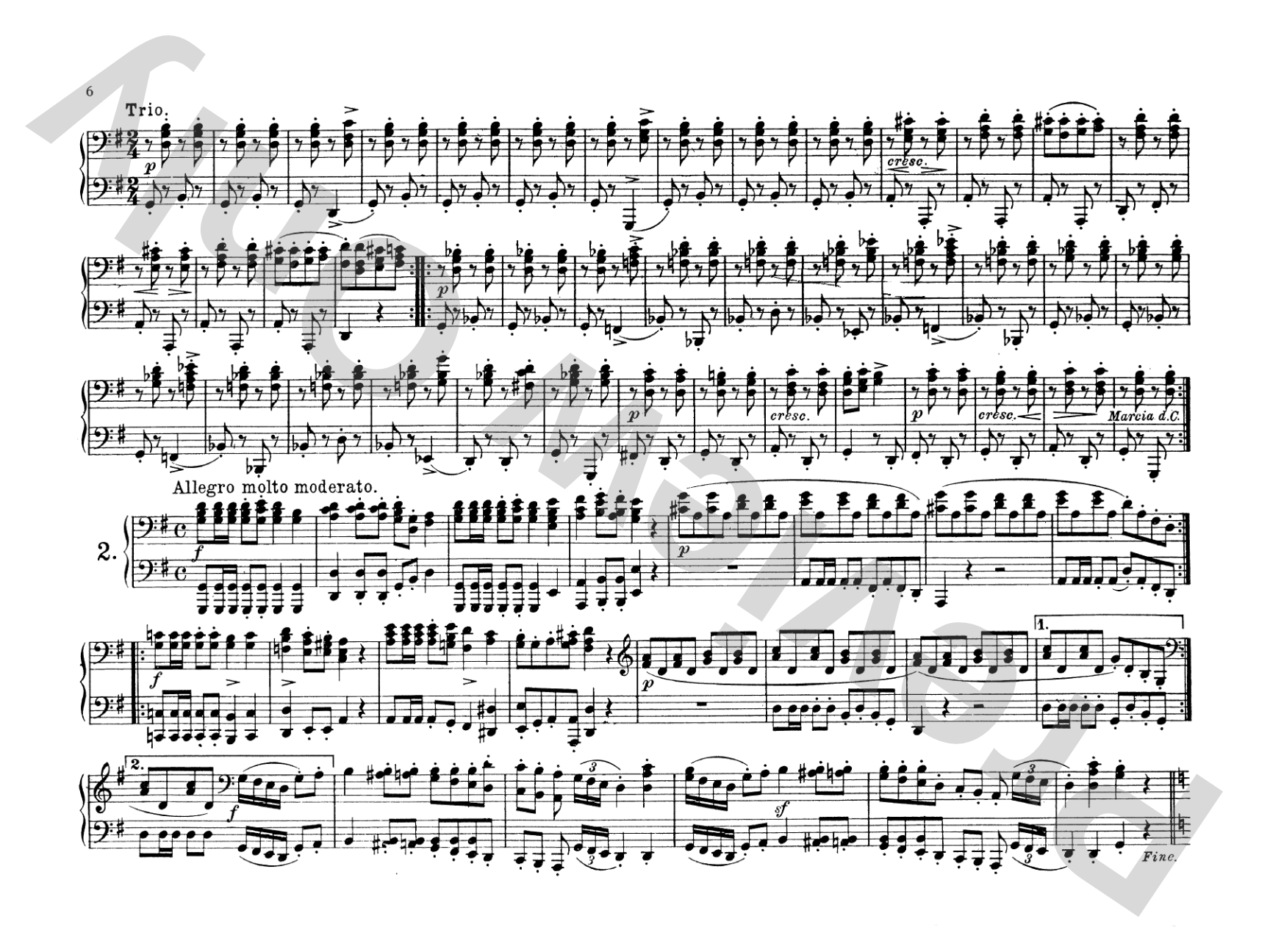
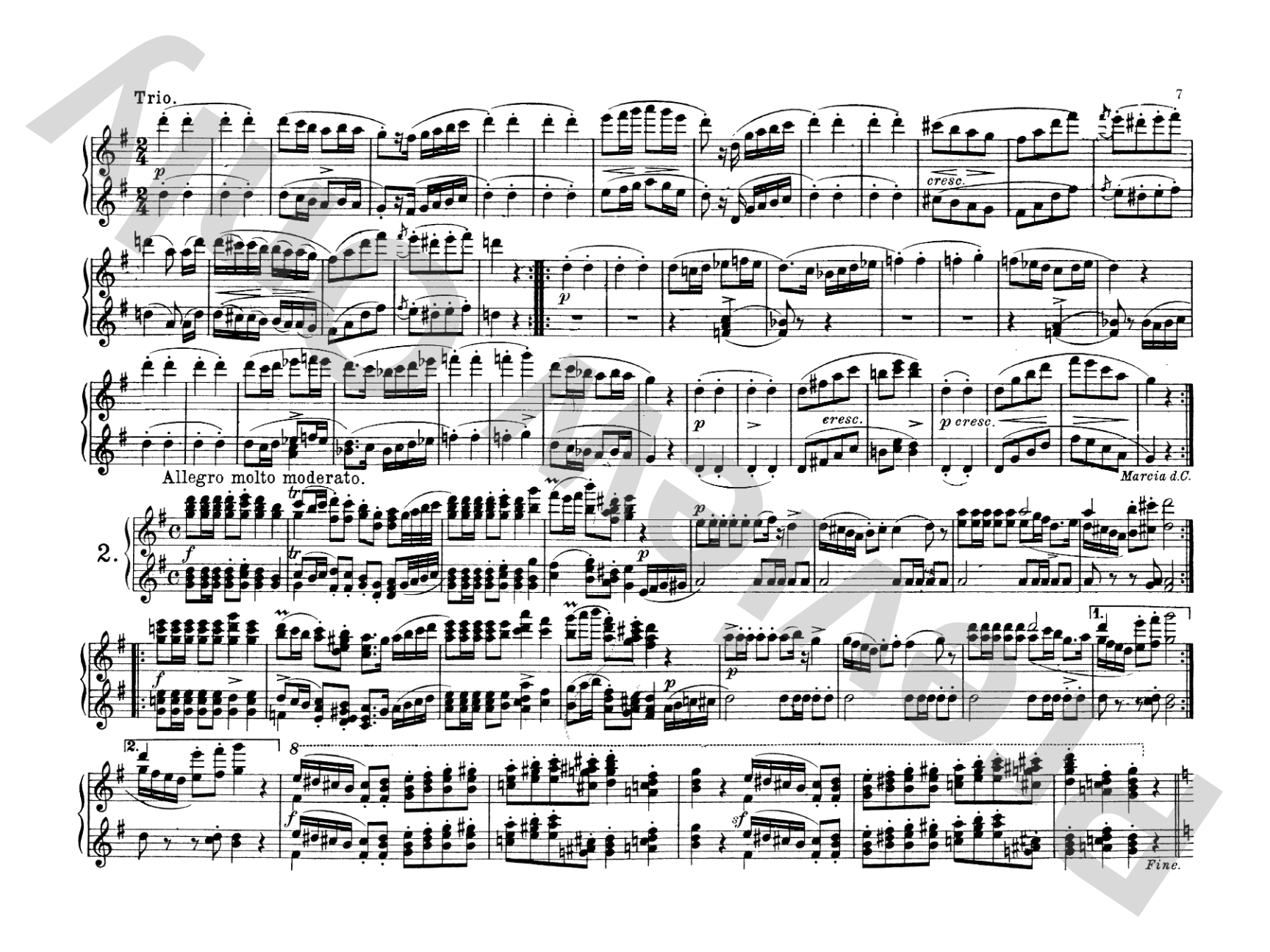
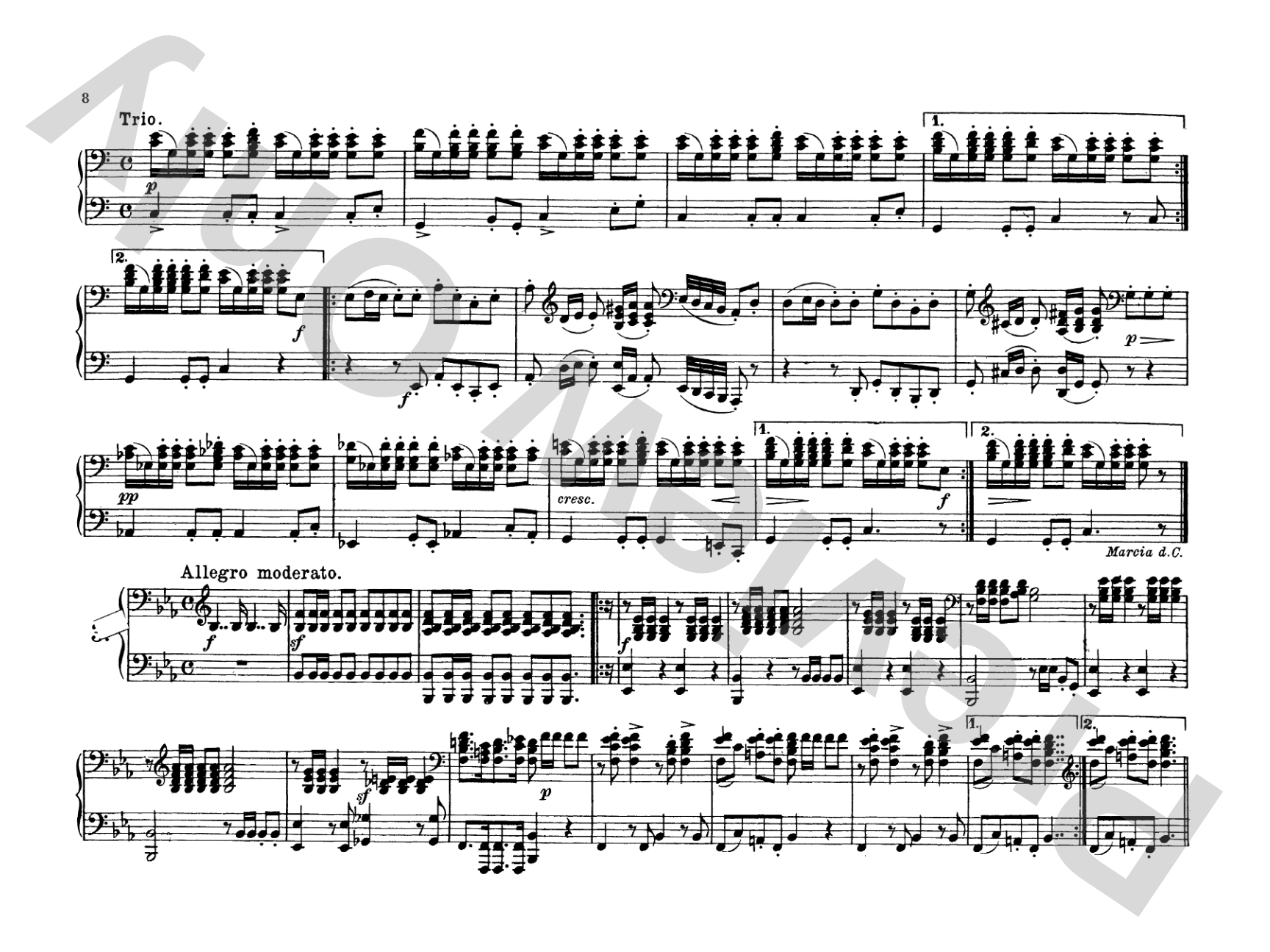
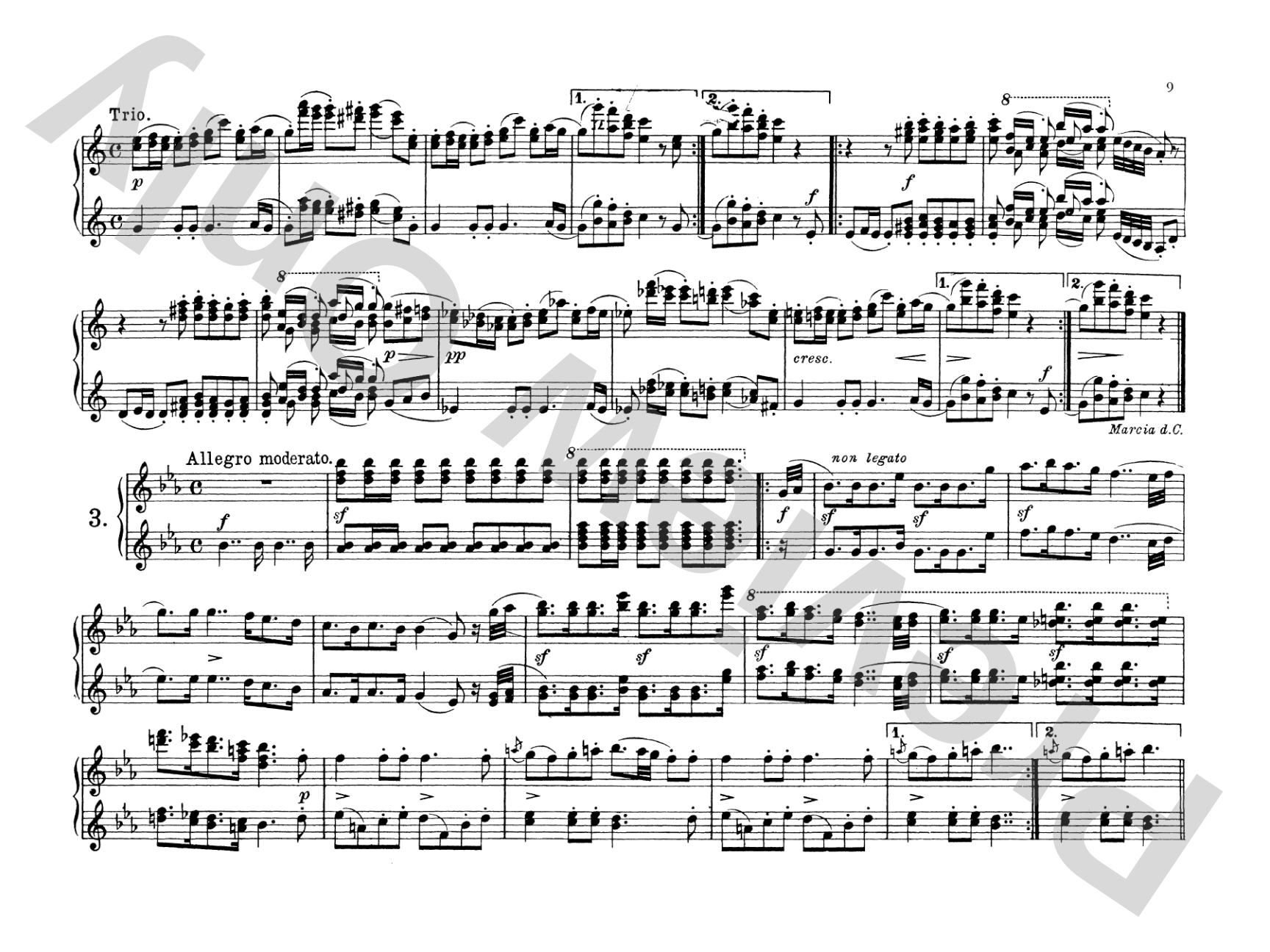
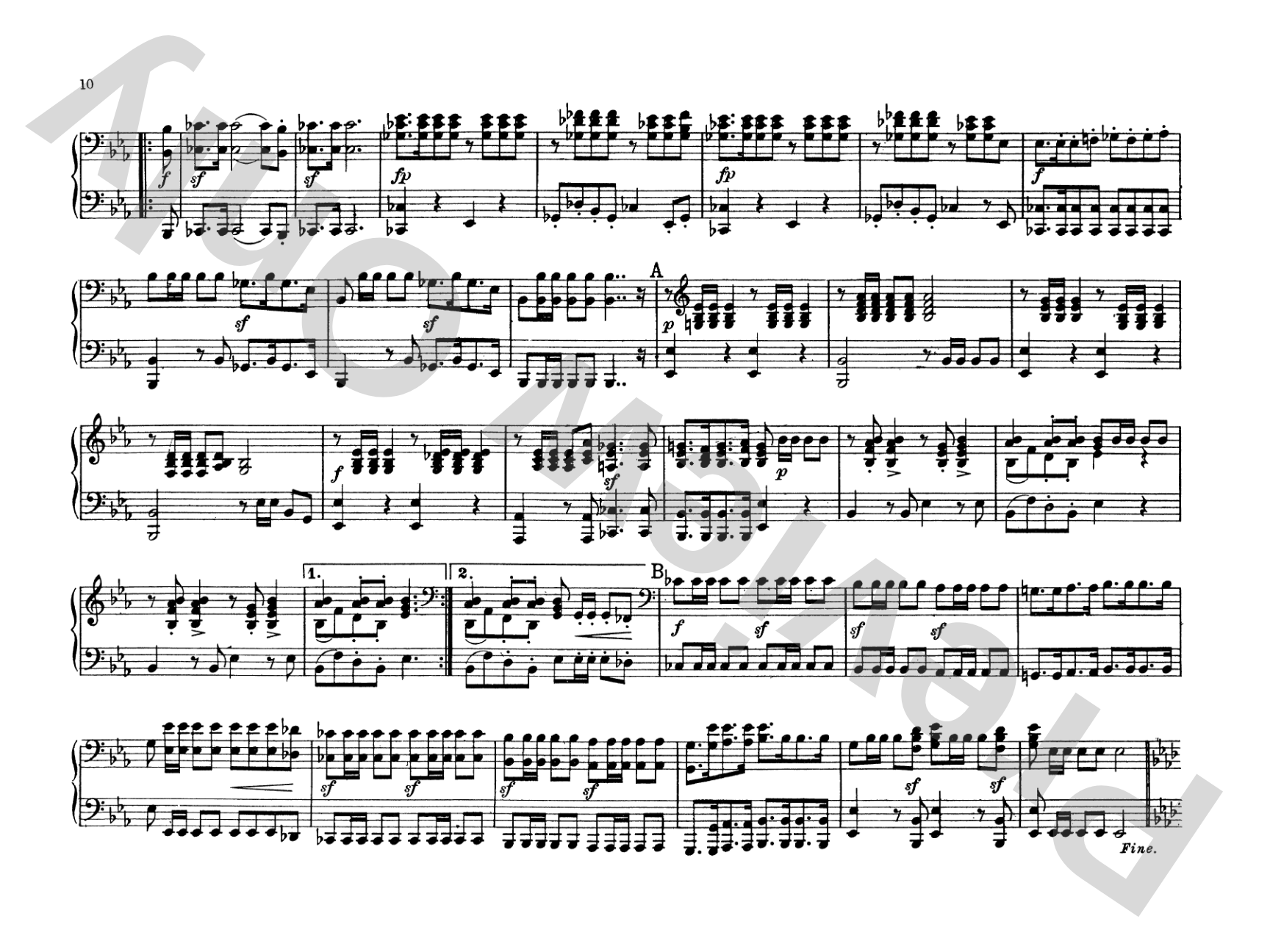
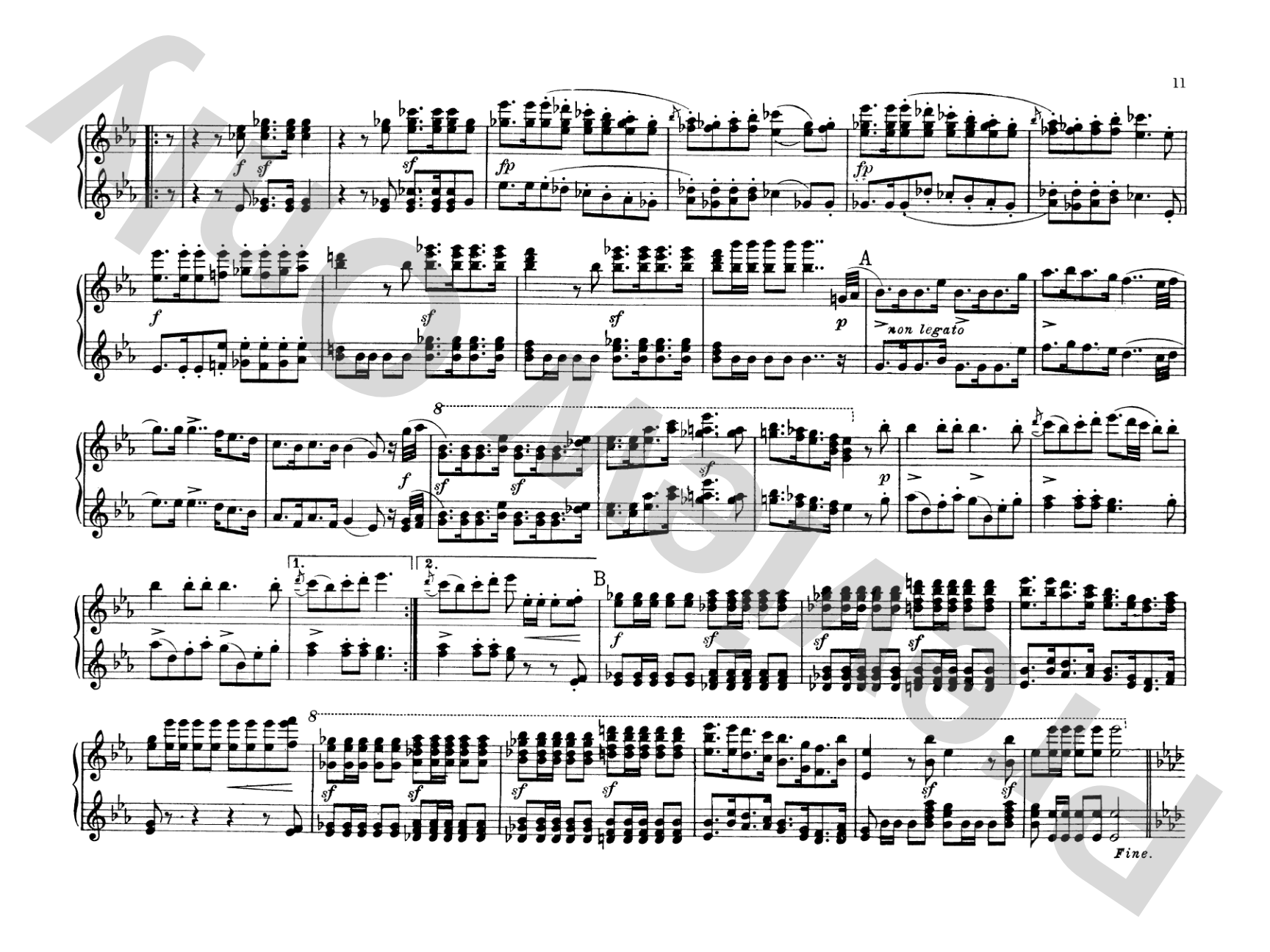

Schubert: Original Compositions for Four Hands, Volume II: Piano Duet (1 Piano, 4 Hands) Comb Bound Book
By Franz Schubert
Item: 00-PK-0003315

$20.99
Pickup currently not available
Buy Extra Parts (Digital PDF Download)
Parts Added to Cart!
Related Items
Original Compositions for Four Hands, Volume II: Piano Duet (1 Piano, 4 Hands) Comb Bound Book |
$20.95
|
View |
Description
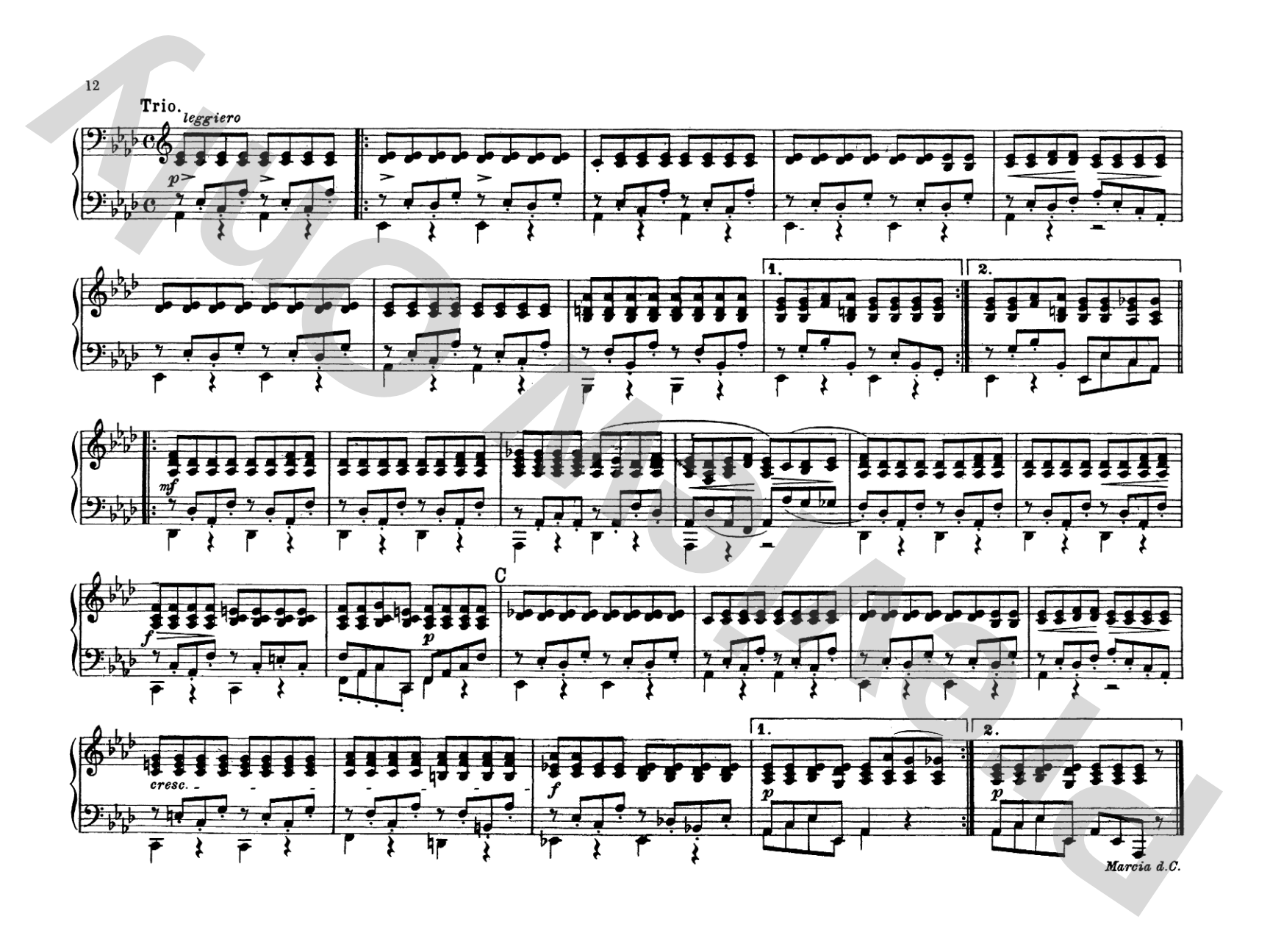
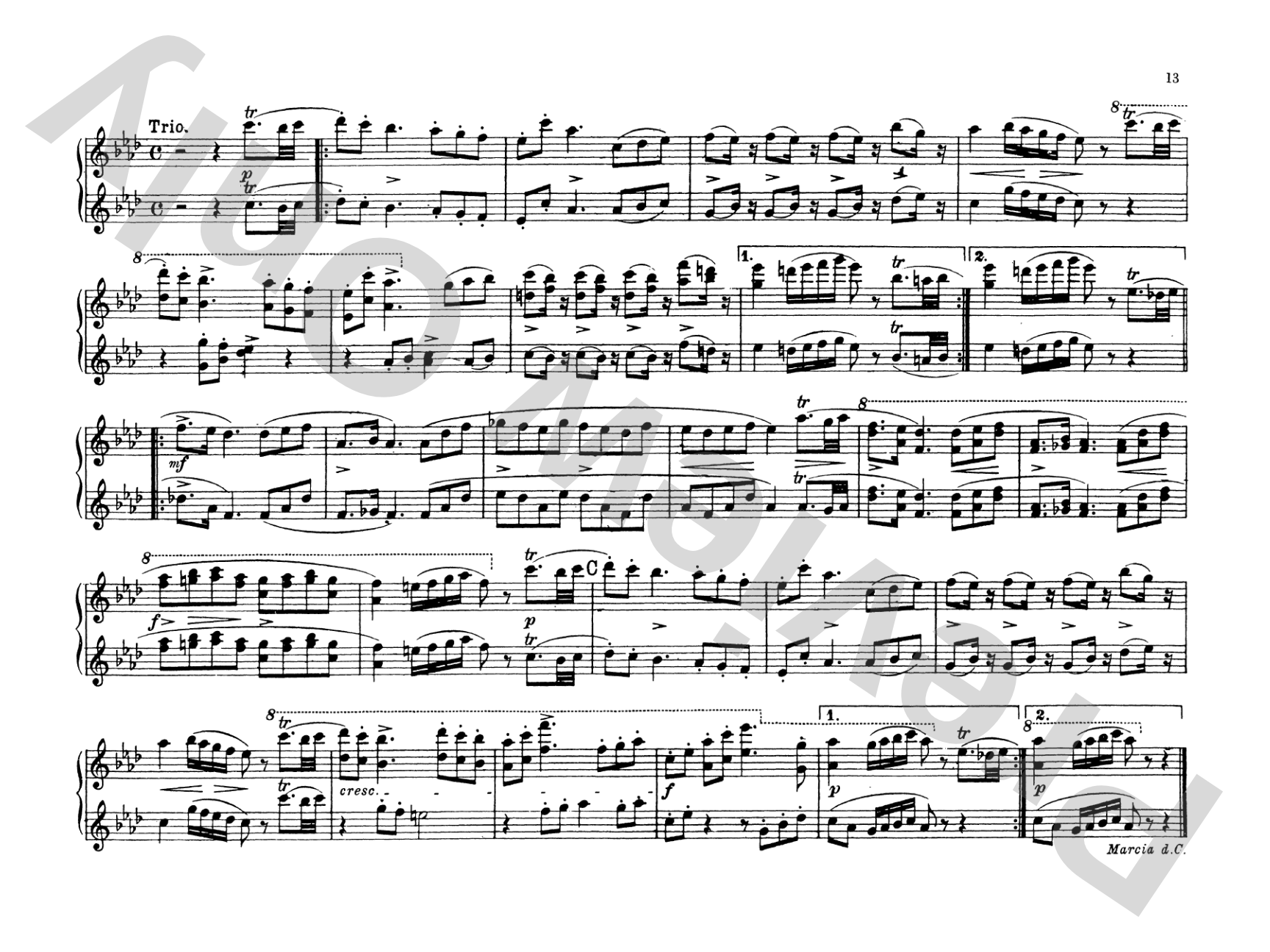
The comb binding creates a lay-flat book that is perfect for study and performance.


Don't just read it, hear it, play along with it, and watch your students grow with it. In MakeMusic Cloud, Schubert: Original Compositions for Four Hands, Volume II: Piano Duet (1 Piano, 4 Hands) Comb Bound Book comes alive with professional accompaniment, adjustable tempo, and built-in practice tools that turn solo practice into real progress.
Open in the Player
Jump straight in and assign it today.
Start Your Free Trial
Open this title and explore the full library in minutes.
Sample Audio
No sample audio found.
Sample Video
No sample videos found.
Additional Details
Series:
Kalmus Edition
Publisher:
Alfred Music
Page Count:
108
SKU:
00-PK-0003315
More about this title
About the Composer: Franz Schubert
Franz Schubert (1797, 1828) composed prolifically across every major genre despite his short life, leaving behind nine symphonies, seventeen string quartets, over six hundred songs, and a substantial body of keyboard music. His four-hand piano works occupy a distinctive place in his output: they are simultaneously intimate chamber works and fully realized compositions that exploit the textural and dynamic possibilities of the duet medium.
Schubert's four-hand pieces range from dance collections to substantial sonatas and fantasias. They were written both for his own domestic music-making and as vehicles for serious artistic expression. In these works, he refined the balance between primo and secondo parts, ensuring both players remain engaged musically rather than relegating one to accompaniment duty. This collection represents some of his most approachable yet artistically significant contributions to the duet repertoire.
Why we love this
Schubert's duet works occupy a rare space: they are immediately engaging and genuinely fun to play together, yet they contain the harmonic sophistication and structural elegance that keep musicians returning to them for decades. This volume offers access to substantial compositional thinking without the performance and preparation demands of his longer sonata cycles, making it an ideal choice for studio teachers pairing students or for ensembles developing collaborative skills alongside serious musicianship.
What to expect
Schubert's four-hand writing balances lyrical elegance with playful rhythmic interplay. There is warmth throughout, even in the more energetic movements, and a natural sense of conversation between the two parts that makes playing these pieces together feel less like following instructions and more like having a musical dialogue. The harmonic language is richer than much contemporary pedagogical duet repertoire, but the melodies unfold with the kind of inevitability that makes the pieces feel immediate rather than academic.
Who it's for
Advanced intermediate and advanced pianists who are developing duet skills and want to explore Classical-Romantic literature at a serious level. Studio teachers pairing students of similar ability will find these works rewarding for developing listening, balance, and ensemble communication without requiring the sustained technical demands of full sonatas.
How to get the most out of it
- Balance the primo and secondo parts carefully during tuttis; Schubert frequently layers the melody across both players, and clarity depends on listening actively rather than relying on seating position alone.
- Establish a shared pulse before each section by playing through passages together at half-speed, paying special attention to transitions and harmonic rhythm changes.
- Observe all repeats and dynamic markings as written; Schubert's scoring choices drive the emotional arc, and cutting them diminishes the architecture of each piece.
- Use the lay-flat binding to keep both players' pages visible without propping or holding, which reduces tension and allows for better hand position and control through longer passages.
How to use it
Feature a Schubert duet on a student recital to showcase collaborative musicianship and to give listeners a sense of Romantic-era compositional sophistication in an accessible format. These pieces also pair well with solo repertoire by the same composer, creating a thematic program that traces Schubert's voice across different instrumental settings. For collaborative studio events, they provide substantial yet approachable material that celebrates partnership without isolating either player.
Skills your students will build
- Balancing melody and accompaniment at one keyboard
- Synchronized pedaling and rhythm across two players
- Voice leading through figuration in Classical-Romantic idiom
- Phrasing and rubato in ensemble context
- Page-turning coordination and communication without stopping