
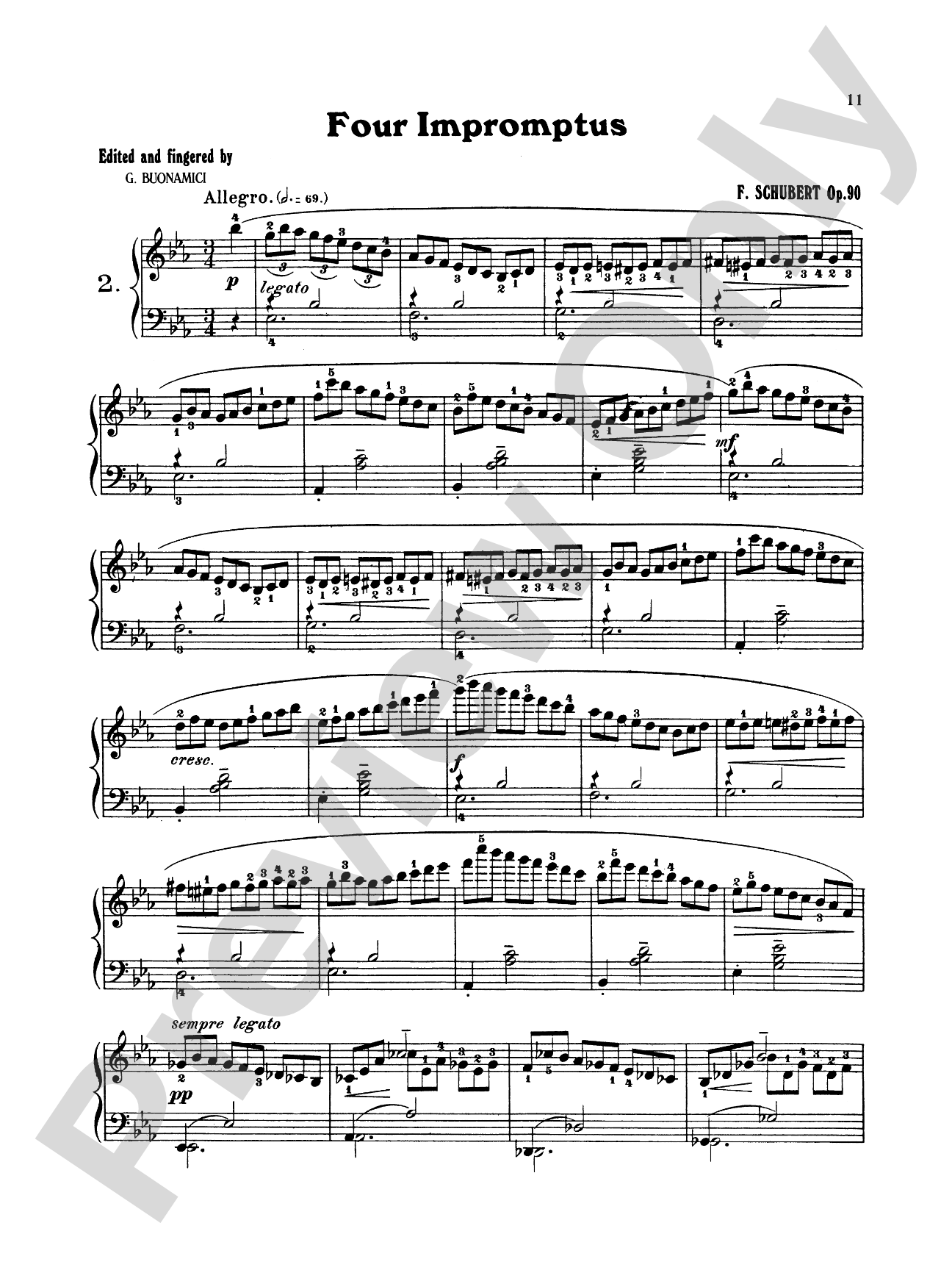
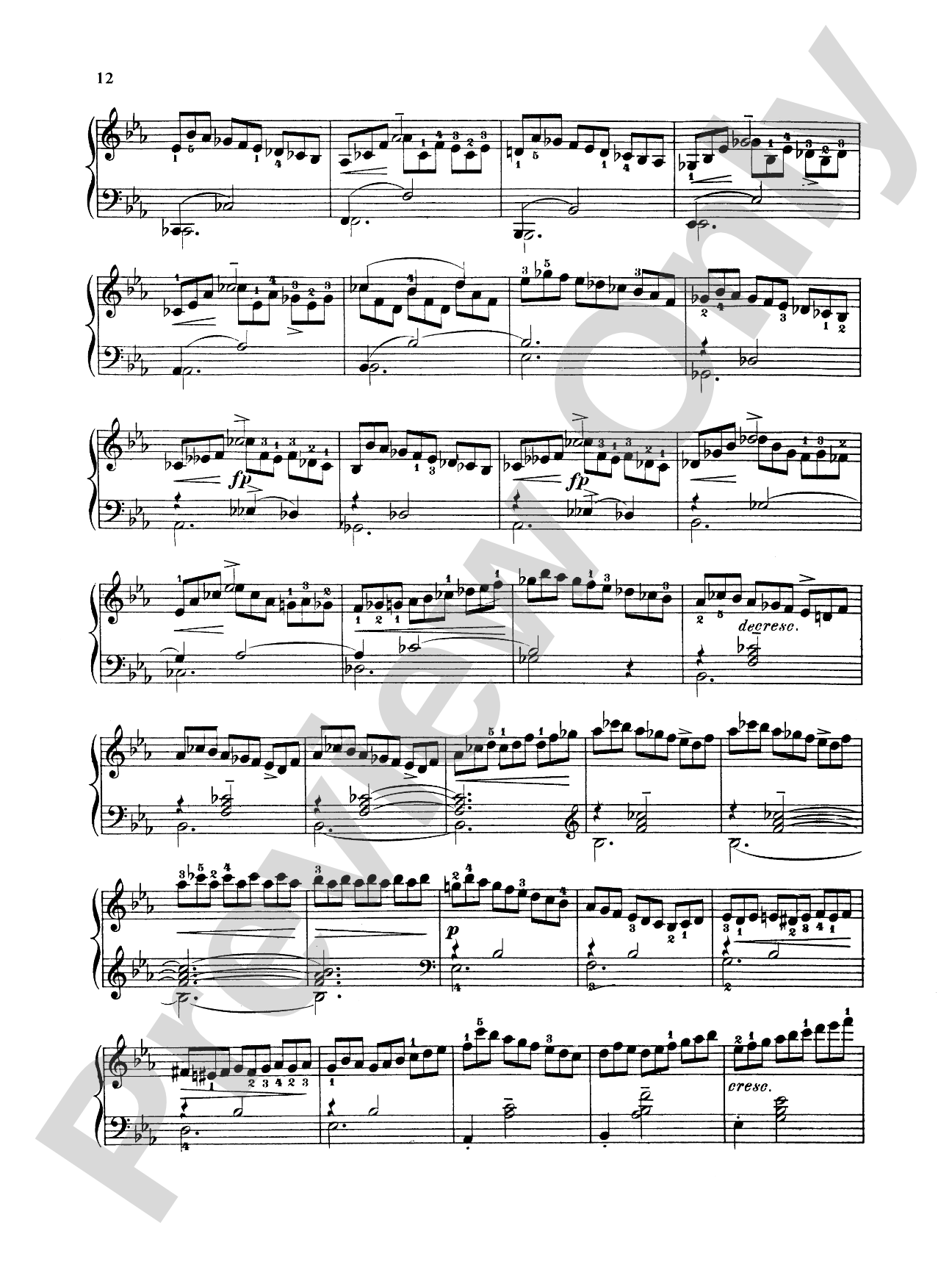

Schubert: Four Impromptus, Op. 90 (Ed. Giuseppe Buonamici)
By Franz Schubert / ed. Giuseppe Buonamici
Level: Intermediate / Advanced
Item: 00-PC-0013477
$1.99
Pickup currently not available
Description
Contents: Allegro Molto Moderato in C Minor * Allegro in E-Flat Major * Andante Mosso in G-Flat Major * Allegretto.


Don't just read it, hear it, play along with it, and watch your students grow with it. In MakeMusic Cloud, Schubert: Four Impromptus, Op. 90 (Ed. Giuseppe Buonamici) comes alive with professional accompaniment, adjustable tempo, and built-in practice tools that turn solo practice into real progress.
Open in the Player
Jump straight in and assign it today.
Start Your Free Trial
Open this title and explore the full library in minutes.
Sample Audio
No sample audio found.
Sample Video
No sample videos found.
Additional Details
Series:
Kalmus Edition
Publisher:
Alfred Music
Page Count:
40
SKU:
00-PC-0013477
More about this title
About the Composer: Franz Schubert
Franz Schubert (1797-1828) composed the four Impromptus of Op. 90 in 1827, a year before his death. These works emerge from a composer who had already mastered the symphony, string quartet, and song cycle, yet turned to the intimate four-hand piano format to explore lyrical expression at its most personal. Schubert's Impromptus occupy a unique space in piano literature, blending the improvisatory character suggested by their title with carefully crafted harmonic progressions and melodic architecture that reveal themselves only through repeated playing.
For music students, Schubert's Impromptus represent the gateway between Classical formal structures and Romantic harmonic language. His modulations feel natural rather than studied, and his ability to generate entire sections from a single phrase makes these works rewarding models for understanding how material develops. The set remains central to the intermediate-advanced piano repertoire because it demands both technical security and interpretive maturity.
Why we love this
These four pieces showcase Schubert at his most economical and expressive. Rather than relying on virtuosic display, he achieves depth through harmonic subtlety and the interplay between lyrical melody and accompaniment, making them ideal for pianists developing interpretive independence. The set offers enough variety in tempo and mood to stand alone as a meaningful recital program or to anchor a mixed concert without requiring a major time commitment from students.
What to expect
These Impromptus inhabit an intimate emotional landscape. The first movement broods in C minor; the second expands into the warmth of E-flat major; the third settles into the dark, introspective G-flat major; the fourth closes with a lighter, more resigned character. Taken together, they trace a journey from turbulence to resignation, held together by Schubert's gift for spinning memorable melody from spare material and his fearless use of chromatic harmony.
Who it's for
Pianists working at the intermediate-advanced level who are ready to move beyond technically demanding display pieces and into repertoire that rewards interpretive decision-making. Teachers seeking substantial material for recital preparation or concert programming will find these four movements economical and musically sophisticated. This edition serves advanced students building a foundation in Romantic-era piano literature and adult learners returning to serious study.
How to get the most out of it
- Balance the singing line in the Allegro Molto Moderato (first movement) against its supporting harmonies; the entire emotional weight rests on this melodic thread.
- In the Andante Mosso, resist the urge to rush through passage work. These figurations are decorative, not driving, and should sit comfortably behind the harmonic rhythm.
- Attend closely to Schubert's tempo markings and dynamic contrasts rather than relying on pedal to create continuity. The drier sound often reveals his voice leading more clearly.
- Practice the key relationships between movements separately. Each modulation takes time to hear and internalize; rushing into the next piece diminishes the Impromptus' architectural logic.
How to use it
Program the entire set as a standalone group on a recital featuring mixed eras, or pair the first two movements with other Classical and early Romantic keyboard works for a focused thematic concert. These pieces also work well as a cumulative project spanning several lessons or weeks of study, allowing students to absorb Schubert's harmonic language gradually. The emotional arc of all four movements makes them suitable for formal recitals, salon concerts, or streaming performances where sustained artistic attention is the goal.
Skills your students will build
- Reading and executing Schubert's chromatic harmony and unexpected key relationships
- Maintaining rhythmic independence between hands while balancing melody and accompaniment texture
- Interpreting dynamic and tempo marking subtleties as essential to musical meaning rather than as ornament
- Developing touch differentiation to project lyrical lines without relying on pedal
- Understanding structural unity across movements in a four-part cycle