Schubert: Four Impromptus, Op. 142 (Ed. Giuseppe Buonamici) Sheet Music Preview

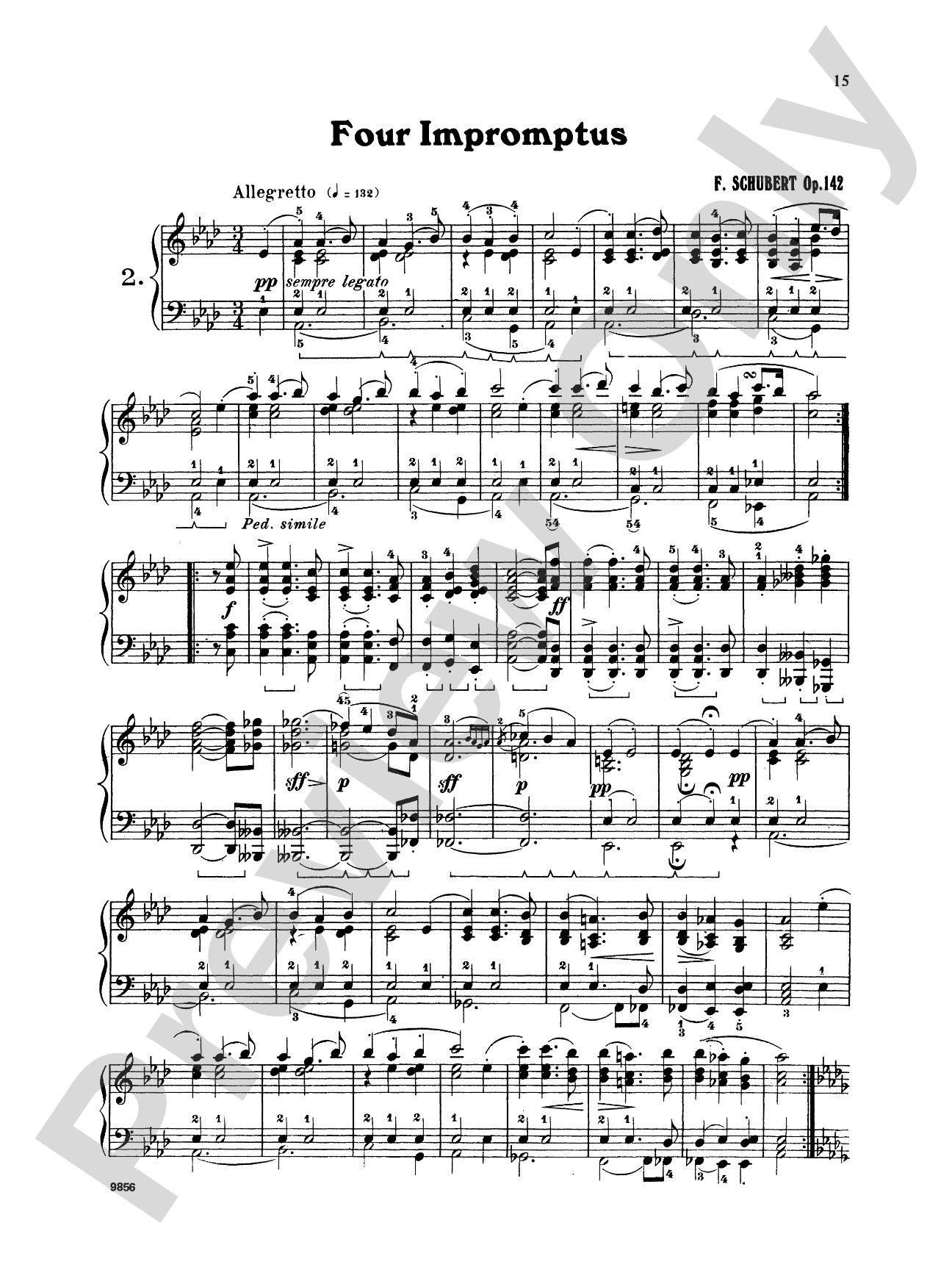
Schubert: Four Impromptus, Op. 142 (Ed. Giuseppe Buonamici)

By Franz Schubert / ed. Giuseppe Buonamici

Level: Intermediate / Advanced

Item: 00-PC-0013481

Digital Download
$1.99
Description
An Intermediate / Advanced Piano Collection by Franz Schubert and edited by Giuseppe Buonamici.

Don't just read it, hear it, play along with it, and watch your students grow with it. In MakeMusic Cloud, Schubert: Four Impromptus, Op. 142 (Ed. Giuseppe Buonamici) comes alive with professional accompaniment, adjustable tempo, and built-in practice tools that turn solo practice into real progress.

Sample Audio
No sample audio found.
Sample Video
Additional Details
Series: Kalmus Edition
Publisher: Alfred Music
Page Count: 40
SKU: 00-PC-0013481

More about this title

About the Composer: Franz Schubert

Franz Schubert (1797-1828) stands among the greatest song composers in Western music, yet his instrumental works reveal an equally profound gift for melody and harmonic innovation. Working in Vienna during the twilight of the Classical era, Schubert absorbed Beethoven's formal ambitions while charting his own path toward the Romantic sensibility that would define the nineteenth century. His impromptus and moments musicaux represent a distinctly pianistic voice, balancing lyrical accessibility with genuine compositional sophistication.

Schubert's four impromptus, Op. 142, showcase his mastery of the miniature form. Each piece unfolds with the spontaneity its title suggests, yet each demands technical facility and interpretive maturity from the performer. These works bridge the gap between salon music and concert repertoire, making them essential to any intermediate-advanced pianist's musical diet.

Why we love this

These impromptus occupy a rare middle ground: they are singable and charming enough to reward student performers, yet they contain genuine compositional substance that satisfies sophisticated ears. The Buonamici edition provides a reliable, legible score that lets the music speak without interpretive impositions, and at forty pages, the collection fits neatly into a recital program or final-lesson cycle without overwhelming the practice schedule.

What to expect

Intimate and introspective, these impromptus unfold like private thoughts shared at the keyboard. Schubert's melodies rise and fall with the ease of breathing, while unexpected harmonic turns and pianistic textures invite listeners into moments of genuine musical discovery. The overall character balances warmth with subtle melancholy, offering both technical satisfaction and emotional resonance.

Who it's for

Pianists approaching the intermediate-advanced threshold who are ready to move beyond Romantic showpieces into works of genuine artistic substance. These impromptus suit performers preparing for recitals, competitions, or music school auditions, as well as mature student pianists seeking repertoire that rewards careful, thoughtful practice.

How to get the most out of it

  • Treat each impromptu as a study in contrast. The harmonic language shifts frequently, and clarity at moderate tempos will reveal Schubert's chromaticism more effectively than rushing.
  • Balance the song-like melodic lines with independence in the left hand. These are not pieces where the accompaniment disappears; Schubert's piano writing is genuinely conversational.
  • Listen for the formal architecture beneath the improvisational surface. Each piece has clear harmonic pillars and structural return points; finding these landmarks will anchor interpretation and prevent the music from drifting.

How to use it

Program these impromptus on recitals where you want to anchor a program in Classical-Romantic tradition without relying on Beethoven sonatas or Chopin nocturnes. They work equally well as a cohesive four-piece set or paired strategically with Schubert Moments Musicaux or early Mendelssohn to create a thematic program around the miniature form.

Skills your students will build

  • Reading chromatically altered harmonies and unexpected modulations
  • Balancing melodic and harmonic independence between hands
  • Sustaining nuanced phrasing over multi-phrase structures
  • Navigating moderate-tempo articulation and control
  • Interpreting formal structure in the miniature piano work

You May Also Like