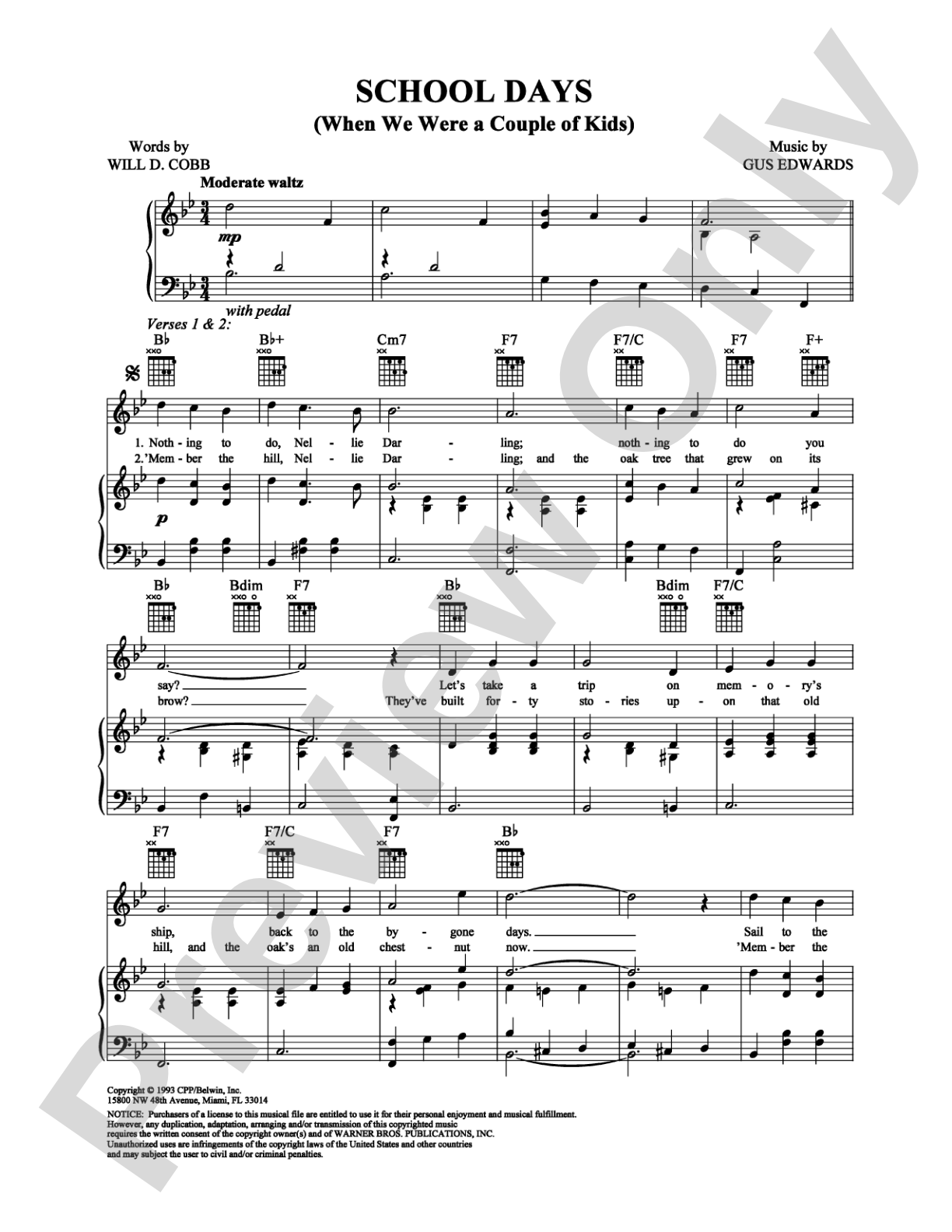
School Days (When We Were a Couple of Kids): Piano/Vocal/Chords Digital Sheet Music

School Days (When We Were a Couple of Kids): Piano/Vocal/Chords Digital Sheet Music

Gus Edwards

Item: 00-PS-0007454

Digital Download
$3.99
Description

School Days (When We Were a Couple of Kids): Piano/Vocal/Chords Digital Sheet Music isn't in MakeMusic Cloud just yet...but it could be. Let us know you'd like to see it, and you'll help shape what comes next. In the meantime, start a free trial and dive into thousands of interactive titles your students can play along with today.

Sample Audio
No sample audio found.
Sample Video
Additional Details
SKU: 00-PS-0007454

More about this title

Why we love this

This standard sits in that sweet spot between singability and authenticity. The piano/vocal/chords format makes it accessible whether you're accompanying a vocalist in a studio setting, teaching a student to work with chord symbols, or sketching out arrangements for a small ensemble.

What to expect

Warm and reflective, with the gentle humor that comes from remembering simpler times. The melody carries a lightness that keeps sentimentality from curdling into maudlin, while the harmonic framework suggests gentle swing and ease.

Who it's for

Vocalists in jazz or pop settings, pianists building a standard repertoire, and voice teachers working with students on character-driven material. This works equally well for a student learning to sight-read with a chord lead sheet or for a rehearsal pianist developing arrangements on the fly.

How to get the most out of it

  • Let the piano comping breathe. Sparse voicings in the verses will keep focus on the lyric and melody; fill in more texture during the chorus to lift the emotional peak.
  • Shape the vocal line with the natural phrasing of speech. Nostalgia works best when it feels conversational, not oversold.
  • Balance the accompaniment so chord symbols guide improvisation rather than lock it down. Leave room for the pianist to voice chords in ways that fit the room and the vocalist's interpretation.

How to use it

Slot this into a recital that explores the Great American Songbook, pair it with other nostalgic standards to build a thematic set, or use it as a teaching piece that asks students to inhabit a character and mood. It also works beautifully as a lower-pressure performance vehicle for students first learning to work with chord changes and vocal storytelling.

Skills your students will build

  • Reading and interpreting chord symbols
  • Maintaining conversational phrasing across a complete melody
  • Balancing vocal line with piano accompaniment
  • Understanding harmonic function through practical playing and singing

You May Also Like