
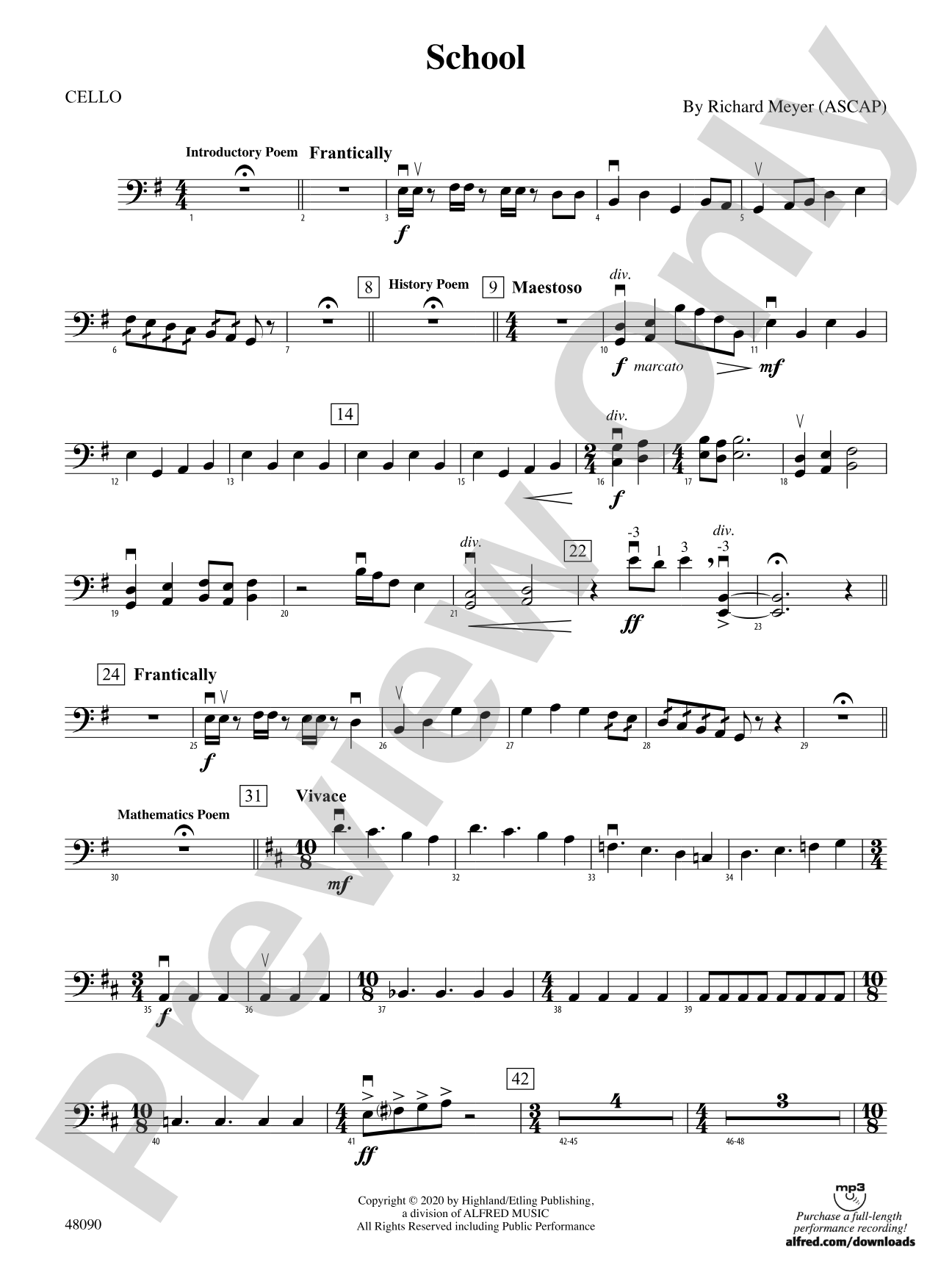

School: Cello
By Richard Meyer
Grade: 3
Item: 00-PC-0018525_VC1
$3.00
Pickup currently not available
Description
Pay tribute to your school with this imaginative musical portrait of the school day as viewed by typical students through the inspired genius of composer Richard Meyer. Six creative musical interludes portray the subjects of the school day (History, Math, English, Physical Education, Science, and Orchestra), each introduced with a short poem read by a narrator. The delightful poems were written by middle-school students and offer amusing and enlightening insights into their encounters with the wonders (and perils) of education. The subjects are linked together by brief and hectic musical "passing periods" based on the "Promenade" from Mussorgsky's famous Pictures at an Exhibition. Use the poems included or, for a wonderful writing prompt, have your students compose their own! School is the perfect piece for an assembly, a concert for the parents, or a recruiting tour. (8:50)


Don't just read it, hear it, play along with it, and watch your students grow with it. In MakeMusic Cloud, School: Cello comes alive with professional accompaniment, adjustable tempo, and built-in practice tools that turn solo practice into real progress.
Open in the Player
Jump straight in and assign it today.
Start Your Free Trial
Open this title and explore the full library in minutes.
Sample Audio
1
Audio File
--:--
0:00
0:00
Sample Video
Additional Details
Series:
Highland/Etling String Orchestra
Publisher:
Alfred Music
Page Count:
128
SKU:
00-PC-0018525_VC1
More about this title
About the Composer: Richard Meyer
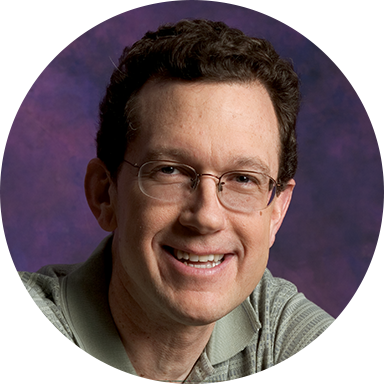
Richard Meyer built his reputation across three decades of string teaching in California public schools, where he expanded the orchestra program at Oak Avenue Intermediate School from 29 students to 200 while simultaneously directing the city's elementary string initiative. His work extends beyond the classroom: he conducted the Pasadena Youth Symphony Orchestra for 16 years in performances spanning New York, Vienna, Australia, and Canada, and founded the "Giving Bach" program in 2009, an interactive concert series that has earned national recognition for bringing music to underserved and special needs student populations throughout Southern California.
As a composer and arranger, Meyer has published over 190 works and served 16 years as string editor for Alfred Publishing Company. He co-authored several string curricula, including the String Explorer Series and Sight-read It for Strings. His clinician credentials include presentations at the A.S.T.A. National Conference, the Texas Orchestra Directors' Association Conference, and university workshops at Ohio State and elsewhere. Meyer and his wife live in Sierra Madre, California.
Why we love this
Meyer captures the authentic voice of middle schoolers by embedding their own poetry into the score, transforming what could be a gimmick into genuine curricular engagement. The passing periods based on Mussorgsky's "Promenade" inject musical humor and sophisticated structural thinking at a grade level where students rarely encounter recognizable compositional references. Directors love this piece because it works equally well as a concert centerpiece, an assembly showstopper, or a recruiting tool that speaks directly to student experience.
What to expect
School captures the texture of a student day through music and voice: gentle curiosity in the History movement, mechanical precision in Math, lyrical warmth in English, physical exuberance in PE, wonder in Science, and a homecoming to the orchestra itself. The framing device of passing periods creates genuine dramatic momentum, with Mussorgsky's influence lending a sophisticated musical wink that teachers and older students recognize while younger listeners simply enjoy the propulsive energy.
Who it's for
Grade 3 string orchestras with reliable ensemble discipline and access to a student narrator (or adult volunteer). The piece works for programs of any size, from full orchestras to more modest ensembles, because the orchestration is flexible and the narrative frame carries the performance regardless of instrumental numbers.
How to get the most out of it
- Assign the narrator role strategically: the poems land hardest when delivered by a student with confidence in public speaking, not necessarily the strongest reader. Rehearse the narrator's timing against the orchestra separately so cues feel natural rather than mechanical.
- The six subject interludes each carry distinct orchestration; highlight these timbral shifts during sectional rehearsals so the string sections understand they are painting different moods, not simply executing rhythmic patterns.
- Lean into the hectic energy of the passing periods by pushing tempo slightly and encouraging precise articulation in the pizzicato figures; this contrast sharpens the structural journey and keeps audience attention alive between subjects.
- If your students compose replacement poems as the score suggests, budget rehearsal time to integrate new text without sacrificing musical integrity. The original poems are crafted to fit Meyer's phrasing precisely.
How to use it
This piece thrives as the anchor of a concert built around school identity or student voice; pair it with a shorter, purely instrumental piece beforehand to establish orchestral credibility, then let School shine as your main event. It also works beautifully on spring recruiting concerts or assemblies where you want to celebrate what orchestra means to your students specifically. Consider performing it mid-year once the ensemble has built secure intonation and confidence, since the piece's charm depends on musical clarity rather than virtuosity.
Skills your students will build
- Listening for and responding to textual cues synchronized with orchestral accompaniment
- Articulation contrast across multiple movements (legato in English, pizzicato in passing periods, sustained bowings in Science)
- Maintaining ensemble cohesion during frequent meter and tempo changes between interludes
- Understanding program music and narrative structure in orchestral composition
- Collaboration between singers or speakers and instrumentalists in a staged performance context