School Cover Image

School: String Orchestra Conductor Score

$10.00 USD
Sale price  $10.00 USD Regular price 
Skip to product information
School Cover Image

School: String Orchestra Conductor Score

By Richard Meyer

Grade: 3

Item: 00-48090S

$10.00
Shipped

One moment…

Description
Pay tribute to your school with this imaginative musical portrait of the school day as viewed by typical students through the inspired genius of composer Richard Meyer. Six creative musical interludes portray the subjects of the school day (History, Math, English, Physical Education, Science, and Orchestra), each introduced with a short poem read by a narrator. The delightful poems were written by middle-school students and offer amusing and enlightening insights into their encounters with the wonders (and perils) of education. The subjects are linked together by brief and hectic musical "passing periods" based on the "Promenade" from Mussorgsky's famous Pictures at an Exhibition. Use the poems included or, for a wonderful writing prompt, have your students compose their own! School is the perfect piece for an assembly, a concert for the parents, or a recruiting tour. (8:50)

School: String Orchestra Conductor Score isn't in MakeMusic Cloud just yet...but it could be. Let us know you'd like to see it, and you'll help shape what comes next. In the meantime, start a free trial and dive into thousands of interactive titles your students can play along with today.

Sample Pages

Sample Audio
0:00
0:00
Sample Video
Additional Details
Series: Highland/Etling String Orchestra
Publisher: Alfred Music
Page Count: 24
UPC: 038081550947
SKU: 00-48090S

More about this title

About the Composer: Richard Meyer
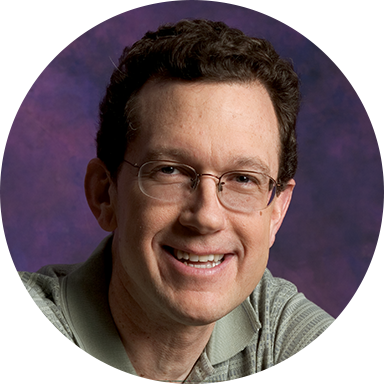
Richard Meyer

Richard Meyer spent 35 years in public school string education, building the orchestra program at Oak Avenue Intermediate School in Temple City, California from 29 students to 200. For 16 years he led the Pasadena Youth Symphony Orchestra, conducting performances across New York, Washington D.C., Vienna, Australia, and Canada.

Beyond the classroom, Meyer developed the "Giving Bach" program in 2009, which uses interactive concerts to reach special needs and underserved students throughout Southern California. A prolific composer with over 190 published works and arrangements, he also served as string editor for Alfred Publishing Company and co-authored the String Explorer Series and Sight-read It for Strings. He has been a featured clinician at the A.S.T.A. National Conference, Texas Orchestra Directors' Association Conference, and string workshops at major universities.

Why we love this

This piece transforms a school day into concert repertoire with genuine wit and heart. Meyer anchors the humor in middle school poetry and Mussorgsky, creating something that feels both substantial and immediately engaging for performers and audiences alike. The flexibility to use student-written poems as a performance option makes every performance feel locally owned rather than generic.

What to expect

Playful, colorful, and surprisingly moving. Each subject gets its own musical personality, from stately history marches to percussive math rhythms, while the frantic passing periods buzz with student energy. The narrative frame gives the whole piece heart; you're not just hearing a suite of variations, you're stepping inside student experience.

Who it's for

String orchestras working at grades 3-4 level who want repertoire that connects to their school community while remaining musically substantial. This works equally well for concert programs, school assemblies, open houses, and recruitment events where you want to celebrate orchestral learning without condescension.

How to get the most out of it

  • Balance the narration so it lands without drowning out the orchestra; rehearse the narrator separately, then map out sightlines and mic placement if performing in a large venue.
  • Emphasize the character of each movement. History calls for gravitas, Math benefits from rhythmic precision, and Orchestra should shine with pride. The interludes between subjects demand crisp, energetic conducting.
  • Lock in the "passing period" transitions on the Mussorgsky model. These are quick and chaotic; rehearse them deliberately so the chaos serves the story and doesn't feel loose.
  • If using student-written poems, workshop them in rehearsal so the orchestra responds musically to the students' actual words and phrasing, not just the content.

How to use it

Program this as a concert centerpiece or opening number where the audience can settle in and enjoy the storytelling. It pairs well with a more traditional concerto or sonata arrangement on the same concert, offering balance between humor and technical display. For school assemblies and recruiting events, it's perfect as a standalone feature that showcases both musicianship and the spirit of your program.

Skills your students will build

  • Character writing and stylistic contrast within a single piece
  • Ensemble precision in quick tempo changes and transitions
  • Coordination with a narrator and narrative structure
  • Reading and executing contrasting textural demands (sustained tone, rhythmic drive, delicate accompaniment)
  • Collaborative interpretation when incorporating student-written poems

You May Also Like