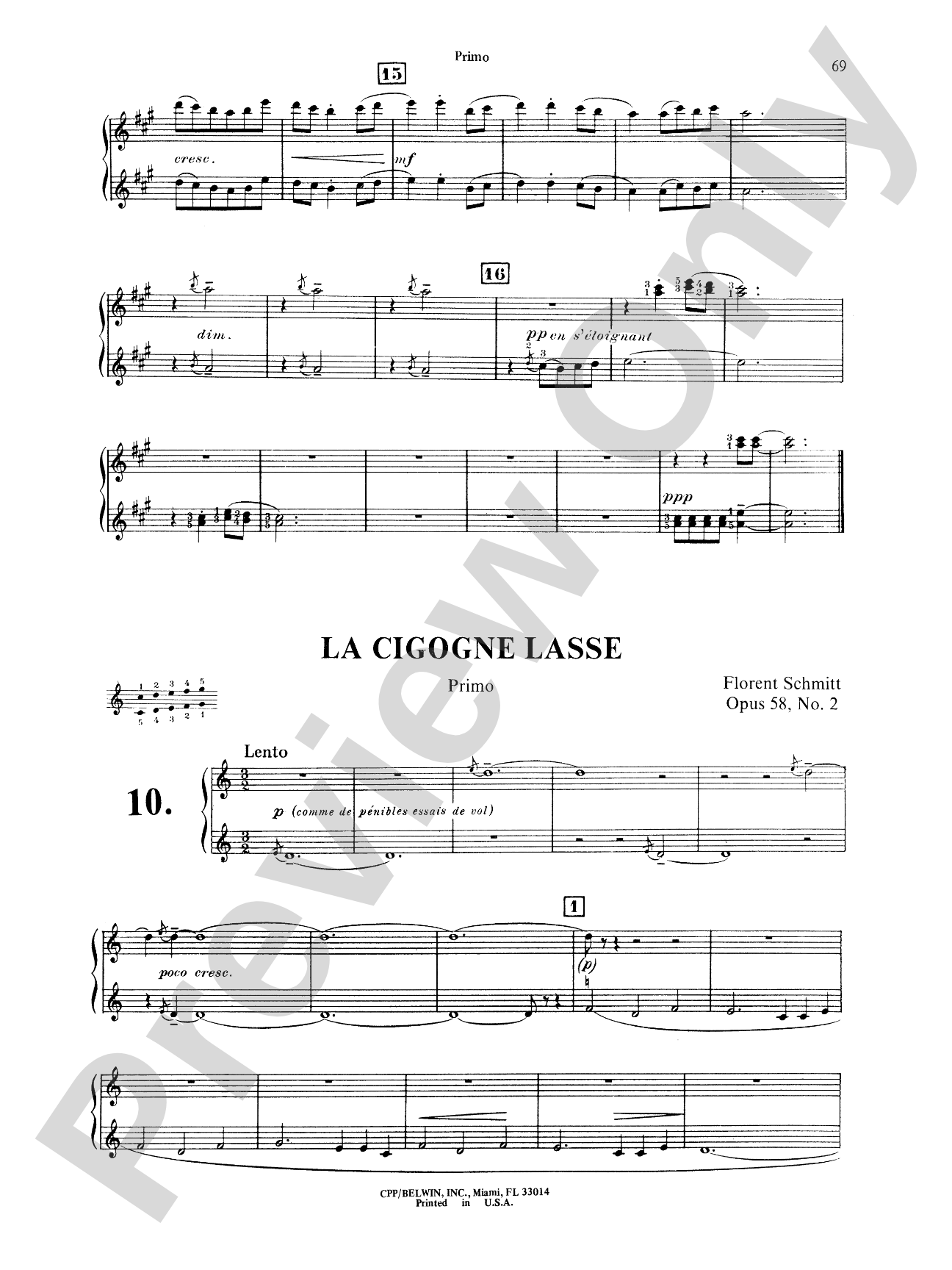
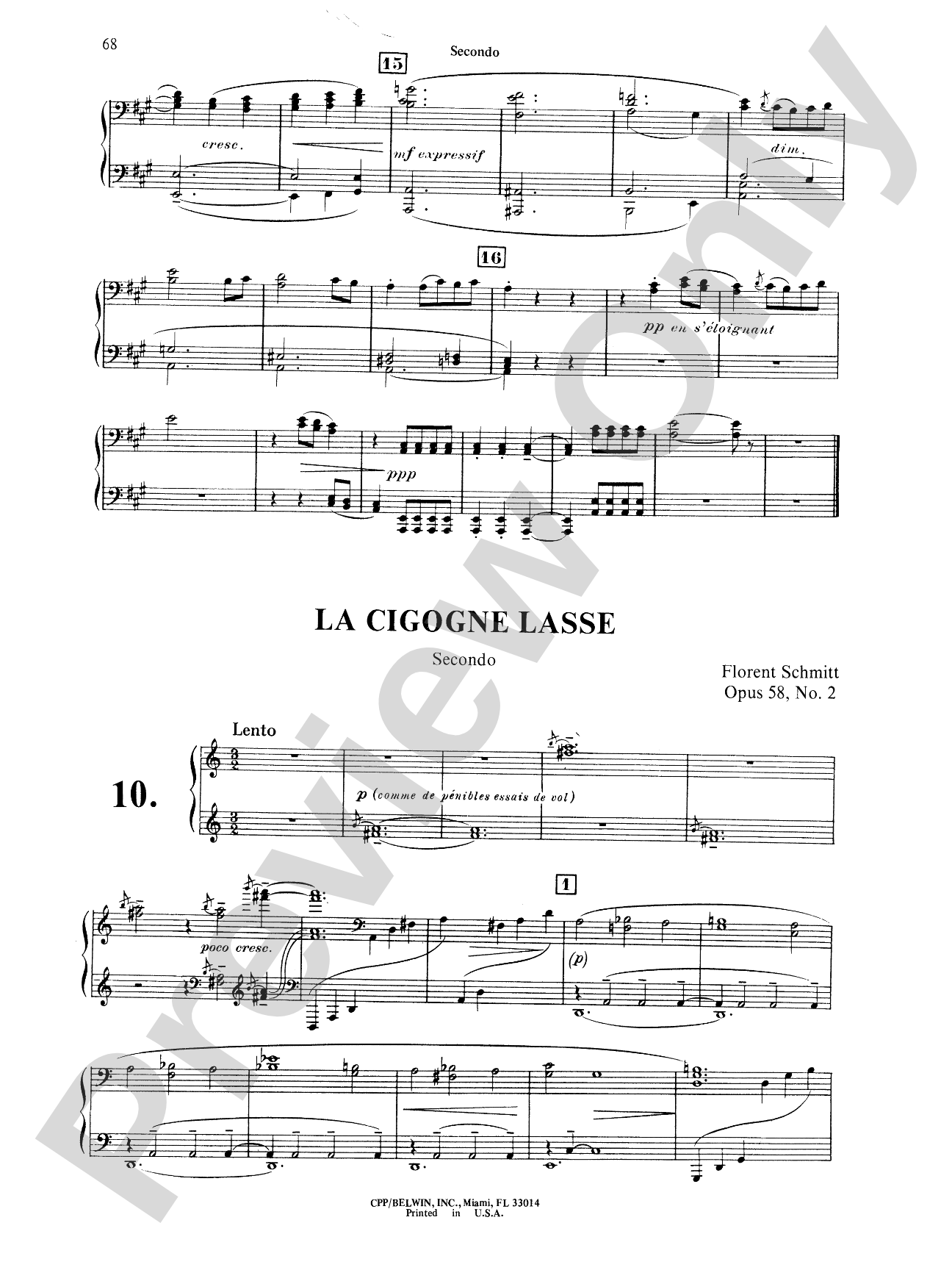
Schmitt: Album of Piano Duets, Volume II Sheet Music Preview

Schmitt: Album of Piano Duets, Volume II

By Florent Schmitt

Item: 00-PC-0014191

Digital Download
$0.99
Description
Op. 28, Op. 58

Don't just read it, hear it, play along with it, and watch your students grow with it. In MakeMusic Cloud, Schmitt: Album of Piano Duets, Volume II comes alive with professional accompaniment, adjustable tempo, and built-in practice tools that turn solo practice into real progress.

Sample Audio
No sample audio found.
Sample Video
Additional Details
Series: Kalmus Edition
Publisher: Alfred Music
Page Count: 104
SKU: 00-PC-0014191

More about this title

About the Composer: Florent Schmitt

Florent Schmitt (1870-1958) was a French composer of substantial ambition and technical mastery, equally comfortable writing for large orchestras, intimate chamber groups, or solo instruments. Though less frequently performed today than some of his contemporaries, Schmitt commanded respect across Europe for his harmonic sophistication, orchestral color, and gift for memorable melody. His four-hand piano works reflect the genre's peak popularity in the early 20th century, when such pieces provided serious composers an outlet for inventive writing aimed at accomplished amateur musicians.

Schmitt's piano duets balance accessibility with genuine musical substance. These works avoid the sentimentality that can bog down lighter salon pieces, instead offering genuine compositional craft that rewards careful listening and skilled ensemble playing. His harmonic language feels modern for the Romantic tradition he inherited, and his textures often blur the line between who has the principal voice and who provides accompaniment.

Why we love this

Schmitt's duets occupy the sweet spot between musical seriousness and playable difficulty. Both players remain engaged throughout with genuinely interesting material, and the writing avoids the formulaic patterns that make some Victorian four-hand music feel static. These pieces work perfectly for duet recitals, student collaborations, or faculty performances where you want substance without extreme technical demands.

What to expect

Schmitt's harmonic language feels warmly modern without abandoning the Romantic era's lyricism. The textures shift between moments of intimate conversation between the two players and fuller, richer sonorities where four hands fill the keyboard with sophisticated color. There's elegance throughout, with a sense of refinement that rewards both the performers and an attentive audience.

Who it's for

These duets suit accomplished student pianists preparing for collaborative repertoire, as well as teachers and advanced amateurs seeking substantial four-hand works that showcase musicianship without requiring virtuosic technique. Two players of approximately equal ability will find genuine satisfaction here, whether in lessons, studio recitals, or informal music-making.

How to get the most out of it

  • Establish the distribution of material clearly in rehearsal. Schmitt frequently passes thematic ideas between primo and secondo, and both players must understand who owns each phrase to maintain proper projection and balance.
  • Address the pedal as a shared responsibility. Four-hand playing requires more deliberate pedal coordination than solo work; mark the score together to avoid muddying transitions.
  • Listen across the entire keyboard. Schmitt's textures often layer melodic material across both players' ranges; listen for how your line interacts with your partner's, not just what you're playing.
  • Shape the musical lines with clear rubato and phrase direction. The Romantic aesthetic underlying these pieces demands attention to arc and breathing, especially when melodic interest shifts between parts.

How to use it

Program these duets on student recitals as a way to feature two advancing pianists together, or use them as the centerpiece of a duo recital that showcases four-hand literature beyond Brahms and Mozart. They also work well in chamber music contexts where collaborative ensemble experience matters as much as spotlight opportunity.

Skills your students will build

  • Ensemble listening and balancing between primo and secondo parts
  • Coordinated pedal technique across two performers
  • Navigating rapid hand positions and shared keyboard space
  • Interpreting early 20th-century harmonic language and phrase structure
  • Maintaining rhythmic cohesion without a conductor in complex meters and tempo variations

You May Also Like