
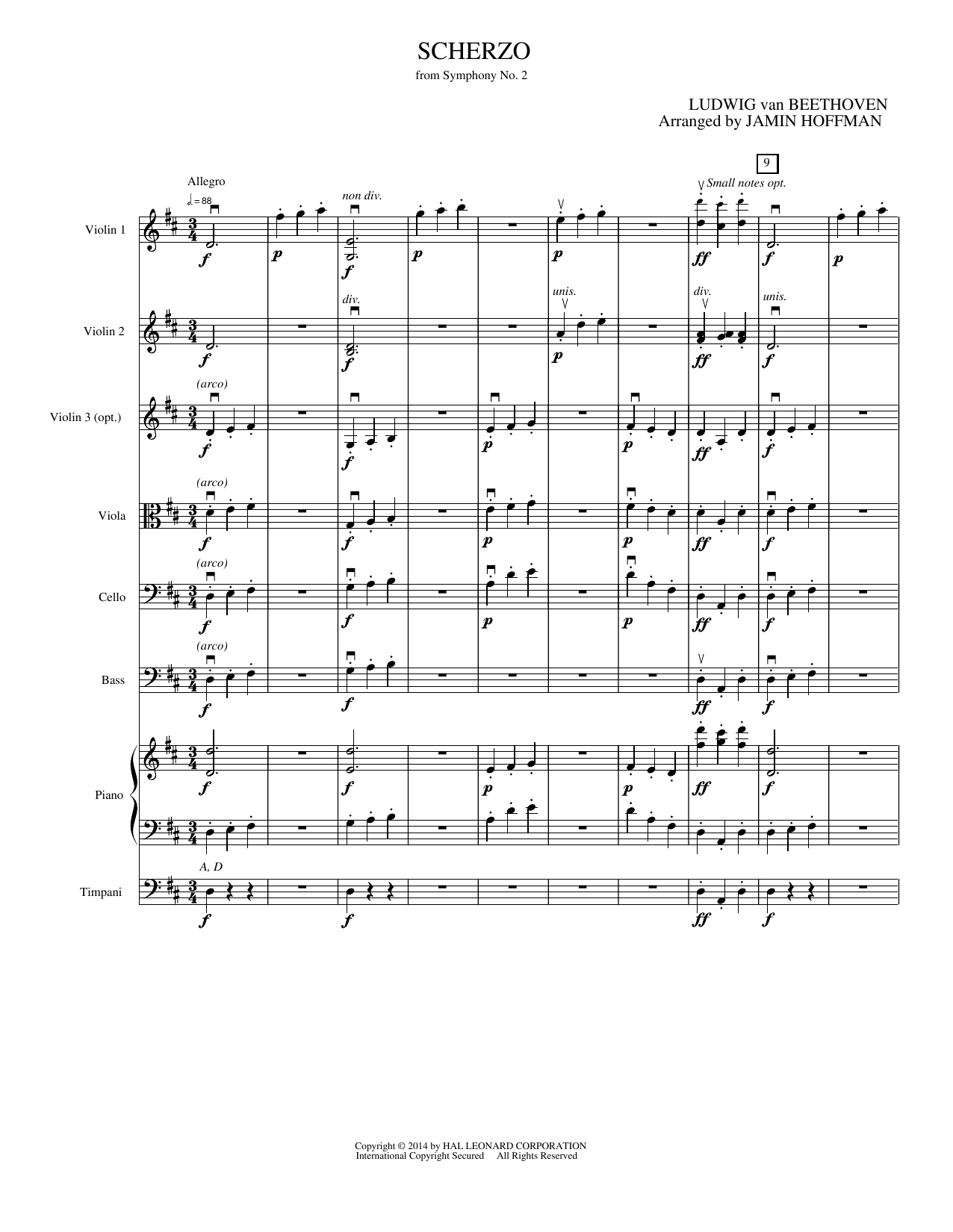

Scherzo from Symphony No. 9: String Orchestra Conductor Score & Parts
By Ludwig Van Beethoven / Arranged by Jamin Hoffman
Grade: 3-4
Item: 35-PK00426661
$50.00
Pickup currently not available
Buy Extra Parts (Digital PDF Download)
| Product | Price | Quantity |
|---|---|---|
| Scherzo from Symphony No. 9 - Full Score | $50.00 |
Parts Added to Cart!
Description
Scherzo from Symphony No. 9


Scherzo from Symphony No. 9: String Orchestra Conductor Score & Parts isn't in MakeMusic Cloud just yet...but it could be. Let us know you'd like to see it, and you'll help shape what comes next. In the meantime, start a free trial and dive into thousands of interactive titles your students can play along with today.
Request This Title
Tell us you want it.
Start Your Free Trial
Explore everything that's ready to play right now.
Sample Audio
No sample audio found.
Sample Video
No sample videos found.
Additional Details
Publisher:
Hal Leonard
SKU:
35-PK00426661
More about this title
About the Composer: Ludwig Van Beethoven
Beethoven's nine symphonies fundamentally reshaped what the orchestra could express. He expanded the ensemble's sonic range, deepened harmonic language, and gave individual instrumental lines the independence of chamber music. For string players, his works demand both technical precision and the ability to communicate profound emotional content through subtle dynamic shifts and phrasing.
The Scherzo form became one of Beethoven's most characteristic contributions to symphonic architecture. Where earlier composers used the minuet as a formal interlude, Beethoven transformed it into something urgent and unpredictable. His scherzos crackle with rhythmic vitality and unexpected harmonic turns, making them demanding but deeply rewarding to perform.
Why we love this
Arranging Beethoven's Scherzo for strings alone strips away the wind colors and focuses listeners entirely on the rhythmic drive and harmonic sophistication that makes this movement so propulsive. Students at this level encounter genuine symphonic writing without the complication of multiple sections, making it an ideal entry point for understanding how Beethoven builds form from motivic fragments. The movement's inherent momentum carries rehearsals forward.
What to expect
Restless energy permeates the Scherzo. The opening theme propels forward with insistent rhythmic repetition, creating forward momentum that feels almost breathless. When the contrasting middle section arrives, it offers harmonic relief while maintaining that same underlying urgency, before the return sweeps back in with renewed vigor.
Who it's for
Directors looking for repertoire that sounds substantial without requiring a full orchestra; this Hoffman arrangement preserves Beethoven's essential ideas in a string setting. Advanced middle school or early high school orchestras benefit from working with a recognized composer's actual symphonic material, building confidence in students' ability to handle classical forms. Strong intermediate players will find genuine musical challenges here.
How to get the most out of it
- Maintain clarity of articulation in the primary theme. Beethoven's repeated sixteenth notes need rhythmic precision to avoid sounding muddy; light staccato in the bow helps.
- Balance the inner parts during the contrasting sections. Violas and second violins carry important harmonic material that students often underplay.
- Shape the dynamic arc across entire phrases rather than measure by measure. This movement rewards players who listen to the larger line instead of reacting to every written accent.
- Lock the string sections' rhythmic relationship early. The viola and cello rhythms are the foundation; once those are secure, the violins can layer their figuration cleanly.
How to use it
Pair this with a classical era overture or another Beethoven extract to build a thematic program exploring the composer's approach to structure and orchestration. It also serves well as a concert opener because its kinetic energy immediately engages the audience and warms up the ensemble technically. Consider programming it early in the concert season as students build facility with classical rhythmic and harmonic language.
Skills your students will build
- Reading compound rhythmic figures with clear articulation
- Maintaining internal pulse while tracking multiple independent string lines
- Balancing exposed inner voices (viola and second violin parts)
- Responding to frequent dynamic shifts within a fast tempo
- Understanding scherzo form and how Beethoven manipulates motivic material
- Intonation precision in chromatic harmonic progressions