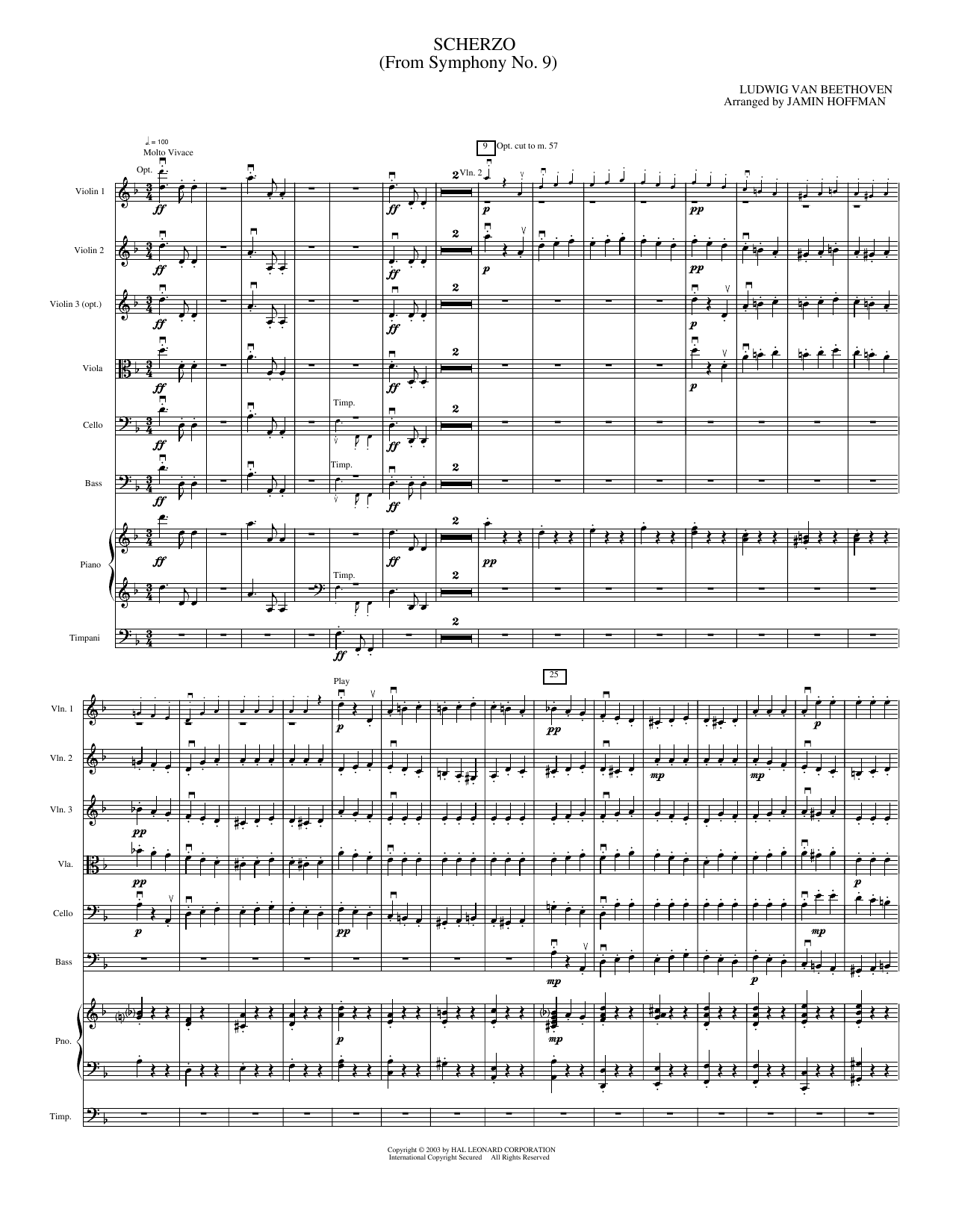
Beethoven revolutionized orchestral writing by expanding the scope and emotional range of the symphony. His second symphony, composed in 1802 and premiered in 1803, stands at a pivotal moment in his career, bridging the classical forms he inherited from Haydn and Mozart with the expansive gestures that would define his mature works.
For string players and conductors, Beethoven's string writing demands both technical precision and interpretive maturity. His scherzi broke from the minuet tradition by introducing rhythmic drive and humor, requiring orchestras to balance clarity of articulation with ensemble cohesion. This movement, in particular, showcases how effectively he could sustain momentum and character through relatively straightforward harmonic language.