
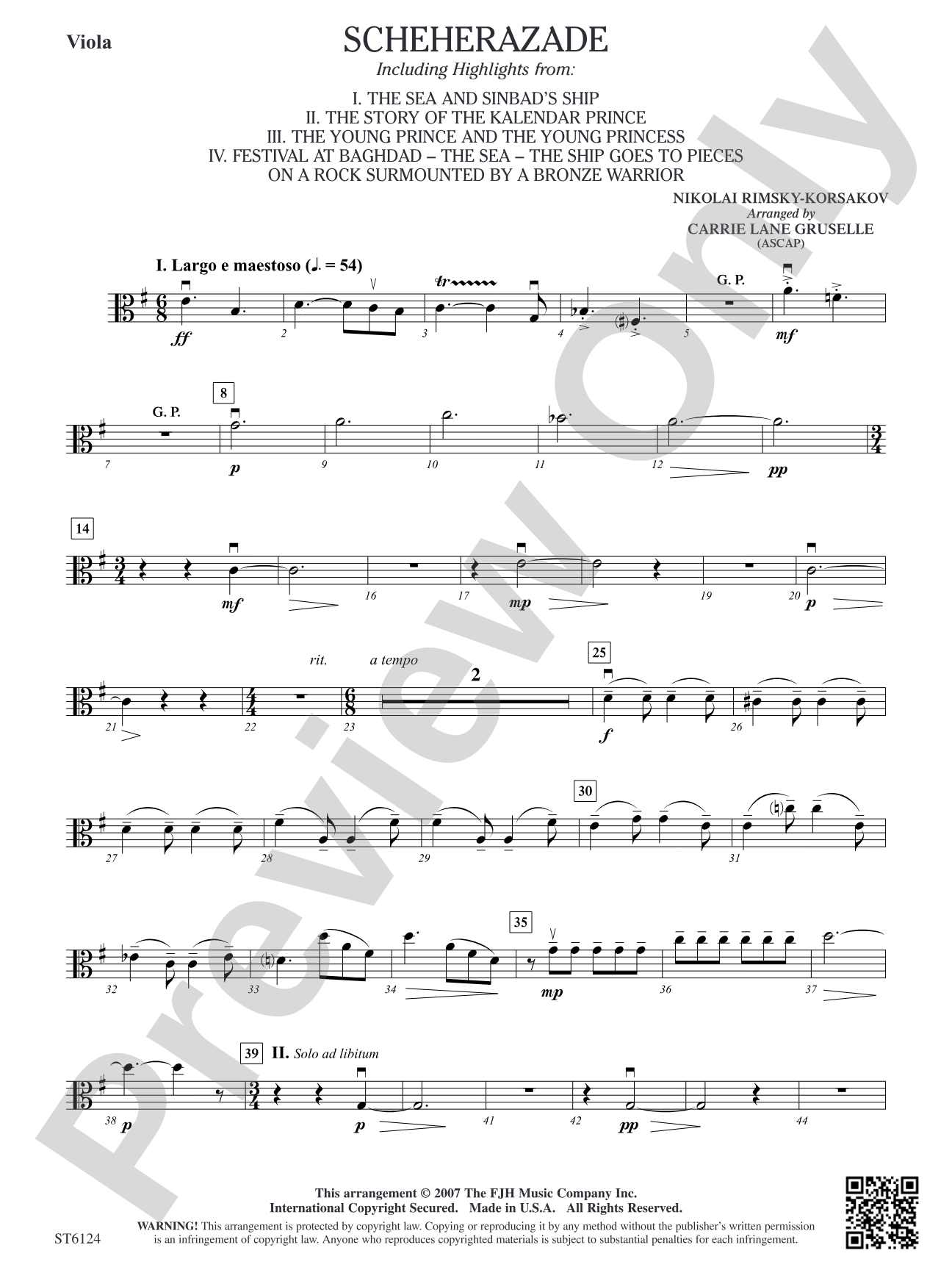

Scheherazade: Viola
By Nikolai Rimsky-Korsakov / arr. Carrie Lane Gruselle
Grade: 4
Item: 98-PC-DST6124_VA1
$7.00
Pickup currently not available
Description
Students finally have the opportunity to play this Romantic masterpiece by Rimsky-Korsakov, inspired by the story of 1001 Arabian Nights. Incorporating themes from all four movements, this arrangement provides study opportunity for young string students in a wide variety of keys, tempi, articulations, accidentals, rhythmic challenges, and expressive styles. As is the case in the original, a violin soloist is featured as the narrator of the tales. No shifting is required for the second violin and viola. Excellent!


Scheherazade: Viola isn't in MakeMusic Cloud just yet...but it could be. Let us know you'd like to see it, and you'll help shape what comes next. In the meantime, start a free trial and dive into thousands of interactive titles your students can play along with today.
Request This Title
Tell us you want it.
Start Your Free Trial
Explore everything that's ready to play right now.
Sample Audio
1
Audio File
--:--
0:00
0:00
Sample Video
No sample videos found.
Additional Details
Series:
FJH String Orchestra
Publisher:
The FJH Music Company, Inc.
SKU:
98-PC-DST6124_VA1
More about this title
About the Composer: Nikolai Rimsky-Korsakov
Nikolai Rimsky-Korsakov (1844-1908) was a Russian composer and master orchestrator whose innovative approach to instrumental color transformed late 19th-century music. A member of the nationalist "The Five," he drew inspiration from Russian folk traditions, oriental themes, and literary sources, creating works of vivid harmonic language and brilliant sonic textures.
For music educators, Rimsky-Korsakov's legacy extends far beyond concert halls. His compositions reward detailed study of orchestration, harmonic function, and the relationship between melody and accompaniment. Students engaging with his music develop an ear for sophisticated harmonic writing and begin to understand how color and technique serve storytelling in music.
Why we love this
This arrangement captures the narrative arc and orchestral ingenuity of the original while remaining playable for Grade 4 students. The solo violin part ensures one student experiences the role of storyteller, while the ensemble writing maintains the harmonic sophistication and key diversity that make the piece musically substantial. Contest and festival judges recognize Scheherazade as a work that demonstrates genuine musical maturity when performed well.
What to expect
Lush, exotic, and deeply romantic. Scheherazade evokes candlelit nights, distant lands, and the power of storytelling to enchant and transform. The music shifts between moments of intimate vulnerability and sweeping grandeur, with the solo violin always present as the voice spinning tales into being.
Who it's for
String orchestras at the intermediate-advanced level ready to tackle a recognized masterwork with confidence. Students benefit from exposure to one of the repertoire's most celebrated pieces without the technical demands of unison shifting or extreme register changes. This arrangement works equally well for a principal soloist on an all-state or honor orchestra or for building ensemble cohesion through a substantial, unified musical goal.
How to get the most out of it
- Establish the solo violin's character early in rehearsals. This role carries the entire narrative thread, so the soloist should understand the "tales within tales" structure and shape each thematic return with fresh interpretation.
- Balance articulation clarity across the ensemble, especially in passage work. The variety of articulations (marked and unmarked) creates rhythmic lift and prevents the texture from becoming muddy when multiple voices move simultaneously.
- Use the key changes as rehearsal markers and interpretive opportunities. Moving through different tonal areas mirrors the geographical and emotional journey of the tales; help students hear these shifts as signposts rather than technical obstacles.
- Work tempo transitions deliberately. The original spans multiple tempi and moods; secure internal ensemble timing in each section before connecting movements, then practice the transitions until they feel inevitable.
How to use it
Feature this as the centerpiece of a concert or competition set; its five to seven minute span and narrative completeness make it a natural program anchor. It pairs well with shorter Romantic era works or with contemporary pieces that share its interest in cultural storytelling. Scheduling it mid-season allows adequate rehearsal time while building toward festival competition deadlines.
Skills your students will build
- Reading and executing accidentals across multiple keys and key centers
- Maintaining rhythmic precision through syncopation and articulation variety
- Balancing parts while tracking harmonic movement underneath the melodic line
- Responding to expressive direction changes (marcato, legato, sustained) within a single piece
- Ensemble listening with a defined solo voice, understanding accompaniment roles
- String-specific techniques: clean string crossings, smooth phrase connections without shifting