
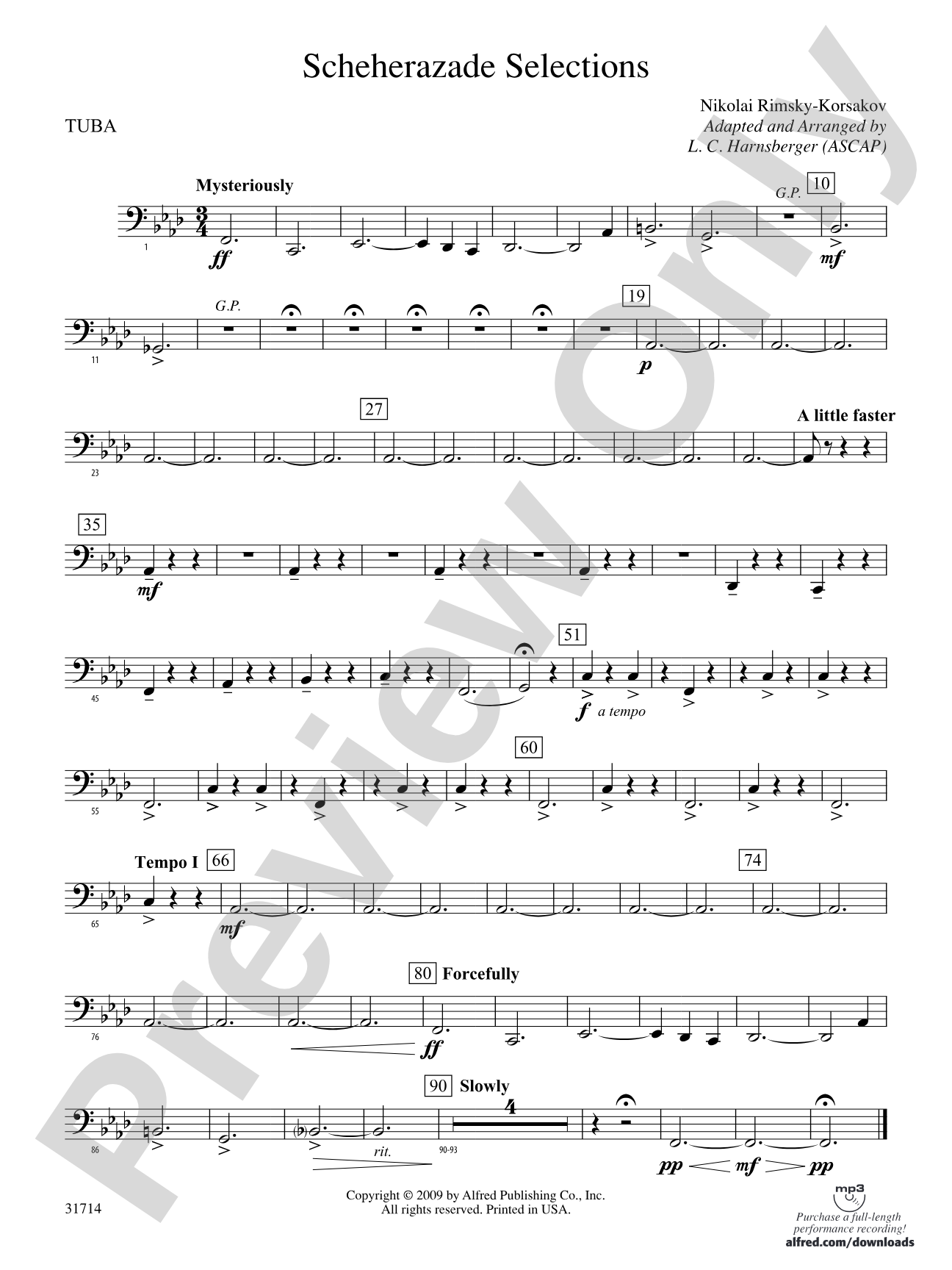

Scheherazade Selections: Tuba
By Nicolai Rimsky-Korsakov / arr. L. C. Harnsberger
Grade: 2 (Medium Easy)
Item: 00-PC-0014861_TB1
$3.00
Pickup currently not available
Description
Scheherazade is Rimsky-Korsakov's amazing musical interpretation of the tales of the Arabian Nights as told to the sultan by his wife who is destined to be executed. Her stories over 1,001 nights so engage the sultan he eventually spares her life. This skillful arrangement transforms some of the most memorable themes of the original piece into a real audience pleaser perfect for younger performers. The mysterious mood of the opening from "The Sea and Sinbad's Ship" sets the tone for the magical music to come. Woodwinds soar with the lyrical melodies of "The Young Prince and Princess," and the full band shines in the exciting selection from "The Story of the Kalendar Prince." Scheherazade Selections will make a successful addition to any concert.


Don't just read it, hear it, play along with it, and watch your students grow with it. In MakeMusic Cloud, Scheherazade Selections: Tuba comes alive with professional accompaniment, adjustable tempo, and built-in practice tools that turn solo practice into real progress.
Open in the Player
Jump straight in and assign it today.
Start Your Free Trial
Open this title and explore the full library in minutes.
Sample Audio
1
Audio File
--:--
0:00
0:00
Sample Video
No sample videos found.
Additional Details
Series:
Young Symphonic
Publisher:
Alfred Music
Page Count:
128
SKU:
00-PC-0014861_TB1
More about this title
About the Composer: Nicolai Rimsky-Korsakov
Nicolai Rimsky-Korsakov (1844-1908) was a Russian composer and orchestrator whose command of instrumental color shaped the sound of Romantic orchestral music. A naval officer turned full-time composer, he synthesized Russian folk traditions with Western harmonic language, creating works that remain central to the concert repertoire. His gift for orchestration—the way he layers melodies across instrumental families—makes his music ideal for arrangement projects in school settings.
Why we love this
L. C. Harnsberger's arrangement captures the narrative arc of Scheherazade without overwhelming younger ensembles; the Grade 2 scoring lets every section sing their moment while maintaining the piece's exotic character and dramatic shape. The progression from mysterious opening through lyrical middle voices to a brilliant final climax gives your band something to build toward, and audiences recognize these melodies instantly.
What to expect
Scheherazade Selections unfolds like a night sky opening up—first shadowy and intimate, then glimmering with lyrical beauty, finally blazing with orchestral color and momentum. The music carries the story's own tension: a woman buying time with tales, and you'll feel that urgency building toward the thrilling close.
Who it's for
Concert bands at the high school and upper middle school level benefit most from this arrangement, though strong middle school ensembles can handle it. Directors looking for repertoire that combines narrative interest, audience recognition, and accessible scoring will find this a reliable choice for winter or spring concerts.
How to get the most out of it
- Shape the opening woodwind unison with rubato and subtle dynamic swell to establish Scheherazade's mysterious storytelling voice before the band enters.
- Balance the 'Young Prince and Princess' section so the lyrical melody floats above accompaniment; it's easy for sections to play too heavily at this grade level.
- Use the contrasting tempos between movements as rehearsal anchors; the band will respond to the energy shift between the dreamlike opening and the driving Kalendar Prince section.
- Watch the full band moments in the finale; younger players often rush the exciting passages. Clicking through the rhythmic figures in sectionals prevents the tempo from slipping.
How to use it
Program this as a featured work on a concert that pairs classical masterworks with contemporary pieces, letting audiences hear how deeply Rimsky-Korsakov's melodies have woven into our musical culture. It also works well as a concert-opener to establish mood and draw listeners into your program immediately, or as a finale when you want to close on a note of brilliance and drama.
Skills your students will build
- Balancing melodic lines with accompaniment textures across the full ensemble
- Sustaining lyrical phrasing in woodwind sections at moderate tempos
- Executing rhythmic precision in fast, energetic passages without rushing
- Reading and responding to multiple tempo and dynamic changes within a single work
- Listening for orchestration cues and understanding how melodies pass between instrumental choirs