
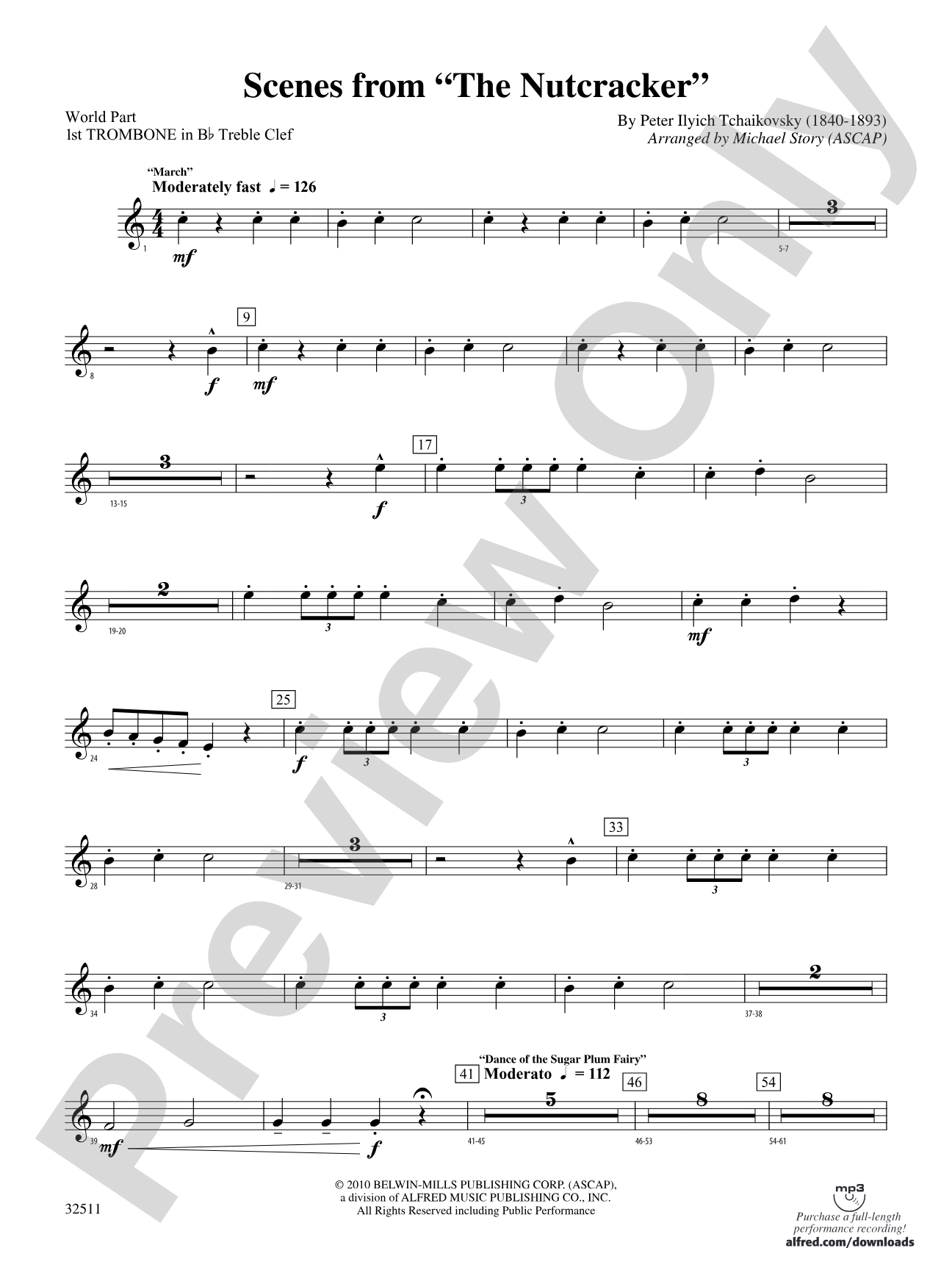
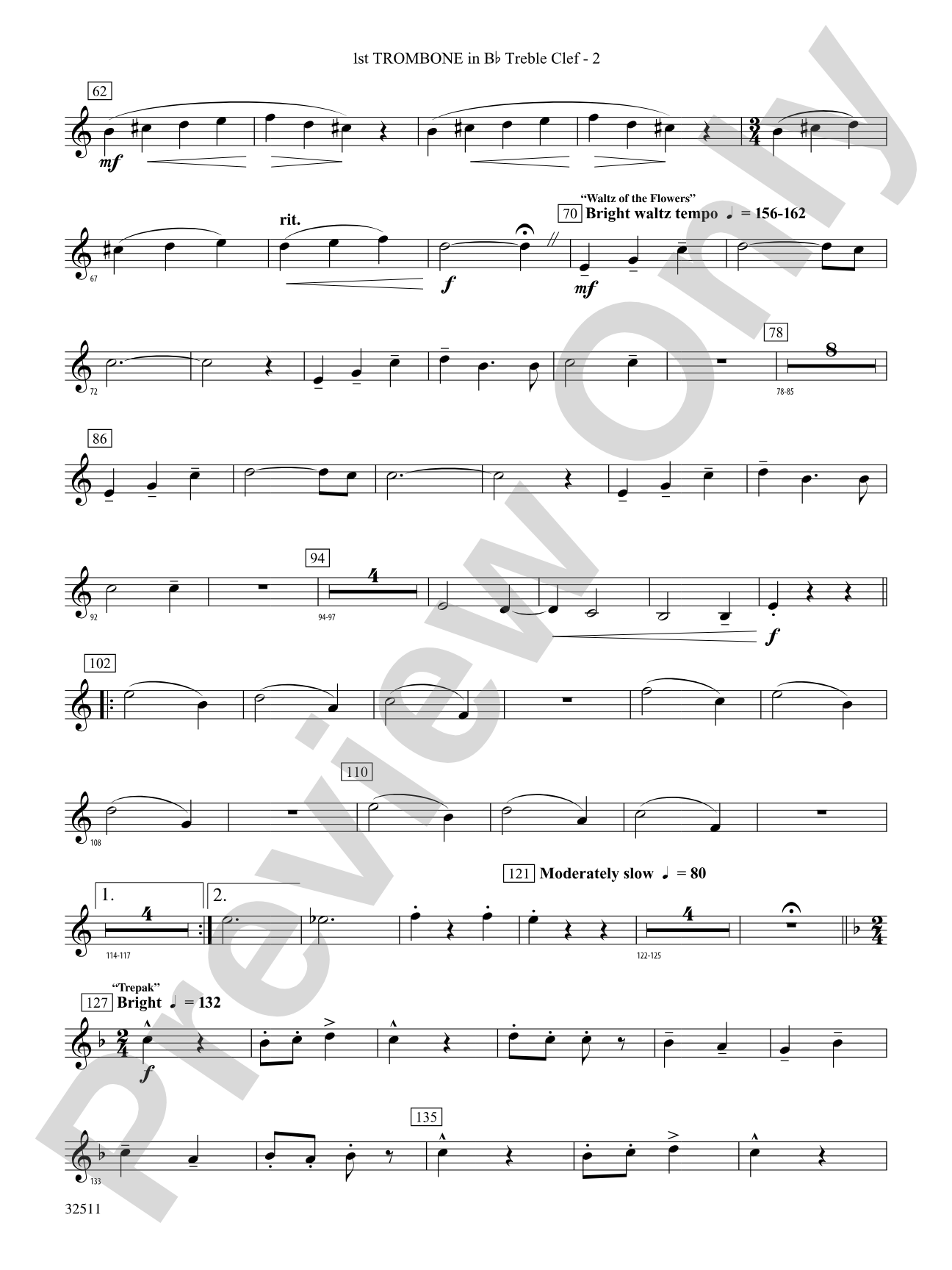
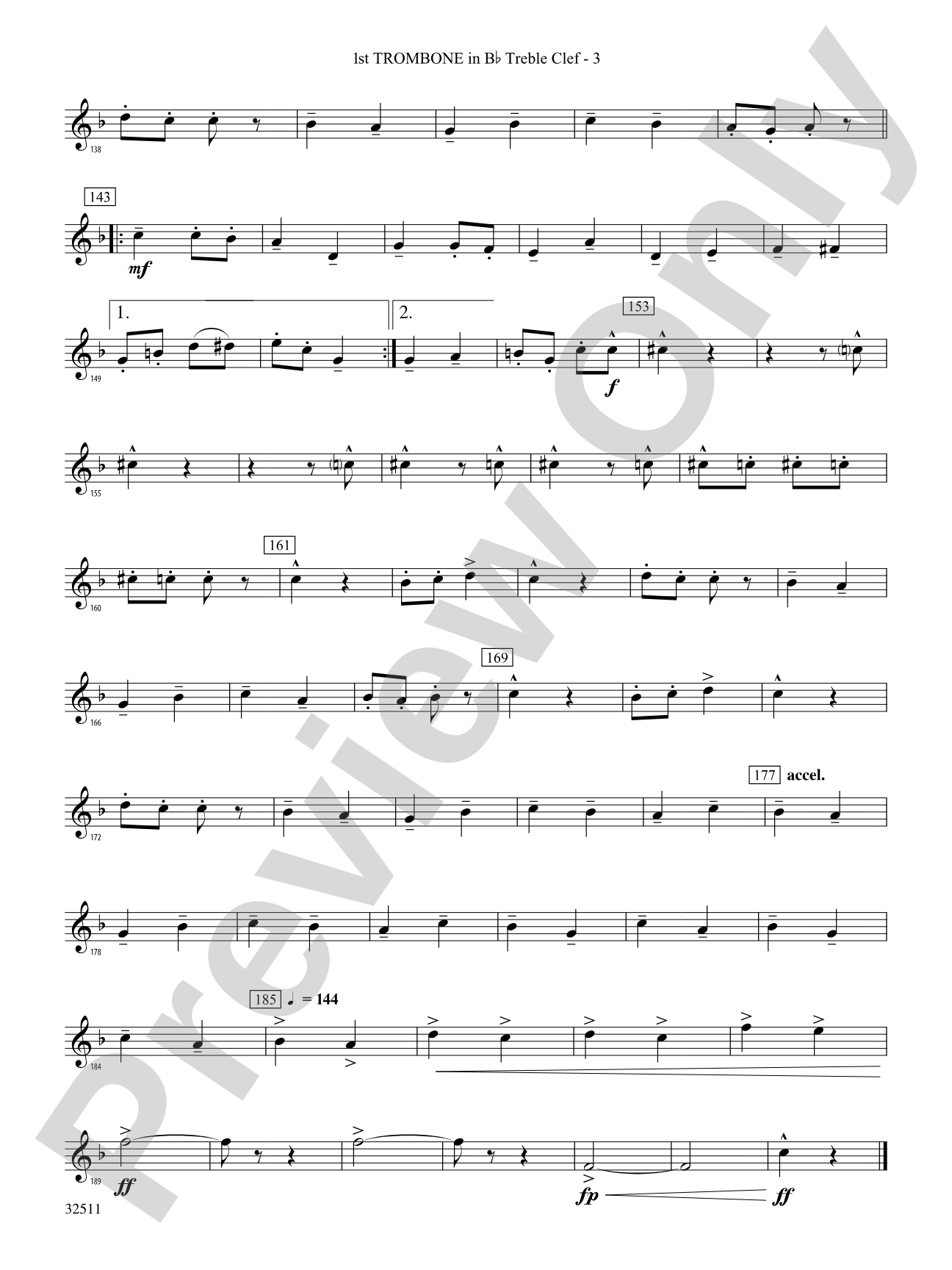

Scenes from The Nutcracker: (wp) 1st B-flat Trombone T.C.
By Peter Ilyich Tchaikovsky / arr. Michael Story
Grade: 3 (Medium Easy)
Item: 00-PC-0014388_wpTN1TC
$3.00
Pickup currently not available
Description
Peter Ilyich Tchaikovsky composed the ballet The Nutcracker in 1891--1892. Based on Alexandre Dumas' adaptation of E. T. A. Hoffmann's story, "The Nutcracker and the Mouse King." Before the premiere, Tchaikovsky selected eight pieces from the ballet and created The Nutcracker Suite, Op. 71a, which became an immediate success and contains some of the most recognizable and best-loved holiday music. "Scenes from The Nutcracker" contains four numbers from Tchaikovsky's The Nutcracker Suite, Op. 71a.


Don't just read it, hear it, play along with it, and watch your students grow with it. In MakeMusic Cloud, Scenes from The Nutcracker: (wp) 1st B-flat Trombone T.C. comes alive with professional accompaniment, adjustable tempo, and built-in practice tools that turn solo practice into real progress.
Open in the Player
Jump straight in and assign it today.
Start Your Free Trial
Open this title and explore the full library in minutes.
Sample Audio
1
Audio File
--:--
0:00
0:00
Sample Video
No sample videos found.
Additional Details
Series:
Belwin Concert Band
Publisher:
Alfred Music
Page Count:
240
SKU:
00-PC-0014388_wpTN1TC
More about this title
About the Composer: Peter Ilyich Tchaikovsky
Peter Ilyich Tchaikovsky (1840–1893) stands as Russia's most internationally celebrated composer of the Romantic era. His gift for melody and his ability to blend Russian nationalist idioms with Western European forms made him a bridge between musical traditions. The Nutcracker ballet, premiered in St. Petersburg in 1892, emerged from a commission and has become one of the most performed works in concert halls worldwide.
Tchaikovsky's orchestral writing was notably skilled and colorful, which translates beautifully to band arrangement. His instinct for narrative and character—essential to ballet composition—gives The Nutcracker Suite its theatrical clarity and emotional directness. These qualities made the original suite an immediate success and continue to make it ideal for concert band performance at all levels.
Why we love this
Michael Story's arrangement captures the orchestral shimmer and harmonic sophistication of Tchaikovsky's original without overwhelming a developing ensemble. The four movements provide variety in character and technical demand, letting you program a complete concert work that audience members actually recognize and love. Holiday programming becomes something more substantial than obligatory seasonal fare.
What to expect
These four movements conjure the warmth and wonder of a winter fairy tale. The familiar melodies and clear harmonic language create an immediate sense of familiarity, while Tchaikovsky's touches of elegance and harmonic color remind you that you're playing something genuinely composed by a master. It feels like stepping into a snow globe where everything is beautiful and just slightly magical.
Who it's for
Concert bands at the Grade 3 level (typically Grades 4–6 or middle school ensembles) will find this accessible yet musically substantial. It works equally well for high school bands seeking holiday repertoire that doesn't talk down to their students, or for community bands wanting recognizable, rewarding material.
How to get the most out of it
- Balance the upper woodwind solos (particularly in the Nutcracker theme) so they sing above the accompaniment; these melodies carry the work's identity.
- Shape the contrasting middle sections by adjusting dynamics within phrases rather than relying on sudden dynamic changes. Smooth, graded volume shifts feel more orchestral.
- Lock the timpani and bass drum into a steady pulse during march-like sections; rhythmic confidence from low brass and percussion gives the whole band security.
- Allow the softer transition passages breathing room. Resist the urge to rush; letting the music breathe between sections adds sophistication and contrast.
How to use it
This works as a complete four-movement work during a holiday concert, or you can select individual movements to anchor different halves of a program. The suite's recognizable themes make it particularly effective as an opener or closer, drawing the audience in immediately. It pairs naturally with other seasonal pieces while maintaining artistic credibility on its own.
Skills your students will build
- Balanced sectional playing in soft dynamic contexts
- Phrasing and shaping within lyrical melodic lines
- Control of sustained tones and ensemble blend across woodwind and brass choirs
- Rhythmic security in march-like passages with varied accompaniment figures
- Transition between contrasting characters and tempo relationships