Scenes from Grand Lake Cover Image

Scenes from Grand Lake: Concert Band Conductor Score & Parts

$65.00 USD
Sale price  $65.00 USD Regular price 
Skip to product information
Scenes from Grand Lake Cover Image

Scenes from Grand Lake: Concert Band Conductor Score & Parts

By Barry E. Kopetz

Grade: 3.5

Item: 98-B1074

Need it now?

Buy Digital Version
$65.00
Shipped

One moment…

Description
An ideal festival or concert winner, this exciting single-movement work is divided into five main sections. Very programmatic in nature, this piece features lively, energetic themes and swift changes of mood and style throughout. A slow, lyrical section is included with contrasting material. The intensity builds into a powerful coda which brings the entire work to a dramatic and fitting finale. (6:30)

Scenes from Grand Lake: Concert Band Conductor Score & Parts isn't in MakeMusic Cloud just yet...but it could be. Let us know you'd like to see it, and you'll help shape what comes next. In the meantime, start a free trial and dive into thousands of interactive titles your students can play along with today.

Sample Pages

Sample Audio
0:00
0:00
Sample Video
Additional Details
Series: FJH Concert Band
Publisher: The FJH Music Company, Inc.
UPC: 674398208098
SKU: 98-B1074

More about this title

About the Composer: Barry E. Kopetz
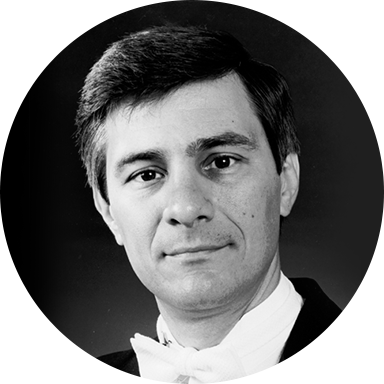
Barry E. Kopetz

Barry E. Kopetz directs the Wind Symphony and Chamber Winds at Capital University in Columbus, Ohio, where he also teaches conducting, rehearsal techniques, and arranging. His academic background includes degrees from Ohio State University and Indiana University, and he studied conducting with Frederick Fennell in Tokyo in 1989.

Kopetz has served on the faculty at the University of Utah, the University of Minnesota, and Bowling Green State University, along with directing bands in public schools across Ohio and South Carolina. As a composer and arranger, he has over 50 published works in print and remains active as a guest conductor and adjudicator throughout the United States and Australia. He contributes regularly to Instrumentalist magazine and has worked on orchestrations for television and film. He was elected to membership in the American Bandmasters Association in 1998.

Why we love this

Kopetz understands what adjudicators want to hear: music that balances accessibility with genuine compositional substance. The five-section structure keeps ensembles engaged without overcomplicating the architecture, and the programmatic approach gives conductors something tangible to rehearse and students something immediate to connect with musically.

What to expect

The piece unfolds like a musical postcard, shifting from vibrant, rhythmic energy to reflective calm and back again. You'll feel the momentum build toward a powerful finish that rewards both the ensemble's technical control and expressive maturity throughout the journey.

Who it's for

Concert bands at the upper intermediate level (Grade 3.5) looking for a single, compelling work that showcases the ensemble's versatility in both energetic and lyrical writing. This score works equally well for festival competition or concert programming where you want to demonstrate range without splitting focus across multiple pieces.

How to get the most out of it

  • Shape each of the five sections as distinct scenes rather than transitions between them; clear sectional identity makes the program work pay off.
  • Balance the lively, energetic themes against the slow, lyrical section by establishing distinct character in rehearsal before polishing transitions.
  • Build intensity steadily into the coda so the dramatic finale feels earned rather than sudden; plan your tempo relationships across the full arc.

How to use it

Use this as your centerpiece concert work or festival submission when you want a single piece that demonstrates the band's full capability. The six-and-a-half-minute runtime and dramatic arc make it an excellent standalone feature that doesn't require pairing with multiple other selections to satisfy a concert length.

Skills your students will build

  • Sustaining lyrical phrasing while maintaining ensemble balance in slow sections
  • Executing rapid mood and style changes with clear articulation and dynamic control
  • Building cumulative intensity across a multi-section form
  • Balancing fast, rhythmic unison passages with harmonic independence
  • Managing tempo and tempo relationships across a programmatic arc

You May Also Like