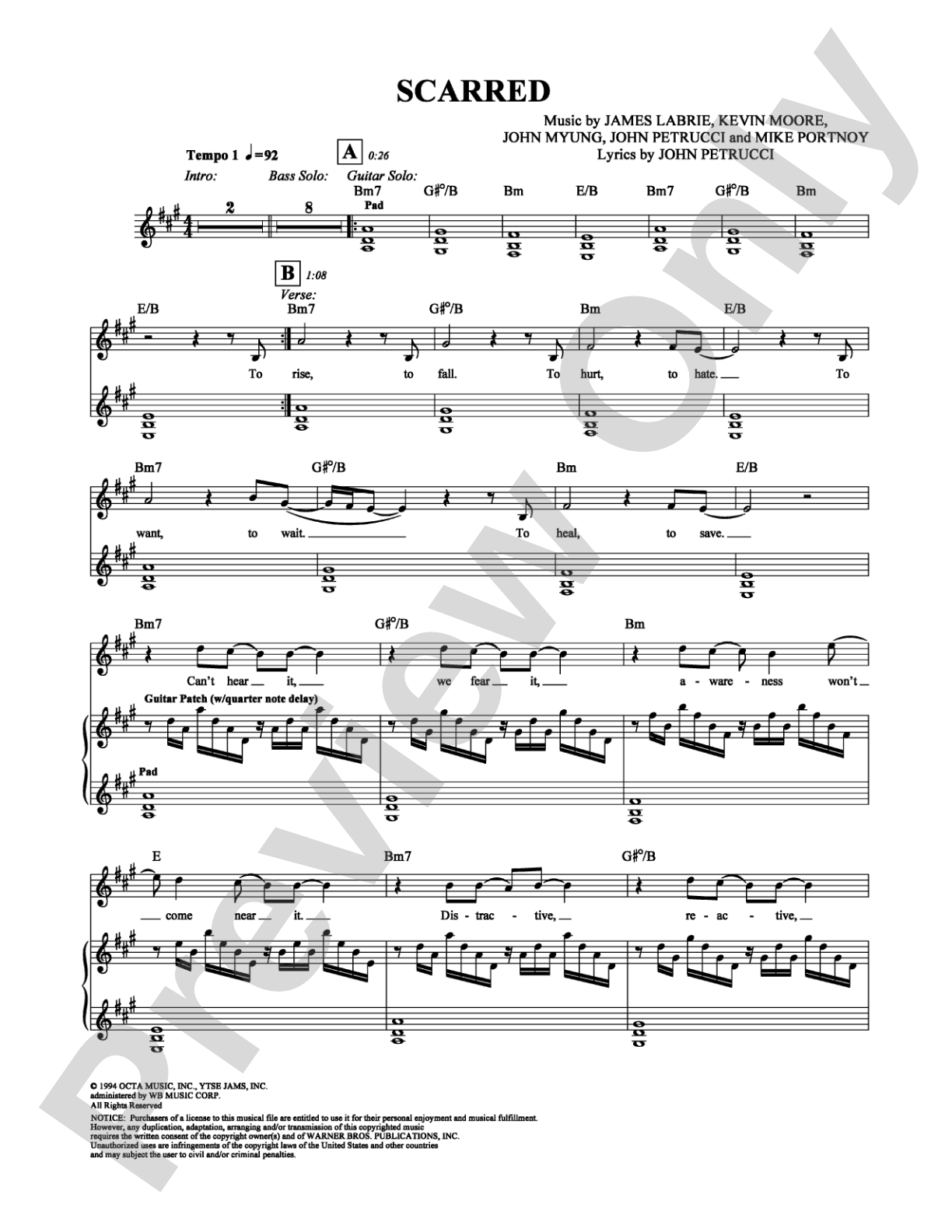
Scarred: Piano/Vocal/Chords Digital Sheet Music

Scarred: Piano/Vocal/Chords Digital Sheet Music

John Petrucci, Dream Theater, Mike Portnoy, John Myung, James Labrie, Kevin Moore

Item: 00-PS-0003180

Digital Download
$3.99
Description

Scarred: Piano/Vocal/Chords Digital Sheet Music isn't in MakeMusic Cloud just yet...but it could be. Let us know you'd like to see it, and you'll help shape what comes next. In the meantime, start a free trial and dive into thousands of interactive titles your students can play along with today.

Sample Audio
No sample audio found.
Sample Video
Additional Details
SKU: 00-PS-0003180

More about this title

About the Artist: Dream Theater

Dream Theater stands among progressive rock's most technically accomplished and influential bands. Formed in 1985, the group has built a reputation for complex compositions, virtuosic musicianship, and ambitious storytelling that spans albums, stage productions, and visual art. Their work attracts serious musicians across genres because it demands precision, interpretive maturity, and a willingness to embrace unconventional song structures.

In educational settings, Dream Theater's catalog serves as a gateway to progressive rock's compositional techniques and the collaborative possibilities of ensemble work. Students studying this material encounter real-world applications of music theory, arrangement, and performance under pressure.

Why we love this

This arrangement gives singers and pianists access to a modern rock composition with genuine harmonic sophistication. The piano/vocal/chords format makes it accessible for recital study or rehearsal without requiring a full band, opening the piece to solo voice students, studio teachers, and accompanists looking for contemporary repertoire with substance.

What to expect

Introspective and layered, with the harmonic and rhythmic sophistication you'd expect from Dream Theater's catalog. The piece carries emotional weight even in this stripped-down format; the piano work suggests the fullness of the original arrangement while the vocal line commands focus and expressive control.

Who it's for

Solo singers exploring rock and pop-rock repertoire beyond standard musical theater, accompanied pianists preparing contemporary art song material, and studio teachers building a modern classical voice repertoire. This works equally well for high school singers seeking challenging material and college-level voice students interested in non-classical genres.

How to get the most out of it

  • Study the chord symbols carefully; they often suggest comping patterns that define the song's pocket. Your left hand can voice these to either anchor the harmonic foundation or add rhythmic texture depending on the arrangement density.
  • Lock the vocal phrasing with the harmonic rhythm. Progressive rock typically layers harmonic changes at irregular intervals, so mark the structural points where chords shift and ensure your voice lands cleanly with the piano.
  • Balance dynamic storytelling across the form. Since you're working without a full band arrangement, every textural choice in the piano part communicates the emotional arc; perform with that awareness.

How to use it

Pair this with other contemporary rock or pop-influenced art songs on a recital to show range and genre fluency. It also works as a teaching piece for demonstrating how modern composers approach harmony, or as a solo performance vehicle for students interested in rock and pop styles.

Skills your students will build

  • Reading and interpreting chord symbols in a pop-rock context
  • Phrasing over irregular harmonic rhythms
  • Balancing vocal expression with complex accompaniment
  • Understanding contemporary rock composition and arrangement

You May Also Like