Scarlatti: The Complete Works, Volume III Sheet Music Preview

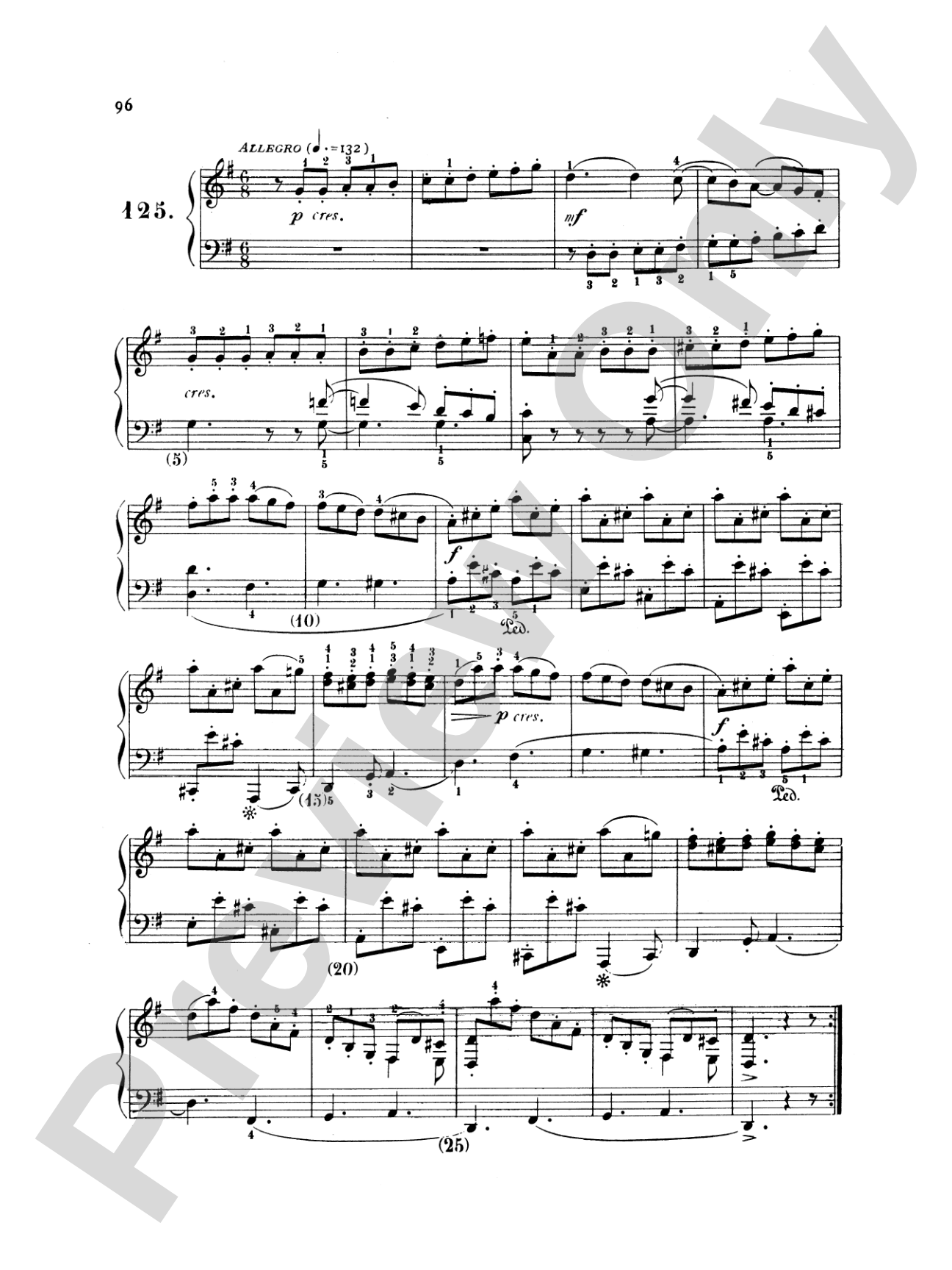
Scarlatti: The Complete Works, Volume III

By Domenico Scarlatti

Item: 00-PC-0012193

Digital Download
$0.99
Description
10 Suites (Longo 101-150)

Don't just read it, hear it, play along with it, and watch your students grow with it. In MakeMusic Cloud, Scarlatti: The Complete Works, Volume III comes alive with professional accompaniment, adjustable tempo, and built-in practice tools that turn solo practice into real progress.

Sample Audio
No sample audio found.
Sample Video
Additional Details
Series: Kalmus Edition
Publisher: Alfred Music
Page Count: 204
SKU: 00-PC-0012193

More about this title

About the Composer: Domenico Scarlatti

Domenico Scarlatti (1685-1757) spent most of his career in the royal courts of Spain and Portugal, where he composed over 500 keyboard sonatas that transformed the instrument's technical and expressive possibilities. His work bridges the late Baroque and early Classical periods, and his influence on keyboard writing extends directly to Haydn, Mozart, and beyond.

Scarlatti's sonatas are built on rapid figuration, hand-crossing, unexpected harmonic turns, and rhythmic vitality that demand genuine virtuosity from performers. Unlike many Baroque composers, he wrote idiomatically for the keyboard itself rather than adapting vocal or orchestral gestures, creating music that rewards both technical precision and interpretive boldness.

Why we love this

Volume III opens a window into Scarlatti's mature harmonic language and technical innovation at the height of his Spanish period. These ten suites contain some of his most rewarding material for pianists seeking substance beyond the familiar sonata repertoire, with enough stylistic variety to sustain a full recital or serve as a foundation for themed programming around keyboard virtuosity.

What to expect

These suites shimmer with rhythmic invention and harmonic daring. Hand-crossing passages create a sense of sparkling keyboard brilliance, while sudden tonal shifts pull you into unexpected harmonic territory. There is an almost theatrical quality to Scarlatti's writing: moments of pure virtuosic display give way to intimate, lyrical passages, keeping the listener perpetually engaged.

Who it's for

This collection serves advanced pianists and serious students preparing for recitals, competitions, or comprehensive study of Baroque keyboard literature. It is equally valuable for teachers constructing curricula around keyboard history and for performers seeking authoritative editions of less frequently programmed but musically substantial works.

How to get the most out of it

  • Approach the rapid passagework as pure keyboard articulation rather than mimicking vocal phrasing; Scarlatti's hand-crossing figures demand clear, unhurried finger work and consistent voicing to remain audible.
  • Use the harmonic surprises (modal inflections, unexpected cadential turns) as interpretive landmarks; these moments of tonal adventure deserve slight emphasis without disrupting forward momentum.
  • Balance ornamentation with structural clarity; ornaments should enhance the melodic line, not obscure the underlying harmonic progression that often moves quite quickly.
  • Experiment with articulation and pedal to shape the sectional architecture; unlike later Classical sonata form, these pieces often rely on textural and rhythmic contrast rather than thematic development to create coherence.

How to use it

Program individual sonatas from this volume as contrasting pieces between larger Romantic or Contemporary works, or build an entire recital around a thematic arc (for instance, pairing suites that explore similar technical or harmonic ground). These works also function beautifully as transition pieces in a survey concert tracing keyboard development from Baroque through Classical periods.

Skills your students will build

  • Hand independence and crossing through rapid figural writing
  • Ornamentation conventions of the Spanish Baroque keyboard tradition
  • Tonal navigation through unexpected harmonic movement and modal inflection
  • Articulation and pedaling choices that clarify sectional structure in multi-movement form
  • Interpretive decision-making in the absence of detailed performance markings

You May Also Like