Scarlatti: The Complete Works, Volume II Sheet Music Preview

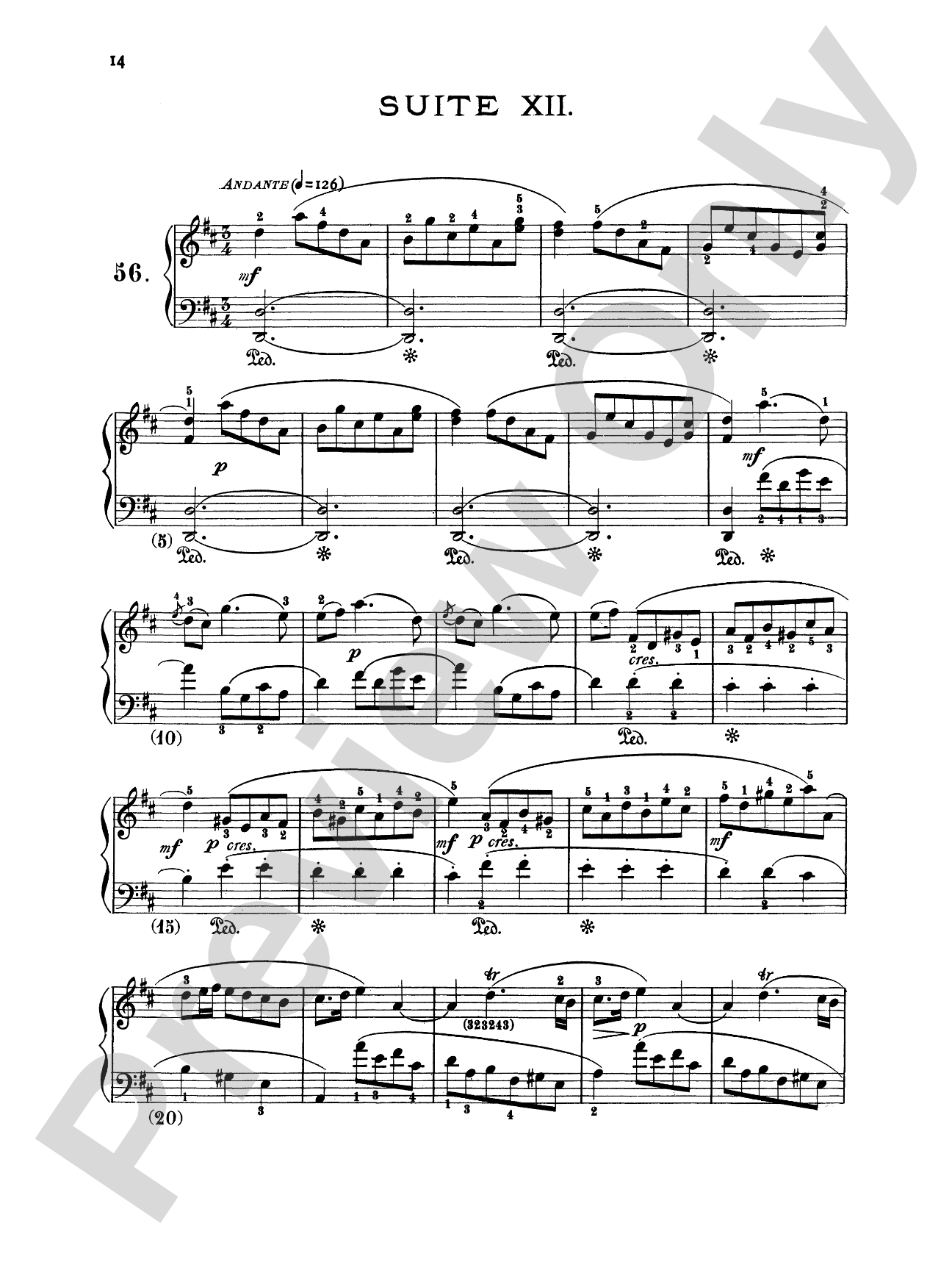
Scarlatti: The Complete Works, Volume II

By Domenico Scarlatti

Item: 00-PC-0012124

Digital Download
$0.99
Description
10 Suites (Longo 51-100)

Don't just read it, hear it, play along with it, and watch your students grow with it. In MakeMusic Cloud, Scarlatti: The Complete Works, Volume II comes alive with professional accompaniment, adjustable tempo, and built-in practice tools that turn solo practice into real progress.

Sample Audio
No sample audio found.
Sample Video
Additional Details
Series: Kalmus Edition
Publisher: Alfred Music
Page Count: 144
SKU: 00-PC-0012124

More about this title

About the Composer: Domenico Scarlatti

Domenico Scarlatti (1685-1757) spent most of his career as a keyboard virtuoso and composer in the service of the Spanish and Portuguese courts. His sonatas, written across several decades, represent a radical departure from the keyboard conventions of his time, featuring rapid hand crossings, wide leaps, and rhythmic innovations that challenged performers and audiences alike.

Scarlatti's writing shaped the technical demands of keyboard music for centuries to come. His exploration of idiomatic figuration and harmonic surprise established a foundation for Classical keyboard writing while remaining rooted in Baroque sensibility. For pianists, his works represent a crucial historical bridge and an endless laboratory for developing technique and musical intelligence.

Why we love this

These ten suites offer pianists a direct encounter with one of the Baroque era's most inventive and pianistically demanding voices. The Kalmus edition presents the full text with excellent legibility, making it possible to study the architecture of Scarlatti's thinking across entire groups of sonatas rather than in isolated excerpts. Advanced students and professional pianists will find inexhaustible material for recital programming, technical development, and historical understanding.

What to expect

These suites pulse with wit, virtuosity, and harmonic daring. Each sonata balances rhetorical display with intimate harmonic surprises, moving between brilliant passage work and moments of lyrical simplicity with sudden unpredictability. The overall effect is exhilarating, technically taxing, and deeply satisfying for ears trained to follow Scarlatti's restless harmonic invention.

Who it's for

This collection is designed for advanced pianists working toward concert recitals, graduate study, or comprehensive historical repertoire knowledge. It suits teachers preparing advanced students for competitions or recitals that include Baroque material, and it serves as an essential reference for pianists exploring the keyboard idiom across musical periods.

How to get the most out of it

  • Map out the hand crossings well in advance of performance. Scarlatti writes them into the musical fabric, not as technical decoration, so clarity of line depends on planning the exact moment and height of the crossing.
  • Approach the rapid figuration as part of the harmonic argument, not as empty passage work. Each flourish and scale fragment should articulate the underlying chord progression.
  • Observe the binary form carefully. Most of these sonatas follow a two-part structure with clear repeat points; respecting the repeat, if taken, shapes the listener's experience of harmonic and thematic return.
  • Use the sustain pedal judiciously. Scarlatti's textures often depend on clear voice independence; overuse of pedal will blur the contrapuntal writing and technical precision he intended.

How to use it

Single sonatas from this volume work exceptionally well on recitals pairing Baroque and Classical repertoire, particularly when programmed alongside early Beethoven or later Mozarts to show harmonic and structural evolution. A group of three to five consecutive sonatas from the same suite can form a substantial standalone group, giving audiences a sense of Scarlatti's range within a single sitting. Advanced students benefit from mining these volumes for recital material across a full season of performances.

Skills your students will build

  • Hand crossing and independence in rapid passagework
  • Reading and executing wide intervallic leaps and angular melodic lines
  • Understanding binary form and harmonic architecture in Baroque keyboard music
  • Technical control of rhythmic precision across fast figurations
  • Interpretation of ornamentation and articulation in the Baroque keyboard idiom
  • Pedal management in texturally complex writing

You May Also Like