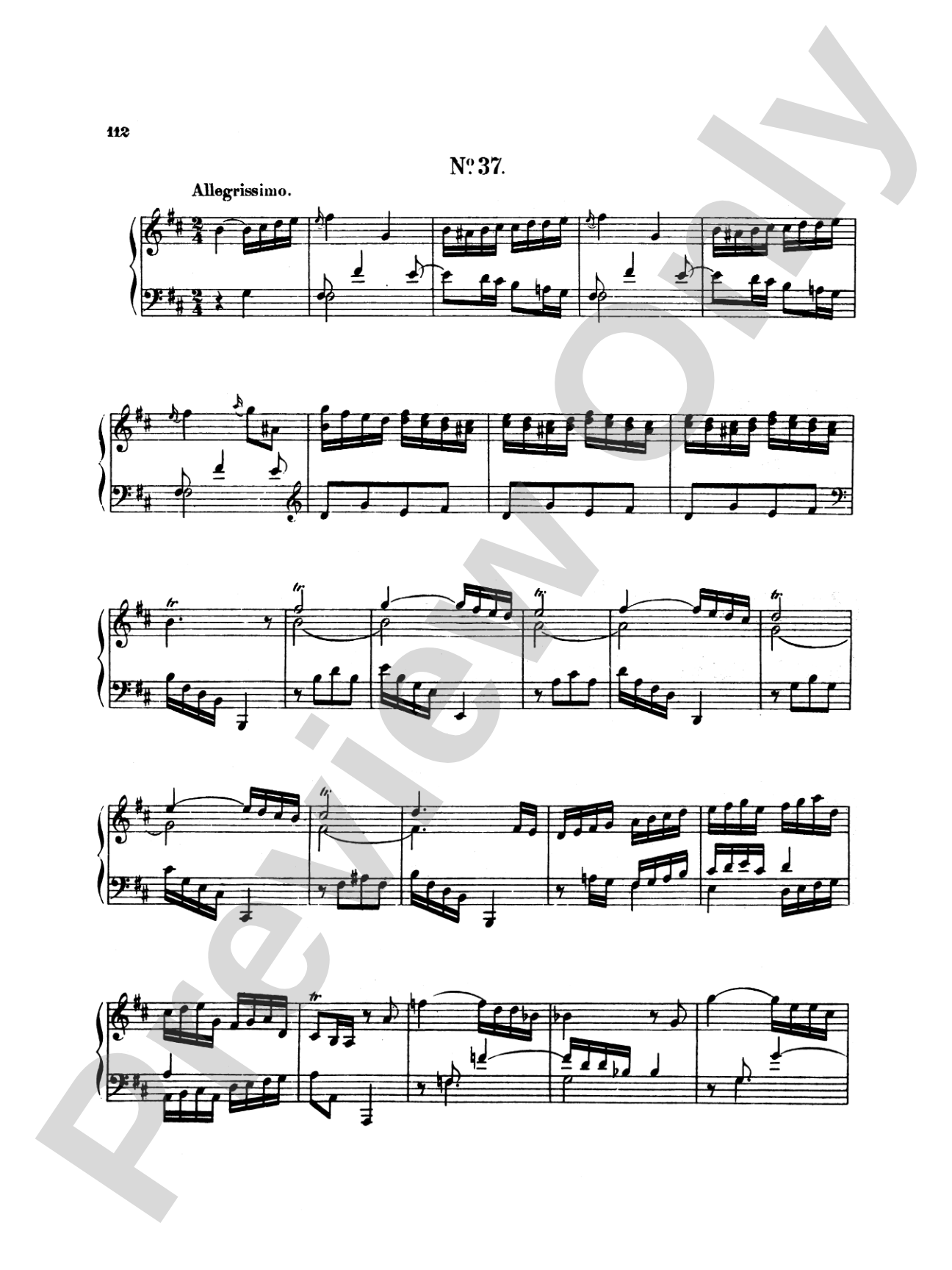
Scarlatti: Sixty Sonatas, Volume II Sheet Music Preview

Scarlatti: Sixty Sonatas, Volume II

By Domenico Scarlatti

Item: 00-PC-0009109

Digital Download
$0.99
Description
Expertly arranged Piano Sonatas by Domenico Scarlatti from the Kalmus Edition series. These Sonatas are from the Baroque era.

Don't just read it, hear it, play along with it, and watch your students grow with it. In MakeMusic Cloud, Scarlatti: Sixty Sonatas, Volume II comes alive with professional accompaniment, adjustable tempo, and built-in practice tools that turn solo practice into real progress.

Sample Audio
No sample audio found.
Sample Video
Additional Details
Series: Kalmus Edition
Publisher: Alfred Music
Page Count: 100
SKU: 00-PC-0009109

More about this title

About the Composer: Domenico Scarlatti

Domenico Scarlatti (1685-1757) was the most prolific composer of keyboard sonatas in the Baroque era, writing over 550 works for harpsichord and piano. His career spanned two continents: he served as master of the chapel at the Portuguese court and later held similar positions in Spain, where he spent the majority of his creative life developing a highly personal compositional voice.

Scarlatti's sonatas stand apart from those of his contemporaries through their harmonic adventurousness, rhythmic vitality, and technical demands. He wrote for the keyboard with an understanding of idiomatic writing that influenced every generation of pianists who followed. His music bridges the late Baroque and early Classical periods, containing seeds of the Classical sonata form while maintaining the improvisatory spirit and ornamental language of the Baroque.

Why we love this

This collection represents Scarlatti at his most inventive, offering students and teachers a curated selection of 60 sonatas that showcase the full range of his keyboard writing. The Kalmus Edition provides a reliable, carefully edited text that lets pianists engage directly with music of genuine substance, whether building repertoire or exploring the Baroque sonata on a deeper level.

What to expect

These sonatas pulse with theatrical energy and improvisational flair. You'll encounter sparkling passagework that demands rhythmic precision, sudden harmonic turns that catch you off guard, and moments of unexpected intimacy amid the virtuosity. The writing feels both intellectually engaging and physically satisfying at the keyboard.

Who it's for

This volume serves intermediate to advanced pianists who have moved beyond elementary repertoire and want to explore Baroque keyboard music with genuine artistic weight. Teachers will find it essential for students preparing for competitions, auditions, or recitals, as well as for those seeking a deeper understanding of pre-Classical keyboard writing.

How to get the most out of it

  • Approach hand crossing and dramatic register shifts with physical confidence rather than caution; Scarlatti wrote these textures as integral to the music's character, not as technical obstacles to minimize.
  • Shape the running passagework through gentle dynamic shaping and subtle articulation rather than aggressive attack; clarity emerges from control and phrase direction, not force.
  • Honor the ornaments (trills, mordents, turns) as structural elements that define harmony and phrasing, not as surface decoration added after learning the basic notes.
  • Exploit the harmonic boldness of sudden key shifts and unexpected chromatic movement; these moments reflect Scarlatti's experimental approach and deserve to be heard distinctly.

How to use it

Feature a single Scarlatti sonata on a recital program to anchor a Baroque segment, or program two contrasting sonatas from this collection to demonstrate the range within his output. This volume also works well as a study resource throughout a season, allowing students to develop facility and interpretive skills across multiple works rather than focusing on a single piece.

Skills your students will build

  • Hand independence and crossing in rapid passage work
  • Understanding of Baroque ornamentation and its structural role
  • Navigation of unexpected harmonic progressions and key relationships
  • Baroque phrasing and articulation in keyboard music
  • Sight-reading fluency across multiple sonata forms
  • Finger dexterity and control in wide-ranging registers

You May Also Like