
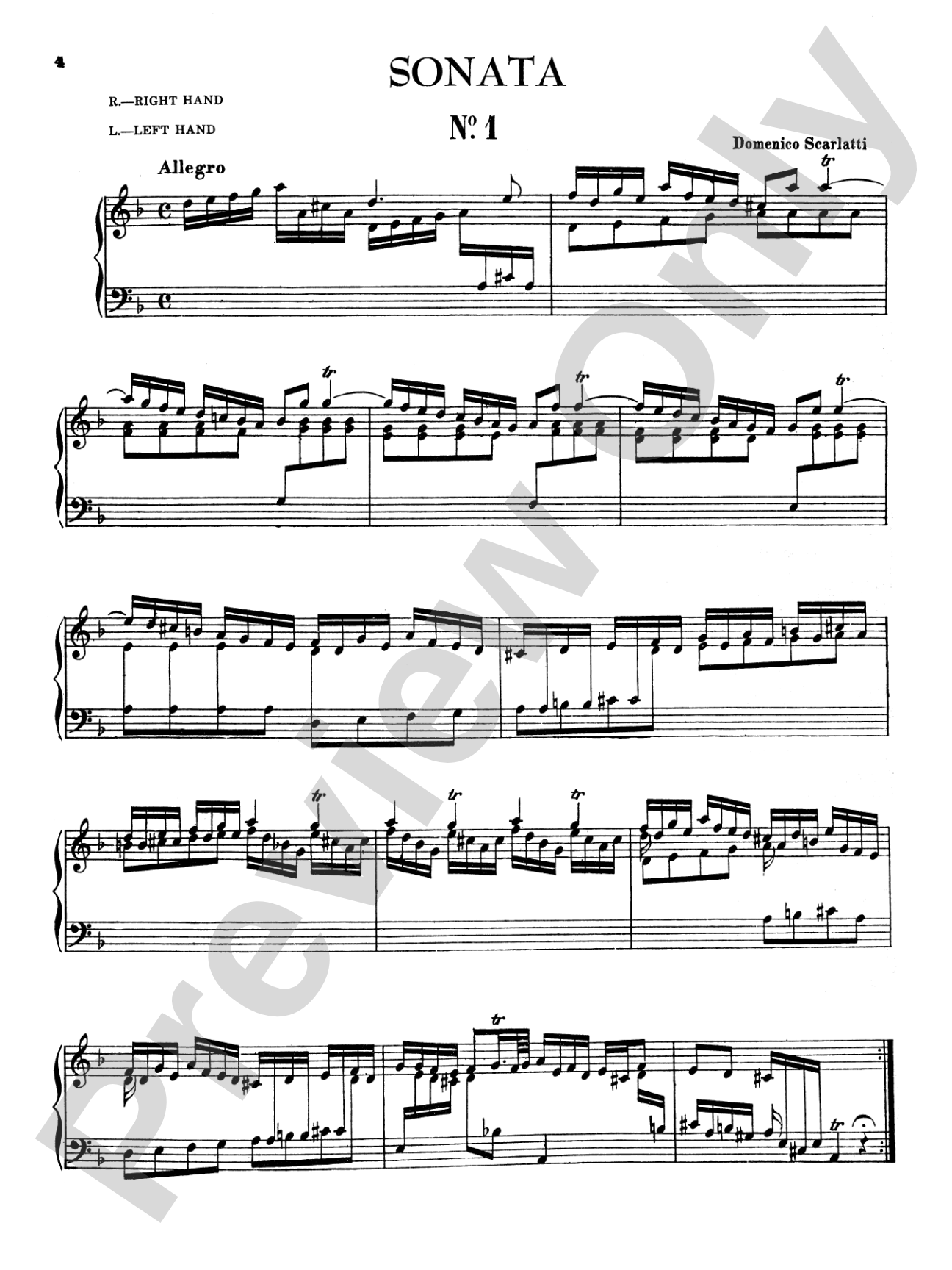

Scarlatti: Sixty Sonatas, Volume I: Piano Book
Nos. 1-30
By Domenico Scarlatti
Item: 00-PK-0003306

$14.99
Pickup currently not available
Buy Extra Parts (Digital PDF Download)
Parts Added to Cart!
Related Items
Sixty Sonatas (Urtext), Volume I: Piano Book |
$14.95
|
View |
Description
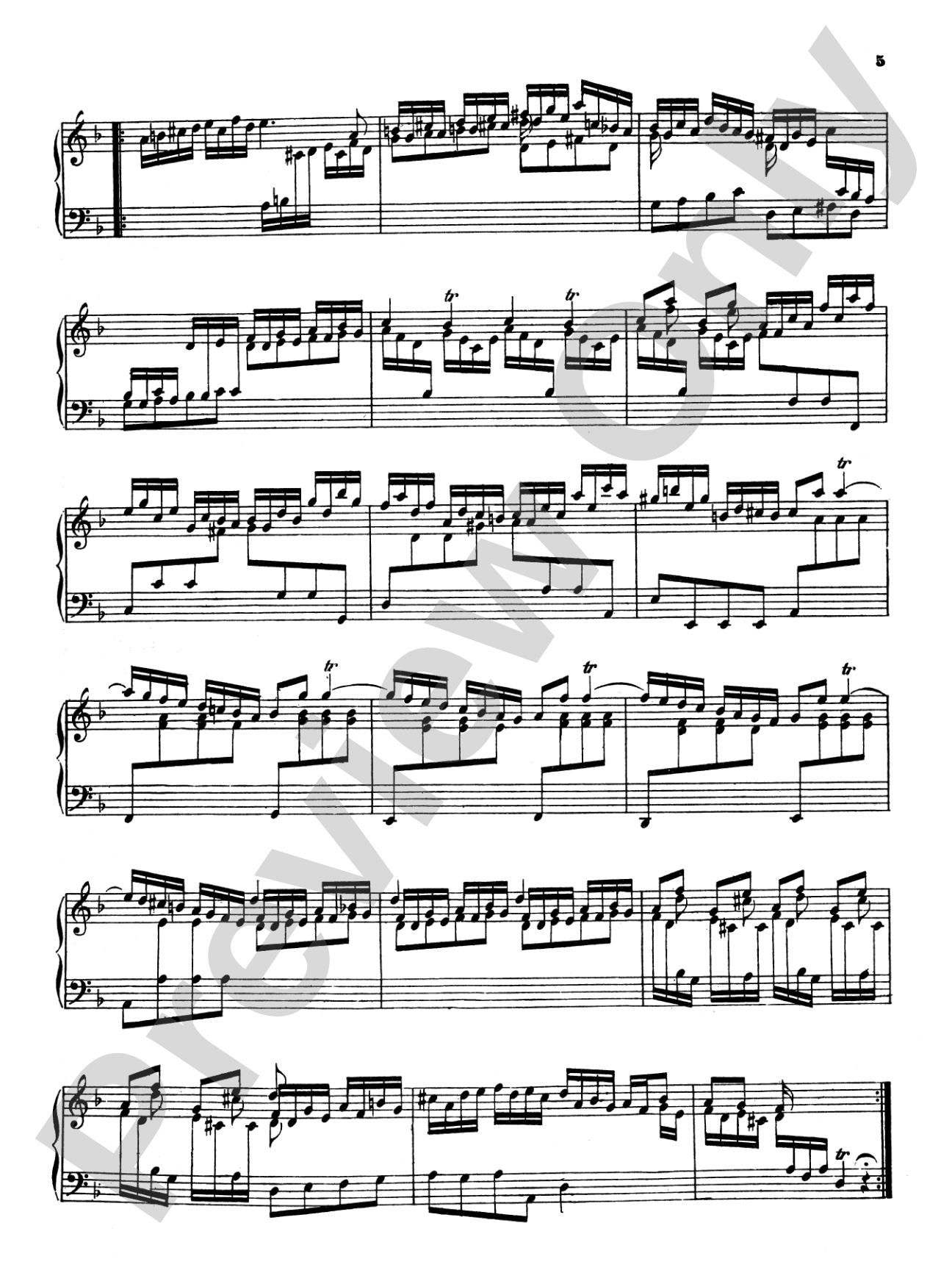
Italian baroque era composer, Domenico Scarlatti, produced a great number of short piano sonatas during his lifetime. This is Volume One of a two-volume collection, labeled "Urtext Edition," 95 pages.


Don't just read it, hear it, play along with it, and watch your students grow with it. In MakeMusic Cloud, Scarlatti: Sixty Sonatas, Volume I: Piano Book comes alive with professional accompaniment, adjustable tempo, and built-in practice tools that turn solo practice into real progress.
Open in the Player
Jump straight in and assign it today.
Start Your Free Trial
Open this title and explore the full library in minutes.
Sample Audio
No sample audio found.
Sample Video
No sample videos found.
Additional Details
Series:
Kalmus Edition
Publisher:
Alfred Music
Page Count:
100
SKU:
00-PK-0003306
More about this title
About the Composer: Domenico Scarlatti
Domenico Scarlatti (1685-1757) spent most of his career in the service of the Spanish and Portuguese royal courts, where he composed keyboard music in relative isolation from the mainstream European musical centers. His prolific output of over 500 sonatas represents a pivotal moment in keyboard literature, bridging the harpsichord idiom of the Baroque with the emerging galant style that would define the Classical era.
Scarlatti's sonatas are instantly recognizable for their harmonic adventurousness, rapid hand crossings, and idiomatic keyboard writing that often echoes the music of Spanish guitars and folk traditions. His influence on later composers—particularly Haydn and early Beethoven—underscores his importance in the historical arc from Baroque keyboard conventions to modern piano technique.
Why we love this
These sonatas occupy a unique pedagogical sweet spot: they demand real musical maturity and technique while remaining shorter and more approachable than the full Classical sonata cycle. Pianists encounter genuine compositional sophistication without the commitment of a 20-minute work, and the individual pieces naturally lend themselves to recital programming, competitions, and student concerto showcases.
What to expect
Scarlatti's sonatas sparkle with harmonic surprise and keyboard brilliance; there's an almost improvisatory character beneath their formal structure, as though the composer is discovering new harmonic territory in real time. The music sits comfortably under the hands yet constantly challenges expectations, balancing lyrical passages with driving rhythmic energy and moments of genuine tenderness.
Who it's for
Intermediate to advanced pianists seeking substantial yet manageable Baroque repertoire, as well as teachers building a balanced recital program that avoids the Romantic-heavy standard rep. Students preparing for competitions, auditions, and degree requirements benefit from the breadth and variety of musical ideas across these 30 sonatas.
How to get the most out of it
- Treat hand crossings as integral to the musical character rather than technical obstacles; Scarlatti expects these to sound fluid and occasionally playful, not labored.
- Baroque ornamentation requires clarity and precision in the execution of trills and turns; check the original notation carefully, as later editions sometimes modernize Scarlatti's intentions.
- Balance the textural layers with a lighter touch in accompanying figures so the melodic line remains singing and prominent.
- Resist pushing the harmonic surprises and chromatic passages into rubato; Scarlatti's wit relies on rhythmic directness and clarity of harmony.
How to use it
A single Scarlatti sonata serves well as a concise statement of Baroque keyboard style on a recital, positioned either early in the program as an opener or alongside other shorter character pieces from the same era. This volume also supports a historically informed semester study of Baroque keyboard music or a themed concert exploring the evolution from harpsichord to modern piano.
Skills your students will build
- Hand crossing technique and independence between left and right hands
- Ornamentation execution (trills, turns, mordents) in Baroque style
- Harmonic analysis of unexpected chromatic movement and key relationships
- Baroque phrasing and articulation conventions
- Rapid scalar and arpeggio passage work with rhythmic clarity
- Understanding of Baroque keyboard idiom and its transition to Classical writing