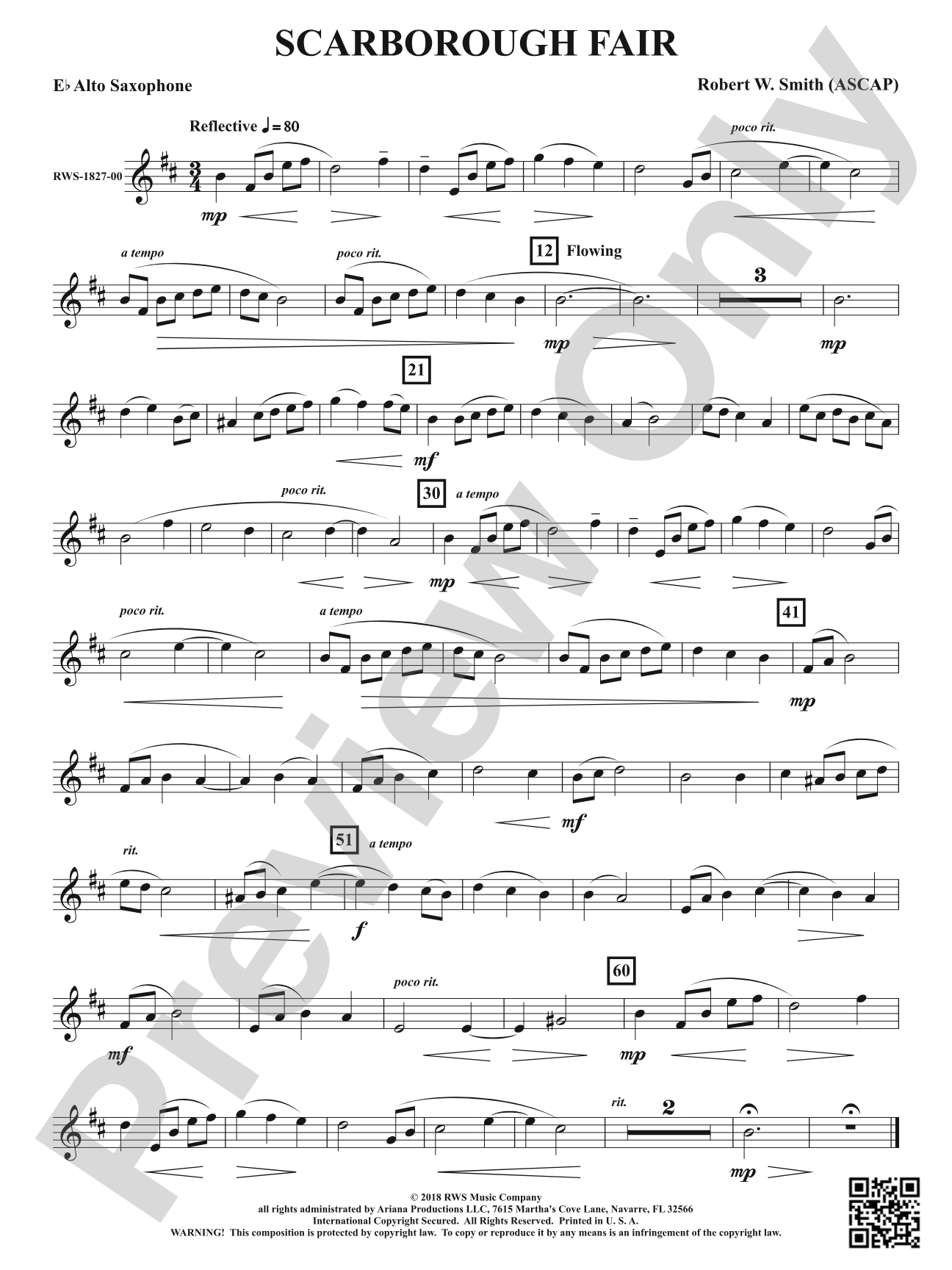
Robert W. Smith's setting of this classic melody is perfect as a lyrical selection for your concert, contest and festival performance. Expressive and independent performance opportunity with flowing harmonic effects make this a very unique and effective arrangement of this timeless folk song. Expertly voiced to create a mature sonority for your band, this hauntingly beautiful melody will continue to be loved for generations to come. Highly recommended!
Original Item#: RWS-1827-00
Discover MakeMusic Cloud: thousands of interactive titles your students can play along with today.
Robert W. Smith has established himself as one of North America's most widely performed composers of concert band and orchestral music. His catalogue exceeds 400 published works, the majority distributed through Alfred Music. He holds degrees from Troy State University (Alabama) and the University of Miami, and his original compositions and arrangements have been performed by ensembles across North America, Europe, Australia, and Asia.
Beyond the concert hall, Smith's music has reached audiences through television broadcasts, ceremonial events, and major sporting occasions including the Olympic Games and Opening Day at Dodger Stadium. He remains active as a conductor and clinician, having led masterclasses and performances throughout the United States, Canada, Japan, Australia, Italy, Austria, and the United Kingdom. Works like The Tempest and his symphonies (The Divine Comedy and The Odyssey) have become standard repertoire in bands at all levels.
Why we love this
Smith's arrangement honors the folk melody's intrinsic beauty while giving it sophisticated harmonic depth that feels neither overstated nor thin. The independent voice writing means your band gets genuine musicianship experience rather than padding around a melody, and the Grade 3 accessibility means capable middle or advancing younger bands can handle the maturity of the sound without technical struggle.
What to expect
The melody unfolds with a contemplative quality, supported by harmonies that shift subtly underneath without calling attention to themselves. You hear the familiar tune but experience it freshly, wrapped in textures that feel both warm and slightly mysterious. It's the kind of piece that settles into a room rather than demands it.
Who it's for
This arrangement suits concert bands at Grade 3 level seeking repertoire with genuine musical substance and emotional presence. Directors building a contest or festival program need pieces that demonstrate musicianship without excessive technical demands, and this setting gives your ensemble that opportunity.
How to get the most out of it
Shape the melody with a steady but unhurried tempo; the harmonic movement will feel richer if you resist the urge to rush through the lyrical sections.
Balance the independent inner voices carefully during rehearsal so the solo line remains primary but the surrounding texture stays audible and intentional.
Use the flowing harmonic effects as your rehearsal guide; when the band hears how one voice leads to the next, intonation and blend improve naturally.
How to use it
This works beautifully as a ballast piece in a mixed concert program, offering contrast to faster or more rhythmically driven selections. Consider programming it alongside folk-inspired works or between pieces with higher energy. It also fits naturally in thematic programs about American music, seasonal concerts, or events where a reflective moment serves the arc of the full program.
Skills your students will build
Shaping a lyrical melodic line with appropriate phrasing and rubato
Balancing independent harmonic voices while maintaining tonal blend
Listening across the ensemble to hear how individual parts create harmonic color
Maintaining steady intonation in slower tempos with sustained harmonies
You May Also Like
Scan to Complete Your Purchase
Use your phone's camera to scan the code below
You'll log in on your phone and the order will be added to your account