
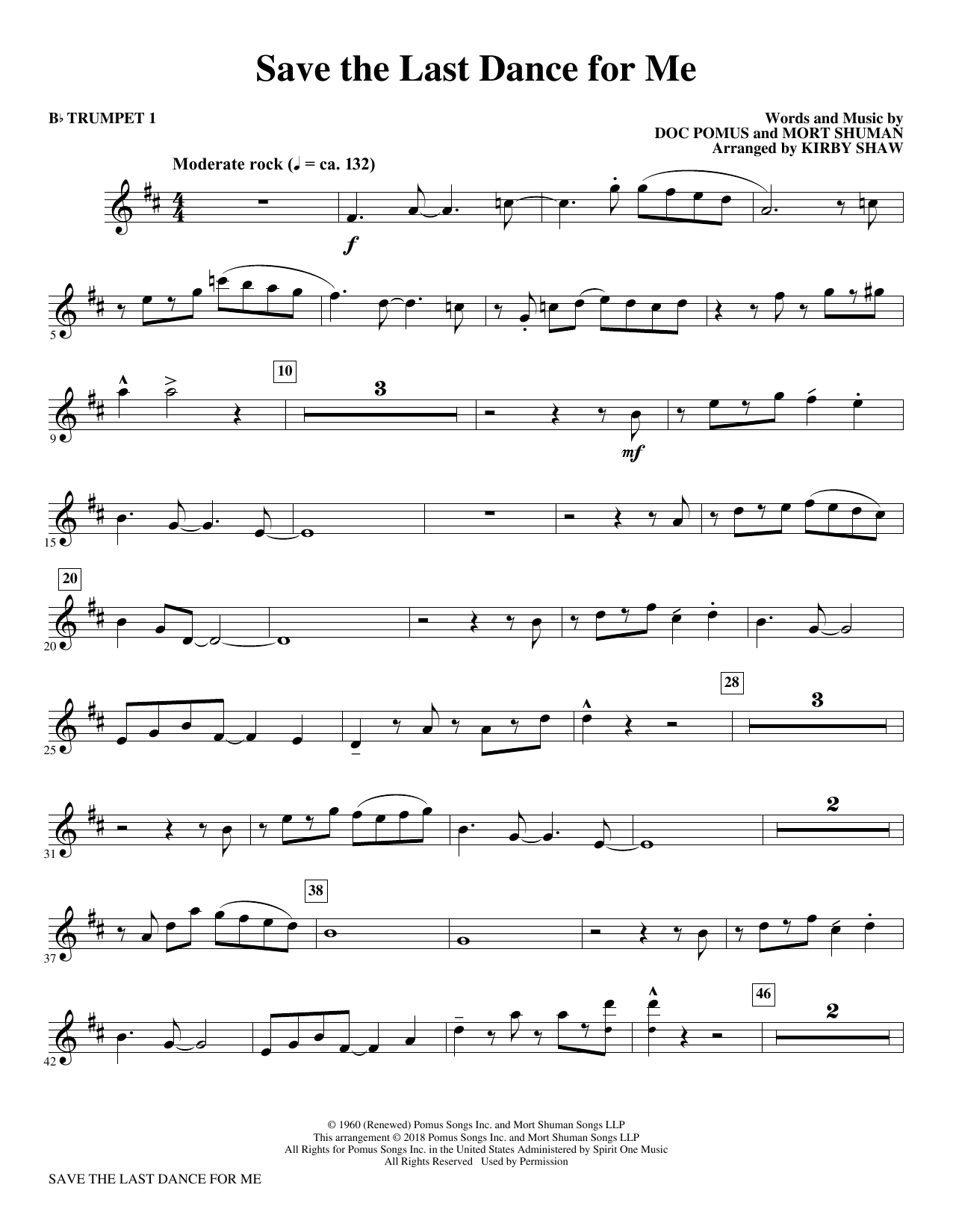

Save the Last Dance for Me (arr. Kirby Shaw): Choral Instrumental Pak
As performed by The Drifters / Arranged by Kirby Shaw
Item: 35-PK00416081
$30.00
Pickup currently not available
Buy Extra Parts (Digital PDF Download)
Parts Added to Cart!
Description
Here is a jazzy take on a classic pop/rock tune. The original version, sung by the Drifters, with all of its back up harmony and part singing, is a great beginning for a choral arrangement. In the hands of this skilled arranger it is a real concert piece.


Save the Last Dance for Me (arr. Kirby Shaw): Choral Instrumental Pak isn't in MakeMusic Cloud just yet...but it could be. Let us know you'd like to see it, and you'll help shape what comes next. In the meantime, start a free trial and dive into thousands of interactive titles your students can play along with today.
Request This Title
Tell us you want it.
Start Your Free Trial
Explore everything that's ready to play right now.
Sample Audio
No sample audio found.
Sample Video
No sample videos found.
Additional Details
Publisher:
Hal Leonard
SKU:
35-PK00416081
More about this title
About the Artist: The Drifters
The Drifters emerged from the R&B landscape of the 1950s and became one of the most influential vocal groups in American popular music. Known for their smooth harmonies, sophisticated arrangements, and emotional delivery, they bridged the gap between rhythm and blues and mainstream pop, earning them a place in the Rock and Roll Hall of Fame. Their catalog of hits, including "Save the Last Dance for Me," showcases the tight part writing and vocal layering that makes their music ideal for choral adaptation.
The group's emphasis on ensemble singing and carefully crafted harmonies created a template that arrangers continue to return to. For music educators, The Drifters' recordings demonstrate how vocal blend, balance, and precise intonation can elevate a song beyond its commercial appeal into genuine artistry. Their influence on contemporary choral music remains significant.
Why we love this
Kirby Shaw's arrangement respects the original's melodic and harmonic strengths while giving it theatrical energy that works in a concert setting. The vocal layering feels natural to singers who already know the tune, which means students connect to the material immediately while still discovering new interpretive possibilities.
What to expect
Smooth, warm, and nostalgic with a contemporary edge. The arrangement captures the original's romantic sincerity while infusing it with jazz sophistication, creating something that feels both timeless and fresh in the same moment.
Who it's for
Directors programming pops or oldies concerts will find this arrangement strikes the right balance between accessibility and musicality. It works equally well for groups with solid sight-reading skills and those still building confidence; the familiarity of the tune lowers the entry barrier while the arranging craft keeps singers engaged.
How to get the most out of it
- Balance the lead line carefully against the background harmony; the nostalgia of the song comes through when listeners hear both clearly without the melody getting buried.
- Pay attention to the rhythmic precision in the accompanying parts, especially where the original's doo-wop elements appear. That specificity is what makes the arrangement feel intentional rather than generic.
- Shape the dynamics to follow the emotional arc rather than treating each section identically. The arrangement has room to breathe in some places and build intensity in others.
- Let the jazz sensibility inform your approach to phrasing and articulation, particularly in sustained passages where a classical legit approach would flatten the character.
How to use it
Pair this with other pop standards from the 1950s and 60s to build a concert that celebrates the vocal group tradition, or use it as a contrast piece in a more classical program to show students how different genres demand different interpretive choices. It also works beautifully as a finale that leaves audiences with something they recognize and genuinely enjoy.
Skills your students will build
- Singing balanced inner harmony lines within a jazz harmonic context
- Interpreting rhythmic swing and syncopation in a choral arrangement
- Blending doo-wop influenced vocal techniques with concert ensemble standards
- Phrase shaping that follows emotional intent rather than mechanical sectional divisions
- Reading and executing accurate intonation in close voiced jazz chords