
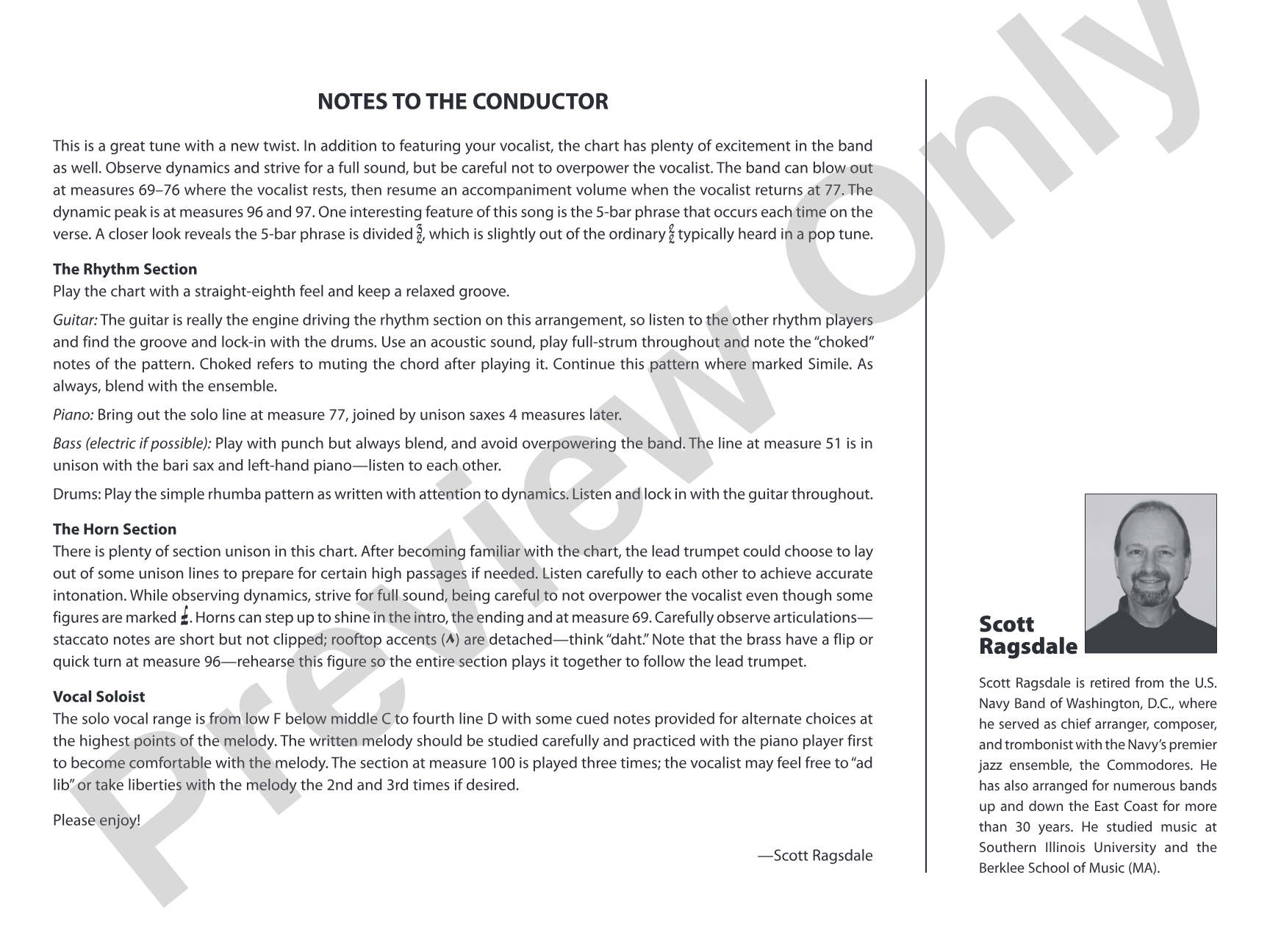
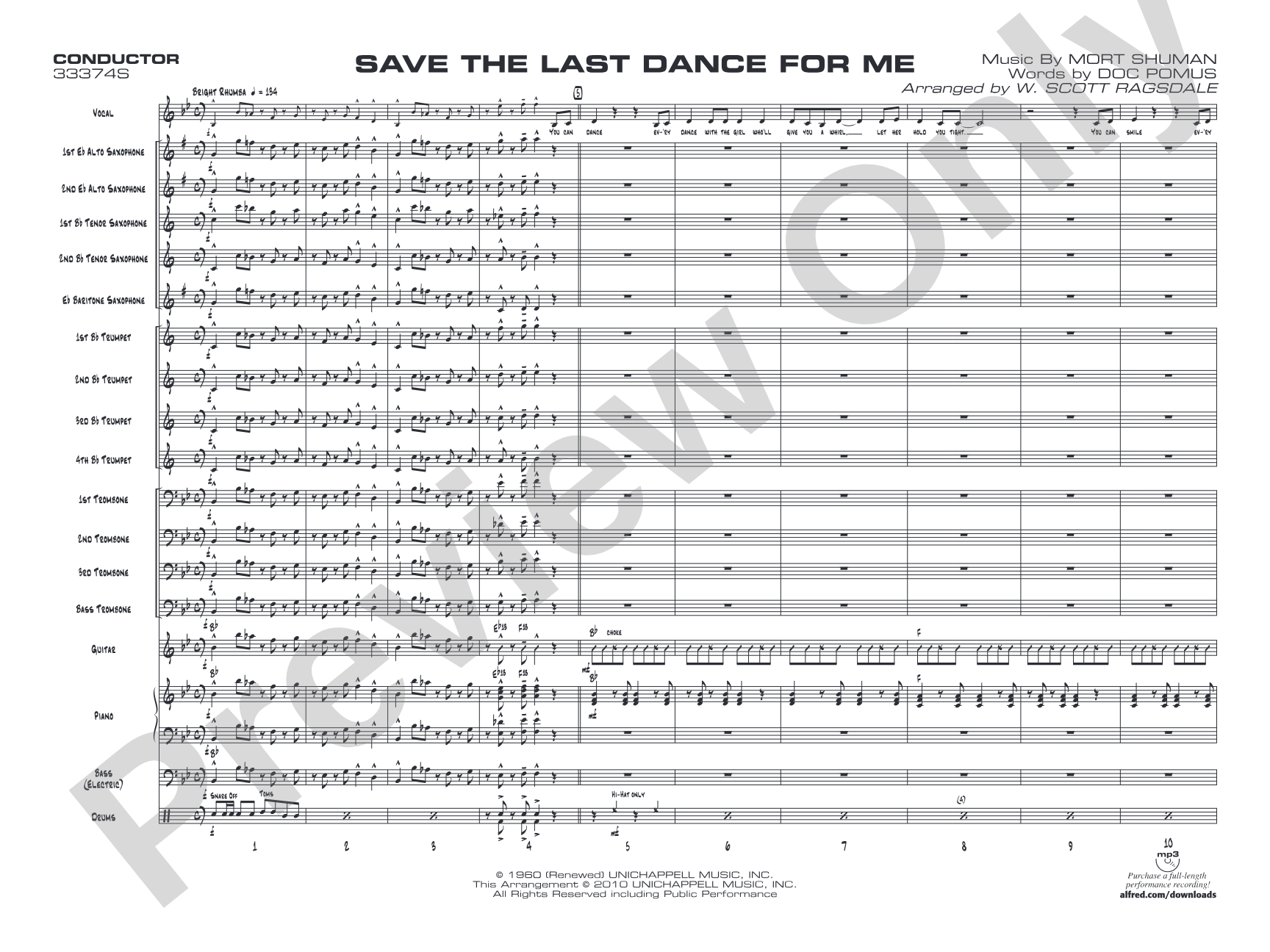
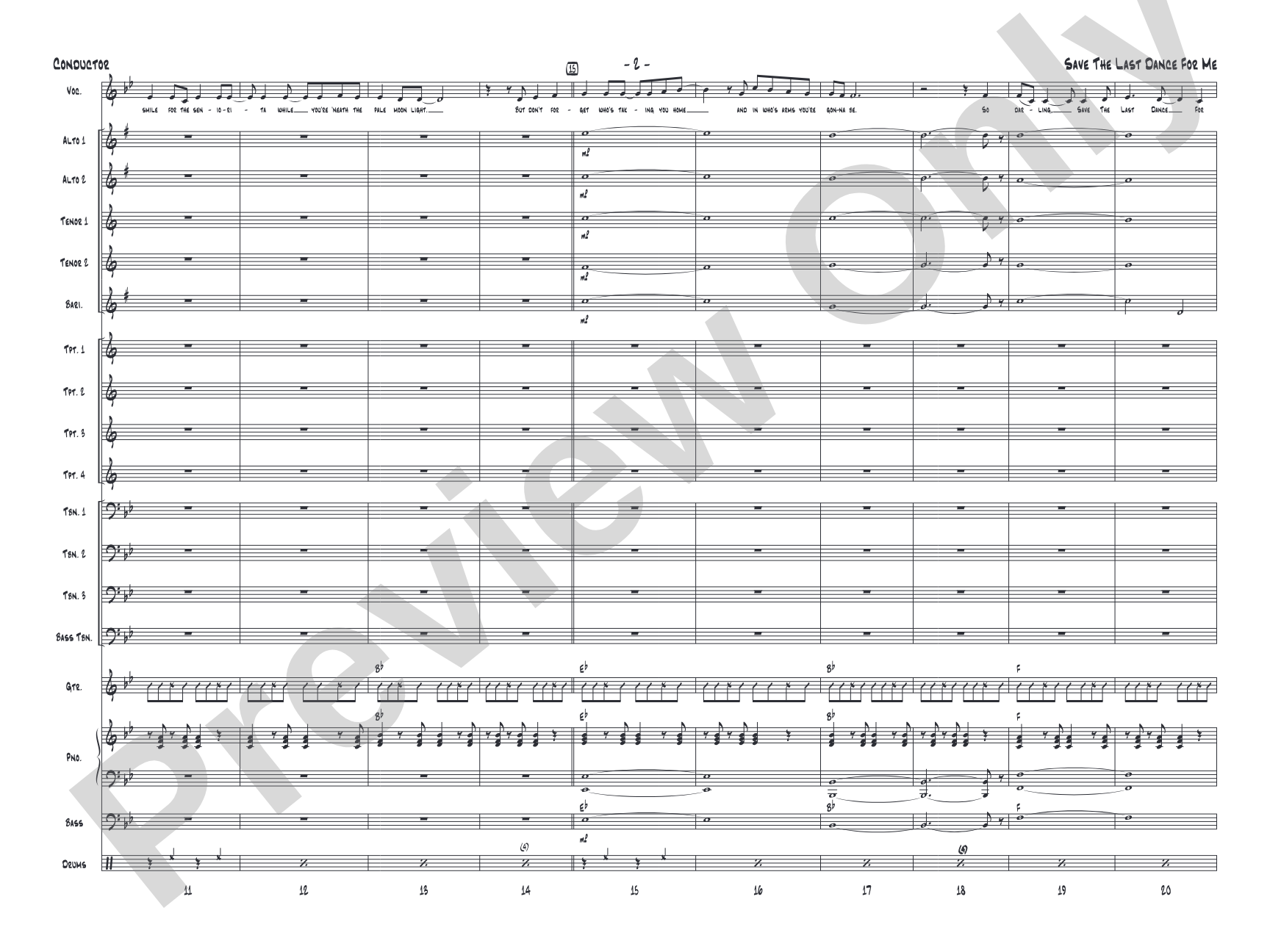
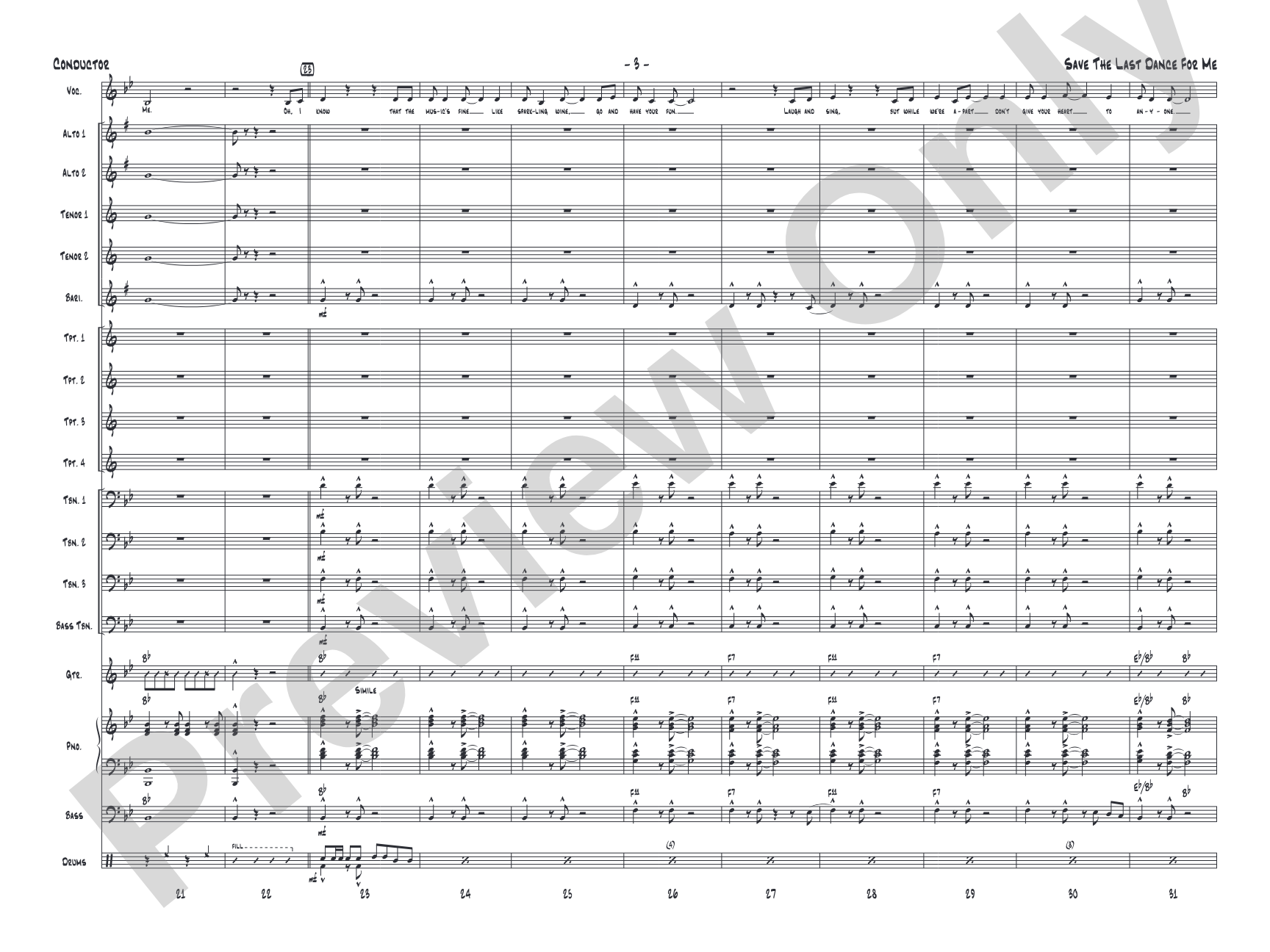
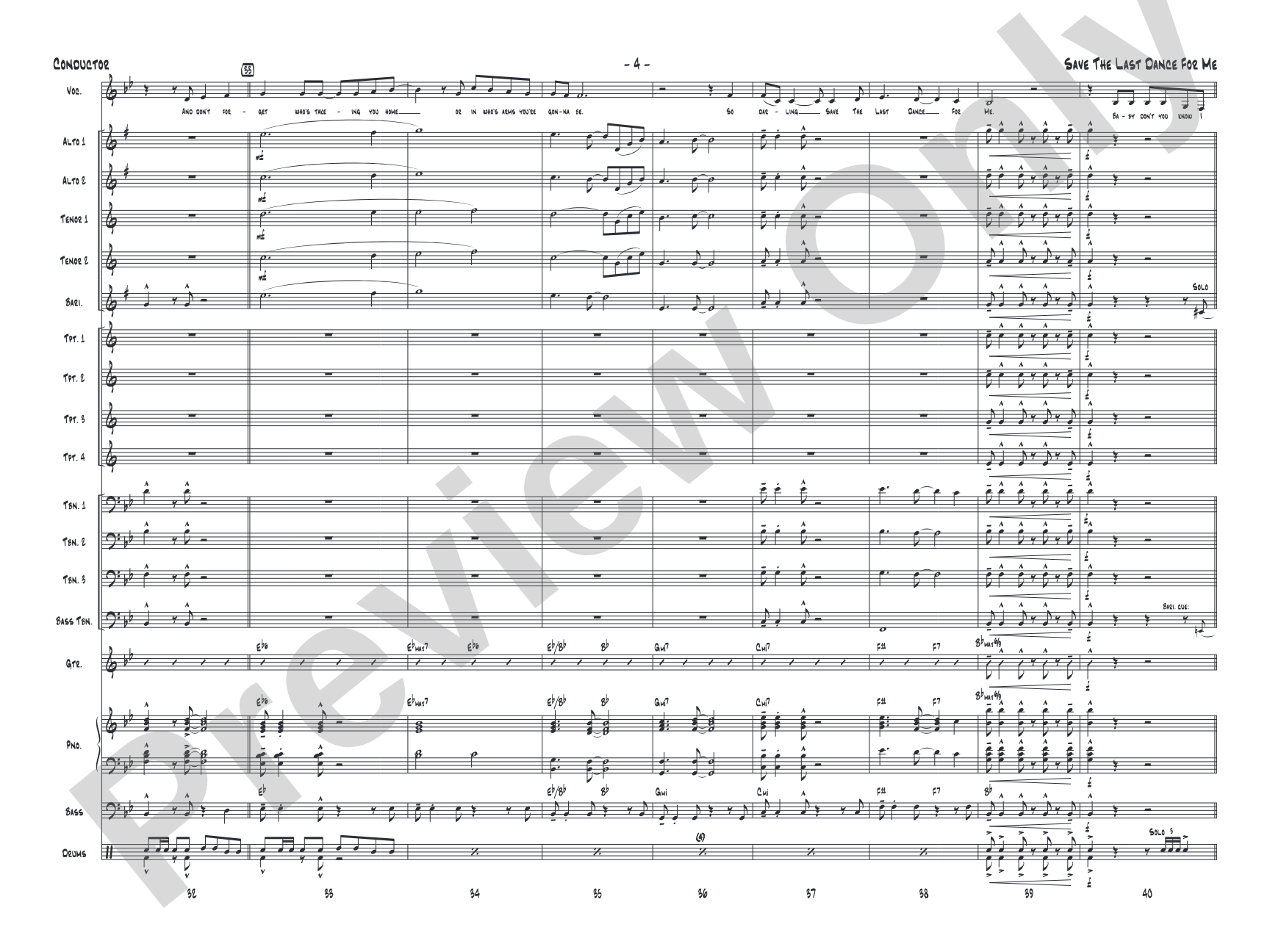
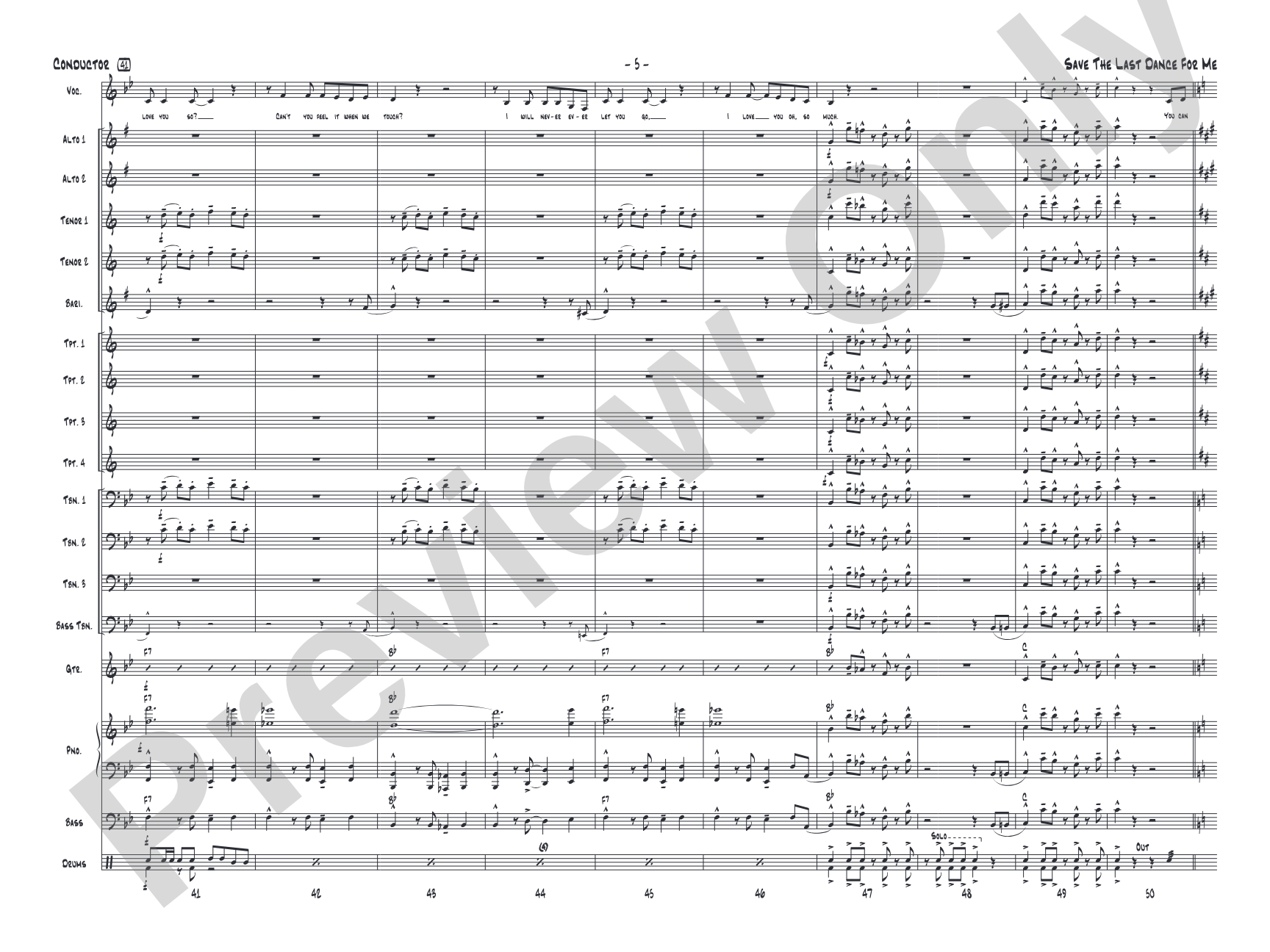
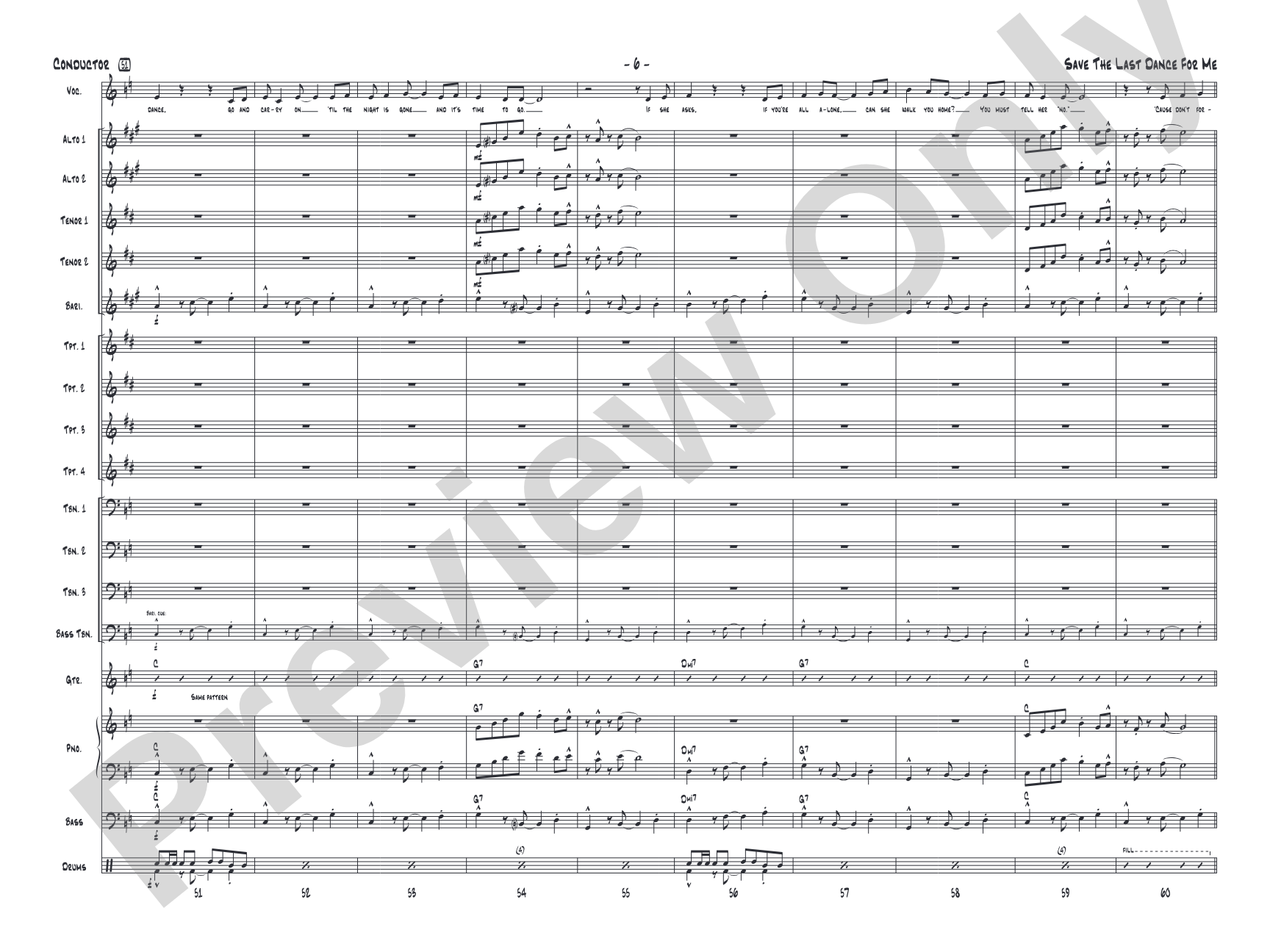
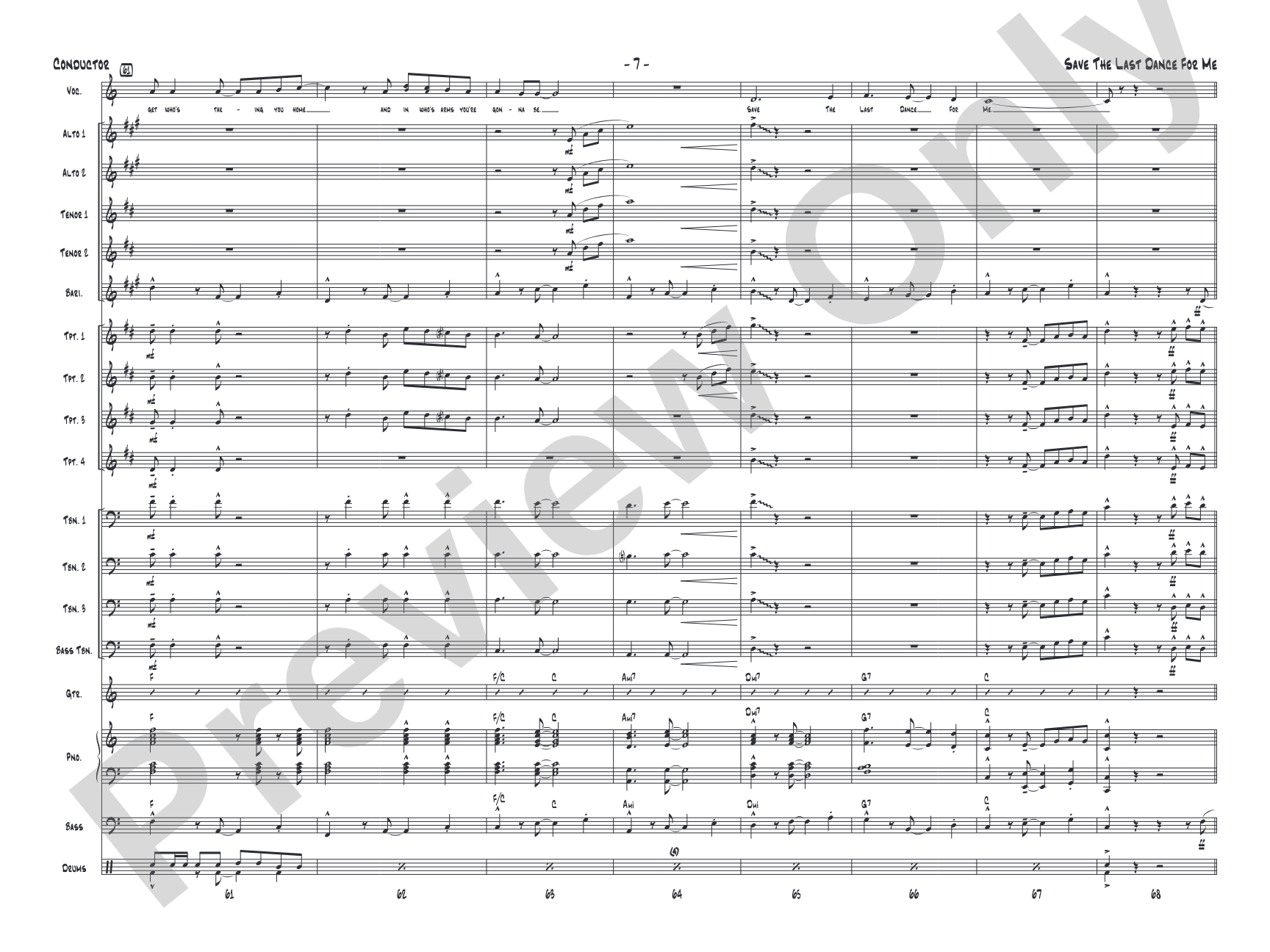
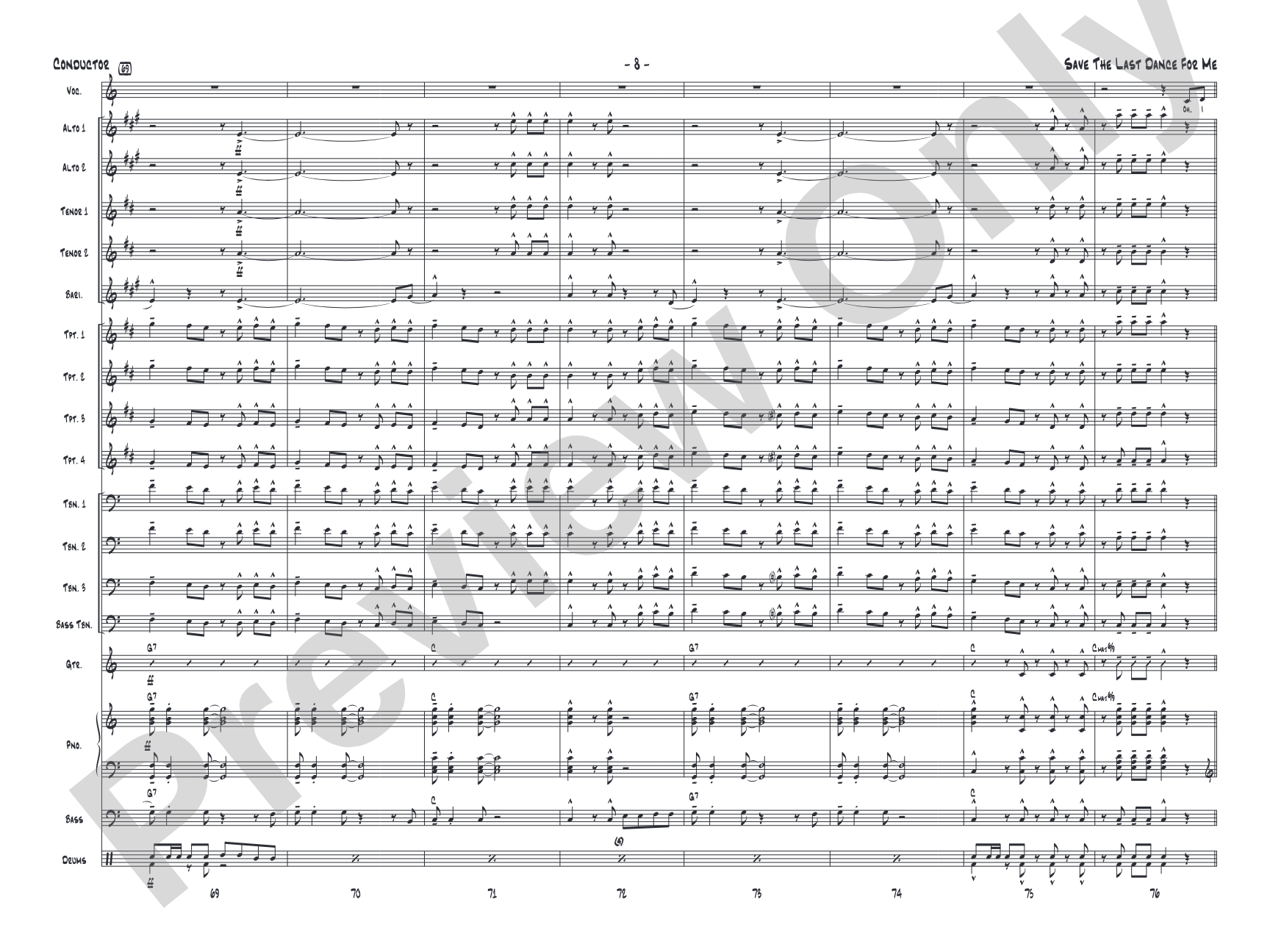
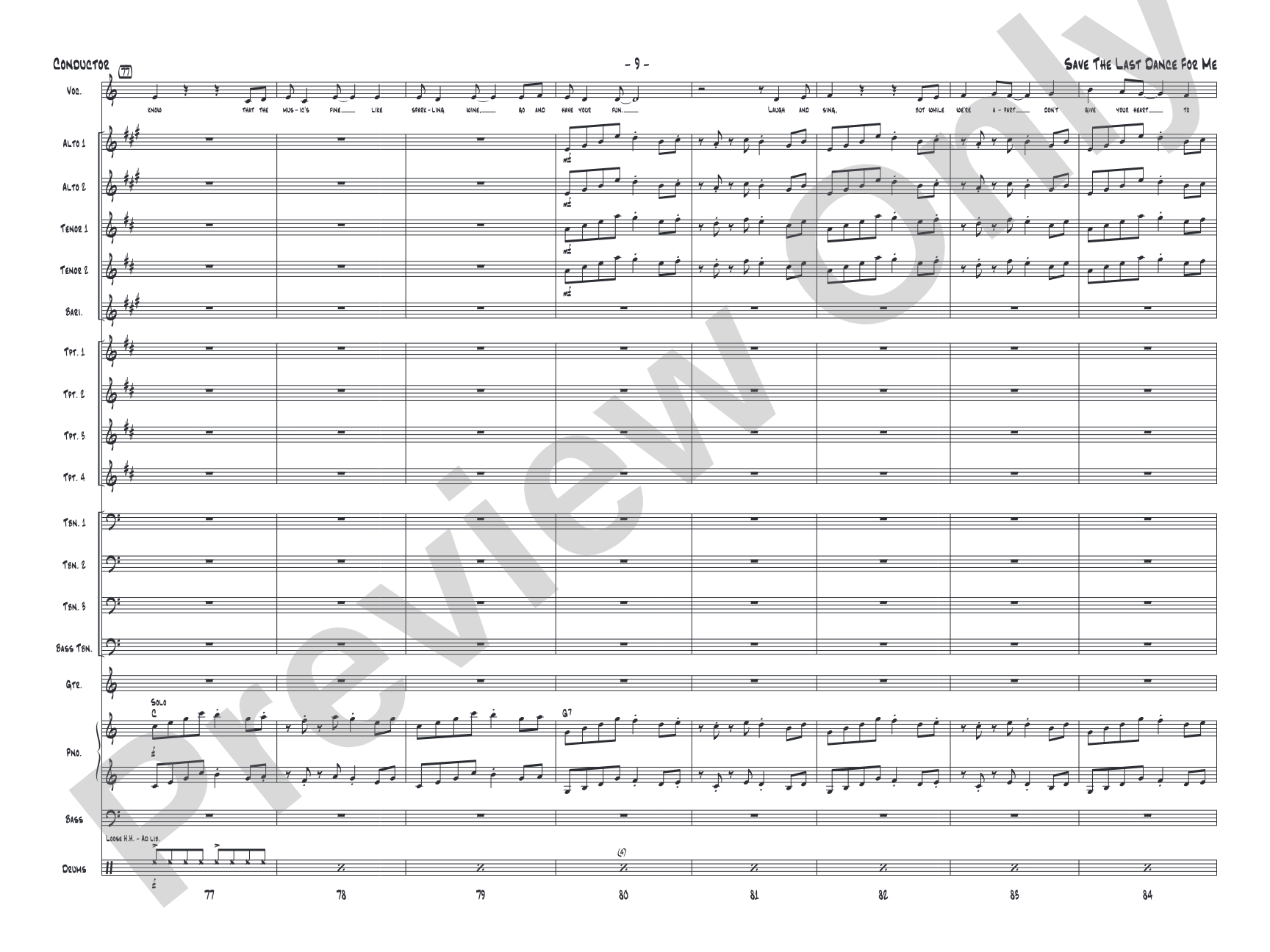
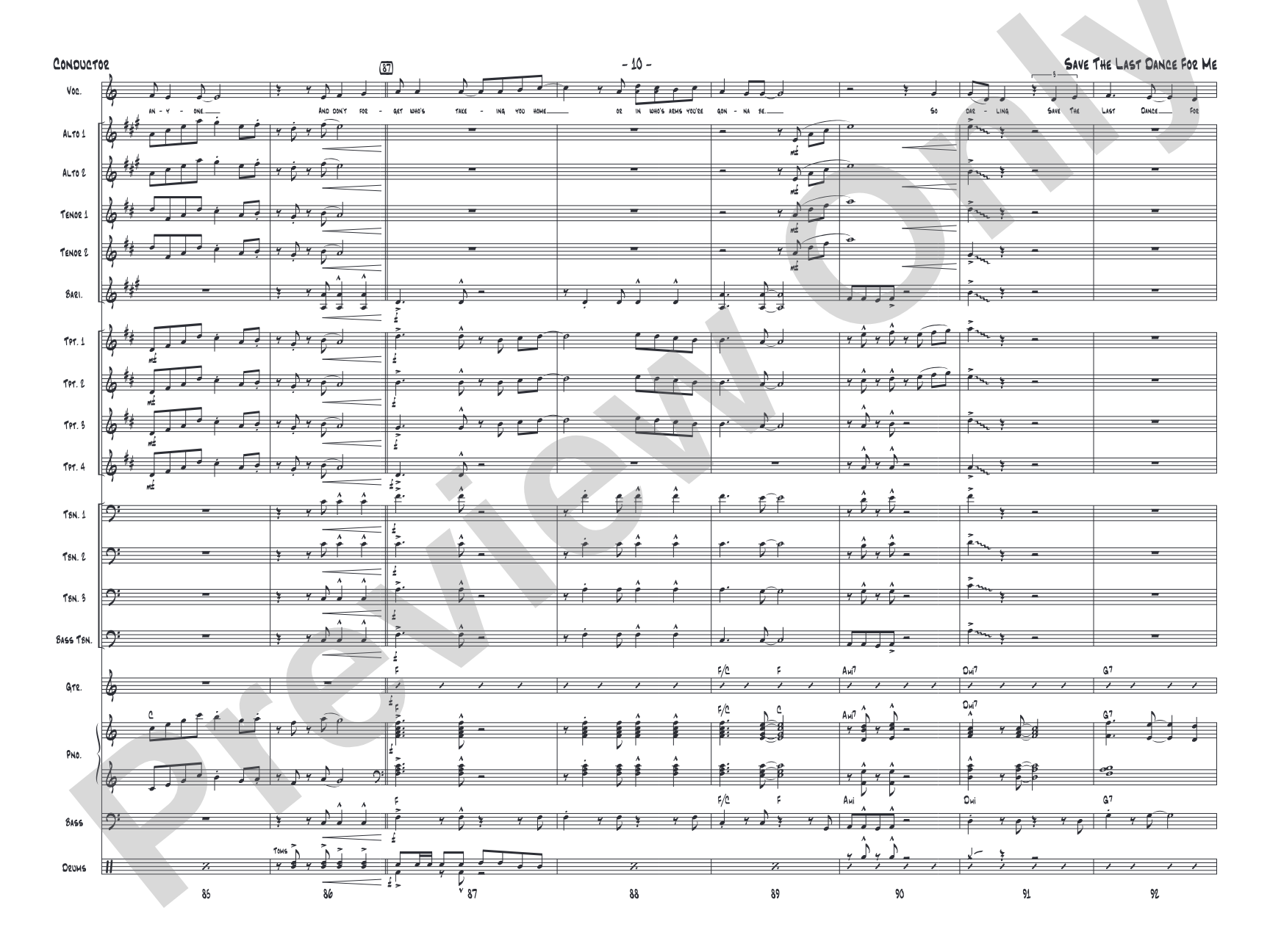
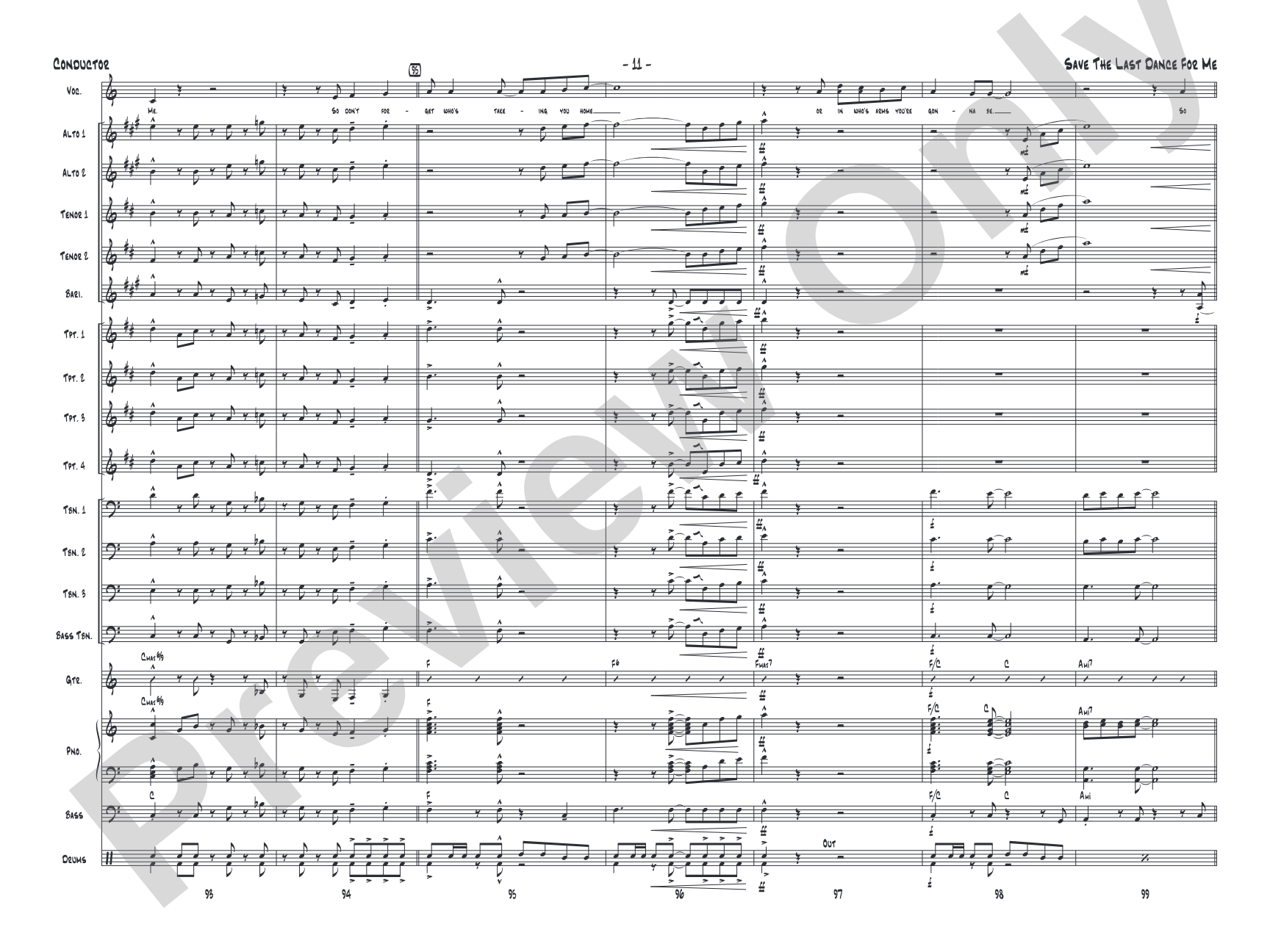
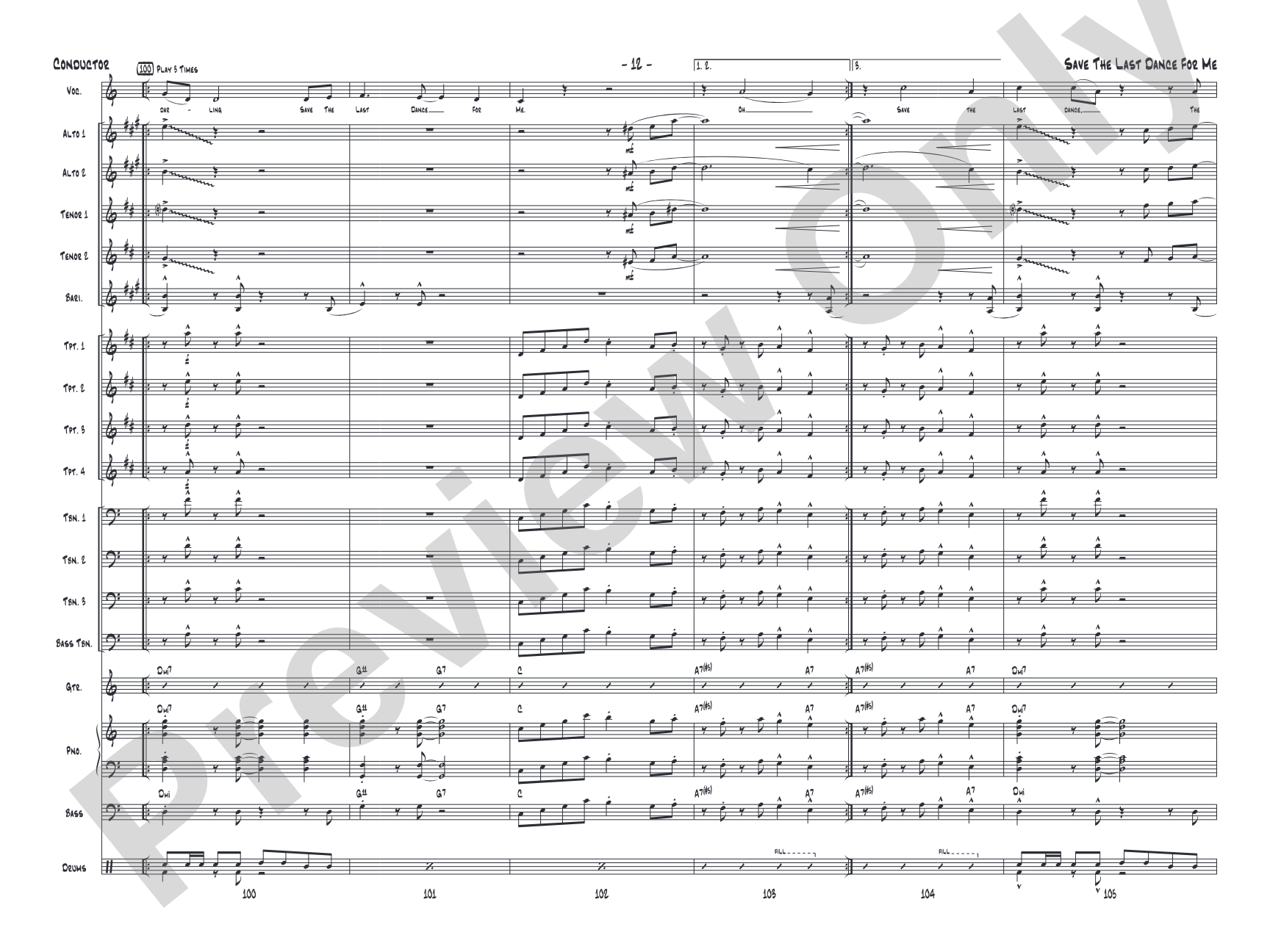
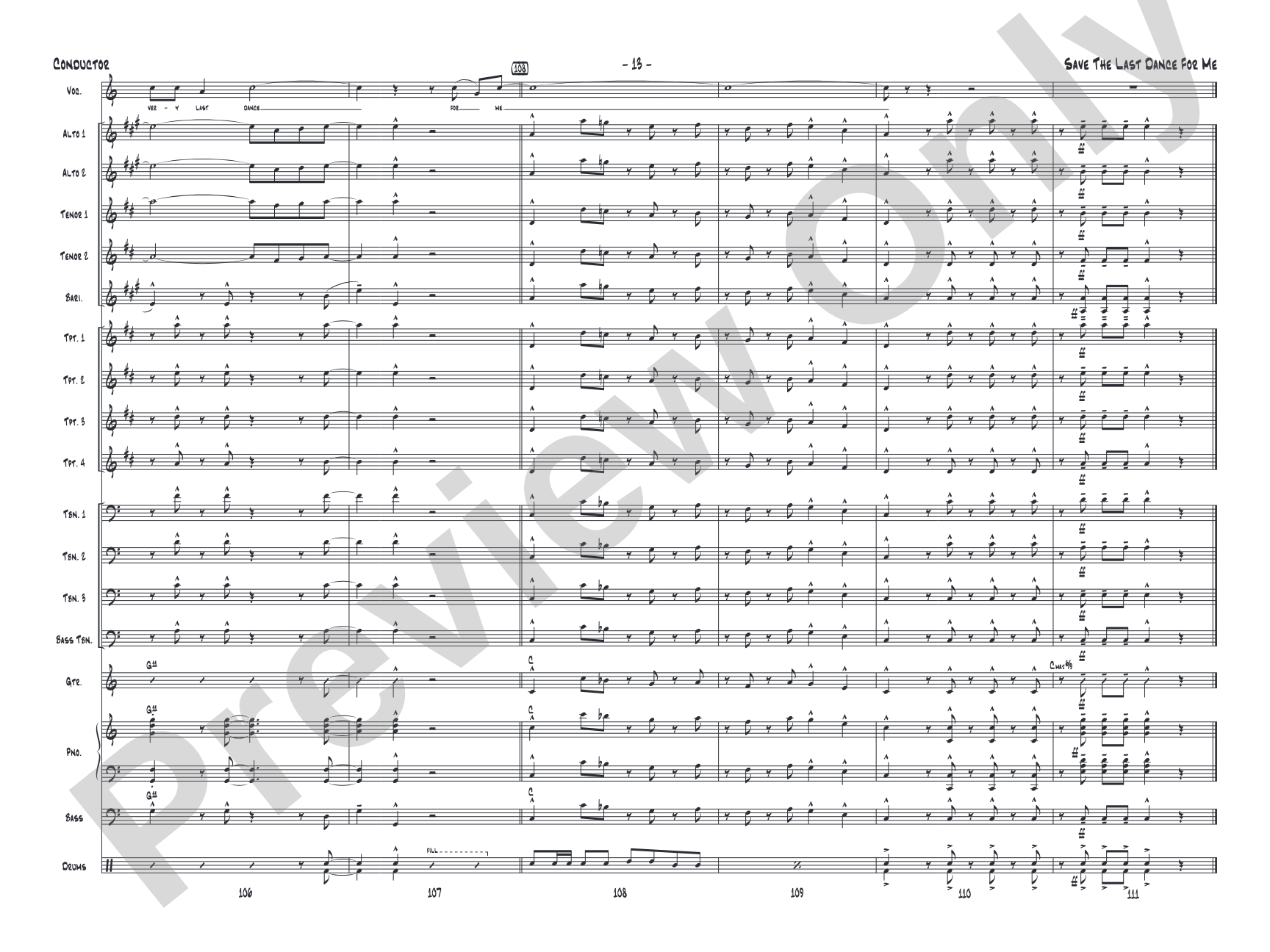

Save the Last Dance for Me: Vocal Solo with Jazz Ensemble Conductor Score & Parts
Music by Mort Shuman, words by Doc Pomus / arr. W. Scott Ragsdale
Grade: 3 (Medium)
Item: 00-PK-0006938

$54.00
Pickup currently not available
Buy Extra Parts (Digital PDF Download)
Parts Added to Cart!
Description
A very exciting chart to feature your vocalist on this popular standard with some great ensemble work for the band. It is arranged superbly as a bright rhumba in the key of B-flat, modulating to C with a vocal solo range of F below middle C to C third space (optional D).


Don't just read it, hear it, play along with it, and watch your students grow with it. In MakeMusic Cloud, Save the Last Dance for Me: Vocal Solo with Jazz Ensemble Conductor Score & Parts comes alive with professional accompaniment, adjustable tempo, and built-in practice tools that turn solo practice into real progress.
Open in the Player
Jump straight in and assign it today.
Start Your Free Trial
Open this title and explore the full library in minutes.
Sample Audio
1
Audio File
--:--
0:00
0:00
Sample Video
No sample videos found.
Additional Details
Series:
Jazz Vocal Series
Publisher:
Alfred Music
Page Count:
82
SKU:
00-PK-0006938
More about this title
About the Composer: Mort Shuman
Mort Shuman (1936-1991) was a songwriter and lyricist who built his career writing for rhythm and blues, pop, and rock artists during the 1950s and 1960s. He co-wrote "Save the Last Dance for Me" with Doc Pomus in 1960, and the song became a standard recorded by countless artists across multiple genres. Shuman's work bridged pop sensibility with jazz idioms, making his compositions natural fits for vocal jazz arrangements.
Why we love this
This arrangement brings genuine swagger to a classic standard without overwhelming the vocalist. W. Scott Ragsdale's rhumba setting keeps the energy buoyant while giving the band real ensemble work that stays locked and supportive, which means your vocalist can focus on phrasing and storytelling rather than fighting through charts.
What to expect
Bright, rhythmically propulsive, and deeply groovy. The rhumba feel gives the piece a relaxed sophistication that lets the vocalist breathe while the band swings hard underneath. There's a sense of ease and confidence here—the kind of vibe you want when featuring a vocalist.
Who it's for
Any jazz ensemble program with a strong vocalist ready to own a familiar standard. This works equally well for a vocalist stepping into jazz for the first time or an experienced jazz singer who needs a guaranteed crowd-pleaser with professional-quality charts.
How to get the most out of it
- Set the rhumba groove early in rehearsal and lock it in with the rhythm section before introducing the vocal line. The chart won't breathe if the band isn't rock-solid on the Latin feel.
- Exploit the key modulation from B-flat to C as a lift. This shift should feel earned and energizing, not abrupt. Coach the band to brighten their sound when you move into the new key.
- Give your vocalist space on the vocal solo section. The range (F below middle C to C third space, with optional D) sits well for most voices, but make sure they understand the idiomatic flexibility that jazz phrasing requires.
- Balance the ensemble work carefully so the band supports without drowning out the lead. These parts are written to complement, not compete.
How to use it
Slot this into a concert where you want to showcase your vocalist without pulling focus from the band's ensemble musicianship. It pairs beautifully in a program with other vocal standards or as a standalone feature in a mixed jazz concert. Consider using it as a mid-set energy peak if your vocalist has the maturity to deliver it with poise.
Skills your students will build
- Reading and playing in a Latin jazz (rhumba) feel with consistent groove
- Balancing ensemble texture around a featured soloist
- Executing a key modulation (B-flat to C) with clean voice leading
- Phrasing and interpreting a jazz vocal standard with idiomatic flexibility
- Playing written ensemble figures that support rather than overshadow a solo line