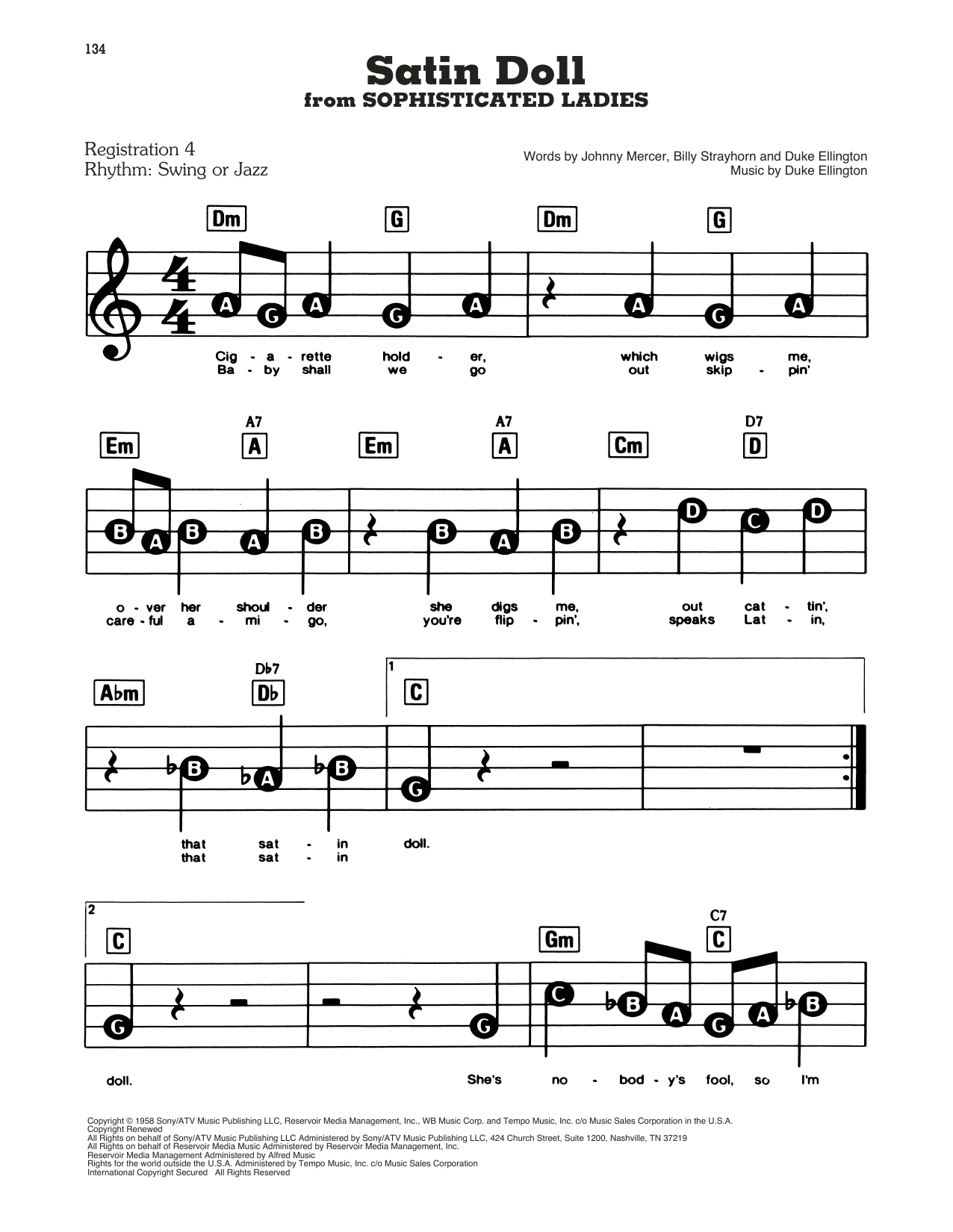
Satin Doll Sheet Music Preview

Satin Doll: E-Z Play Today

As performed by Billy Strayhorn

Item: 35-DS00399697

Digital Download
$4.99
Description

Satin Doll: E-Z Play Today isn't in MakeMusic Cloud just yet...but it could be. Let us know you'd like to see it, and you'll help shape what comes next. In the meantime, start a free trial and dive into thousands of interactive titles your students can play along with today.

Sample Audio
No sample audio found.
Sample Video
Additional Details
Publisher: Hal Leonard
Page Count: 2
SKU: 35-DS00399697

More about this title

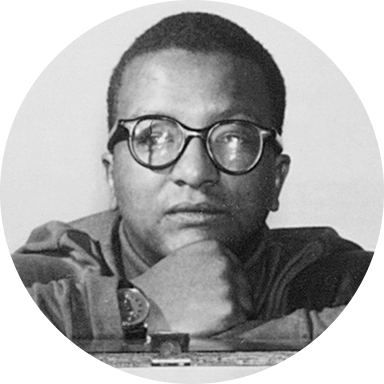
About the Artist: Billy Strayhorn

Billy Strayhorn

Billy Strayhorn emerged from Dayton, Ohio in 1915 to become one of America's most prolific and influential jazz composers, though his name remained obscured from public recognition for much of his career. Beginning his partnership with Duke Ellington in 1939, Strayhorn crafted a catalog that defined the sound of 20th century jazz: his compositions have been recorded by virtually every major jazz artist from Ella Fitzgerald to John Coltrane, yet he chose to live authentically as a gay Black man during an era when such visibility carried profound personal cost. His masterworks span from the exuberant "Take the 'A' Train" (the Ellington Orchestra's theme since the 1940s) to the harmonically sophisticated "Lush Life," which he composed at just 16 years old and which remains a proving ground for singers seeking genuine harmonic depth.

Why we love this

Strayhorn's harmonic vocabulary in 'Satin Doll' feels instantly accessible yet intellectually rich, making it an ideal entry point into jazz standards for pianists developing their comping voice. The melody sits comfortably for students still building independence between their hands, while the underlying changes reward closer study of voice leading and reharmonization options.

What to expect

Effortless sophistication. The tune glides with the kind of understated elegance that defines Strayhorn's writing; it sounds deceptively simple until you notice the harmonic turns that give the piece its subtle shimmer and wit.

Who it's for

Pianists with basic jazz vocabulary who are ready to move beyond lead sheets and explore how standard changes actually sit on the keyboard. This arrangement works equally well for self-directed students building their jazz repertoire and for ensemble pianists needing reliable, transparent voicings.

How to get the most out of it

  • Treat the melody as a conversation rather than a recitation; the phrasing should breathe naturally, with space between phrases that invites a listener's attention.
  • Explore the tension between the stated changes and possible reharmonization; this is where the piece reveals its pedagogical richness and where your individual voice emerges.
  • Keep the left hand texture light and swinging; resist the impulse to fill every beat with comping figures, as restraint often swings harder than constant motion.

How to use it

Pair this with other Strayhorn standards in a jazz history concert to illustrate his compositional range, or use it as a study piece in a jazz improvisation course where students can explore melodic reharmonization and variation without the complexity of a through-composed form.

Skills your students will build

  • Chord substitution and reharmonization within a jazz standard form
  • Left-hand comping textures and jazz piano voicing
  • Phrasing and articulation specific to swing-era melody
  • Reading and interpreting jazz chord symbols in context
  • Independence between melody and accompaniment

You May Also Like