
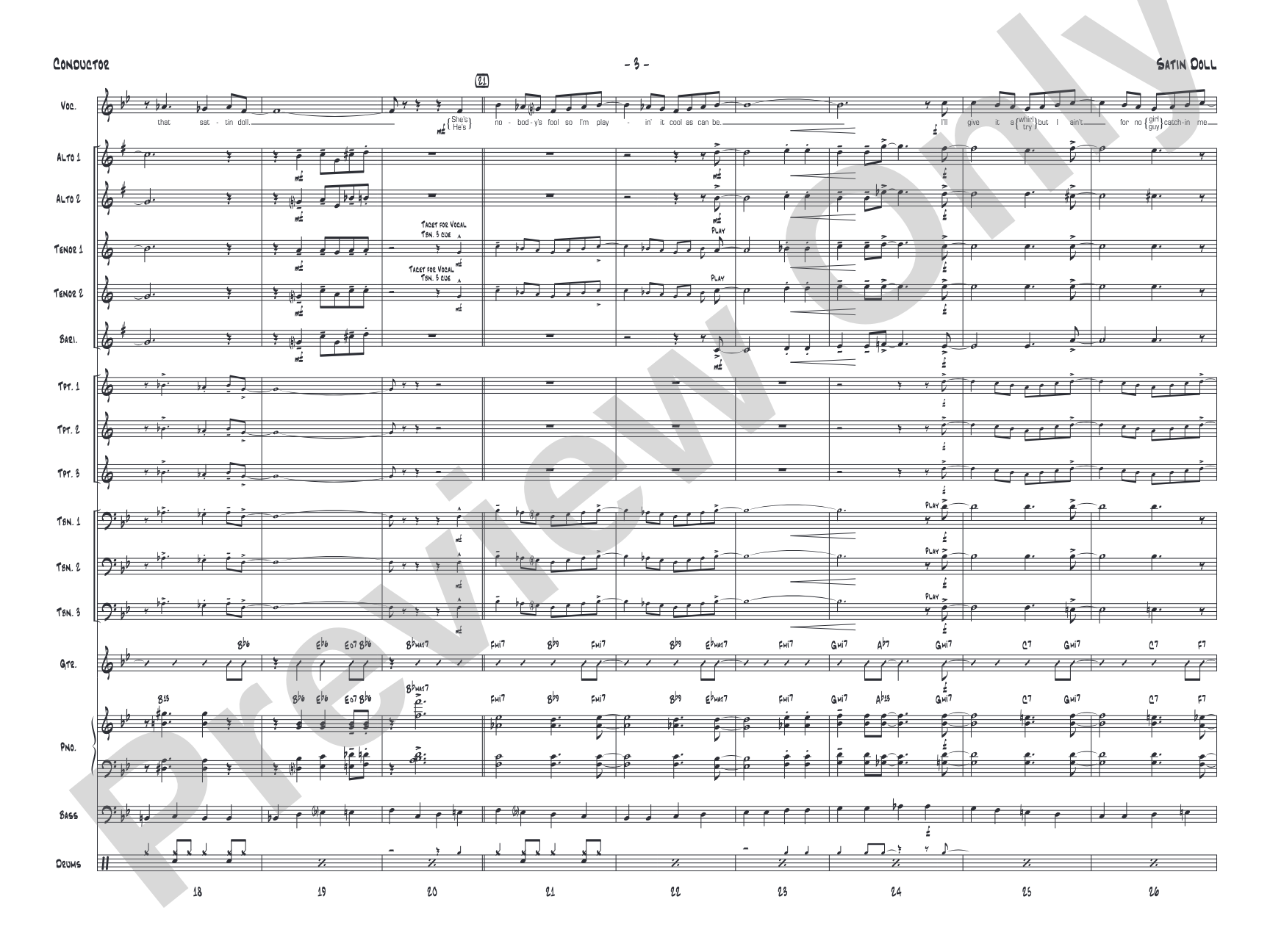
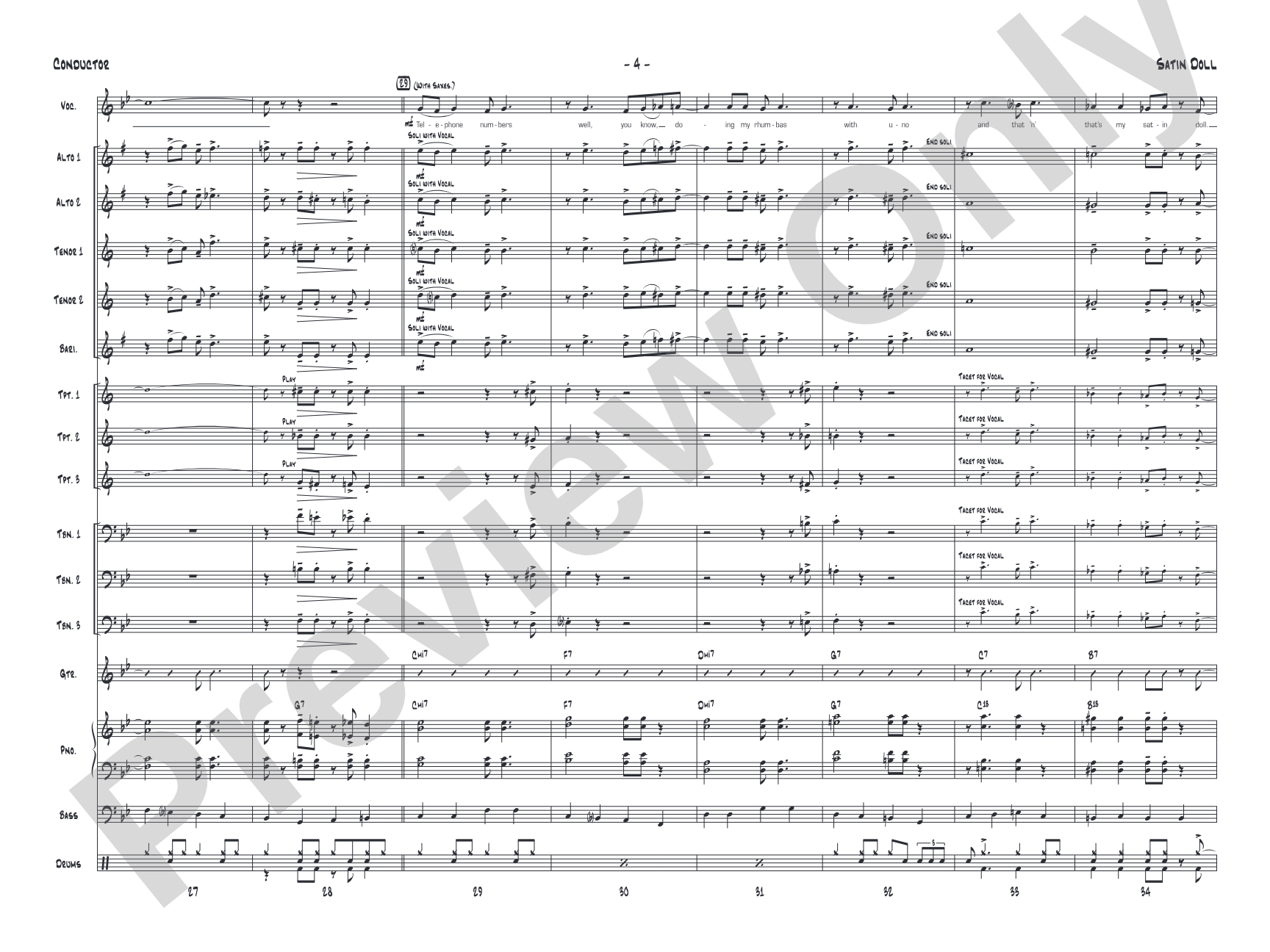
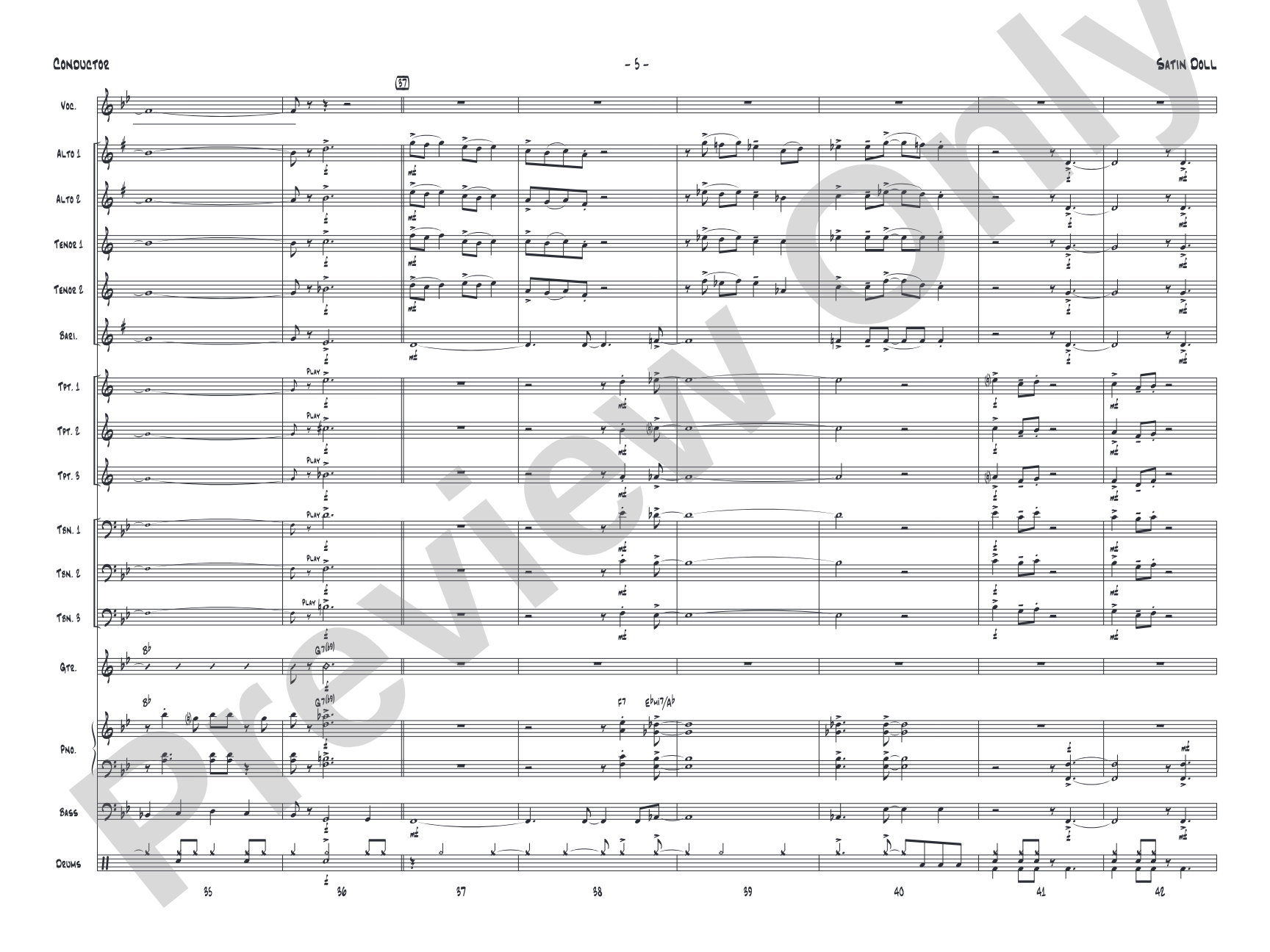
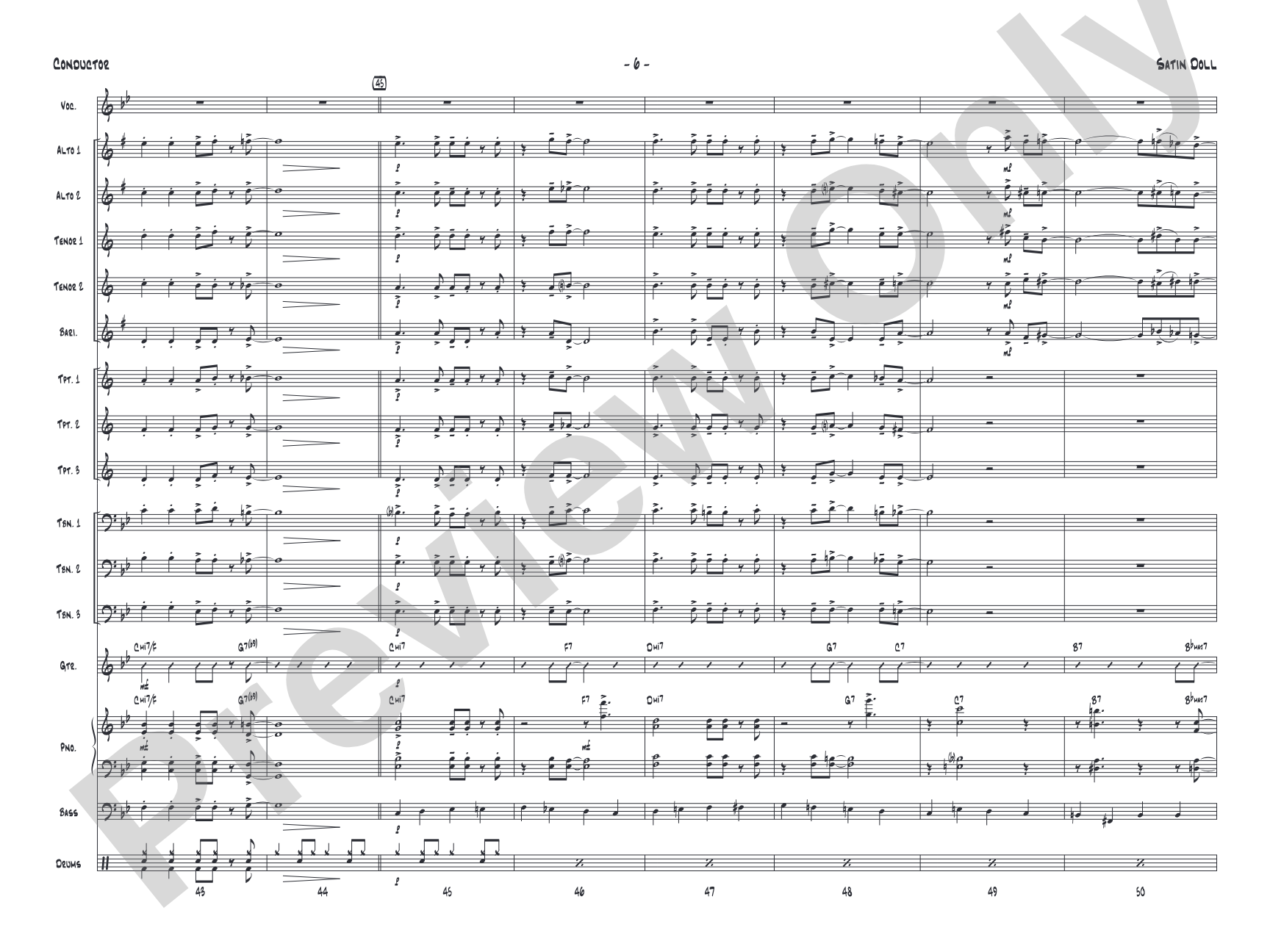
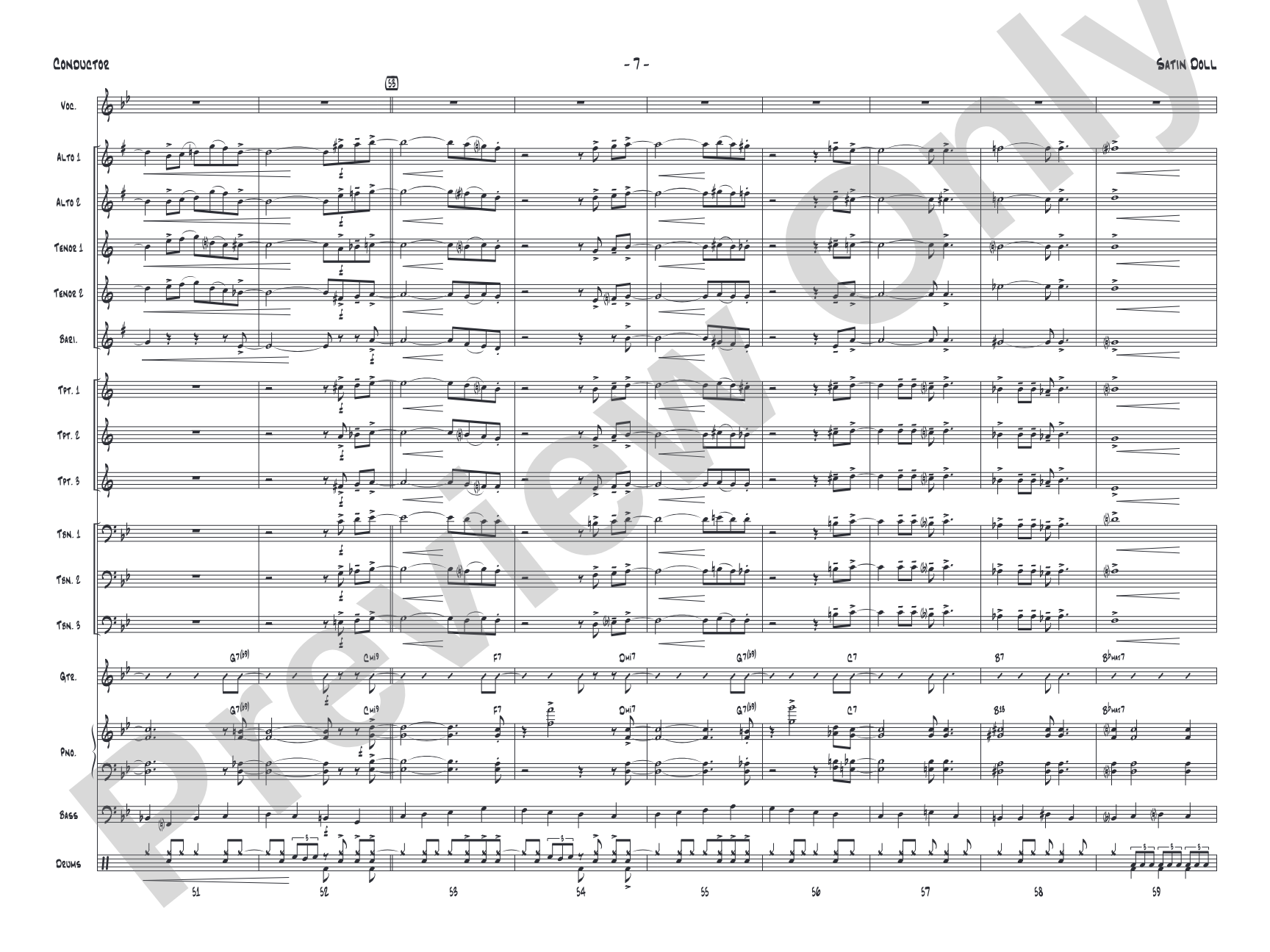
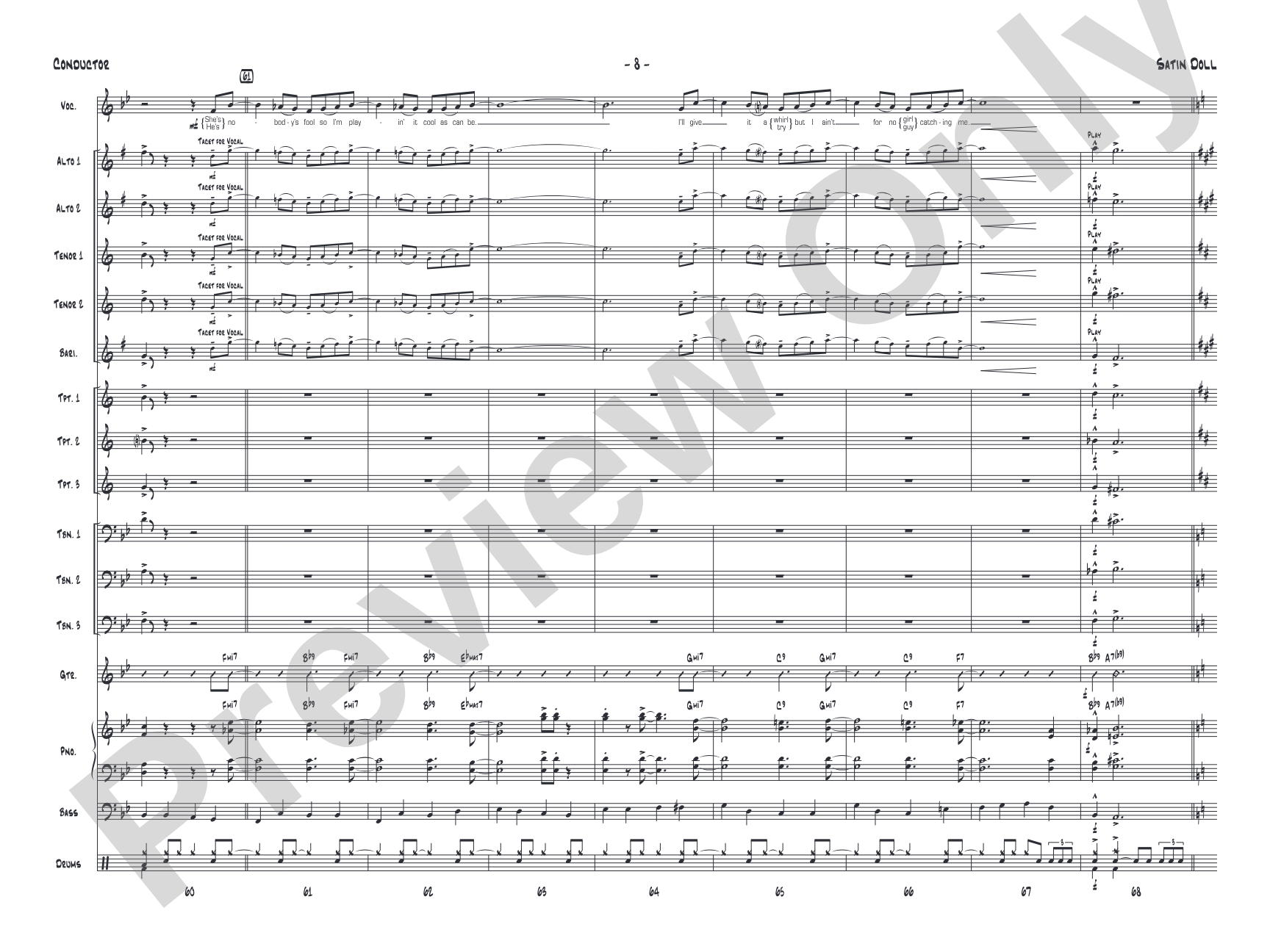
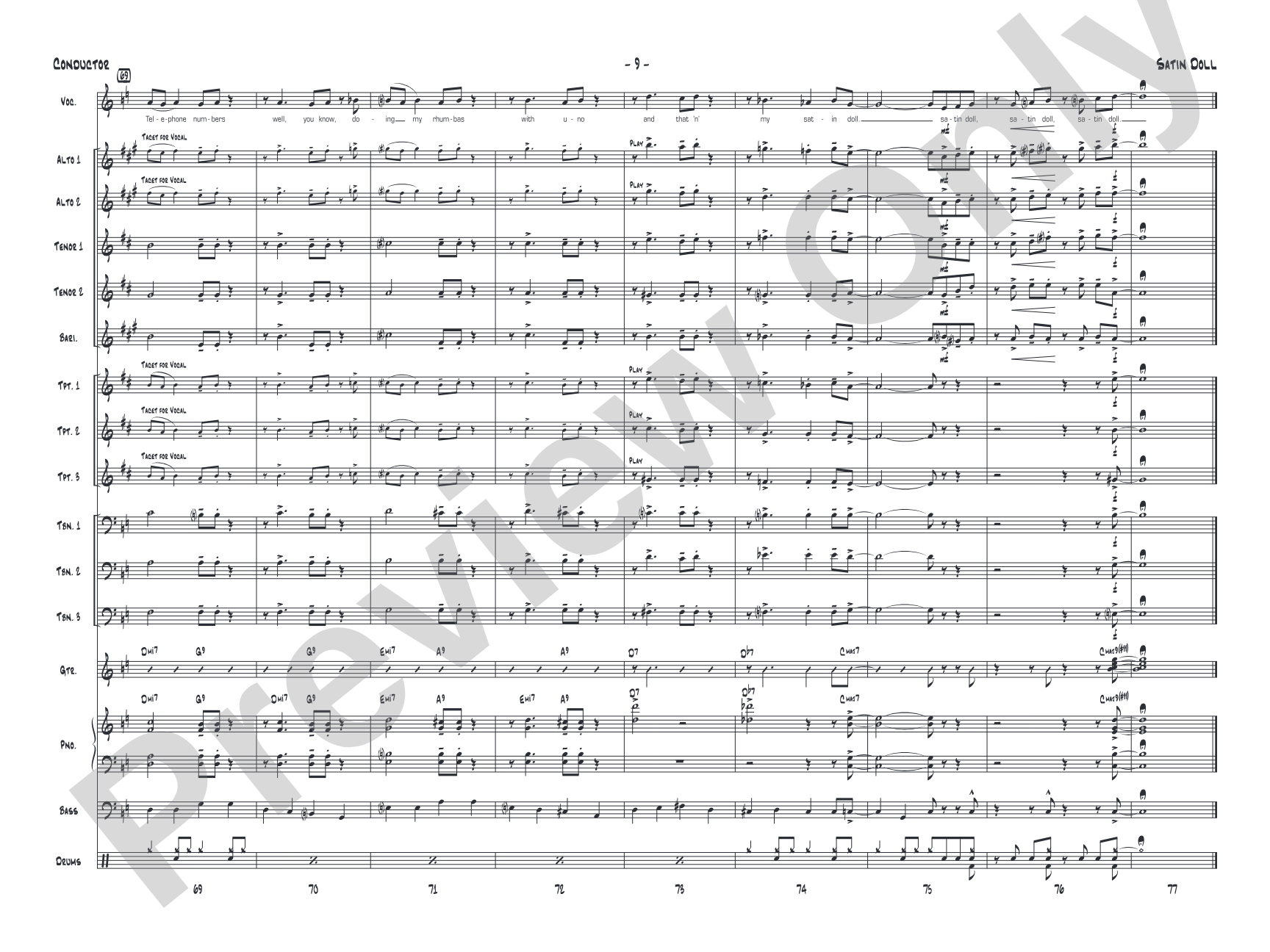

Satin Doll: Jazz Ensemble Conductor Score & Parts
Words and music by Johnny Mercer, Duke Ellington, and Billy Strayhorn / arr. Terry White
Grade: 1 (Easy)
Item: 00-PK-0006902

$62.00
One moment…
Description
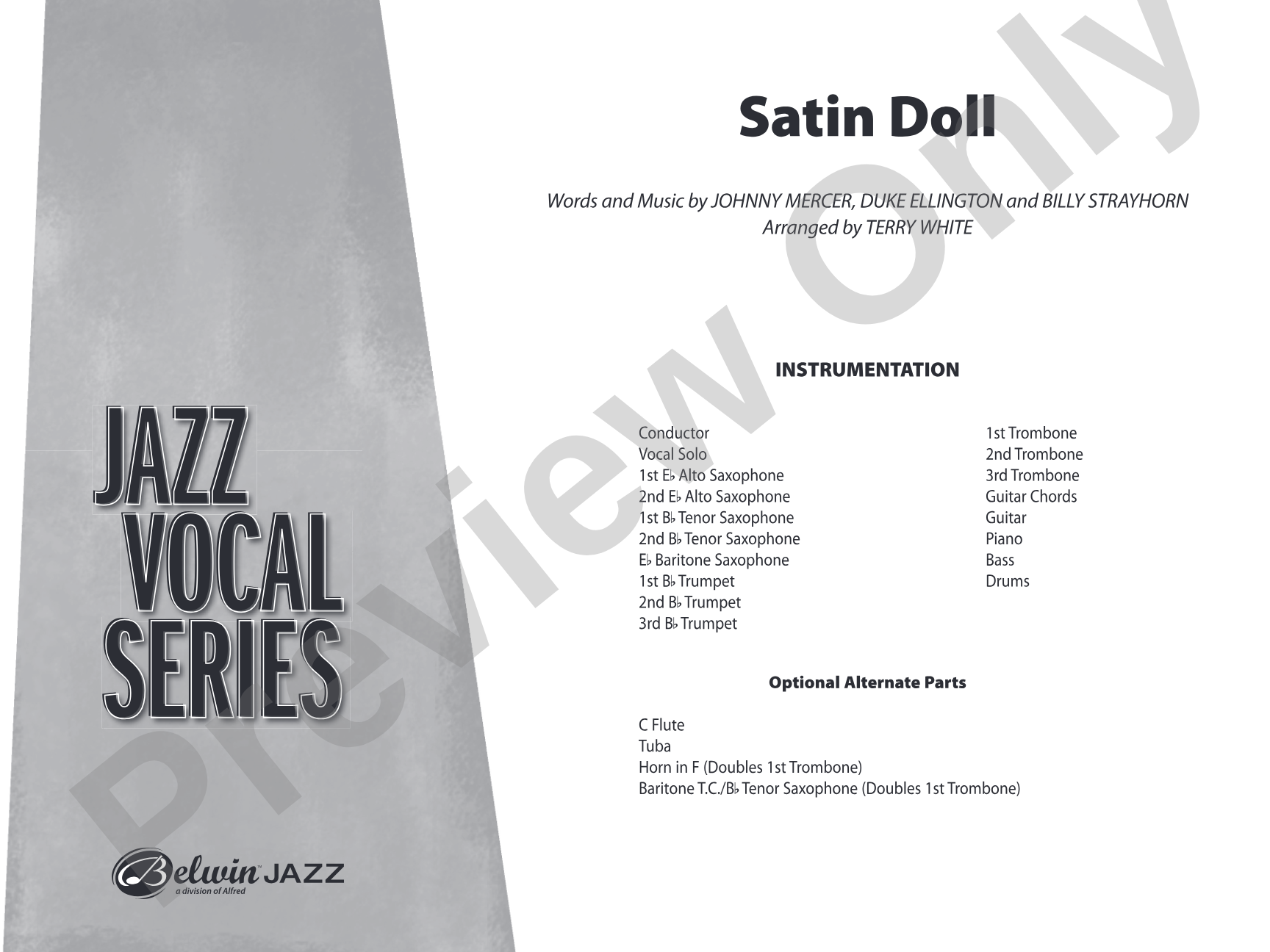
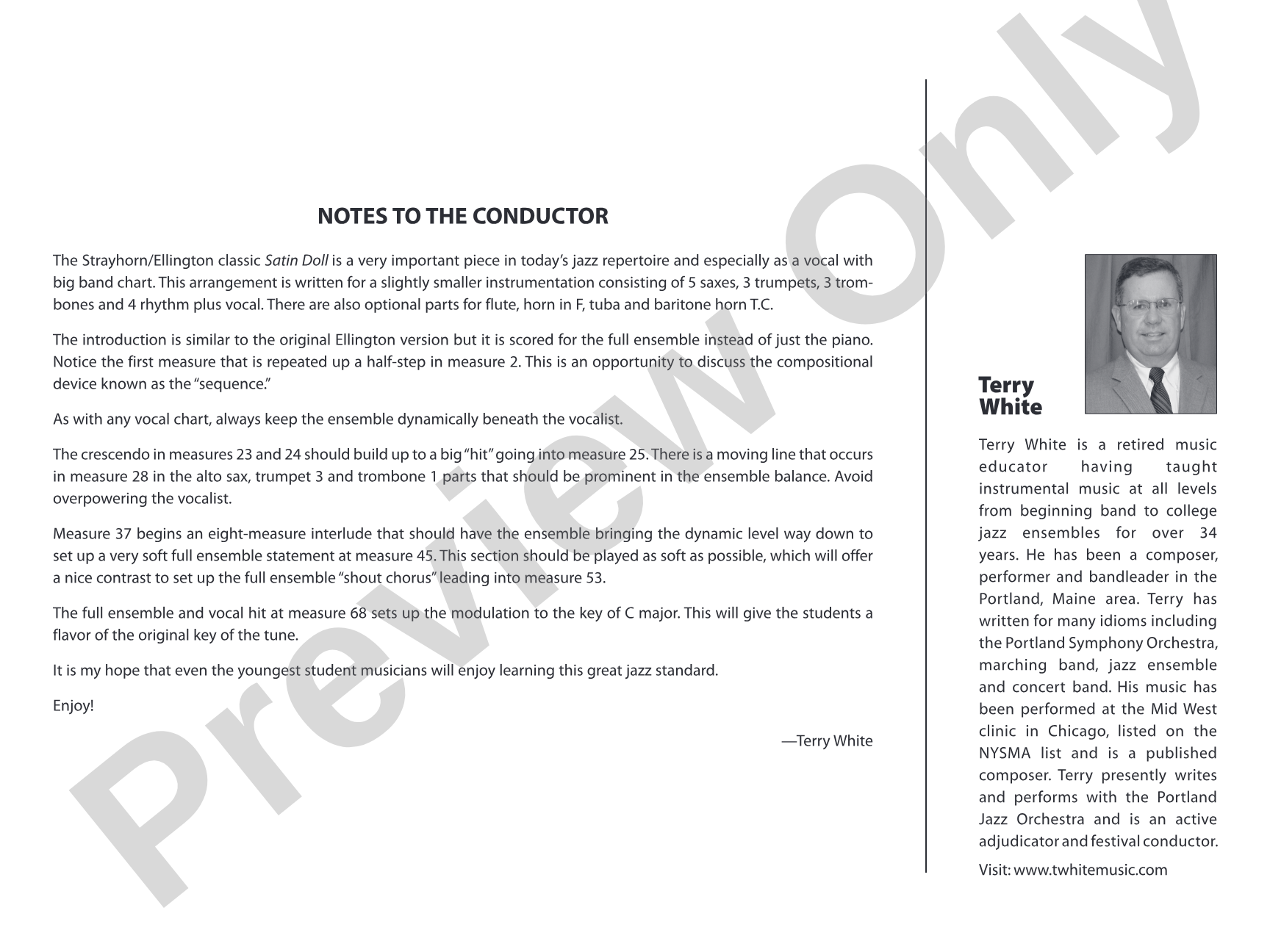
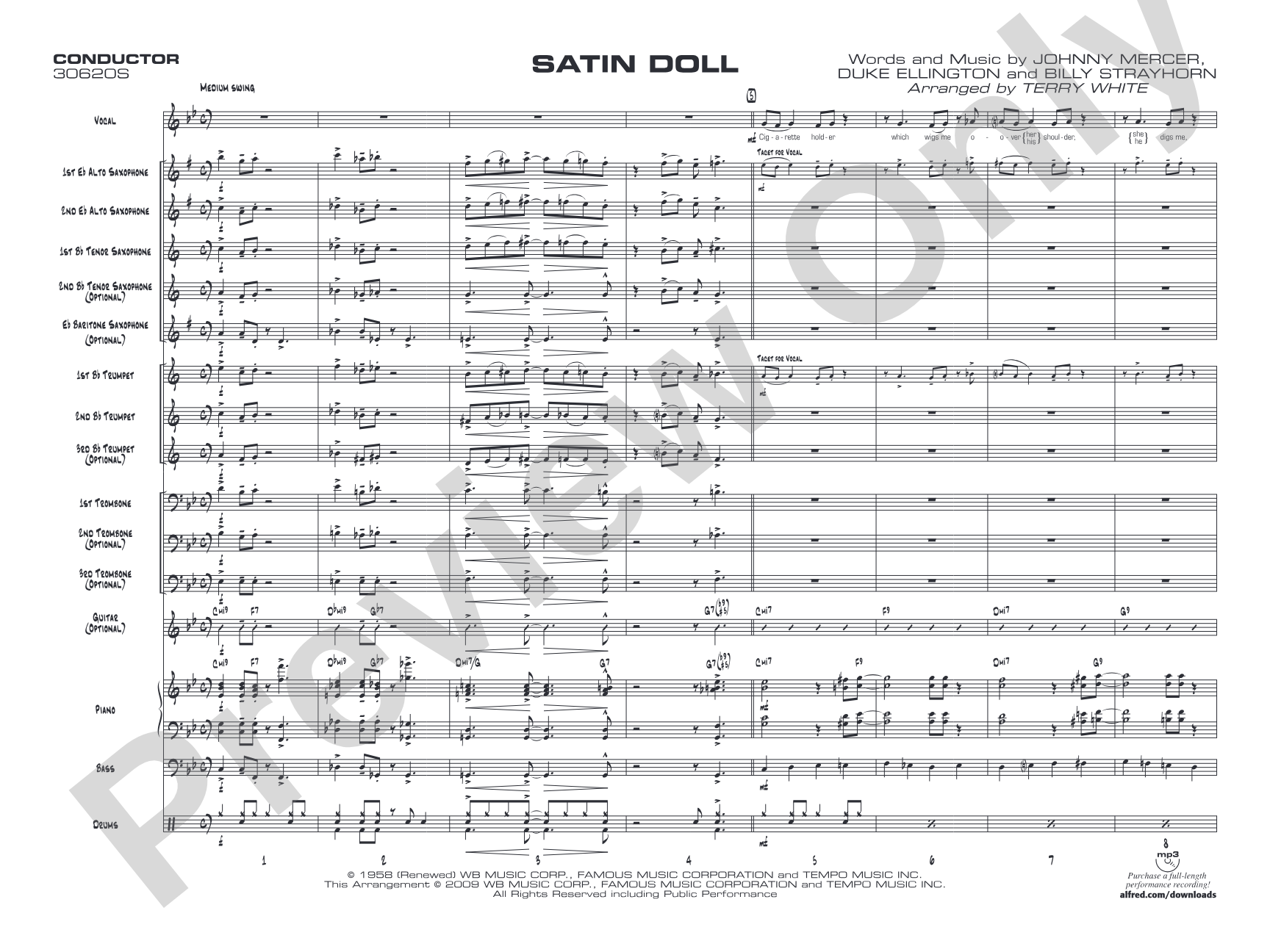
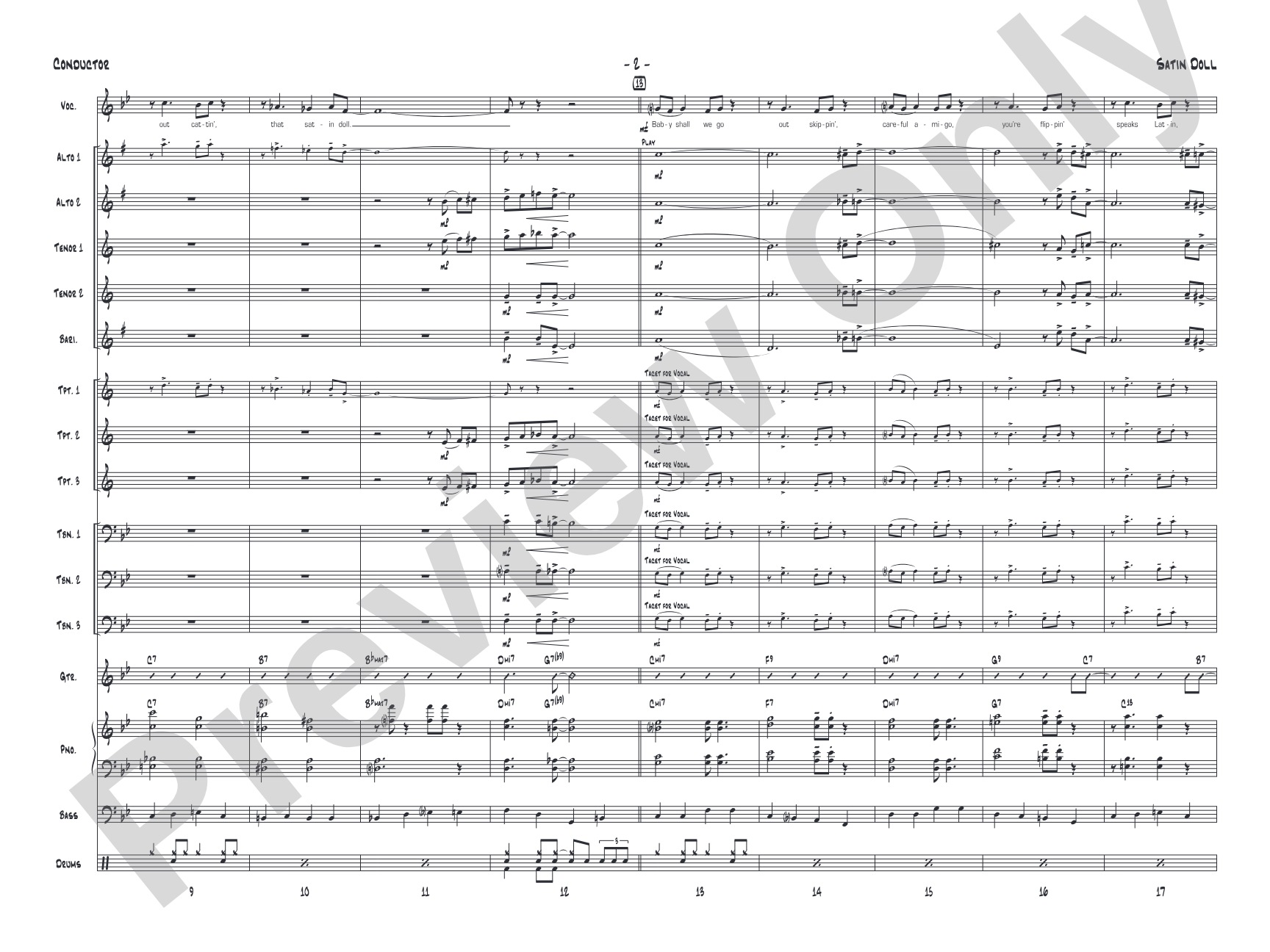
Looking for an easy to play vocal piece? Here is an excellent vocal chart on a well known standard that is arranged at a much easier level by Terry White, with no individual solos, lots of full ensemble, a shout chorus and a modulation. And it's all very easy to rehearse and perform! The vocal range is from F, first space to fourth line D, treble clef. Scored for 5 saxes, 6 brass and 4 rhythm, plus this arrangement will sound full with reduced instrumentation. With very accessible brass ranges and optional parts for flute, horn, tuba and baritone horn T.C., this is a classy chart all the way. (2:45)


Don't just read it, hear it, play along with it, and watch your students grow with it. In MakeMusic Cloud, Satin Doll: Jazz Ensemble Conductor Score & Parts comes alive with professional accompaniment, adjustable tempo, and built-in practice tools that turn solo practice into real progress.
Open in the Player
Jump straight in and assign it today.
Start Your Free Trial
Open this title and explore the full library in minutes.
Sample Audio
1
Audio File
--:--
0:00
0:00
Sample Video
No sample videos found.
Additional Details
Series:
First Year Charts for Jazz Ensemble
Publisher:
Alfred Music
Page Count:
82
SKU:
00-PK-0006902
More about this title
About the Composer: Johnny Mercer
Johnny Mercer (1909-1976) was one of America's most prolific and versatile songwriters, equally skilled at crafting lyrics for jazz standards, Broadway musicals, and Hollywood films. His partnership with composers like Duke Ellington and Henry Mancini produced some of the 20th century's most enduring melodies, and his lyrics became essential repertoire for singers across all genres. For jazz educators, Mercer's work represents the golden age of American songwriting, where sophisticated harmonic language meets accessibility and genuine emotional expression.
Mercer's contribution to "Satin Doll" (composed by Duke Ellington and Billy Strayhorn) demonstrates his gift for crafting lyrics that enhance rather than overshadow the underlying music. His words fit naturally into the sophisticated chord changes while remaining singable and memorable, a balance that makes his compositions ideal teaching tools for students learning to navigate jazz standards with both technical precision and interpretive warmth.
Why we love this
Terry White's arrangement strips away the complexity that often intimidates first-year jazz ensembles while preserving every element that makes "Satin Doll" a classic. The emphasis on full ensemble moments and a shout chorus gives every student a chance to feel part of something sophisticated, and the optional parts mean you're not scrambling to cover missing instruments. This is a chart that sounds polished and professional without requiring virtuosic soloists or extensive rehearsal time.
What to expect
Satin Doll swings with easy sophistication. The melody floats over gentle harmonic movement, and there's a warmth to the arrangement that feels less like a performance and more like a group having a conversation over a smooth groove. The shout chorus lifts everything up without losing the tune's inherent elegance.
Who it's for
Jazz ensemble directors leading students in their first or second year of jazz experience, whether in a school setting or community ensemble. Vocal jazz groups will find this arrangement particularly valuable since it accommodates singers while keeping the instrumental demands straightforward. Programs looking for standards that sound mature without requiring extended improvisation or high-range demands will have success here.
How to get the most out of it
- Balance the vocal line clearly in the ensemble blend; even though the range sits comfortably in the treble staff, the melody needs to cut through without the brass and saxes overshadowing it.
- Use the modulation as a moment to shift energy in the room. A clean key change is exciting for students and audiences alike, and White's arrangement makes this transition accessible for developing ensembles.
- Shape the shout chorus with clear dynamics and articulation. The written hits are your guide, but rhythmic unity across the entire ensemble makes the impact.
- Let the rhythm section lock in early in rehearsals. With reduced instrumentation options, your piano, bass, and drums set the groove everyone else rides on.
How to use it
This works beautifully as a concert opener or closer, setting a sophisticated tone without demanding an exhausting amount of energy before or after heavier repertoire. Consider pairing it with another standards-based chart to build a short set that shows your ensemble's range within the jazz idiom. It's also an ideal selection for a casual concert, community performance, or recording project early in the school year when students are still building confidence.
Skills your students will build
- Reading and executing jazz articulation and phrasing conventions
- Balancing written ensemble hits with the needs of the solo vocal line
- Understanding how key changes function in jazz arrangements and responding musically to modulation
- Developing flexibility in instrumentation by reading optional parts and adapting to ensemble needs
- Maintaining consistent groove and time feel as an ensemble, particularly in rhythm sections with optional instrument combinations