Satchmo! - A Tribute to Louis Armstrong Sheet Music Preview

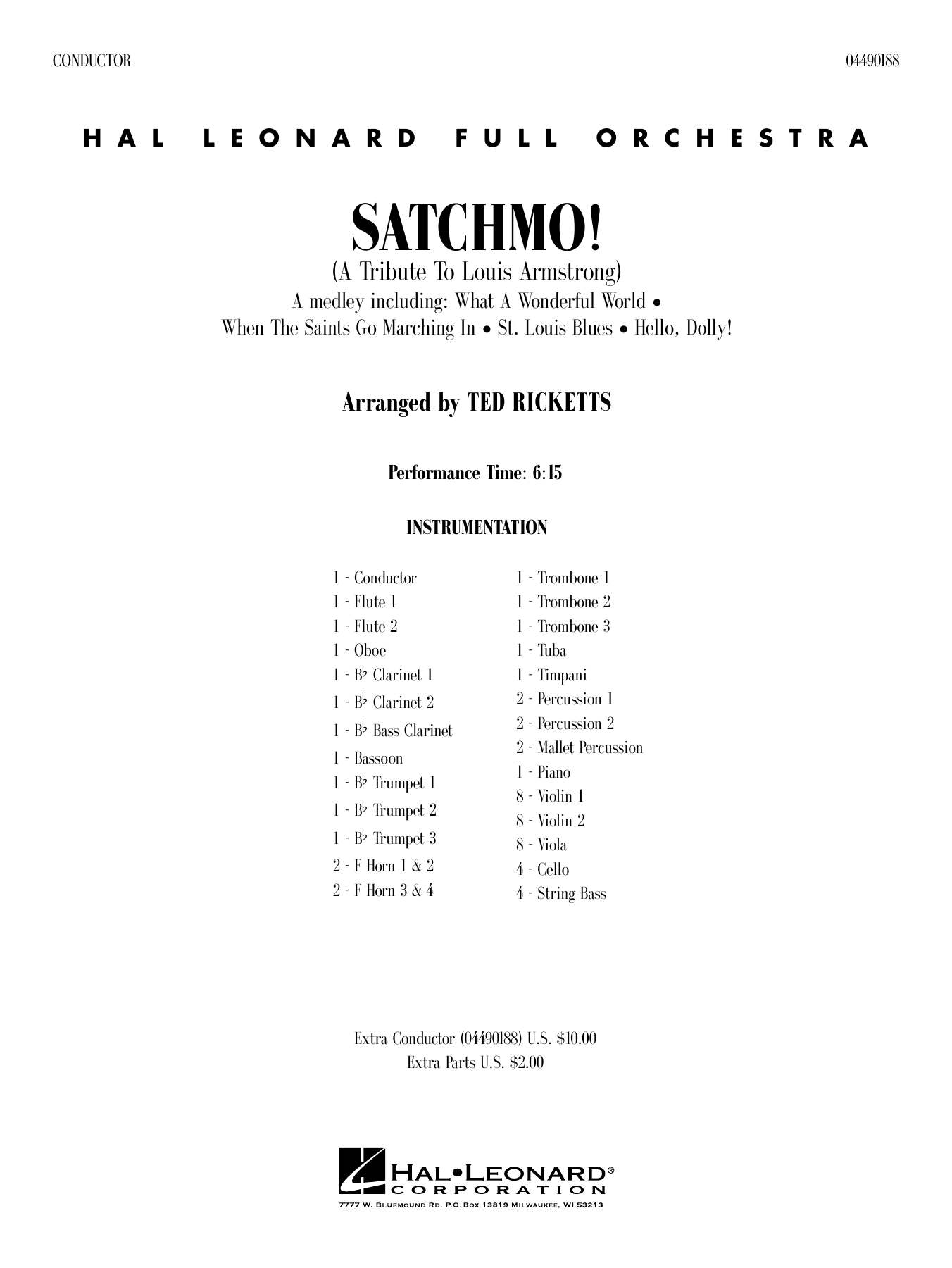
Satchmo! - A Tribute to Louis Armstrong: Full Orchestra Conductor Score & Parts

As performed by Louis Armstrong / Arranged by Ted Ricketts

Grade: 3-4

Item: 35-PK01358935

Digital Download
$70.00

One moment…

Description
Arranger Ted Ricketts brings us this musical tribute to America's beloved artist, considered by many to be the most influential personality in the rich heritage of American popular and jazz music. Includes: What A Wonderful World, When the Saints Go Marching In, St. Louis Blues, and Helly Dolly!

Satchmo! - A Tribute to Louis Armstrong: Full Orchestra Conductor Score & Parts isn't in MakeMusic Cloud just yet...but it could be. Let us know you'd like to see it, and you'll help shape what comes next. In the meantime, start a free trial and dive into thousands of interactive titles your students can play along with today.

Sample Audio
No sample audio found.
Sample Video
Additional Details
Publisher: Hal Leonard
SKU: 35-PK01358935

More about this title

About the Artist: Louis Armstrong

Louis Armstrong revolutionized jazz and popular music through his innovative trumpet playing and distinctive vocal style. Born in New Orleans in 1901, Armstrong developed a approach to improvisation and phrasing that fundamentally shaped how musicians understand swing, rhythmic flexibility, and emotional expression across genres. His recordings from the 1920s onward became foundational documents for jazz musicians and remain essential listening for understanding American music history.

Why we love this

Ricketts captures the warmth and joy that made Armstrong a cultural icon, crafting arrangements that sit comfortably for intermediate orchestras without sacrificing the swing and personality of these standards. The mix of vocal showcase moments and purely instrumental passages gives you flexibility in how you feature soloists, and the four selections represent Armstrong's range from New Orleans tradition to his later pop hits. Your audience will recognize these melodies immediately, which means your students get to experience the satisfaction of playing genuinely beloved music.

What to expect

These arrangements radiate the optimism and casual virtuosity Armstrong brought to every performance, moving smoothly from the second line swagger of New Orleans tradition to the sophisticated pop arrangements that made him a household name. Your ensemble will feel the openness and conversational quality that Armstrong championed, where precision matters less than genuine musical communication and joy.

Who it's for

This collection works for any orchestra director looking to expand repertoire into jazz standards and American songbook classics. It's ideal for concert programs that aim to celebrate American cultural heritage or feature student and faculty soloists in an accessible jazz context.

How to get the most out of it

  • Let the rhythm section establish the groove before bringing in the ensemble parts; these arrangements depend on a relaxed swing feel rather than metronomic precision.
  • Balance the solo passages prominently if you have a vocalist or featured instrumentalist, as Armstrong's playing and singing always sat naturally in front of the band.
  • Shape the melodic phrases with the legato or articulation that Armstrong himself used; listen to original recordings to catch his phrasing nuances before rehearsal.
  • Keep the ensemble behind the solos responsive and supportive rather than pushing; the best jazz arrangements succeed when everyone listens to what's happening in the moment.

How to use it

Place this as a standalone concert featuring the four selections, or select individual pieces to anchor programs celebrating American music, jazz history, or multicultural influences in classical tradition. The variety within the suite also makes it useful as a flexible encore segment where you can program different combinations depending on your available soloists and performance context.

Skills your students will build

  • Swing rhythm and jazz articulation
  • Listening and responding to soloist phrasing in ensemble contexts
  • Balancing accompaniment roles with solo features
  • Understanding call and response and New Orleans jazz traditions
  • Flexible intonation and vibrato control in jazz style

You May Also Like