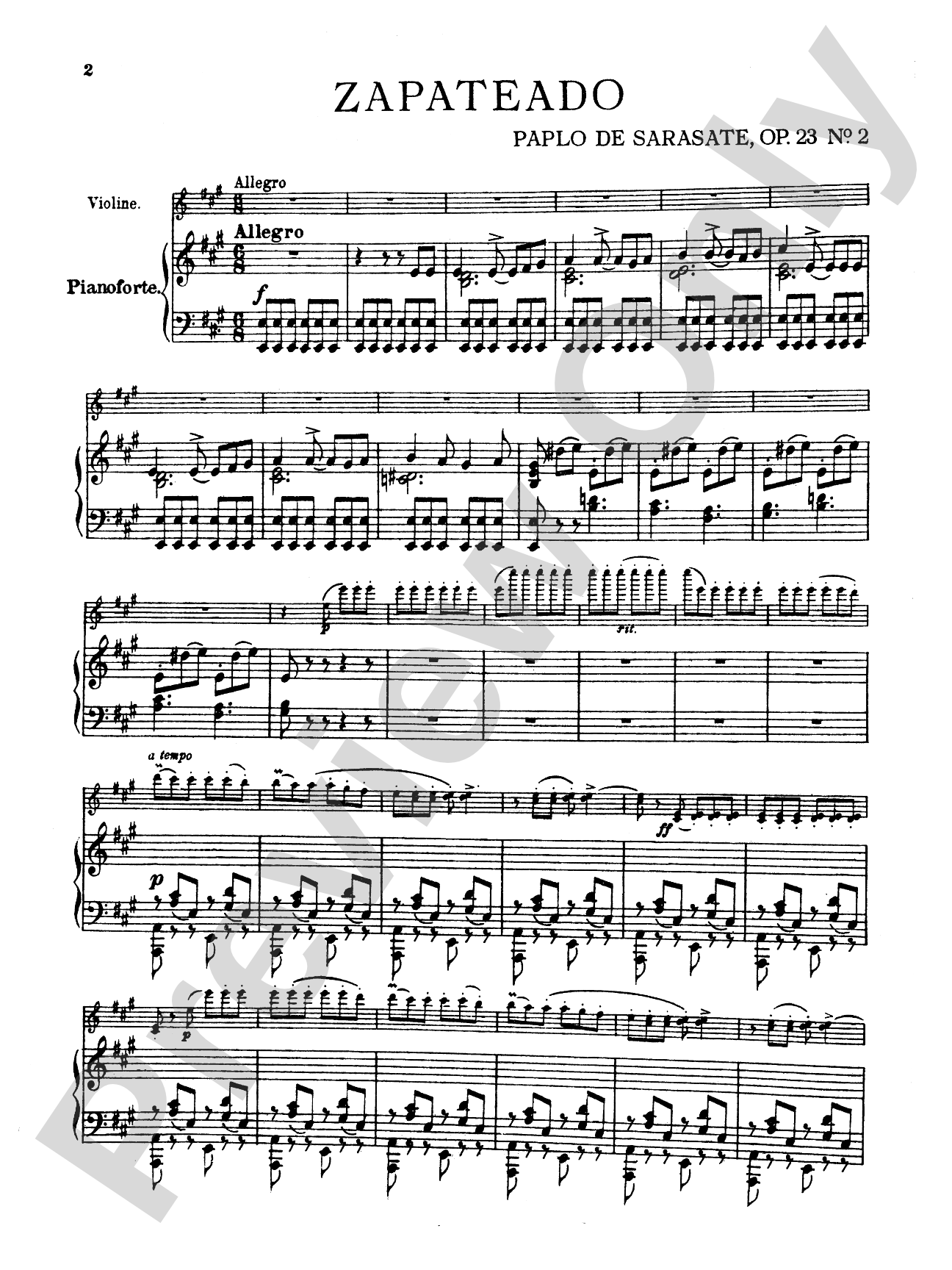
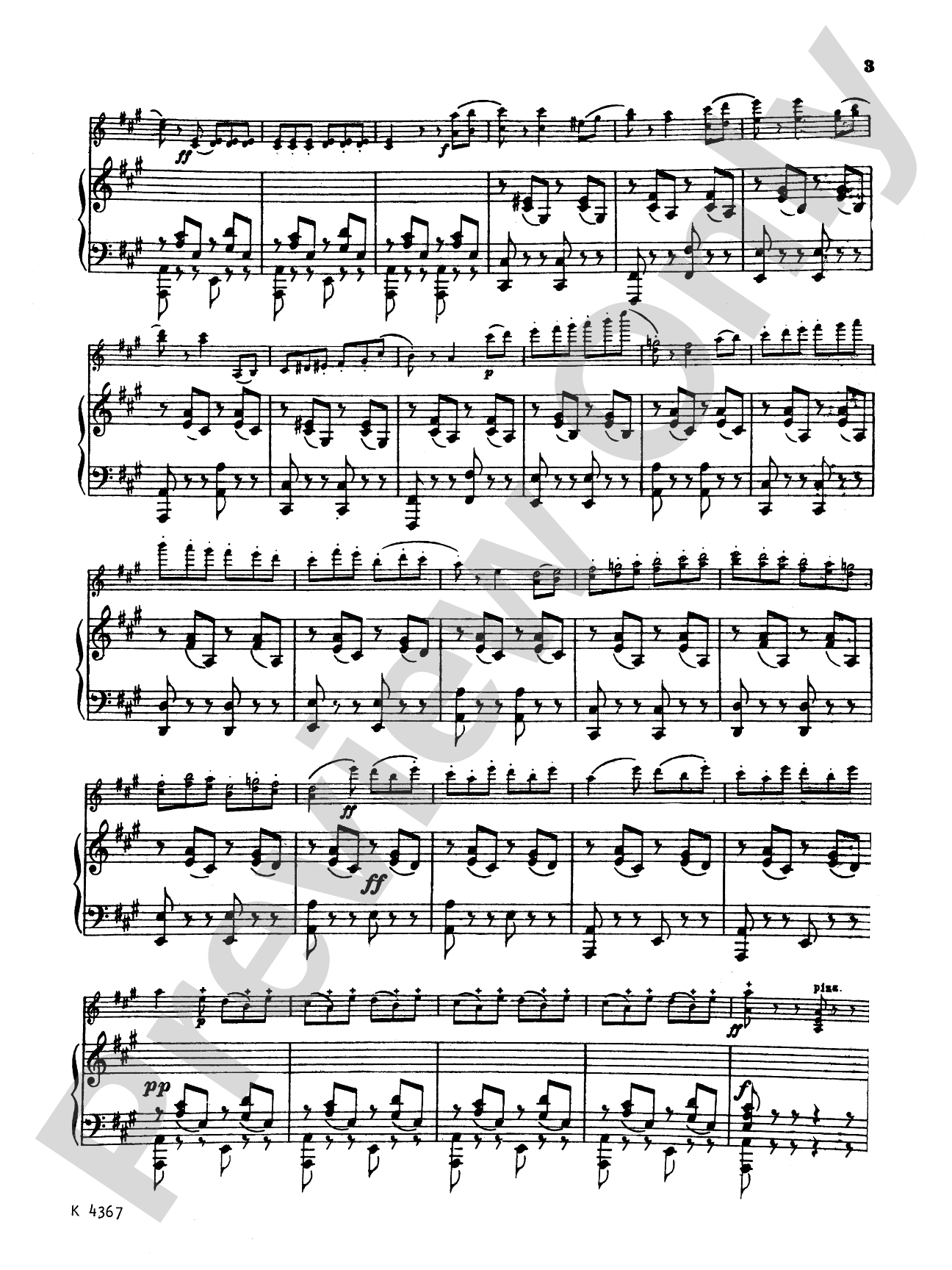
Sarasate: Spanish Dance, Op. 23, No. 2 (Zapateado) Sheet Music Preview

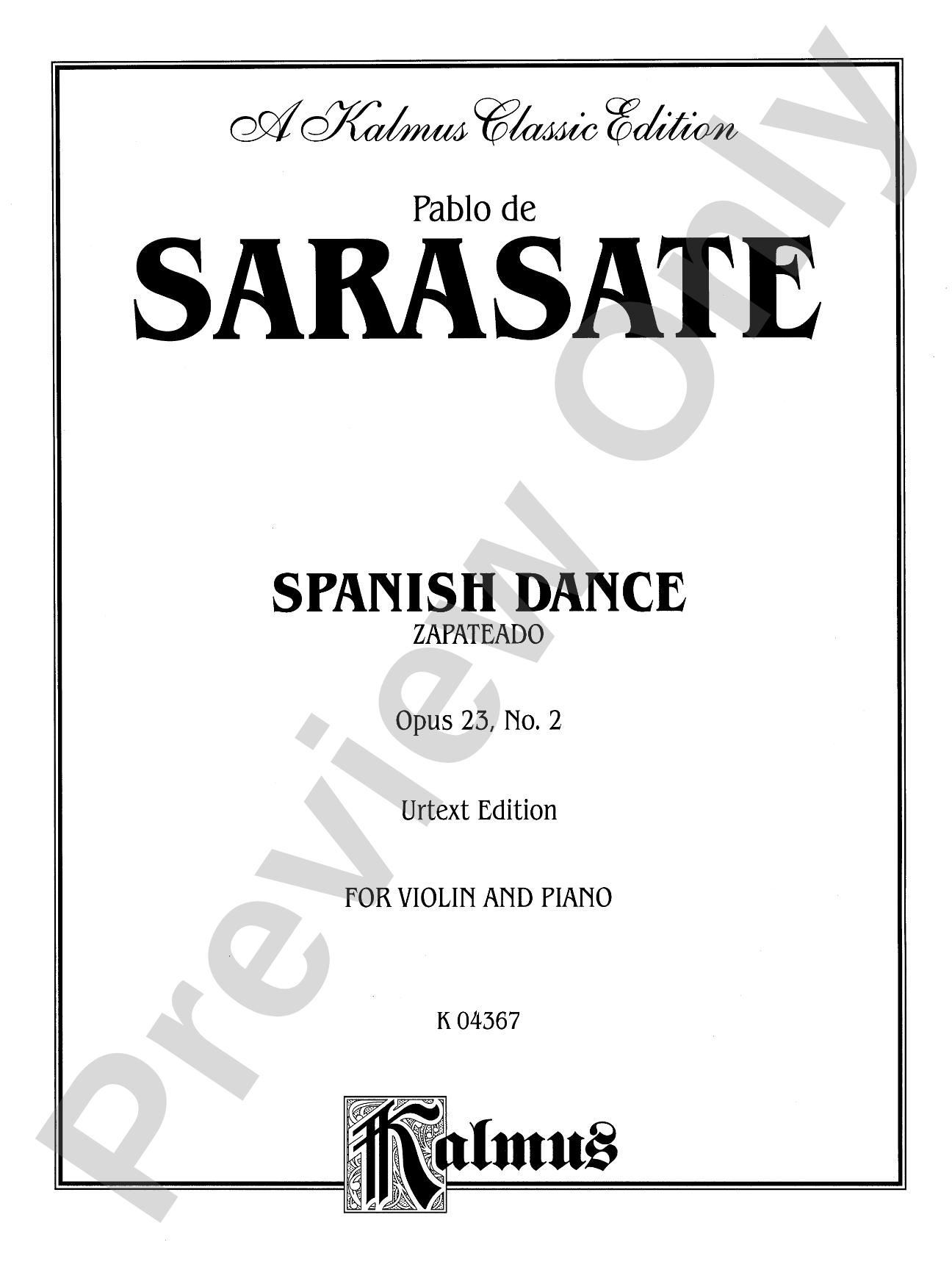
Sarasate: Spanish Dance, Op. 23, No. 2 (Zapateado)

By Pablo de Sarasate

Item: 00-PC-0010287

Digital Download
$3.99
Description
A Violin solo with Piano Accompaniment composed by Pablo de Sarasate.

Don't just read it, hear it, play along with it, and watch your students grow with it. In MakeMusic Cloud, Sarasate: Spanish Dance, Op. 23, No. 2 (Zapateado) comes alive with professional accompaniment, adjustable tempo, and built-in practice tools that turn solo practice into real progress.

Sample Audio
No sample audio found.
Sample Video
Additional Details
Series: Kalmus Edition
Publisher: Alfred Music
Page Count: 20
SKU: 00-PC-0010287

More about this title

About the Composer: Pablo de Sarasate

Pablo de Sarasate (1844-1908) was a Spanish virtuoso violinist and composer whose technical brilliance and elegant musical voice shaped the Romantic violin repertoire. His own compositions, written to showcase the capabilities of the instrument he mastered, remain cornerstones of the violin recital world and competition circuit. Sarasate's gift for memorable melody combined with genuine orchestral sophistication made him a favorite among serious violinists across generations.

Why we love this

Spanish Dance, Op. 23, No. 2 (Zapateado) sits at the perfect intersection of accessibility and artistry. The piece demands real musicianship and technical fluency without requiring the extreme virtuosity of his more demanding works, making it ideal for advanced high school players and emerging college-level violinists preparing for competitions or recitals.

What to expect

The piece crackles with the energy of a Spanish dance floor, its driving rhythms and percussive articulation capturing the authentic spirit of the zapateado. Beneath the spirited exterior lies a vein of romantic lyricism that surfaces in the piece's contrasting sections, creating a satisfying arc between exuberance and expression.

Who it's for

Advanced violinists preparing for competitions, festival performances, or recitals who need a substantial solo with both technical and musical substance. This work suits players comfortable with fast passage work, secure intonation across multiple positions, and the interpretive maturity to balance virtuosity with Spanish character.

How to get the most out of it

  • Establish the Spanish character through rhythmic clarity and percussive articulation in the dance sections; the zapateado rhythm is the piece's heartbeat, so let it drive the musical pulse rather than float above it.
  • Shape the melodic line with generous but controlled vibrato during the lyrical moments to contrast with the crisp, detached character of the dance passages.
  • Work closely with the pianist to balance the rhythmic accompaniment figures; the piano is not a mere backdrop but an active partner in establishing the piece's dance-floor energy.
  • Pay attention to dynamic contrast between the spirited dance material and any quieter, more introspective sections; this shape keeps the listener engaged across the full span.

How to use it

Ideal as a competition or festival entry where a Romantic-era solo with genuine national character and performance appeal strengthens a program. Its 20-page length and moderate timespan fit well in a mixed recital or as a standalone showcase of the violinist's technical and interpretive range.

Skills your students will build

  • Rhythmic precision in Spanish dance idioms, particularly the zapateado figure
  • Sustaining lyrical melody over rhythmic accompaniment without losing tempo
  • Dynamic contrast between detached, percussive passages and warm, singing lines
  • Collaboration with pianist to balance solo voice with harmonic and rhythmic figures
  • Character-driven interpretation and stylistic authenticity in Romantic-era repertoire

You May Also Like