
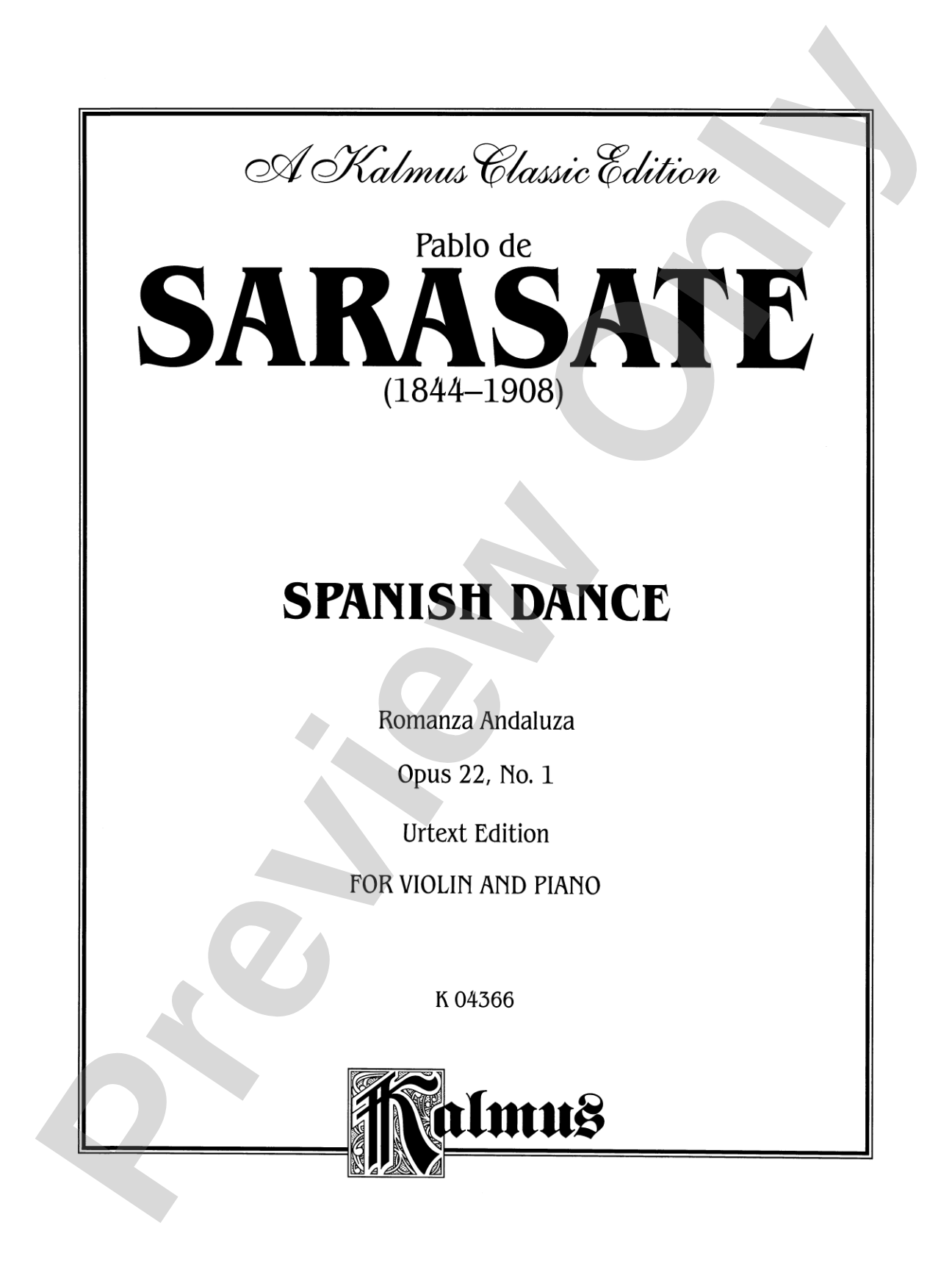
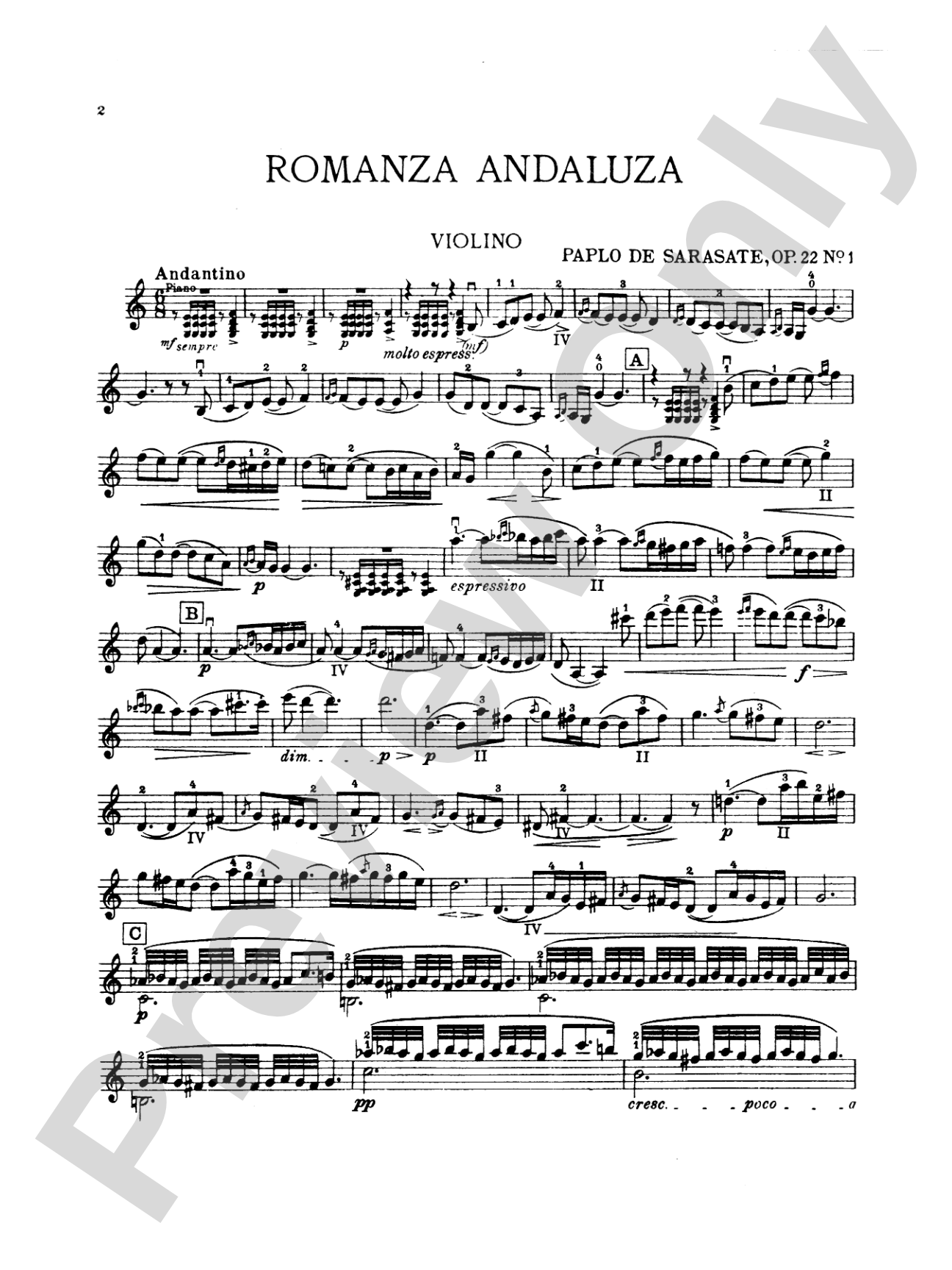
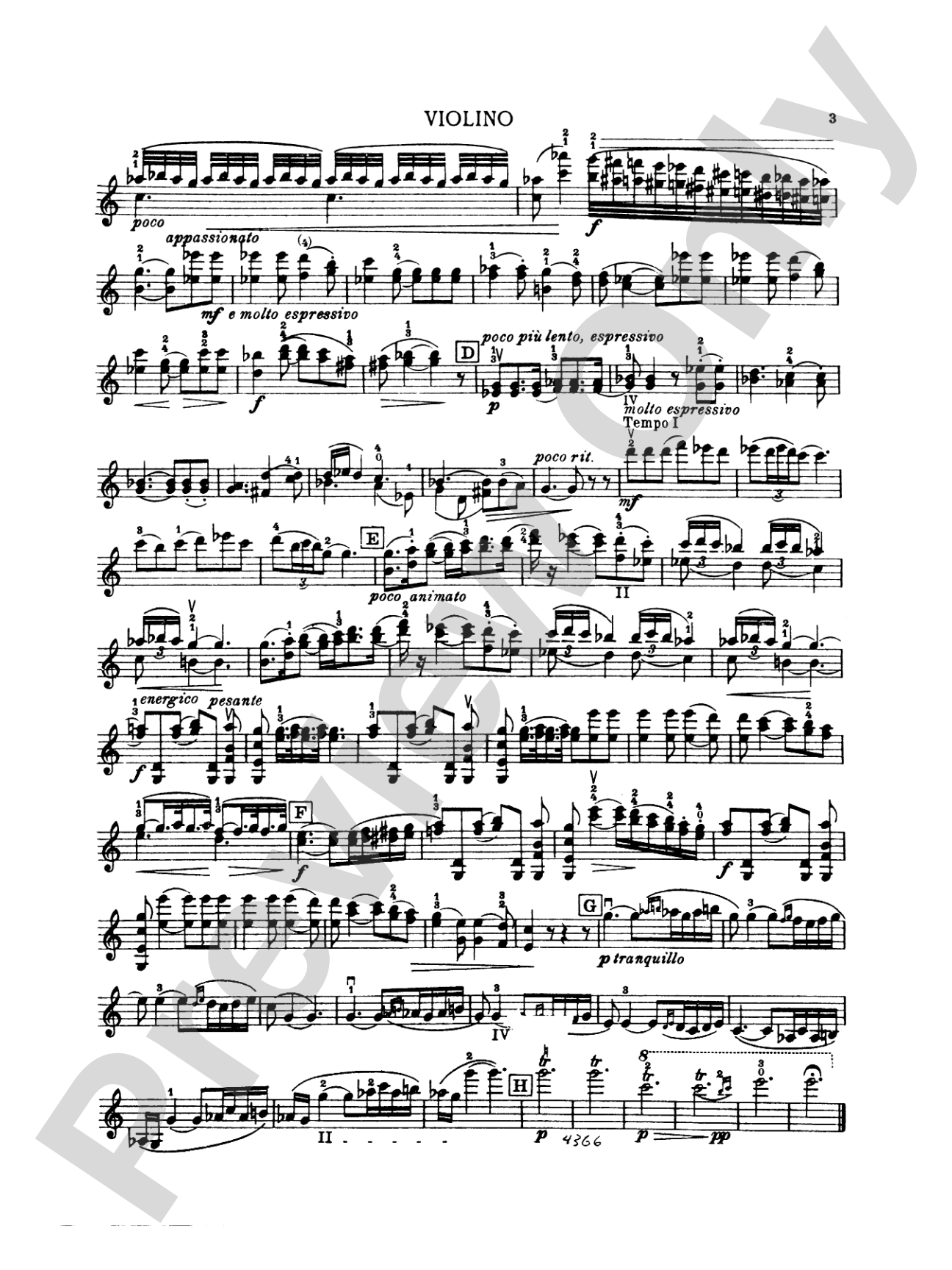


Sarasate: Spanish Dance, Op. 22, No. 1 (Romanza Andaluza): Violin Book
By Pablo de Sarasate
Item: 00-PK-0003486

$7.99
Pickup currently not available
Buy Extra Parts (Digital PDF Download)
| Product | Price | Quantity |
|---|---|---|
| Sarasate: Spanish Dance, Op. 22, No. 1 (Romanza Andaluza) | $2.99 | |
| Sarasate: Spanish Dance, Op. 22, No. 1 (Romanza Andaluza) | $2.99 |
Parts Added to Cart!
Related Items
Spanish Dance, Opus 22, No. 1 (Romanza Andaluza): Violin Book |
$7.99
|
View |
Description
A solo, for Violin with Piano Accompaniment, composed by Pablo de Sarasate.


Don't just read it, hear it, play along with it, and watch your students grow with it. In MakeMusic Cloud, Sarasate: Spanish Dance, Op. 22, No. 1 (Romanza Andaluza): Violin Book comes alive with professional accompaniment, adjustable tempo, and built-in practice tools that turn solo practice into real progress.
Open in the Player
Jump straight in and assign it today.
Start Your Free Trial
Open this title and explore the full library in minutes.
Sample Audio
No sample audio found.
Sample Video
No sample videos found.
Additional Details
Series:
Kalmus Edition
Publisher:
Alfred Music
Page Count:
12
SKU:
00-PK-0003486
More about this title
About the Composer: Pablo de Sarasate
Pablo de Sarasate (1844-1908) was a Spanish violinist and composer whose technical mastery and lyrical sensibility defined the instrument's Romantic repertoire. His performing career took him across Europe's major concert halls, and he composed primarily for his own instrument, creating works that showcase both virtuosic display and intimate musical expression. Sarasate's pieces remain central to the violin recital canon because they demand both technical brilliance and emotional maturity from performers.
Sarasate's compositional voice is rooted in Spanish musical language. His dances, including the Op. 22 set, blend Andalusian melodic character with the formal structures of European concert music. Unlike some of his contemporaries who favored pure virtuosity, Sarasate wrote music that balances showmanship with substance, making his works enduringly satisfying to play and hear.
Why we love this
This Romanza Andaluza sits at the sweet spot between accessibility and artistry for developing soloists. The work's Spanish lyricism is instantly recognizable, but achieving its full warmth requires genuine musical maturity, making it an ideal choice for advancing students moving into recital repertoire. Audiences respond immediately to its character, which means a student's hard work translates directly into appreciable musical communication.
What to expect
Sarasate's Romanza Andaluza unfolds like a Spanish serenade, intimate and unhurried. The melody carries a gentle melancholy tinged with the warmth of southern light, and the rhythm sways with the characteristic lilt of Andalusian music. Each phrase invites singers and listeners alike into a space of reflection and quiet beauty.
Who it's for
Upper-level violin students preparing for recitals, competitions, or festival performances will find this work both musically rewarding and technically appropriate. Teachers seeking repertoire that develops romantic phrasing, tone control, and collaborative skills will appreciate its balance of demands. This piece suits violinists ready to move beyond standard student concertos into the concert hall literature.
How to get the most out of it
- Honor the Andalusian character by allowing the melody to breathe naturally rather than rushing. The piece rewards a singer's approach to phrasing.
- Balance your tone production between passages requiring warmth and those demanding clarity. The piano accompaniment often carries harmonic weight; let it support without overwhelming.
- Approach the technical passages as musical necessities rather than display opportunities. Sarasate's ornamental figures should serve the romantic line, not interrupt it.
- Work closely with your pianist on the dialogue between instruments. This is not a solo with accompaniment but a chamber music partnership where timing and dynamic conversation drive the performance.
How to use it
This work pairs beautifully on recitals alongside other Romantic-era character pieces or as a centrepiece in a Spanish music evening. Program it after a more dramatic or technically demanding piece to showcase your student's musical range and expressivity. Its moderate length and transparent scoring also make it suitable for chamber music recitals or competitions where a meaningful solo display is needed within time constraints.
Skills your students will build
- Romantic-era phrasing and rubato within a structured harmonic framework
- Tone production that conveys warmth and intimacy without sacrificing clarity
- Collaborative musicianship with keyboard accompanists
- Stylistic understanding of Spanish melodic and rhythmic language
- Sustained cantabile playing across multiple phrase lengths