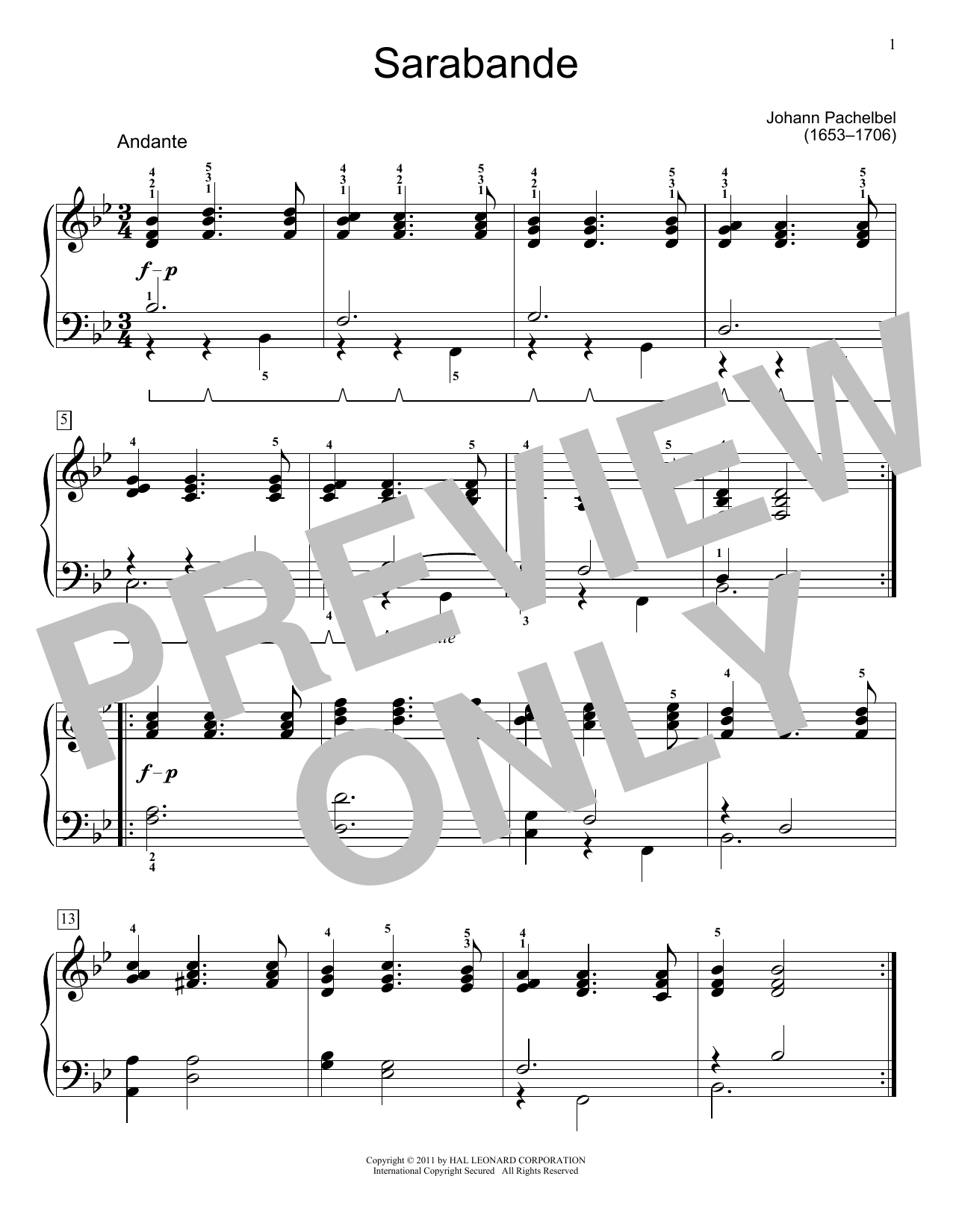
Johann Pachelbel (1653-1706) was a German Baroque composer whose influence on keyboard music extended far beyond his lifetime. His mastery of fugue and variation forms made him a crucial bridge between the Renaissance and the fully developed Baroque style, earning him respect from contemporaries like Johann Sebastian Bach. Pachelbel's approach to composition emphasized clarity, elegant phrasing, and structural integrity, qualities that made his works ideal models for teaching musicians the fundamentals of Baroque counterpoint and form.
Why we love this
Jennifer Linn's arrangement preserves the measured grace of Pachelbel's original while making it genuinely accessible to intermediate pianists. The single-page format removes intimidation without sacrificing the piece's inherent dignity, and students encounter authentic Baroque style without the technical barriers that often prevent them from exploring this essential repertoire.
What to expect
Composed dignity and measured elegance define this piece. The sarabande moves with the careful pace of a formal court dance, its rhythmic weight landing on the second beat in a way that creates a graceful, almost swaying quality. Pachelbel's voice leading unfolds with natural inevitability, and the harmonic journey feels both inevitable and surprising.
Who it's for
Intermediate pianists ready to engage with Baroque repertoire but still developing the technical and interpretive skills for full-length suites or partitas. This also serves teachers seeking to introduce students to the sarabande's aristocratic temperament and the formal conventions of Baroque dance forms.
How to get the most out of it
Shape each phrase with gentle direction rather than dramatic dynamics; the sarabande's stately character thrives on subtle shaping and lean voicing.
Let the dotted rhythms breathe naturally without rushing the sixteenth-note figures that follow; Baroque dances require clarity more than speed.
Balance the voices so that the harmonic progression remains audible; Pachelbel's writing rewards transparent registration that highlights his voice leading.
Consider the piece as preparation for later Bach or Scarlatti; this arrangement builds facility with the ornamentation and phrasing conventions students will encounter in more demanding Baroque works.
How to use it
Pair this arrangement with later Baroque keyboard works or contemporary dances to illustrate how the sarabande evolved across the 17th century. It also works beautifully as a bridge piece in a student recital, offering audiences a moment of calm and refinement between more dramatic selections. The single page makes it ideal for sight-reading practice or as a technical warmup that doubles as a complete musical statement.
Skills your students will build
Baroque voice leading and harmonic analysis
Ornamentation and interpretation of dotted rhythms
Two-hand independence in contrapuntal texture
Understanding sarabande form and dance meter conventions
Phrasing and articulation appropriate to 17th-century style
You May Also Like
Scan to Complete Your Purchase
Use your phone's camera to scan the code below
You'll log in on your phone and the order will be added to your account