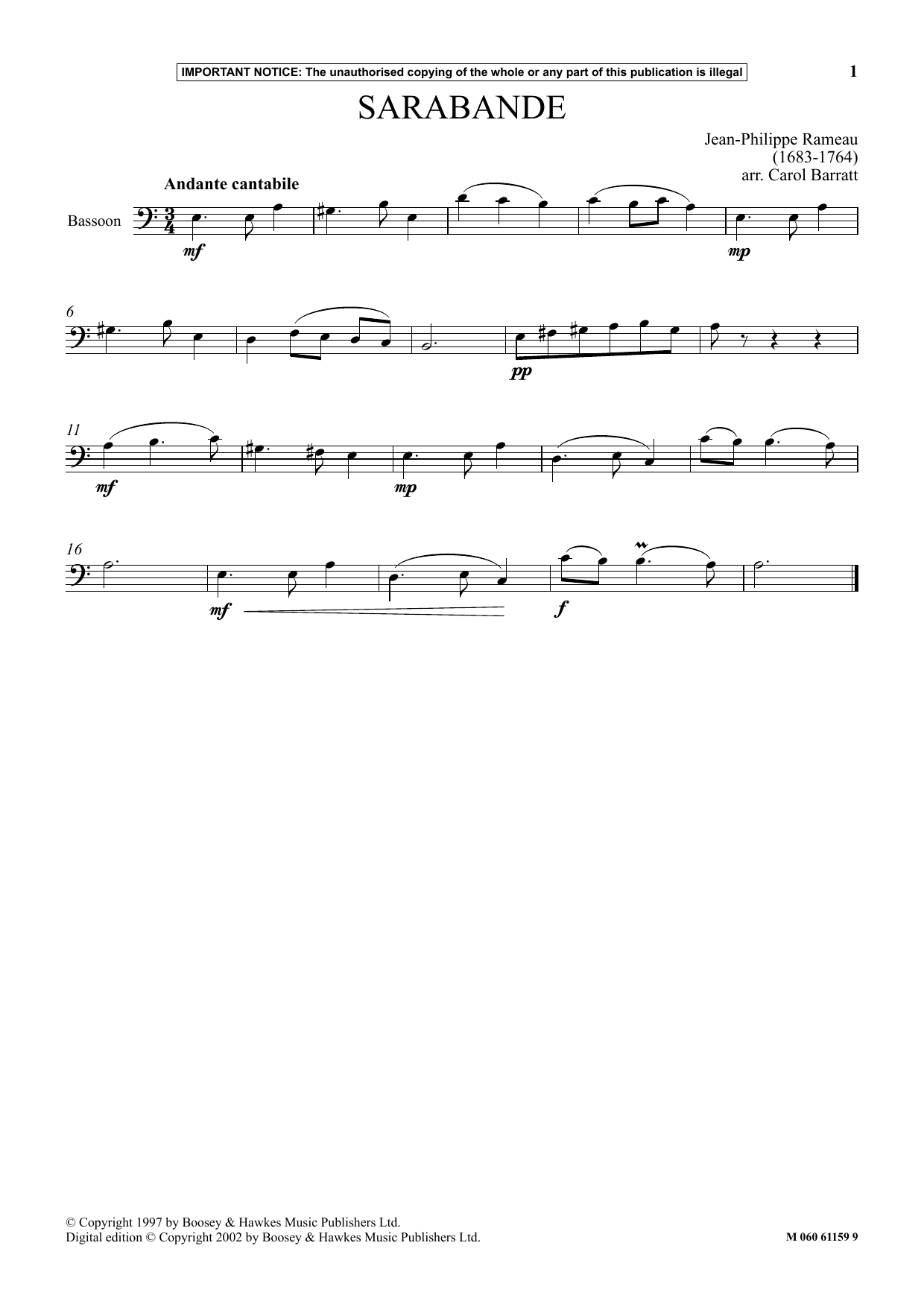
Barratt strips the sarabande to its essential character without pretense. The two-page format makes this accessible for students encountering the form for the first time, yet the musical decisions demand real interpretive maturity from performers.
What to expect
Measured and dignified without being stiff. There's restraint in the writing, an almost courtly quality that rewards careful listening and patient playing.
Who it's for
Intermediate pianists working on Baroque style and form. This piece serves well in curricula focused on dance forms or as a bridge between Bach and later classical composers.
How to get the most out of it
Shape the melody through long phrase arcs rather than measure-to-measure accents; sarabandes live in their sustained architecture, not in local detail
Lean into the characteristic rhythmic weight on beat two, but keep it conversational rather than mechanical
Let silence breathe between phrases; the space is as important as the notes themselves
How to use it
Pair this with other Baroque dances for a thematic concert set, or program it as a contrasting slower movement within a larger student recital. Its brevity also makes it ideal for early semester technical assessments focused on baroque articulation and phrasing.
Skills your students will build
Baroque articulation and ornamentation interpretation
Long-phrase melodic shaping across harmonic changes
Rhythmic precision in characteristic sarabande meter
Stylistic awareness of dance form conventions
You May Also Like
Scan to Complete Your Purchase
Use your phone's camera to scan the code below
You'll log in on your phone and the order will be added to your account