
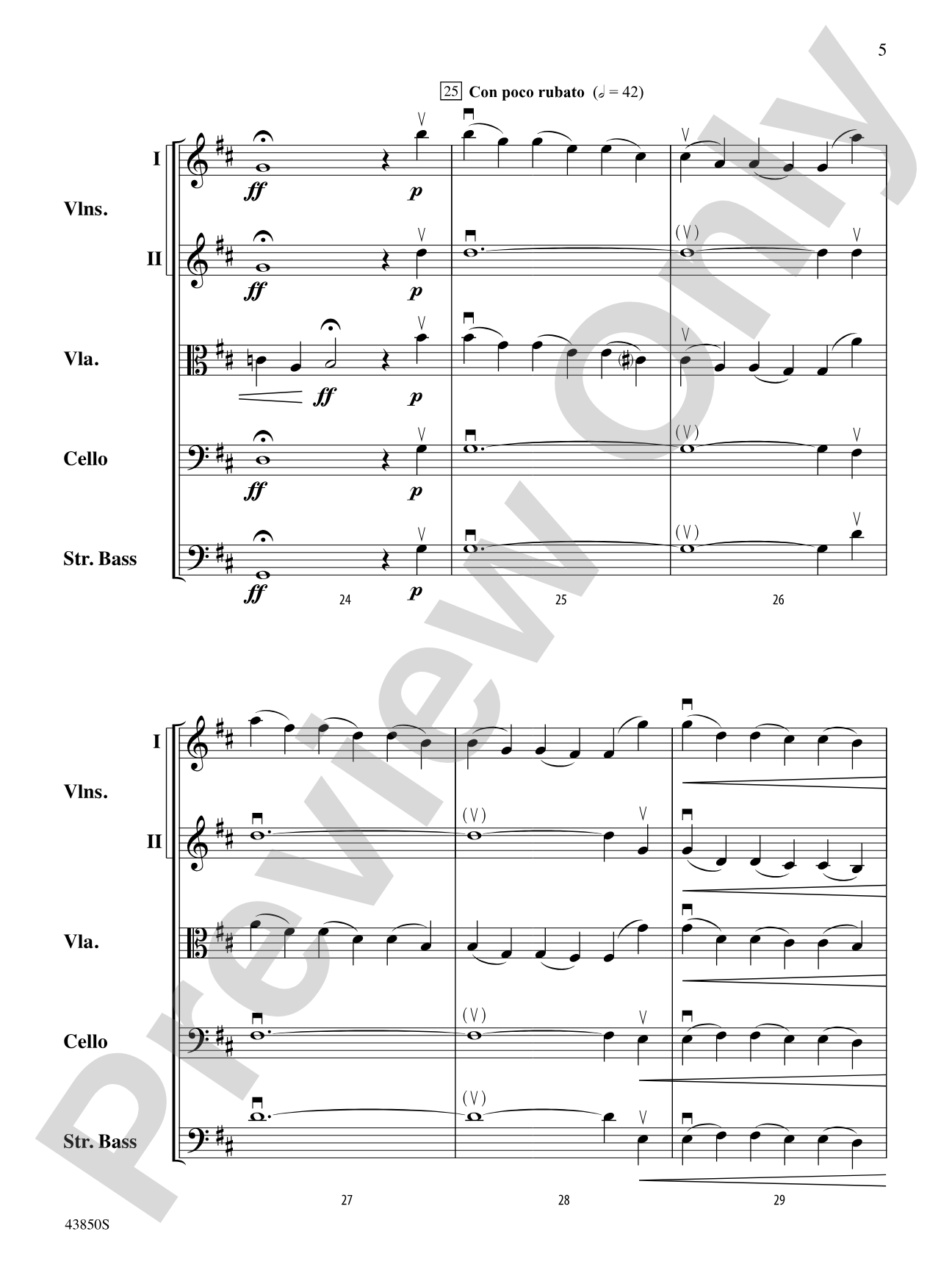
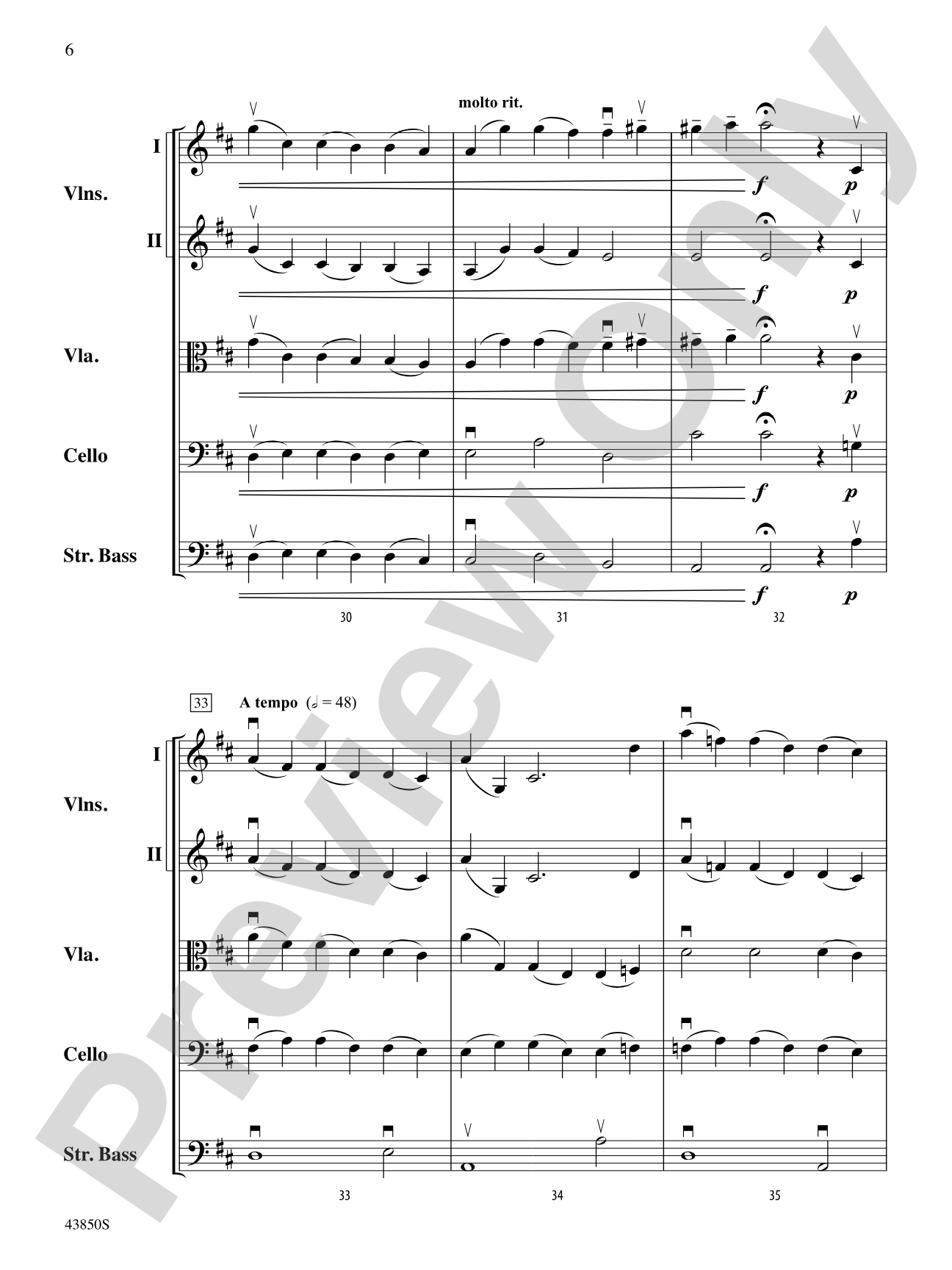
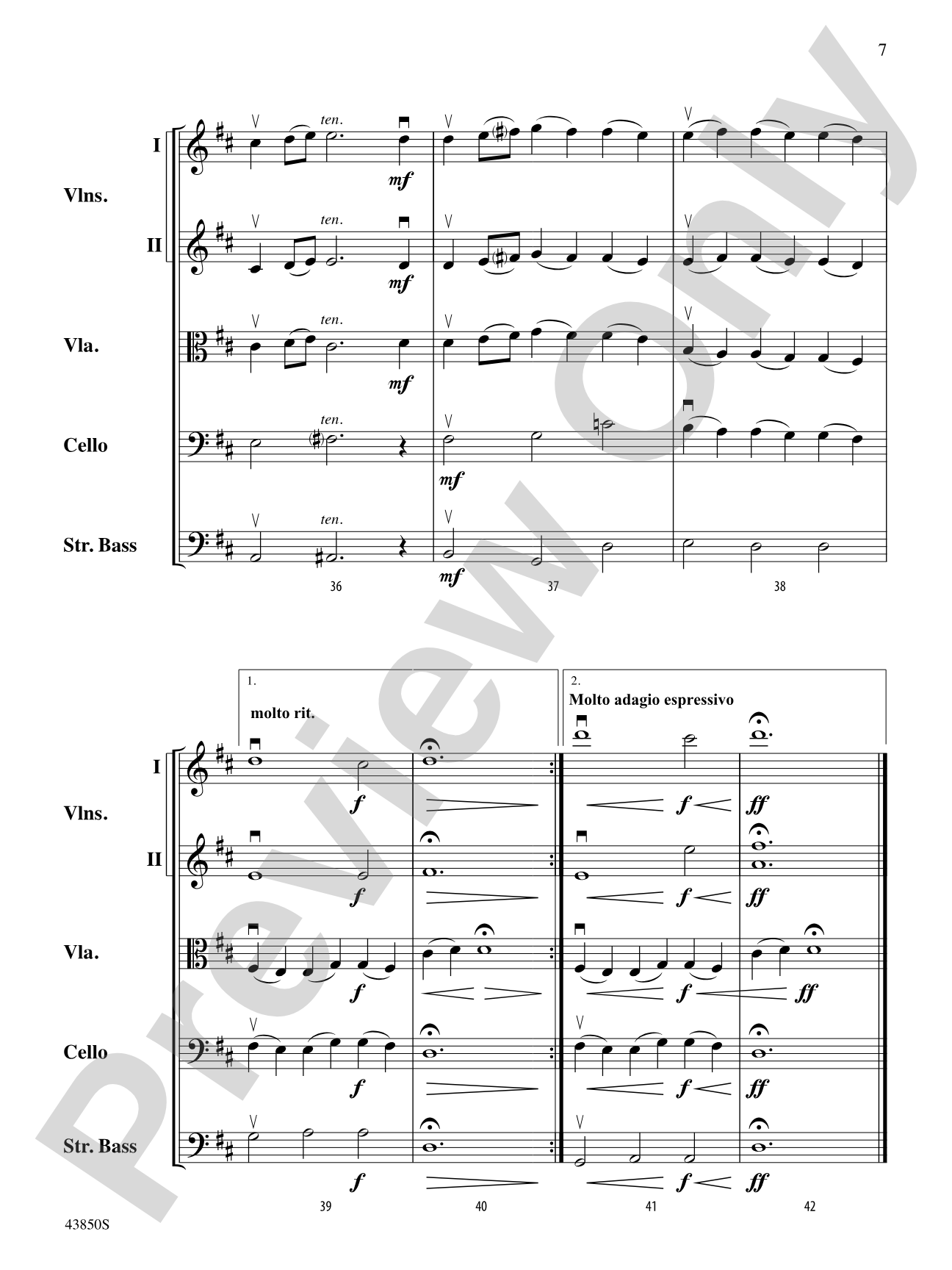

Sarabande: String Orchestra Conductor Score & Parts
From Cello Suite No. 6
By Johann Sebastian Bach / arr. Jeffrey S. Bishop
Grade: 3
Item: 00-PK-0006699

$46.00
Pickup currently not available
Buy Extra Parts (Digital PDF Download)
| Product | Price | Quantity |
|---|---|---|
| Sarabande: Score | $9.00 | |
| Sarabande: 1st Violin | $5.99 | |
| Sarabande: 2nd Violin | $5.99 | |
| Sarabande: Viola | $5.99 | |
| Sarabande: Cello | $5.99 | |
| Sarabande: String Bass | $5.99 |
Parts Added to Cart!
Description
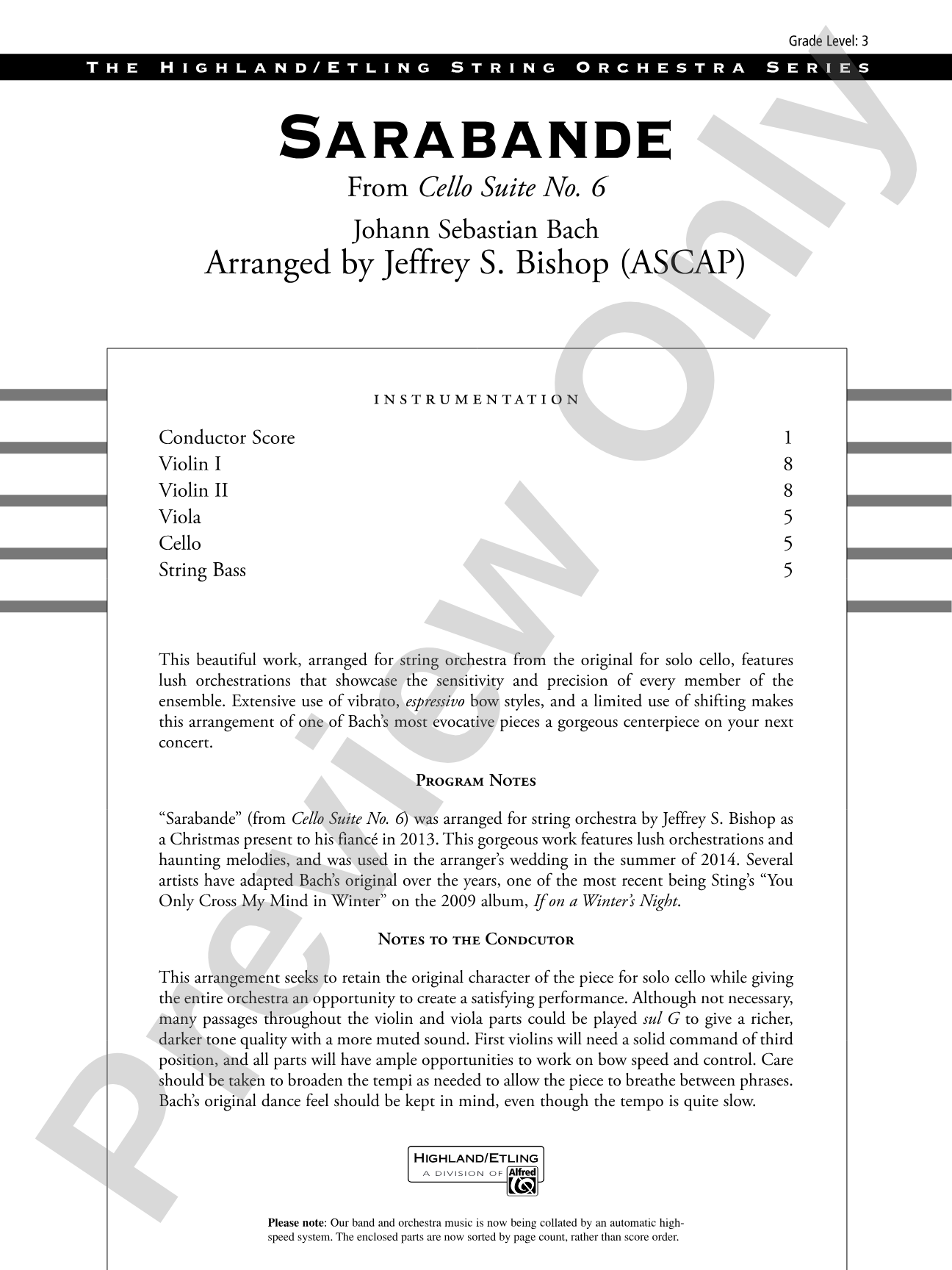
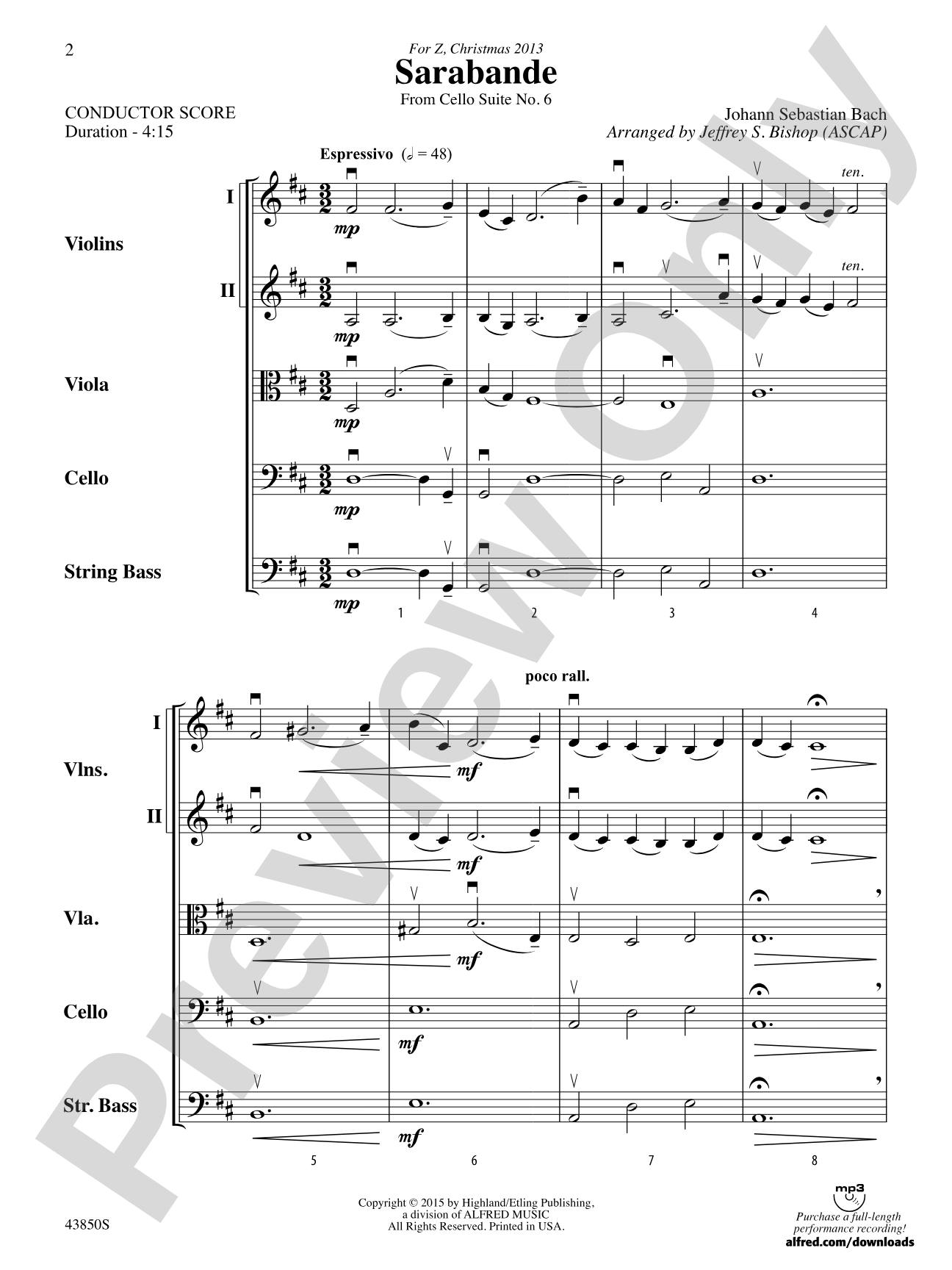
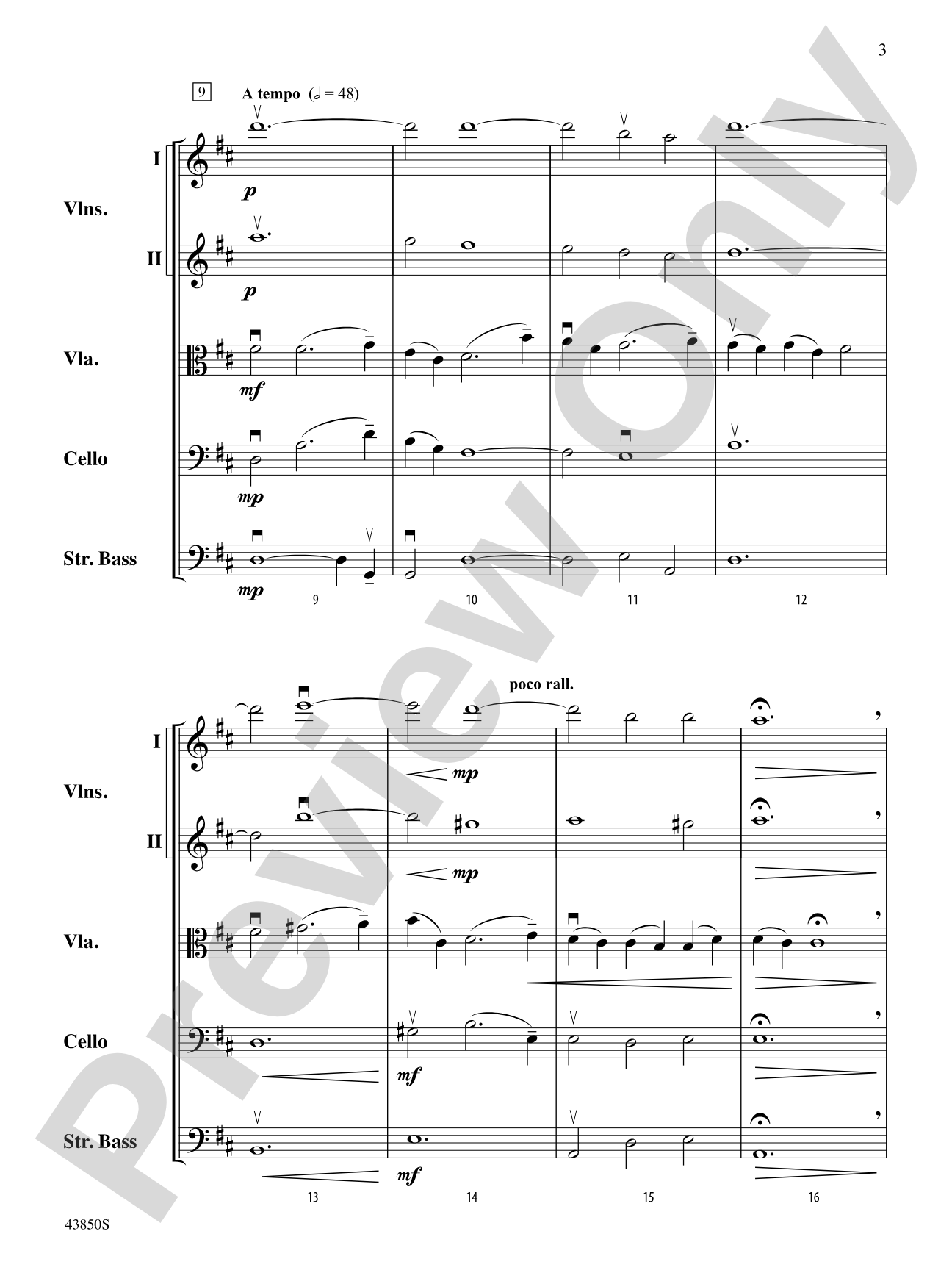
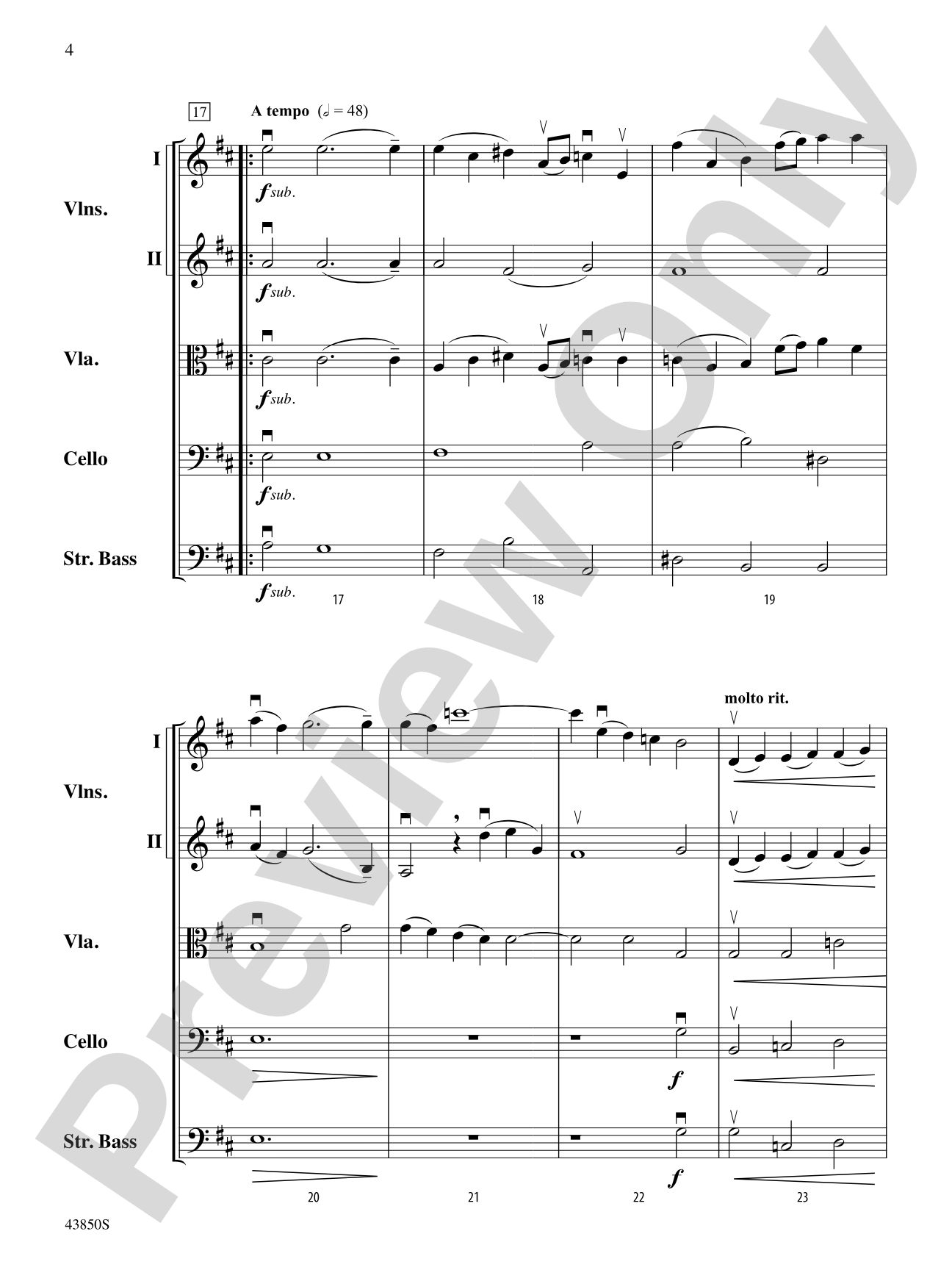
This beautiful work, arranged from the original cello solo, features lush orchestrations that will showcase the sensitivity and precision of every member of your ensemble. Extensive use of vibrato, espressivo bow styles, and a limited use of shifting make this arrangement a gorgeous centerpiece for your next concert. (4:15)


Don't just read it, hear it, play along with it, and watch your students grow with it. In MakeMusic Cloud, Sarabande: String Orchestra Conductor Score & Parts comes alive with professional accompaniment, adjustable tempo, and built-in practice tools that turn solo practice into real progress.
Open in the Player
Jump straight in and assign it today.
Start Your Free Trial
Open this title and explore the full library in minutes.
Sample Audio
1
Audio File
--:--
0:00
0:00
Sample Video
No sample videos found.
Additional Details
Series:
Highland/Etling String Orchestra
Publisher:
Alfred Music
Page Count:
62
SKU:
00-PK-0006699
More about this title
About the Composer: Johann Sebastian Bach
Johann Sebastian Bach (1685-1750) stands as one of the most influential composers in Western music history. His mastery of counterpoint, harmonic innovation, and formal structure established foundations that shaped centuries of musical development. Bach's output spanned sacred and secular works across nearly every genre of his era, from the monumental Mass in B minor to intimate solo instrumental works that remain cornerstones of both performance and study.
Why we love this
Jeffrey S. Bishop's orchestration transforms Bach's intimate cello solo into a work where every string player has meaningful musical responsibility. The arrangement preserves the inherent dignity of the Sarabande while offering Grade 3 ensembles a chance to shape lyrical phrasing, balance multiple voices, and explore nuanced bow control at a musically substantial level.
What to expect
The Sarabande unfolds with grave nobility and restraint. Every phrase breathes with the formality of baroque court dance, yet the orchestration creates a warm, resonant foundation that allows individual players to discover their own expressive voice within a carefully balanced ensemble texture.
Who it's for
String orchestra directors working with Grade 3 ensembles who want to program a substantial baroque work that builds musicianship without excessive technical demand. This arrangement serves ensembles preparing for festival competition or concert performance and seeking a piece that honors Bach's compositional voice while remaining accessible to developing musicians.
How to get the most out of it
- Establish a consistent vibrato foundation among section members; the lush sound this arrangement demands relies on unified color and intensity across the first violins, second violins, and violas.
- Differentiate between cantabile and espressivo bow strokes throughout rehearsal, as the arrangement calls for both sustained singing lines and moments of expressive articulation that define the baroque character.
- Shape the harmonic progression through dynamic subtlety rather than dramatic swells; this Sarabande comes alive through carefully sculpted voicing and voice leading across the four parts.
- Isolate the limited shifting passages early in rehearsal to build confidence; secure technique here allows musicians to focus entirely on tone quality and musical intent during performance.
How to use it
Program this as a concert centerpiece that demonstrates your ensemble's maturity and sensitivity. The piece provides a moment of contemplation and refinement alongside more energetic baroque selections or serves as an elegant contrasting movement when paired with contemporary works in a thematic concert.
Skills your students will build
- Sustained vibrato and tonal control in ensemble context
- Espressivo bow techniques and bow distribution across longer phrases
- Voice leading and harmonic awareness through multi-part baroque writing
- Dynamic shaping and balance in non-text-driven expression
- Baroque articulation and phrasing conventions